
Polarized Lens Delamination: Causes and Claim Control
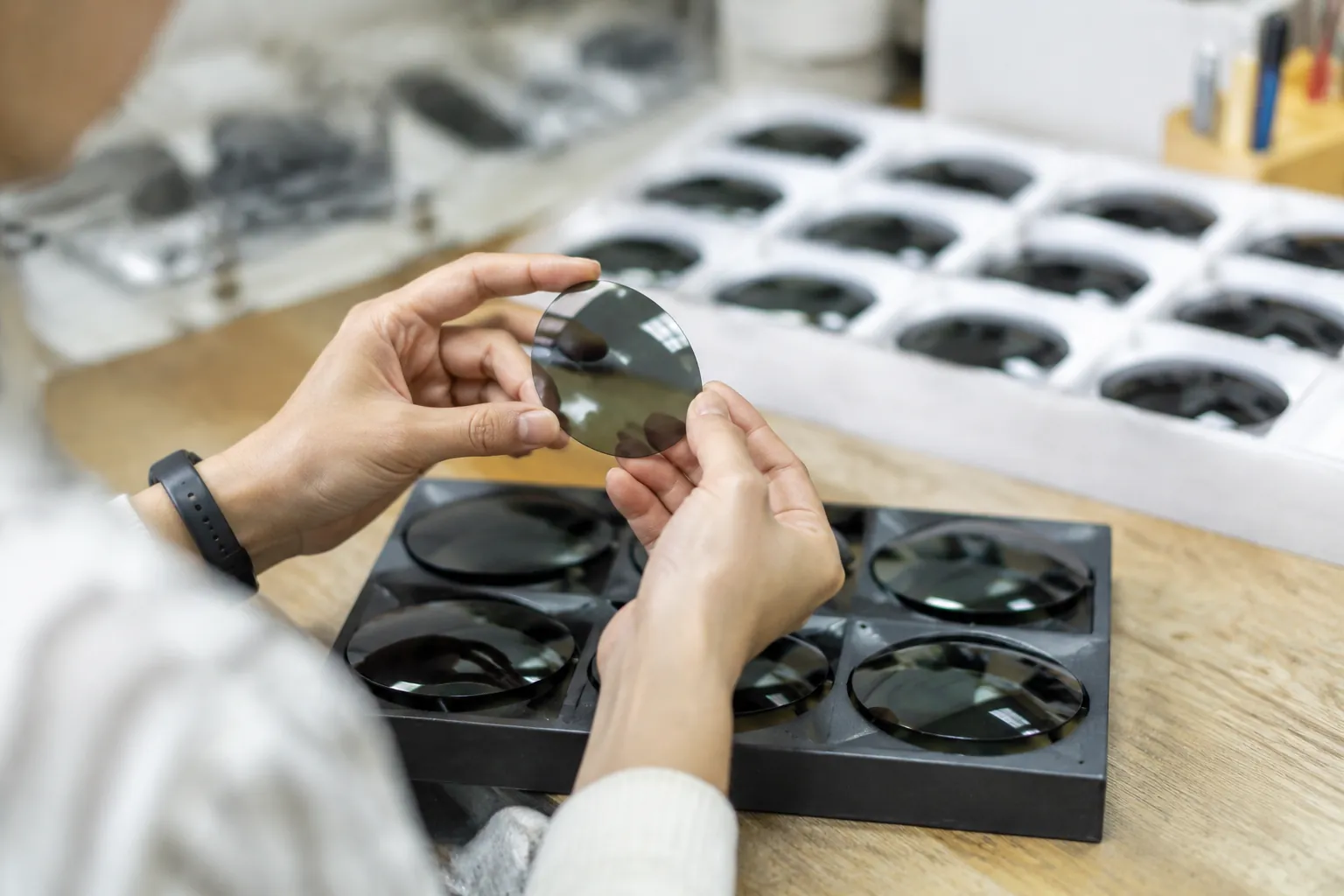
This guide is for brand owners, importers, distributors, and retailers buying polarized sunglasses in volume. Delamination is expensive because it often appears after shipment rather than at final inspection. The practical fix is to define the lens build in detail, approve it against measurable criteria, and add heat, edge, chemical, and assembly checks to sampling and bulk QC. When weak laminated lenses are screened out early, return rates, replacement cost, and claim disputes usually fall later.
Why delamination drives costly post-sale claims
Polarized lens delamination is the separation of bonded layers inside a laminated lens, usually around the polarized film or between lens layers. In the field, buyers may hear it described as bubbles, cloudy patches, rainbow marks, edge whitening, ripples, hazy zones, silvering near the perimeter, or an internal peel effect.
The cost is high because the defect is often latent. A shipment can pass a basic appearance check at room temperature, then fail later after heat, humidity, repeated cleaning, sunscreen exposure, warehouse storage, or time in a hot car or container. Once the bond starts to fail, the optical appearance usually gets worse over time because moisture and stress continue to act on the weak interface.
For B2B buyers, this is a classic post-sale problem. A standard AQL appearance check is useful for visible cosmetic defects, but it does not prove bond durability. A lens can look acceptable on receipt and still fail after thermal stress, chemical contact, or frame assembly. That is why polarized lenses usually need a stricter approval path than non-laminated sun lenses.
Commercially, the defect is expensive because the failure often appears after goods are already in distribution. By that stage, the buyer may be facing store returns, e-commerce complaints, reverse logistics cost, warranty replacements, and disputes over whether the cause was production, handling, or consumer use. If the PO and approved sample do not define measurable requirements, claim review becomes subjective very quickly.
Using a supplier that controls frame production, lens processing, assembly, and QC in-house can help because fewer handoffs usually mean better process visibility. But vertical integration alone is not enough. The purchase order, approved sample, and inspection standard still need to define lens construction, center thickness, edge finish, assembly fit, test conditions, and clear pass/fail rules for appearance and durability checks.
What causes the polarized film bond to fail
Most delamination complaints trace back to a short list of causes. Each cause points to a specific control point in sourcing, processing, product design, or post-production handling.
- Weak lamination bond: The bonding system, pressure, temperature, dwell time, or curing control is not stable enough to handle normal heat and humidity. A bond that is only marginal may survive room-condition inspection but fail later in transport or use.
- Insufficient edge protection: If cutting or beveling exposes too much of the laminated structure, moisture, cleaners, and repeated handling can attack the bond line more easily from the perimeter inward.
- Excess process heat: Coating, drying, lens forming, logo work near the lens area, or other heat-intensive steps can overstress a marginal bond, even when the lens still appears acceptable immediately after production.
- Chemical attack: Alcohol-based cleaners, aggressive surfactants, sunscreen oils, insect repellent, packaging residues, or shop cleaning fluids can weaken exposed edges or damage protective surface layers that shield the laminated structure.
- High curve with thin sections: Wrapped or shield styles increase edge and insertion stress, especially when lens thickness is pushed too low for the frame geometry, groove shape, or base curve.
- Tight frame insertion: If the lens is oversized for the groove or the assembly method requires too much insertion force, the lens perimeter can be damaged during fitting. The damage may be microscopic at first and only become visible later.
- Transport and storage heat: High temperatures in containers, warehouses, or last-mile delivery vehicles can expose weak bonds that were not visible at factory final inspection.
- Uncontrolled material substitution: If bulk production uses a different polarized build, adhesive system, coating stack, or film source than the approved sample, the buyer may unknowingly approve one construction and receive another.
Not every cloudy or distorted lens is true delamination. Some complaints are actually hard-coat crazing, mirror-coat failure, stress birefringence, edge whitening from poor bevel quality, or surface contamination trapped under packaging. The difference matters because the corrective action is not the same. A capable supplier should identify whether the failure sits in the laminated bond, the surface coating, the cut edge, or frame-induced stress.
| Observed symptom | Possible underlying issue | Where to inspect first | Typical corrective action |
|---|---|---|---|
| Bubble or internal peel effect | Lamination bond failure | Cross-section, edge area, returned samples after heat exposure | Review bond system, cycle control, and approved construction |
| Edge whitening | Bevel damage, exposed laminate, assembly stress | Lens perimeter, groove fit, insertion method | Tighten edging standard, reduce insertion stress, revise lens sizing |
| Rainbow patch | Stress pattern or early internal separation | Polarization orientation, frame stress points, post-assembly samples | Check lens fit, frame geometry, and heat-check results |
| Surface haze | Chemical attack or coating damage | Outer surface, wipe test area, packaging contact points | Review cleaner compatibility, coating quality, and packing materials |
| Wave mark or ripple | Thermal distortion or bond instability | Heat-tested sample, curved sections, mirror or coating stage | Reduce process heat, confirm thickness, validate thermal resistance |
Where the risk usually starts in production
Buyers often assume delamination starts at final assembly. In many cases, it starts earlier and only becomes visible later when the lens is stressed by assembly, packing, transport, or use.
- Material selection: The substrate, polarized film, adhesive or bonding system, hard coat, mirror layer, and tint process must be compatible. If the bulk production build differs from the approved sample, the risk increases immediately.
- Lamination process: Temperature, pressure, dwell time, and handling between steps must stay inside a validated process window. Small drift can reduce bond consistency across the lot.
- Lens cutting and edging: Rough cutting, worn tools, aggressive beveling, overheating at the edge, or inconsistent perimeter polishing can leave the lens vulnerable and reduce protection at the bond line.
- Coating, tinting, and mirror finishing: Extra chemical exposure or thermal load can weaken a bond that was already marginal. This is common when a lens build is changed without rechecking its thermal margin.
- Logo decoration and nearby heat input: Any secondary process near the lens area should be reviewed for heat exposure, handling pressure, and solvent contact risk.
- Assembly into the frame: Tight grooves, sharp corners, wrapped geometries, or lens oversize can stress the perimeter during insertion. The result may not appear until after the frame relaxes or later sees heat.
- Packing and storage: Hot warehouses, sea freight containers, compressed packing, or poor storage conditions can reveal weak bonds before goods reach retail.
That is why a polarized sample should never be approved on color, logo, and style appearance alone. A better method is simple and repeatable: inspect the sample on receipt, hold loose and assembled samples at an agreed high temperature for a defined period, return them to room condition, and inspect again under consistent lighting. This extra step often exposes weak constructions before bulk release.
Buyers should also ask one practical question during sampling: does the supplier validate the lens before and after assembly, or only before insertion into the frame? A lens that passes as a loose part can still fail after assembly stress, especially in wrapped frames or designs with narrow groove tolerance.
The lens spec sheet buyers should issue before sampling
If you want fewer warranty claims, start with a tighter lens specification sheet. Asking for a generic polarized lens leaves too much room for substitution. A buyer-grade specification should define the construction, dimensions, appearance criteria, test conditions, and recordkeeping requirements.
| Spec item | What to define | Recommended buyer target | Why it matters |
|---|---|---|---|
| Lens construction | Exact polarized structure and approved sample reference | List the agreed build, color, coating, film orientation, and finish on the PO | Prevents unapproved material substitution |
| Center thickness | Nominal thickness and tolerance by style | State a target thickness and a minimum acceptable value for the approved design | Thin lenses are generally less tolerant of assembly and heat stress |
| Edge finish | Perimeter quality and bevel standard | Require a clean, uniform edge and define no-defect criteria for whitening, chipping, roughness, or exposed laminate | Reduces edge-related ingress and appearance risk |
| Lens size tolerance | Finished lens dimension tolerance for insertion | Define the fit window by frame type so assembly force stays controlled | Limits assembly-induced perimeter damage |
| Heat resistance check | Temperature, time, sample condition, and acceptance rule | Agree a heat-hold test with no bubbling, haze, wave mark, edge lift, or internal peel effect after inspection | Exposes marginal lamination before bulk |
| Chemical wipe check | Test liquid, exposure method, and visual result | Use an agreed cleaner or contamination simulation and inspect for whitening, haze, tackiness, or coating attack | Screens edge and coating weakness |
| Assembly check | Sample size and insertion result after lens mounting | Inspect first-off assembled units for edge stress, deformation, and post-fit appearance stability | Finds stress created during lens insertion |
| Optical compliance | Category, UV performance, and destination-market standard | Match the product to CE EN ISO 12312-1, ANSI Z80.3, or AS/NZS 1067 as required | Supports legal market access and claim defense |
| Traceability mark | How lots are linked to records | Require lot references for lenses, frames, assembly date, and packed cartons | Makes later claim isolation faster |
Appearance rules should also be explicit. State no bubbles, no internal peel effect, no visible edge lift, no abnormal whitening around the bevel, no silvering, and no visible distortion beyond the approved reference sample under defined lighting and viewing conditions. Premium programs should specify the inspection distance, light source, viewing angle, and whether sunglasses are inspected as loose lenses, assembled frames, or both.
For regulated markets, list only the documents that apply to the destination market and product type. Buyers often ask for evidence of conformity or test support against CE EN ISO 12312-1, ANSI Z80.3, or AS/NZS 1067, plus chemical compliance records such as REACH where relevant. Some vendor approval systems also ask for FDA registration, ISO 9001, or BSCI documentation, but those documents do not replace product-performance validation.
- Write the approved sample code directly into the PO and tech pack.
- State inspection conditions so buyer and supplier judge the same way.
- Separate critical defects from minor cosmetics because internal separation is not a standard appearance issue.
- Link each test to a release gate so the result determines whether production moves forward.
- Require retained samples by lot for later comparison if complaints appear.
How commercial decisions change the risk
Lens quality problems often start with conflicting demands: low MOQ, aggressive target pricing, short lead time, frequent revisions, and late design changes. When process margin gets squeezed, durability risk usually goes up.
Small orders can make sense for style validation, but they provide less production history and fewer opportunities to compare repeated lots. Larger orders offer better sampling and traceability data, but they also raise the cost of a repeated defect. The approval method should match the stage of the program rather than staying the same for every order size.
| Order level | Typical sourcing reality | Main risk | Best buyer move |
|---|---|---|---|
| Low-volume pilot order | Used for style validation, fit review, or early market testing | Too little durability evidence if approval is based only on appearance | Use it to confirm construction, fit, edge finish, and the inspection method before scale-up |
| Small-batch production | More stable than a pilot but still sensitive to spec changes | Spec drift if lens details remain open or if substitutes are accepted informally | Freeze lens construction, edge standard, and decoration method before PO release |
| Mid-volume production | More meaningful QC sampling and lot comparison | A repeated defect can affect many units before the issue is recognized | Require pre-production confirmation, in-line checks, and retained samples for each lot |
| High-volume program | Best suited to standardized builds and strict process discipline | Minor process error can scale into major warranty cost across several shipments | Use golden sample control, batch traceability, and documented release gates |
Lead time matters too. Polarized sunglasses can be produced on normal commercial schedules, but risk rises when buyers change tint, mirror finish, logo position, lens curve, or frame groove detail after sample approval. Late changes reduce validation time and may introduce unreviewed process steps. Decoration sequence matters as well. Steps completed before lens insertion are usually easier to control than heat or handling added around finished lenses.
Price pressure also changes risk in practical ways. If the target cost forces thinner lenses, less stable edging, fewer validation runs, or substitution to a different lens build, the buyer may save on purchase price and lose far more in replacements. That is why commercial negotiation should be tied to the approved specification rather than treated as a separate conversation.
A QC framework that catches weak lenses before shipment
Strong buyers control delamination through three gates: sample approval, pre-production confirmation, and final inspection. Each gate should create records, not just verbal signoff.
- Sample gate: Approve lens construction, color, polarization performance, edge finish, and the result of an agreed heat-hold or durability screen. Keep one retained golden sample with the buyer and one with the supplier.
- Pre-production gate: Confirm that bulk materials match the approved lens build and review first-off loose lenses and first assembled pieces, especially for wrapped styles, shield lenses, or tight-groove frames.
- Final inspection gate: Inspect under defined lighting, verify edge integrity, check for haze or abnormal rainbow patches, confirm polarization orientation, and retain packed samples by production lot.
A practical routine is to inspect at three stages: loose lens, assembled frame, and packed goods. Some failures are triggered by assembly stress. Others become visible only after time in packed condition. Checking just one stage leaves gaps in the control plan.
Traceability matters as much as inspection. The lens lot, frame lot, assembly date, operator line or shift where relevant, and packing date should be recoverable by batch. If a claim appears later, retained samples from the same lot are one of the fastest ways to determine whether the issue was already present in production or developed downstream.
If the supplier manages molding, machining, lens processing, and QC in-house, ask for actual production records such as first-off approval, rejection counts, heat-check results, rework records, and lot references. Those records are far more useful in a claim review than a general capability presentation.
| QC gate | Minimum buyer check | Record to keep | Release decision |
|---|---|---|---|
| Sampling | Confirm construction, appearance, edge finish, and agreed durability screen | Approved sample record, photos, test notes, sample code | Approve, revise, or reject construction before bulk material booking |
| Pre-production | Match bulk materials to approved build and inspect first-off parts | Material confirmation, first-off signoff, lens and frame lot numbers | Start mass production only after first-off acceptance |
| In-line assembly | Check insertion stress, edge whitening, and fit consistency | In-line QC logs, defect counts, corrective action notes | Continue, adjust process, or hold line for review |
| Final inspection | Review appearance, packing condition, and traceability labels | Inspection report, AQL result, retained packed samples | Ship, rework, or hold shipment |
How to investigate claims and isolate the root cause
When claims start, classify the failure before arguing about responsibility. Start with what can be seen, when it appeared, and how the problem clusters across orders or markets.
- Group the visual defect: bubble, edge whitening, haze, internal peel effect, rainbow patch, silvering, or wave mark.
- Check timing: did it appear on arrival, after warehousing, after display, after consumer cleaning, or after summer heat exposure?
- Check concentration: is it limited to one style, one colorway, one lens supplier lot, one customer, or one climate zone?
- Request physical returns: photos help, but returned goods are better for separating bond-line failure from coating or edge problems.
- Compare with retained samples: inspect original-lot retained samples to see whether early warning signs were already present.
- Review production records: compare first-off approval, edging records, assembly fit notes, and any heat-check data for the affected lot.
Patterns usually show where to look next. If the issue clusters in wrapped frames, assembly stress or lens oversize may be involved. If it appears after hot-weather display or transport, heat resistance is a likely weakness. If the defect starts near the perimeter after secondary processing, review edge exposure and process heat. If complaints track to aggressive cleaners, check chemical compatibility before classifying the issue as a full production defect.
Returned goods should be examined in a structured order: first the surface, then the edge, then the lens inside the frame, then the same model as a loose retained sample if available. This sequence helps separate cosmetic surface damage from internal layer separation. If the returned unit cannot be destructively analyzed, the next best evidence is a retained sample from the same lot that goes through the same heat and visual review again.
Practical rule: if the PO does not define lens construction, approved sample reference, appearance standard, and test method, claim resolution becomes harder because the original agreement is open to interpretation.
Good claim prevention rarely depends on one special test. It comes from clear documentation, disciplined approvals, retained samples, and traceable production records that connect the complaint back to an actual production lot.
Buyer checklist before releasing a polarized order
Use this checklist before placing or releasing a bulk polarized sunglasses order.
- Define the exact lens construction in the PO and approved sample file, not just a generic polarized description.
- State film orientation, coating finish, and color reference so the bulk build matches the approved sample.
- Set minimum thickness and edge quality requirements by style, base curve, and frame type.
- Define lens size tolerance for insertion so frame assembly does not overstress the perimeter.
- Approve retained golden samples held by both buyer and supplier.
- Require heat and appearance checks during sampling and again before shipment release.
- Add a chemical compatibility check if the product will be sold in hot climates, beach channels, or sports use.
- Freeze decoration and late-stage changes once bulk materials are prepared, especially changes to tint, mirror finish, or lens-related processing.
- Match compliance documents to destination market and request only those that apply, such as CE EN ISO 12312-1, ANSI Z80.3, AS/NZS 1067, REACH, or FDA registration where relevant.
- Keep batch traceability for lens lots, frame lots, assembly dates, and packed cartons.
- Retain packed shipment samples from each production lot for later comparison if claims arise.
This framework works for both development orders and scaled programs. Early on, the goal is to confirm the construction and inspection method. At higher volume, the goal is to stop a repeatable defect from spreading across multiple lots, markets, or seasons.
Have a custom sunglasses project in mind?
Send us your styles, target market and quantities and we will return a detailed quote with MOQ, lead time and a sample plan.
Get a QuoteWhy source this from Wenzhou with LumiShades
Wenzhou in Zhejiang Province is widely regarded as China’s eyewear manufacturing capital, producing a large share of the world’s sunglasses. That concentration matters to buyers: a deep local supply chain for acetate sheet, hinges, lens blanks, plating and packaging means shorter component lead times, easier color and material matching, and a workforce with decades of eyewear-specific skill. LumiShades has manufactured in this ecosystem since 2009, and our vertical integration — in-house injection molding, acetate cutting, CNC milling, lens tinting, decoration and quality control — means no part of your order is quietly subcontracted to a workshop you cannot audit.
For international buyers, that vertical control translates into accountability. When a single factory owns every step, defects are traced and fixed at source rather than bounced between vendors, and your specifications survive intact from first sample to bulk. We back this with 15+ years of experience, shipments to 60+ countries, more than 5 million pairs produced per year and a 98.5% on-time delivery rate. Our certifications — CE EN ISO 12312-1, FDA registration, ANSI Z80.3, AS/NZS 1067, REACH, ISO 9001 and BSCI audit — mean the compliance documentation your market requires already exists. Explore our manufacturing capabilities and quality control process to see how this works in practice.
Frequently asked questions
Can delamination be detected before shipment, or only after market use? Some cases can be detected before shipment if the approval process goes beyond a room-condition appearance check. Buyers should require an agreed heat-hold test on loose and assembled samples, a controlled edge inspection, and a post-assembly visual review after the samples return to room condition. Some failures still remain latent, so retained samples by lot and clear PO pass/fail criteria are also important.
Is TAC polarized construction always the problem? No. TAC polarized lenses can perform well if the film, bonding system, edge finishing, thickness, and frame fit are controlled properly. Buyers should focus less on the material label alone and more on the exact lens construction, approved sample reference, edge-quality standard, and durability checks used for bulk approval. If a supplier cannot state the build and validation method clearly, the risk is higher regardless of the material name.
What should I write into the PO to reduce disputes? Include the approved lens construction, lens color and coating finish, nominal thickness and tolerance, edge-finish standard, lens size tolerance for assembly, appearance criteria, destination-market compliance requirement, golden sample reference, and the agreed heat or chemical check with acceptance criteria. Also require lot traceability and state whether approval applies to loose lenses, assembled product, or both. A measurable PO makes disputes easier to resolve.
Do low MOQs increase delamination risk? They can increase approval risk because there is usually less production history, fewer repeated checks, and less evidence of process stability across multiple lots. The practical response is to treat a low-MOQ order as a validation stage: freeze the lens construction before scale-up, run the same heat and appearance checks planned for bulk, and do not assume a visually acceptable pilot proves long-term durability.
Which compliance documents matter for polarized sunglasses? That depends on the destination market and product category. Buyers commonly request test support or conformity documents aligned with CE EN ISO 12312-1, ANSI Z80.3, or AS/NZS 1067, plus REACH records where chemical compliance applies. Some sourcing programs also ask for FDA registration, ISO 9001, or BSCI documents as part of supplier approval. Start by listing the sales markets, confirm which standard applies to the product, and request only the relevant records in the RFQ and PO.
Ready to start?
Explore our round sunglasses or request a quote — our sales team replies within 12 hours.
Request a Quote