
PC vs TAC vs Nylon Polarized Lenses by Channel
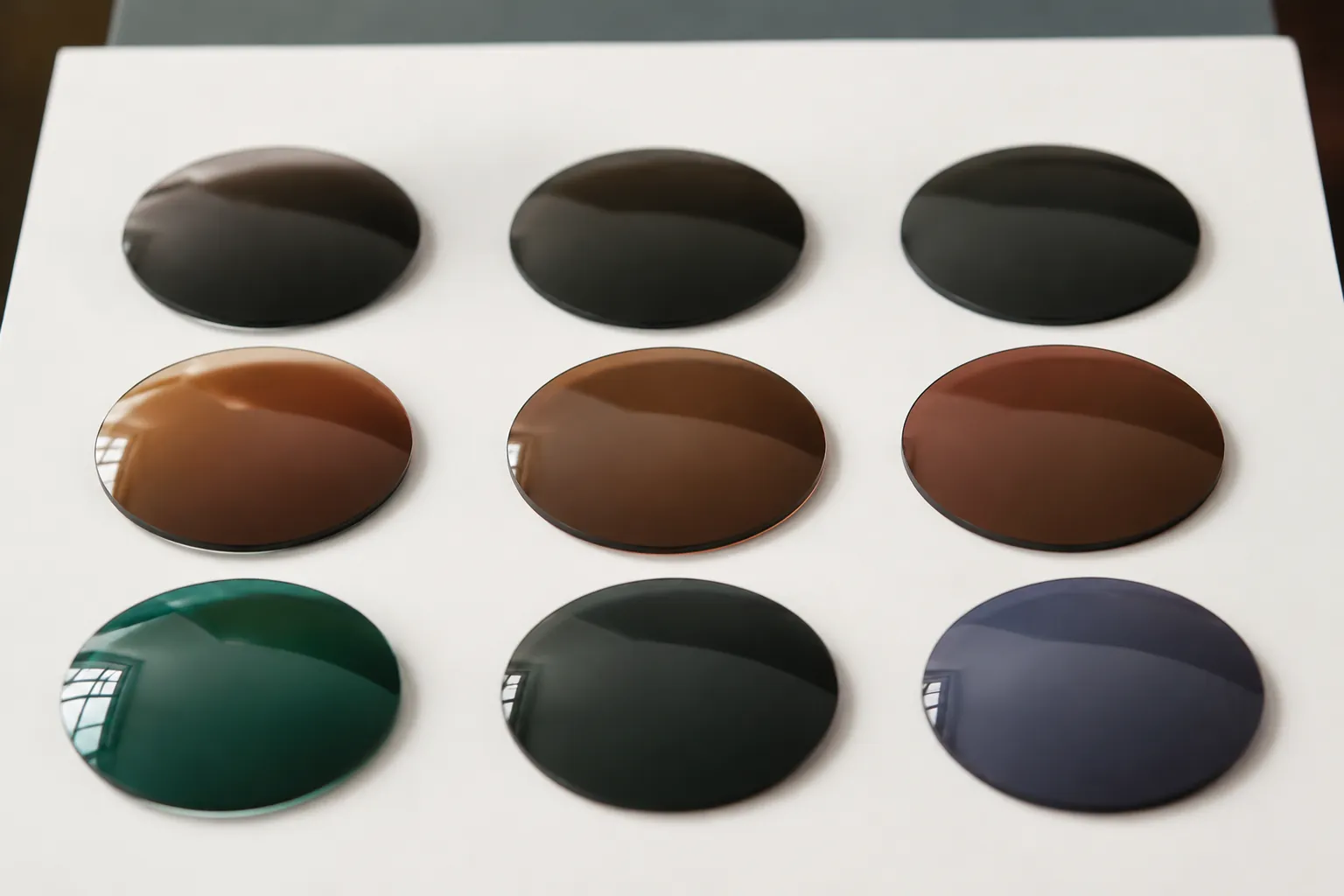
This guide is for brand owners, importers, retailers, and distributors deciding whether a polarized lens upgrade makes sense in their channel. The right answer changes with the selling model. A low-cost promo program, a mid-tier fashion launch, and a premium outdoor line do not carry the same margin structure, complaint risk, or warranty exposure. Start there. Then match lens material and construction to channel economics, likely field failures, compliance needs, and factory controls. Generic lens claims do not help much.
Start with channel economics, not lens claims
Buyers often start with a simple question: which lens material is best? For sourcing, that question is too vague to be useful. The better question is which lens construction fits your channel, price point, and likely complaint pattern.
Before discussing color, mirror, or logo details, screen polarized lens options through four channel filters:
- Price architecture: In low-ticket channels, small component cost changes can alter margin fast. In higher-ticket channels, a more expensive lens may be justified if it reduces complaints or supports the product position.
- Expected use and abuse: Heat, pocket storage, travel, sports use, sweat, salt, sunscreen, and repeated cleaning all affect lens performance over time.
- Return sensitivity: Marketplace sellers, chain retailers, and review-driven brands feel scratch, haze, distortion, and lens inconsistency complaints quickly.
- Brand positioning: Polarization alone does not make a product feel premium. Buyers notice optical consistency, cosmetic durability, coating quality, and how the lens looks after regular wear.
That is the frame for the decision. PC, TAC, and nylon can all work. The issue is fit. Which option gives you the lowest avoidable risk in the channel you actually sell through?
What really changes between PC, TAC, and nylon
All three lens types can be polarized. In production, they are not the same. They are processed differently, and they tend to fail in different ways.
PC polarized uses a polycarbonate lens base. It is common where impact resistance and low weight matter. The main variable is surface durability. Scratch performance depends heavily on hard-coat quality and process control, so two PC polarized lenses can perform very differently in use.
TAC polarized refers to a tri-acetate cellulose layered polarized lens structure used widely in sunglasses. It is common for a reason. The cost-to-performance balance works for many fashion and mid-market programs. The main risk is lamination quality. If bonding, curing, or edge finishing is weak, buyers may see warping, edge whitening, bubbling, or delamination over time.
Nylon polarized is often used in higher-performance sunglasses because it is lightweight and can deliver strong optical quality when processed well. It is usually chosen for premium active use, where comfort, clarity, and harder wear matter more. It also demands tighter process control in shaping, fitting, and inspection. Buyers pay more and expect to see the difference.
At factory level, the workflow usually includes tint or coating control, cutting or shaping, edge finishing, beveling, fitting to frame curvature, polarization-axis verification, and final cosmetic and optical inspection. The main control points are straightforward:
- Lens thickness consistency: variation should be controlled so fit pressure stays balanced across left and right lenses.
- Bevel accuracy: poor bevel geometry can create stress, retention issues, or cosmetic marks after assembly, especially in wrapped frames.
- Polarization axis alignment: left-right mismatch is a reject condition because it affects user experience directly.
- Color and transmittance consistency: approved samples and bulk production should stay visually consistent within the agreed standard.
Material matters. Process discipline often matters more.
A buyer's comparison table: where each lens pays off
| Lens type | Typical channel fit | Main strength | Common risk | Relative cost position |
|---|---|---|---|---|
| PC polarized | Promotional, youth, sport entry level, value retail | Low weight, impact-oriented material, suitable for price-sensitive programs | Scratch performance depends heavily on hard coat; lower-grade builds may show cosmetic wear faster | Often the lowest of the three polarized options |
| TAC polarized | Fashion retail, DTC, department store mid-tier, travel retail | Balanced cost, commercially acceptable optics, widely used for private-label programs | Delamination, edge lift, or warping if lamination and heat control are weak | Usually mid-range |
| Nylon polarized | Outdoor specialty, marine, cycling, golf, driving-focused premium lines | Light weight, good optical potential, strong fit for active and premium positioning | Higher unit cost, tighter processing tolerance, more demanding QC expectations | Usually the highest |
As a sourcing rule, PC is often the quickest route to an entry price point. TAC is the commercial middle for many private-label sunglasses programs. Nylon is the upgrade that makes sense when the retail position, use case, or warranty exposure can support it.
Do not oversimplify pricing. Final cost changes with lens geometry, coatings, color treatment, frame construction, and order scale. Get quotes against the real specification, not a generic material label.
Failure modes that create returns
Most buyers do not lose money because a spec sheet looked imperfect. They lose money because a defect shows up after sale.
The most common return-driving issues are predictable:
- Scratch complaints: common when hard-coat performance is weak for the use case. This hits impulse, travel, and marketplace channels hard because users often store eyewear loosely.
- Delamination: commonly tied to poorly made layered polarized constructions. It often starts at the edge as whitening, bubbling, or rainbow-like visual change and gets worse with heat exposure.
- Warp or fit instability: poor shaping or bevel finishing can create stress in wrapped frames. Problems may appear after transport, storage, or repeated wear.
- Optical distortion: especially important for sports and driving use. A lens can look fine in a sales sample and still create user discomfort if the viewing area lacks consistency.
- Polarization mismatch: if left and right lenses are not aligned correctly, users may notice visual inconsistency on reflective surfaces and digital screens.
These failures do not matter equally in every channel. A low-cost seasonal program may tolerate limited cosmetic wear. A premium outdoor account usually will not. A marketplace seller may accept slightly lower margin, but not a spike in review-driven complaints about scratches, bubbles, or poor lens quality.
Practical rule: if the customer is likely to keep the product for extended use or wear it in heat, sport, or travel conditions, buy for failure prevention, not just first-sample appearance.
That is why first-sample approval is often not enough. In higher-risk programs, ask for a pre-production sample built from the actual bulk materials and finishing conditions, especially for wrapped frames, mirrored lenses, or more complex assemblies.
Compliance is the floor, not the upgrade
Buyers sometimes confuse a better lens material with better compliance. They are separate issues. PC, TAC, and nylon polarized lenses can all be used in compliant sunglasses if the product is designed, tested, and documented correctly.
For export programs, the practical checklist often includes:
- CE EN ISO 12312-1 for general sunglasses requirements and test framework
- ANSI Z80.3 for US non-prescription sunglass requirements
- AS/NZS 1067 for Australia and New Zealand requirements
- REACH for applicable chemical compliance obligations
- FDA registration where relevant to US documentation and supply-chain expectations
- ISO 9001 as a quality management system certification
- BSCI as a social compliance audit framework used by many buyers
Two checkpoints are often missed. First, ask whether the test reports or declarations apply to the exact lens and frame configuration you are buying, not just a similar style. Lens category, tint level, mirror coating, and intended use all matter. Second, confirm that later processing has not introduced problems. A compliant lens blank can still become a non-conforming finished product if assembly stress, coating damage, or production variation changes performance.
So treat compliance as a gate. Nothing more. It tells you whether the product has the documented basis to enter the target market. It does not tell you whether the lens is commercially right for your channel.
Lead time, MOQ, and process risk
Lens construction affects more than unit cost. It also affects approval discipline, production risk, and schedule reliability.
In practical sourcing terms:
- PC polarized is often the most straightforward choice for price-sensitive programs and lower-volume tests. It is commonly selected when launch speed and cost control matter more than premium optical positioning.
- TAC polarized generally fits mainstream private-label timelines, but buyers should allow time for lamination review, edge-finish checks, and consistency approval where mirrored or gradient effects are involved.
- Nylon polarized deserves stricter approval gates. If the target product is premium or performance-led, request a pre-production sample made from the final materials, coatings, and frame curvature before mass production begins.
Decoration adds handling steps and more defect risk. Common methods include:
- Pad printing: flexible and economical for temples, but it requires curing and abrasion checks.
- Laser engraving: more permanent on suitable surfaces, but still needs controlled placement and cosmetic review.
- Metal logo plates or inlays: useful for premium positioning, but they add assembly steps and more opportunities for late-stage cosmetic damage.
If the launch date is fixed, lock the lens construction early. Late changes to frame geometry, lens specification, or decoration increase the chance of delay and rework. Fast.
Channel-by-channel buying guidance
Most buyers do not need a materials lecture. They need a recommendation they can use.
Promotional, gift-with-purchase, festival, and value retail: Start with PC polarized when price pressure is high and expected service life is short to medium. Keep the frame construction simple. Do not position it as premium durability unless testing supports that claim.
Fashion DTC, chain retail, department store mid-tier: TAC polarized is often the strongest commercial answer. It supports a recognizable feature set at manageable cost. The real buying priority is stable lamination and consistent finishing in bulk production, not just an attractive prototype.
Outdoor specialty, marine, cycling, golf, and driving-focused lines: Nylon polarized is where the upgrade can make commercial sense. Users in these channels are more likely to notice clarity, comfort, and visual stability. Returns also cost more.
Kids and higher-impact use: PC polarized often makes sense because polycarbonate is impact-oriented. The caution is surface durability. If the use case is rough, ask directly about hard-coat performance and available test support.
Marketplace sellers: Choose the lens construction that lowers visible complaint risk. In many cases, that means comparing entry-level PC against a stable TAC option and deciding whether the extra cost is justified by lower review risk.
If channel fit is still unclear, run a controlled trial. Test one lens construction in the main channel and another in a smaller specialist channel. Real complaint and reorder data beats internal preference.
A simple checklist before you place the PO
Use this checklist before approving a polarized sunglasses order:
- Define the sales channel first: promo, fashion, active, specialty, marketplace, or mixed.
- Set the acceptable return profile: cosmetic scratches, optical complaints, delamination risk, or near-zero tolerance.
- Confirm the lens construction in writing: PC polarized, TAC polarized, or nylon polarized. Do not leave the specification as only "polarized."
- Request compliance documents for the exact configuration: target market, lens category, tint, and coating stack should match the product being ordered.
- Approve production-like samples: especially for nylon, wrapped sport frames, mirrored lenses, or high-heat channels.
- Review decoration interaction: pad printing, laser engraving, and logo hardware all add handling and cosmetic risk.
- Align quantity with commercial intent: pilot runs and bulk production should not be judged by the same cost expectations.
- Protect the timeline: once the lens and frame specification is approved, avoid late changes unless the schedule can absorb them.
The best lens is not the one with the most premium-sounding material name. It is the one that fits your channel's abuse pattern, complaint sensitivity, compliance needs, and retail structure. For many private-label brands, that means TAC. For hard-use premium channels, nylon may justify the higher cost. For value-driven programs, PC remains a practical option when the specification is controlled properly.
Have a custom sunglasses project in mind?
Send us your styles, target market and quantities and we will return a detailed quote with MOQ, lead time and a sample plan.
Get a QuoteWhy source this from Wenzhou with LumiShades
Wenzhou in Zhejiang Province is widely regarded as China’s eyewear manufacturing capital, producing a large share of the world’s sunglasses. That concentration matters to buyers: a deep local supply chain for acetate sheet, hinges, lens blanks, plating and packaging means shorter component lead times, easier color and material matching, and a workforce with decades of eyewear-specific skill. LumiShades has manufactured in this ecosystem since 2009, and our vertical integration — in-house injection molding, acetate cutting, CNC milling, lens tinting, decoration and quality control — means no part of your order is quietly subcontracted to a workshop you cannot audit.
For international buyers, that vertical control translates into accountability. When a single factory owns every step, defects are traced and fixed at source rather than bounced between vendors, and your specifications survive intact from first sample to bulk. We back this with 15+ years of experience, shipments to 60+ countries, more than 5 million pairs produced per year and a 98.5% on-time delivery rate. Our certifications — CE EN ISO 12312-1, FDA registration, ANSI Z80.3, AS/NZS 1067, REACH, ISO 9001 and BSCI audit — mean the compliance documentation your market requires already exists. Explore our manufacturing capabilities and quality control process to see how this works in practice.
Frequently asked questions
Is TAC polarized good enough for a mid-priced private label brand? Usually yes, if the supplier can show stable lamination quality and consistent bulk production. TAC is widely used in mid-priced sunglasses because it gives a workable balance of cost and performance. Before placing the order, ask for a production-like sample, confirm left-right visual consistency, review edge finishing, and request any available test or QC records tied to the actual style you are buying.
When should I pay extra for nylon polarized lenses? Pay extra for nylon when the channel is performance-led, premium, or sensitive to optical complaints. That usually includes outdoor specialty, cycling, marine, golf, and driving-focused products. The cost is easier to defend when the end user is likely to notice comfort and clarity during extended wear, and when the brand carries higher return costs or warranty expectations. Ask the supplier to quote nylon against the same frame and coating specification so you can compare the real cost impact.
Is PC polarized always the cheapest option? Often, but not always. Final cost depends on hard-coat quality, lens curvature, coatings, shaping complexity, and the frame it must fit. A low-spec PC lens may reduce the purchase price but create higher complaint rates if scratch resistance is weak for the intended channel. To assess it properly, ask for the exact lens stack, coating description, and side-by-side quotations for the same frame using PC, TAC, and nylon where feasible.
Can all three lens types meet export compliance requirements? Yes. Material alone does not determine compliance. PC, TAC, and nylon can all be used in compliant sunglasses if the final product is tested and documented correctly. For export programs, ask for documentation relevant to the target market, including CE EN ISO 12312-1, ANSI Z80.3, AS/NZS 1067, REACH, and any relevant FDA registration records. Also verify that the documents apply to the actual product configuration, including lens category, tint, coatings, and intended use.
How should I test a new lens construction before placing a larger order? Start with a representative sample, then move to a pre-production sample made with the actual bulk materials, final coatings, and final frame geometry. Review cosmetic quality, lens fit, left-right consistency, and visual performance under real use conditions such as outdoor light, heat exposure, and routine cleaning. If the channel is review-sensitive or the style is commercially important, track the first production run by lens construction and compare complaints, returns, and reorder feedback before scaling the next order.
Ready to start?
Explore our square sunglasses or request a quote — our sales team replies within 12 hours.
Request a Quote