
OEM vs ODM Sunglasses: Cut Launch Risk Fast
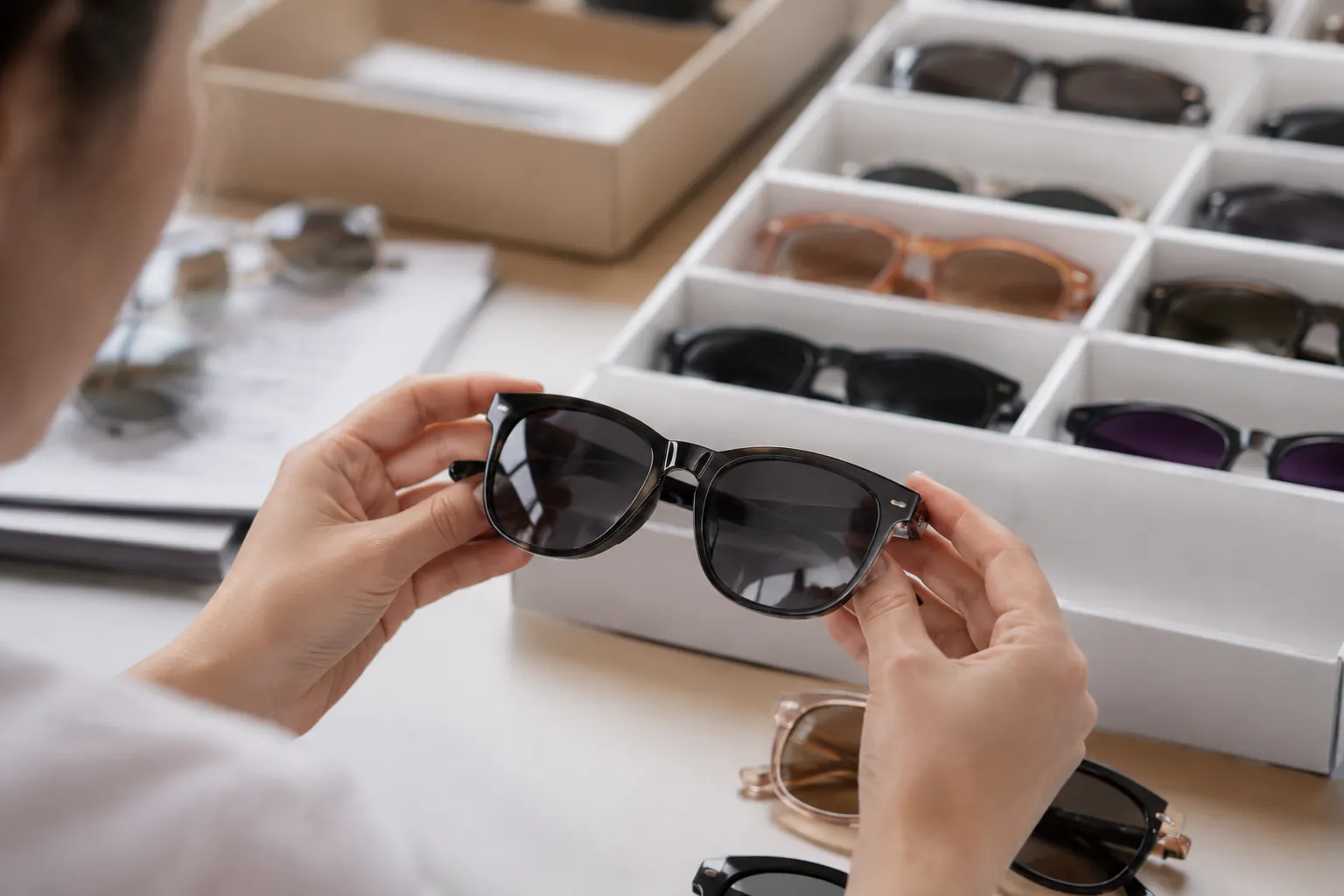
This guide is for brand owners, importers, and retail buyers choosing a sourcing model before sampling starts. The choice is not just custom versus ready-made. It is a risk decision: speed or differentiation, lower upfront cost or tighter engineering control, a faster first order or a stronger reorder system. Pick the wrong model and you lose time, margin, or both. The practical question is simple: which risks can you live with now, and which ones must be removed before bulk production?
Start with the risk that matters most
Many sourcing mistakes begin with mood boards instead of operating limits. Wrong order. OEM and ODM can both work for a strong sunglass program, but they fail in different ways and at different stages.
ODM is often the safer choice when your biggest risk is timing, low opening volume, or spending on development before demand is proven. You select an existing frame platform and customize the elements that usually do not require re-engineering: frame color, lens tint, logo, case, cleaning cloth, hangtag, barcode label, and carton marks. The mold, hinge layout, lens groove, and basic fit profile already exist. That removes unknowns. Sampling is usually faster than a full custom build, and MOQ is often lower, though actual timing and MOQ still depend on the supplier, material, and decoration method.
OEM is usually the better fit when your larger risk is long-term margin pressure, weak shelf differentiation, or poor control over repeat orders. In OEM, the frame is built from your drawing, reference sample, or tech pack. That may mean a new injection mold, a custom acetate cutting file, a specific hinge, unique metal trim, or controlled dimensional changes. You get more control over eye size, bridge width, temple profile, lens shape, logo recess, and finishing details. But you also take on more engineering risk. If the spec is vague, every missing dimension or undefined finish can trigger another sample round.
Use a simple screen. If your deadline is fixed and close, lean ODM. If your brand needs a shape that cannot pass as catalog product, lean OEM. If you are still unsure, ask one blunt question: what hurts more, launching late or launching with a frame competitors can copy easily?
Head-to-head: speed, cost, differentiation, control
Here are the trade-offs that usually matter most in development and production.
| Factor | ODM | OEM |
|---|---|---|
| Development speed | Usually faster because the base frame architecture already exists and needs less engineering review. | Usually slower because new geometry, engineering review, and approval rounds must be completed. |
| Sample cycle | Often shorter when changes are limited to color, lens tint, logo, or packaging. | Often longer because prototype review may be followed by multiple revisions before approval. |
| Tooling and setup | Often low or none when using an existing mold or established acetate platform. | Often higher when new mold work, custom hardware, or exclusive cutting files are required. |
| MOQ fit | Usually better for first launches and demand testing, subject to the supplier's program and material choice. | Usually better when projected volume can justify development effort and setup cost. |
| Unit economics | Often lower at entry volume because development cost is already absorbed into the existing platform. | Often less favorable on short runs, but can improve as volume and repeat orders increase. |
| Differentiation | Moderate. Branding, colorways, and packaging can stand out, but frame architecture is shared. | High. Shape, dimensions, temple construction, trim details, and silhouette can be controlled more closely. |
| Reorder control | Acceptable if the same base platform remains active and unchanged. | Potentially stronger if the approved drawing, golden sample, tooling status, and QC checkpoints are documented and frozen. |
| Compliance risk | Often lower if the frame-lens configuration already matches a tested and documented build for the target market. | Usually higher during development because changes to lens material, tint, coating, frame material, or construction may require new review or testing. |
For many buyers, the practical route is to start with ODM for market testing, then move proven styles into OEM after repeat demand is clear.
What changes on the factory floor
The sourcing model changes what the factory must control every day. In a vertically integrated plant with in-house injection molding, acetate processing, lens tinting, decoration, and QC, the OEM-versus-ODM gap is often easier to manage because fewer steps rely on outside vendors. That matters when corrections are needed fast.
With ODM injection frames, the work is mostly controlled customization, not new geometry development. The mold already exists. The factory adjusts resin color, lens tint, mirror finish, logo process, and packaging. If the frame platform has already passed routine assembly and fit checks, risk is usually lower because hinge alignment, lens seating, and wear balance are already known. Planning is easier too. Material use and process flow are more predictable.
With OEM, every undefined detail can slow the program. Expect the factory to ask for eye size, bridge width, temple length, lens base curve, front curve, hinge position, wire-core requirements where relevant, logo size, logo placement tolerance, lens thickness target, and finish standard. Small changes matter. A minor shift in bridge opening or temple flare can change fit. A logo recess that is too shallow may not survive polishing. A thicker acetate endpiece may improve hand feel but also affect polishing time and hinge seating.
Material choice changes risk as well. Injection materials such as PC or TR90 are common in volume production and can deliver good dimensional consistency when processing is controlled, but color matching still needs discipline across resin lots. Surface gloss, transparency, and visible marks can drift if process control is weak. Acetate can give richer lamination effects and a more premium feel, but it adds its own variables: sheet thickness variation, polishing loss, lamination direction, and post-tumbling warpage. If the collection depends on a precise premium look, OEM acetate may justify the extra work. If repeatability and speed matter more, an ODM frame on a proven injection platform is often the safer choice.
The real cost is the revision loop
Buyers often fixate on ex-works price and miss the bigger cost. It is not the sample fee. It is the revision loop.
In OEM, delays usually come from a short list of avoidable gaps:
- Fit intent is not defined: The drawing may look right, but temple spread, nose contact, wrap angle, or overall balance does not match the target wearer.
- Decoration is approved visually, not technically: Pad print, laser engraving, foil logo, or inset metal plate is chosen without position tolerance, adhesion expectation, or abrasion requirement.
- Lens specification is too loose: A color name is not enough. The factory needs a retained sample, lens chip, or other measurable reference, plus the intended market requirement.
- Hardware choices are added late: A custom hinge, screw finish, or nose pad assembly can affect sourcing, assembly, and validation.
- Packaging starts after frame approval: Then the inner tray, folding case, barcode sticker, or carton dimensions begin holding up shipment.
ODM removes many of these variables because the frame architecture is already fixed. That is why it is often the lower-risk route for a first collection, a capsule drop, or a retail test order. The trade-off is lower design exclusivity, not lower product quality.
If you choose OEM, freeze the program properly. Lock the approved drawing. Retain a golden sample. Record the measurable details that must hold in bulk: frame dimensions and tolerances, lens reference, temple logo position, hinge type, finish standard, packaging pack-out, and any accepted deviation. Clear approvals prevent arguments later.
Specs that prevent production mistakes
Specificity turns a sunglass idea into a repeatable production file. Buyers do not need to overbuild every note. They do need to remove avoidable ambiguity.
| Spec Item | Typical Control Point | Why It Matters |
|---|---|---|
| Frame width and temple length | Record target dimensions and acceptable tolerance in the tech pack or approval sheet. | Fit drift appears quickly on reorders if dimensions are approved only by photo or verbal comment. |
| Lens tint and category | Approve against a physical lens chip, retained sample, or clearly identified standard reference. | Small tint differences can affect appearance, compliance alignment, and customer acceptance. |
| Logo method and position | Define decoration process, size, location, and placement tolerance before bulk. | Pad print, laser, foil, and metal plates behave differently in production and wear testing. |
| Hinge and hardware | Lock hinge type, screw finish, and opening-closing feel during sample approval. | Late hardware substitution can create assembly inconsistency and service issues. |
| Packaging pack-out | Confirm case fit, cloth size, barcode placement, carton quantity, and ship mark layout. | Packaging errors can delay loading even when the sunglasses themselves are finished. |
Decoration method deserves extra attention because buyers often treat it as styling when it is really a production variable. Pad printing is common in ODM because it is fast and cost-effective, but it has limits on abrasion resistance and line detail. Laser engraving can work well on certain temple and lens materials, but contrast varies by substrate. Metal logo plates can create a more premium look, but they add insertion or bonding steps and tighter placement control. Foil stamping can suit cases and accessories, though consistency still depends on substrate and process control.
Define these points early and approvals move faster. Leave them open and the factory fills the gaps. That usually comes back as revision time.
Compliance is where shortcuts get expensive
Sunglasses are regulated in many markets, and the sourcing model affects how hard compliance is to manage. This is where too many buyers rely on broad assumptions.
For Europe, CE EN ISO 12312-1 is the main reference for general-purpose sunglasses. In the United States, ANSI Z80.3 is commonly cited, and some buyers also ask whether the supplier holds FDA registration where relevant to the product program and U.S. import setup. Australia and New Zealand buyers often look to AS/NZS 1067. Chemical compliance may also matter, especially REACH for materials, coatings, and surface treatments. At the factory-management level, ISO 9001 and BSCI may signal quality-system and social-audit status, but they are not substitutes for product compliance.
The working difference is straightforward. With ODM, if you stay close to a frame-lens build that has already been tested and documented, the validation path is usually easier. Keep the same lens material, lens category, frame material family, and construction method, and the chance of a late compliance surprise is lower. Change the lens material, mirror coating, tint depth, frame material, or lens thickness, and you should confirm whether the existing report still covers the exact build you plan to ship.
With OEM, assume testing, report review, or careful report mapping must be checked again unless the factory can clearly document coverage for the final configuration. Ask what the report actually references: lens category, lens material, frame construction, intended market, and product type. Do not rely on a generic certificate list or company brochure.
Also, compliance is not just paperwork. UV performance, tint consistency, lens mounting stability, labeling, and build consistency must match the approved production version. That is one reason ODM can be safer for a launch with a tight retail date. Fewer variables. Fewer late surprises. OEM can still be the right call, but the documentation path needs the same discipline as the design path.
A simple buying path for first orders and reorders
If you are making a live sourcing decision, use a disciplined sequence. It removes a lot of avoidable risk.
- Set the commercial target first. Define launch date, target landed cost, first-order quantity, and realistic reorder quantity before discussing styling options.
- Choose the model based on actual demand confidence. If you are testing demand and need lower commitment, ODM is usually the safer route. If you expect meaningful repeat volume and need more design control, OEM becomes easier to justify.
- Lock the critical written spec. Confirm dimensions, material, lens reference, logo method, hinge type, case style, barcode, and carton pack-out in writing, not only in images.
- Use the sample cycle properly. Review fit, lens appearance, branding placement, and packaging together instead of approving one issue at a time across multiple rounds.
- Validate the bulk calendar honestly. A production lead time is only reliable after frame, lens, decoration, packaging, and compliance points are actually approved.
- Protect the reorder file. Keep a master spec sheet, approved sample, carton layout, compliance file, and any deviation record so the next order can be matched against a fixed baseline.
This sequence matters because the first order is only part of the test. The real test is the second and third orders. Do they arrive with the same fit, finish, lens appearance, labeling, and pack-out, or has drift started?
Use ODM to learn. Use OEM to defend margin
If you want the shortest rule, here it is: ODM usually lowers launch risk on an uncertain collection, while OEM usually lowers copycat and margin risk after a style proves demand.
That leads to a sensible two-stage strategy. Start with ODM on a stable frame platform to test colorways, lens tints, branding response, and fit acceptance in the market. Keep opening quantities disciplined. Watch which SKUs reorder, which price points hold, and which fit profiles generate fewer returns or complaints. Then move the winners into OEM if sales justify owning the shape, tightening fit control, or building a stronger long-term sourcing file.
OEM is also the smarter risk choice if your brand depends on a recognizable silhouette, your customer base needs a specific fit profile, or your retail channel requires year-over-year continuity. In those cases, investing in controlled geometry, a documented process route, and a tighter approval file can reduce long-term commercial risk more than it adds short-term development cost.
That is better portfolio management. Do not pay for originality before demand is proven. Do not stay too generic once the market shows which designs are worth protecting.
Practical rule: If the next collection is mainly a market test, buy speed. If it is a proven style you plan to reorder aggressively, buy control.
That is the real OEM-versus-ODM decision. Not which label sounds better on a supplier list. Which risk are you paying to remove right now?
Have a custom sunglasses project in mind?
Send us your styles, target market and quantities and we will return a detailed quote with MOQ, lead time and a sample plan.
Get a QuoteWhy source this from Wenzhou with LumiShades
Wenzhou in Zhejiang Province is widely regarded as China’s eyewear manufacturing capital, producing a large share of the world’s sunglasses. That concentration matters to buyers: a deep local supply chain for acetate sheet, hinges, lens blanks, plating and packaging means shorter component lead times, easier color and material matching, and a workforce with decades of eyewear-specific skill. LumiShades has manufactured in this ecosystem since 2009, and our vertical integration — in-house injection molding, acetate cutting, CNC milling, lens tinting, decoration and quality control — means no part of your order is quietly subcontracted to a workshop you cannot audit.
For international buyers, that vertical control translates into accountability. When a single factory owns every step, defects are traced and fixed at source rather than bounced between vendors, and your specifications survive intact from first sample to bulk. We back this with 15+ years of experience, shipments to 60+ countries, more than 5 million pairs produced per year and a 98.5% on-time delivery rate. Our certifications — CE EN ISO 12312-1, FDA registration, ANSI Z80.3, AS/NZS 1067, REACH, ISO 9001 and BSCI audit — mean the compliance documentation your market requires already exists. Explore our manufacturing capabilities and quality control process to see how this works in practice.
Frequently asked questions
Is ODM always cheaper than OEM? Not always, but ODM is often less expensive at low volume because the factory is using an existing frame platform and usually avoiding new tooling or major engineering work. To compare properly, ask the supplier to separate unit price from one-time costs such as tooling, prototype charges, logo plate development, and special packaging setup. Then model total cost across both the first order and expected reorders. If a style is likely to repeat at higher volume, OEM may become more competitive over time.
Can I add my logo and custom packaging to an ODM frame? Usually yes. Common ODM changes include temple or lens logo application, lens tint changes, mirror coatings, microfiber cloths, pouches or hard cases, hangtags, barcode labels, warning labels, and export carton marks. Ask the supplier for the exact customization menu for the frame you selected, including artwork format requirements, decoration limits, added lead time, and whether the change affects existing compliance documentation.
What order size makes OEM worth considering? There is no universal cutoff because the answer depends on tooling cost, material, complexity, and your expected reorder volume. OEM is generally easier to justify when the style is strategically important, needs a custom fit or exclusive shape, or is expected to repeat long enough to recover development cost. To decide, ask the supplier for both ODM and OEM scenarios and compare total first-order cost, expected reorder cost, sample timeline, and any compliance implications. If demand is still uncertain, ODM is usually the lower-risk starting point.
How should I check whether compliance documents really apply to my product? Match the report or declaration to the exact build you plan to ship. Check frame material, lens material, lens category or tint classification, coatings, frame construction, labeling, and target market. Ask for the report number, test standard, issue date, product description, and photos or references that tie the report to your SKU. If you change the lens, coating, tint, material, or structure, ask the supplier in writing whether the existing documentation still applies or whether new testing is required.
How do I reduce reorder problems with either model? Keep a controlled approval file. At minimum, retain an approved master sample, final spec sheet, packaging layout, carton marks, and the relevant compliance documents. Record dimensions, material, lens reference, logo method and position, hardware, finish standard, labeling, and any accepted deviations from the original sample. For each reorder, send the previous approved file back to the supplier and ask them to confirm in writing that no material, tooling, logo process, or packaging change has been made before production starts.
Ready to start?
Explore our shield & oversized sunglasses or request a quote — our sales team replies within 12 hours.
Request a Quote