
What to Confirm in a Sunglasses PO Before Production
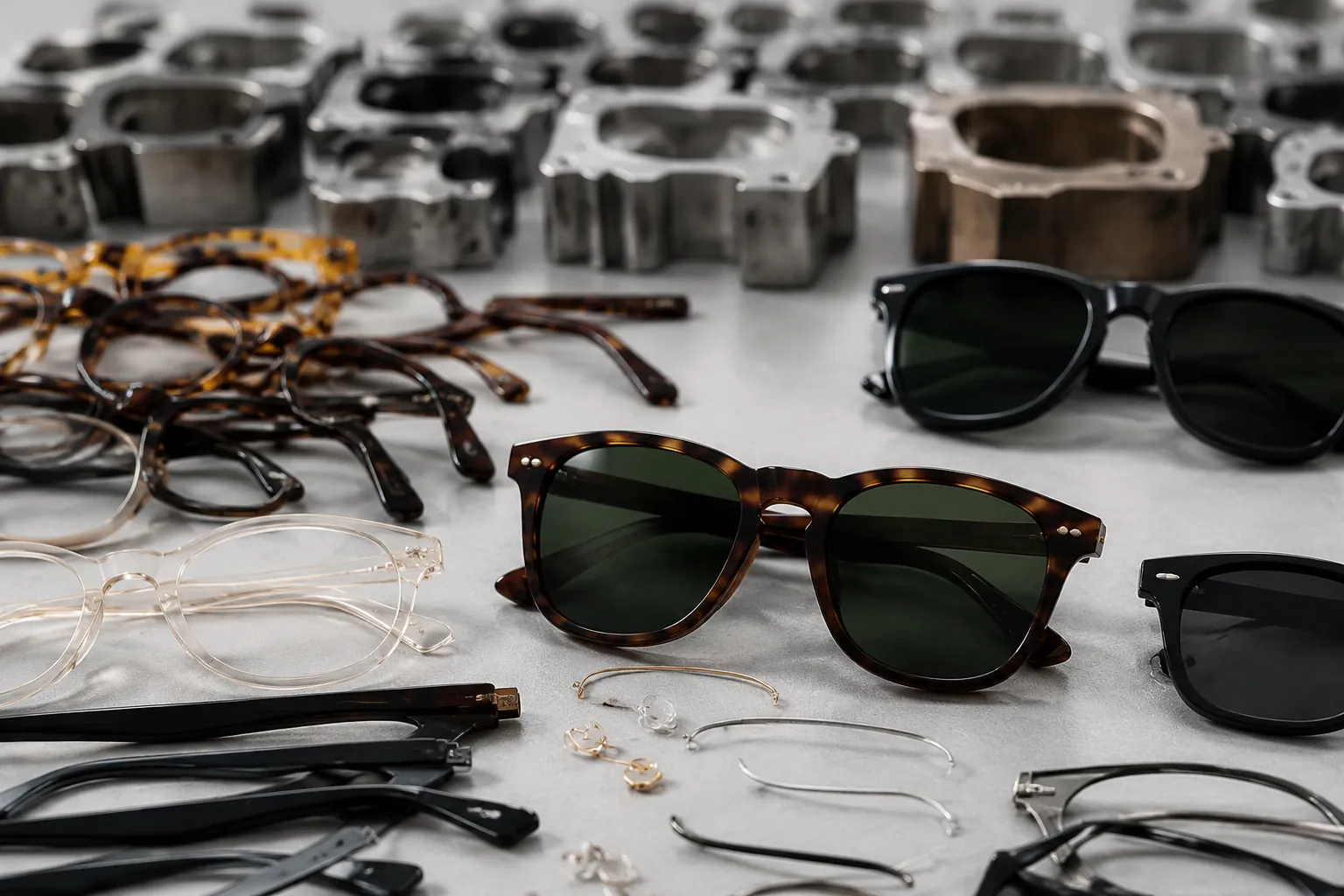
This guide is for brand owners, importers, distributors, and retail buyers placing custom sunglasses orders in China or other sourcing markets. The aim is simple: confirm the commercial and technical terms before the factory commits to frames, lenses, hinges, packaging, and branded parts. A weak purchase order creates avoidable disputes over color variation, logo placement, shipment delays, failed testing, and replacement freight. A strong one does the opposite. It gives both buyer and supplier a clear production standard, not just a quote and a sample photo.
Start with a line-by-line product definition
The first job of the PO is to state exactly what the factory is making. Do not rely on a rendering, chat photo, or model name alone. Those references can support the file set, but they should not control bulk production by themselves.
For each SKU, attach a specification sheet and identify the approved reference sample by sample code and revision date. If the program includes multiple frame colors, lens colors, or packaging versions, list each one separately. A black frame with smoke TAC polarized lenses is a different SKU from a tortoise frame with brown gradient PC lenses, even if the frame shape is the same.
- Frame material: injected PC, TR90, stainless steel, alloy, or acetate sheet with stated thickness where relevant
- Lens material and finish: PC, TAC polarized, nylon, CR-39, mirrored, gradient, hard coat, hydrophobic coat if used
- Hardware: hinge type, screw size, spring hinge yes or no, nose pad material if metal frame
- Decoration: pad print, laser engraving, heat transfer, metal logo plate, foil or hot stamp on packaging
- Critical dimensions: eye size, bridge, temple length, overall front width, lens base curve if relevant
- Packaging: polybag, microfiber pouch, folding box, barcode label, hangtag, master carton packout
Use measurable dimensions wherever fit, appearance, or packout matters. For example, state front width at 145.0 mm plus or minus 1.0 mm, temple length at 145.0 mm plus or minus 1.5 mm, and logo position 12.0 mm from hinge centerline with a tolerance of plus or minus 0.5 mm. If the document only says match sample, the acceptance standard is too loose.
Be direct about visual priorities. Acetate cutting and CNC milling can produce natural pattern variation because the sheet itself is not uniform. Injection colors can also shift slightly between resin lots, especially on translucent or pastel shades. If color consistency is commercially sensitive, require a sealed approval sample and, where practical, a signed color reference for visual comparison.
The PO should also identify the process route where it affects outcome or lead time. Injection molding, acetate cutting, tumbling, hand polishing, lens tinting, pad printing, and final assembly all affect repeatability, scrap risk, and scheduling. A good PO ties the product definition to the process, not just to a broad description of the finished item.
Lock pricing, quantity breaks, and price-change triggers
Price disputes usually start with a quote that was treated as fixed even though it was based on assumptions. Put those assumptions in writing.
State the minimum order quantity by design and by color. If the supplier quotes from 50 pairs per design, confirm whether that means 50 total pairs in one color or 50 pairs split across two colors with separate print setups. Also state whether spare units are included. Buyers often expect extras for replacements. Suppliers often do not include them unless the order terms say so.
| Order volume | Typical pricing logic | What must be fixed in writing |
|---|---|---|
| 50 pairs/design | Highest unit cost because setup, decoration, and carton prep are spread over very few units | Approved sample version, exact logo method, simple or retail packaging, and whether mixed colors are allowed |
| 300 pairs/design | Better material utilization and less setup cost per pair | Color ratio by SKU, lens construction, barcode labeling, and inspection standard |
| 1000 pairs/design | Lower unit cost through more stable production and purchasing efficiency | Spare quantity, backup parts, split-shipment rules, and validity period of the quoted price |
| 5000+ pairs | Volume pricing may improve further if the specification remains stable | Raw material lock period, freight assumptions, payment milestones, and rules for buyer-driven changes |
If the discussion includes a target such as about $2.10 per pair, define the exact basis for that number: quantity tier, lens material, packaging format, decoration count, and shipping term. A quote based on bulk polybag packing will not support the same price as a pack with microfiber pouch, printed box, barcode sticker, hangtag, and metal logo plate.
Also define what can trigger a re-quote before deposit. Common variables include resin cost, acetate sheet cost, TAC lens cost, mirrored coating surcharge, packaging changes, and freight-driven packing changes. A practical clause states that the quoted price is valid for a stated number of calendar days and becomes fixed after PO confirmation and deposit, unless the buyer changes the specification, packaging, artwork, or quantity tier.
Set measurable tolerances and inspection rules
Terms such as good quality, export quality, or premium finish are not enough. They sound useful. They are not. The PO should specify measurable tolerances for appearance, dimensions, and function, then tie those tolerances to an inspection method.
For most sunglasses programs, buyers should define at least the following:
- Key dimensions: front width plus or minus 1.0 mm, temple length plus or minus 1.5 mm, bridge width plus or minus 0.5 mm
- Logo placement: plus or minus 0.5 mm from the agreed datum point on temple or lens
- Lens color: visual match to sealed sample under defined lighting, with no left-right mismatch within a pair
- Surface quality: no scratches in main viewing area, no bubbles, pits, or dents visible at the agreed inspection distance
- Assembly function: temples open and close smoothly, hinge screws tightened, left-right alignment within the agreed standard
Use a practical cosmetic standard for visual inspection, such as inspection at 30 to 40 cm under daylight-equivalent lighting for a defined number of seconds per zone. Then define what is rejectable. For example, a lens scratch in the main viewing area is typically a major defect. A slight polishing mark on the inside of the temple may be minor if it is not visible in normal wear and stays within the written standard.
Material behavior matters. Molded PC frames can show gate marks or parting lines. TR90 flexes differently from rigid PC. Acetate pattern variation is inherent to the sheet, and edge appearance can shift slightly during polishing. The PO should separate normal process traits from unacceptable workmanship. Leave that line fuzzy, and inspectors will make the call themselves.
State whether AQL inspection applies and identify the standard and levels in the agreement. Many buyers use ANSI/ASQ Z1.4 style sampling and define critical defects, major defects, and minor defects in the quality file. Wrong logo, wrong lens category marking, missing required UV-related labeling, or a cracked lens should be classified in writing before production. If defect grading is not defined in advance, the buyer and supplier can inspect the same lot and still disagree.
Write remake, rework, and claim rules early
Many weak agreements spend pages on price and almost nothing on what happens when the shipment misses the approved standard. That is backward. Remedy terms should be set before production starts.
Separate outcomes into remake, rework, discount, and rejection, and state who pays in each case. Remake usually applies to wrong material, wrong branding, failed compliance testing, severe color deviation from the approved standard, or structural defects that cannot be repaired. Rework fits correctable issues such as missing labels, loose screws, or incorrect carton marks. Discount should be used only when the goods remain saleable and both parties confirm the adjustment in writing. Rejection applies when the goods are not commercially acceptable for the destination market or do not meet the agreed specification.
State the evidence required to open a claim. A workable file usually includes a third-party pre-shipment inspection report if used, the buyer's arrival inspection records, dated photos or videos, carton traceability, and the retained approved sample or sealed standard. Also define the notice period. Visible defects and quantity shortages are commonly reported shortly after receipt. Hidden defects and compliance failures usually need a separate, longer notice period because they may not be clear at arrival.
Do not leave responsibility open-ended. A practical clause states that if goods fail the approved sample, written tolerance, or named test standard for reasons caused by the supplier, the supplier bears the reasonable cost of rework or remake, replacement freight, and retest where applicable. If the buyer changes artwork, material, packaging, or labeling after approval, responsibility should shift for issues caused by that change.
Replacement timing also needs to be written down. If normal bulk lead time is 25 to 35 days, the agreement can set a shorter remake window for confirmed supplier-responsible defects, subject to material availability. Without a deadline, even an accepted claim can still miss the selling season.
Define lead-time triggers and shipment consequences
Lead time means very little if the start point is unclear. Does the 25 to 35 day bulk cycle start from deposit, from sample approval, from packaging artwork approval, or from final sign-off on all colors and labels? Write the trigger into the PO.
Custom eyewear usually moves through several gated steps: sample development, buyer comments, revised sample if needed, artwork approval, packaging approval, deposit, then bulk production. Problems start when only part of the program is approved. The buyer may approve the frame but still be changing the temple logo or folding box, while the supplier says full production could not start. Both can be technically right. That is the problem.
| Milestone | Typical timing | Commercial note |
|---|---|---|
| Sample completion | 7-10 days | Buyer confirms fit, color, lens, branding, and packaging direction |
| Approval freeze | 1-3 days after sample review | All comments consolidated into one approved revision to avoid moving targets |
| Bulk start | After deposit and all approvals | Start date should be written in the PO, not inferred from message history |
| Bulk completion | 25-35 days | State whether this means ex-works complete, packed, or ready for pickup |
| Shipment window | Named date range | Include split-shipment rules and who pays extra freight if delay occurs |
If delivery timing matters to a promotion, seasonal launch, or retailer intake date, say so clearly and include the target date in the commercial terms. Then define the consequence for missing it. Reasonable options include a discount on delayed units, the buyer's right to cancel the delayed balance, or expedited shipping at the responsible party's cost. Keep the remedy specific. Broad penalty language often gets argued over and ignored.
Tie compliance and labeling to the destination market
Many buyers write comply with international standards and stop there. That is too vague for sunglasses. Compliance depends on the destination market, lens category, UV claim, labeling content, and sometimes the exact material and coating combination used in the finished SKU.
If the product is sold in Europe, specify compliance to CE EN ISO 12312-1 and define the required labeling and user information for the program. For the United States, state the agreed product standard, such as ANSI Z80.3 where used, and identify any applicable FDA registration obligations for the manufacturer or seller where relevant to the transaction. For Australia and New Zealand, specify AS/NZS 1067. If chemical restrictions matter, name REACH in the PO and attach any substance-related requirements that apply to the materials in scope.
Do not confuse management-system or social-audit credentials with product compliance. ISO 9001 and BSCI may be useful indicators of factory systems or audit status, but they do not prove that a specific sunglasses SKU meets optical, UV, labeling, impact, or chemical requirements.
The PO should also state who pays for testing and when it happens. For a new design, new lens supplier, or new coating combination, buyers often require laboratory testing on representative samples before shipment and, in some cases, before full bulk release. This matters most where UV performance, lens category, polarization claim, nickel-related concerns on metal parts, or REACH-related material controls are commercially sensitive.
Most important, compliance must attach to the actual approved specification. If testing was performed on smoke TAC polarized lenses with a matte black PC frame, do not assume the result automatically covers a mirrored PC lens version or a different coating stack. Change the material, tint, coating, or labeling, and the old test evidence may no longer match the shipped product.
Protect artwork, tooling, and confidential files
Private label eyewear often starts with logo printing and then expands into custom temple shapes, metal trims, exclusive colorways, or buyer-funded molds. If ownership and use rights are not stated early, disputes tend to show up later.
Your agreement should define ownership of logos, packaging artwork, CAD files supplied by the buyer, custom molds paid for by the buyer, custom metal logo plates, and any tooling modification made specifically for the project. If the buyer pays for a mold or trim tool, the PO should state whether the tool may be used for any third party, whether storage fees apply, and whether the tool will be returned, transferred, or destroyed on request at the end of the project.
Add a confidentiality clause that covers design drawings, commercial terms, packaging files, target retail channel information, and sales forecasts if those are being shared. It should also prohibit unauthorized overruns, seconds, or production copies bearing the buyer's brand, whether sold online, offline, or through gray-market channels.
Artwork control deserves its own wording. List file names or revision codes, approval dates, print color references, and exact placement by SKU. This matters even more when the supplier handles pad printing, laser engraving, foil stamping, or metal logo plate application in-house, because multiple artwork files may exist at the same time and weak version control can result in the wrong one being used in production.
Use a pre-production checklist as the release gate
Before deposit release or full production start, issue one short checklist and have both sides confirm it. This is not paperwork for its own sake. It is the last chance to catch contradictions between the quote, the approved sample, the packaging file, the inspection rule, and the PO.
Pre-production checklist: approved sample code and date, final SKU list, color split by quantity, unit price by tier, packaging spec, barcode and carton marks, compliance standard by market, inspection method and AQL, key tolerances, bulk lead-time start trigger, shipment window, remake responsibility, payment terms, and tooling or IP ownership.
If even one of those items is still open, production should not start. Suppliers need stable instructions too. A clean agreement speeds decisions across molding, CNC cutting, lens production, decoration, assembly, packing, and final QC.
That is the practical standard: not a long generic legal document, but a purchase agreement tied to the actual sunglasses being bought and the real risks in the order. If the PO clearly defines specs, tolerances, cost assumptions, lead-time triggers, compliance duties, and remedy rules, both sides have a workable playbook before bulk funds are committed.
Have a custom sunglasses project in mind?
Send us your styles, target market and quantities and we will return a detailed quote with MOQ, lead time and a sample plan.
Get a QuoteWhy source this from Wenzhou with LumiShades
Wenzhou in Zhejiang Province is widely regarded as China’s eyewear manufacturing capital, producing a large share of the world’s sunglasses. That concentration matters to buyers: a deep local supply chain for acetate sheet, hinges, lens blanks, plating and packaging means shorter component lead times, easier color and material matching, and a workforce with decades of eyewear-specific skill. LumiShades has manufactured in this ecosystem since 2009, and our vertical integration — in-house injection molding, acetate cutting, CNC milling, lens tinting, decoration and quality control — means no part of your order is quietly subcontracted to a workshop you cannot audit.
For international buyers, that vertical control translates into accountability. When a single factory owns every step, defects are traced and fixed at source rather than bounced between vendors, and your specifications survive intact from first sample to bulk. We back this with 15+ years of experience, shipments to 60+ countries, more than 5 million pairs produced per year and a 98.5% on-time delivery rate. Our certifications — CE EN ISO 12312-1, FDA registration, ANSI Z80.3, AS/NZS 1067, REACH, ISO 9001 and BSCI audit — mean the compliance documentation your market requires already exists. Explore our manufacturing capabilities and quality control process to see how this works in practice.
Frequently asked questions
Should the purchase agreement follow the sample or the written spec if they conflict? State an order of precedence in the PO before approval. A practical hierarchy is written specification first, sealed approval sample second, and artwork files third. Then cross-check the sample code, revision date, and artwork revision against the PO before deposit. If a conflict is found later, issue a written revision instead of relying on email interpretation.
How should I handle normal color variation on acetate or injected frames? Define the acceptance method by material. For acetate, allow only normal sheet-pattern variation and approve a sealed sample that shows the acceptable visual range. For injected colors, use the approved production sample as the visual standard and require confirmation if a resin lot change causes a visible shift. If color consistency is critical, ask the supplier to submit a pre-production color confirmation sample before the full run starts and do not approve bulk against a generic rendering.
Who should pay for third-party lab testing? Write the rule into the PO by test stage. A common structure is: buyer pays initial qualification testing for a new style or new material combination; supplier pays retest cost if failure is caused by deviation from the approved specification, labeling, or promised compliance basis. Also state which sample will be tested, which lab report format is acceptable, and whether shipment can proceed before test clearance is issued.
What is a reasonable claim period after receiving the goods? Use separate notice periods for different claim types. Visible defects, quantity shortages, and carton marking errors are commonly checked soon after receipt, so define a short arrival-inspection window and require photos plus carton references. Hidden defects, functional failures, or compliance issues need a longer written claim period because they may appear only after unpacking, testing, or market review. The key point is not just the number of days. The PO should also state the timing, evidence required, and remedy path for each claim type.
Can I stop the factory from using my custom mold or logo plate for other customers? Yes, but only if the agreement says so clearly. State who owns the mold or logo plate, whether third-party use is prohibited, how the tool will be identified, who pays storage or transfer cost, and what happens when the project ends. If exclusivity matters, add a clause that the supplier may not use the tool, artwork, or branded components for any other customer without the buyer's prior written consent.
Ready to start?
Explore our shield & oversized sunglasses or request a quote — our sales team replies within 12 hours.
Request a Quote