
Cut Custom Sunglasses Cost Without Looking Cheap
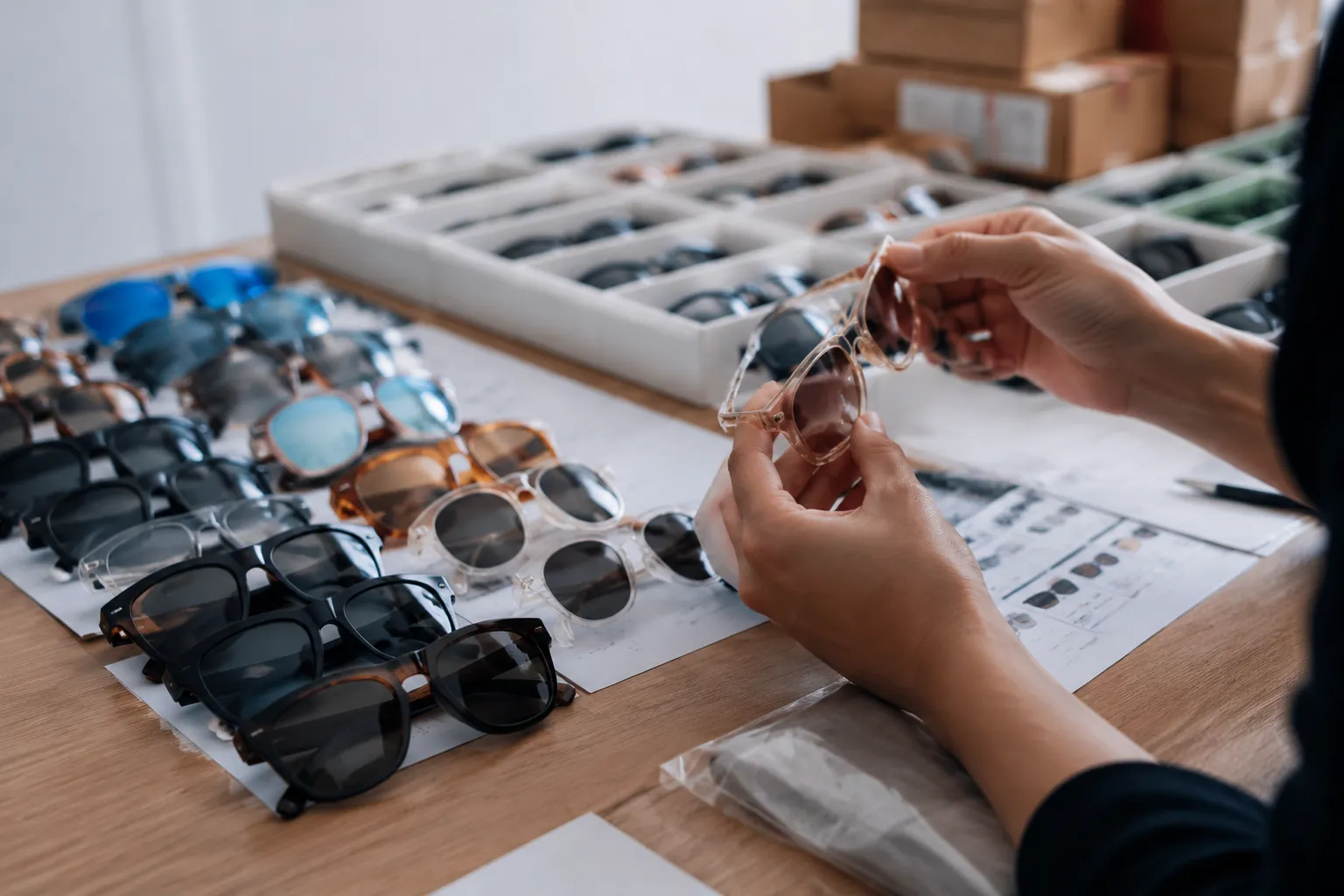
This guide is for brand owners, importers, retailers, and distributors buying custom sunglasses in volume. The goal is not to cheapen the product. It is to strip cost from areas the shopper does not reward while protecting the signals that drive perceived value: frame feel, hinge action, lens appearance, logo execution, and first-touch packaging. Good cost-down work starts before sampling. Review materials, processes, tolerances, decoration, and pack-out early. Done right, this can lower unit cost, reduce defect risk, and keep compliance and lead time under control.
Use one buyer rule: cut what is invisible, protect what is touched
Many cost-down projects fail for a simple reason: the price target gets cut before product priorities are defined. Shoppers do not see your full bill of materials. They judge a few obvious cues: weight in hand, opening resistance, surface finish, lens appearance, visible branding, and whether the packaging feels considered.
Start by splitting every sunglass element into three buckets.
- Visible and touched: front frame finish, temple thickness where fingers grip, hinge feel, lens clarity and color consistency, nose contact, outer-temple branding. Protect these.
- Visible but lightly examined: inner-temple print, microfiber pouch weight, inner-box print coverage, small hidden trim. These are negotiable.
- Mostly invisible: oversized master cartons, heavy rigid inserts, redundant polishing on hidden faces, decorative parts that add handling without adding shelf value. Review these first.
Do this at the drawing and specification stage, not after the first sample is approved. A factory that controls molding, lens processing, decoration, and assembly in-house can sometimes remove cost by simplifying the process flow instead of changing the base material. Example: delete a separate decorative metal trim part. You remove the component, drilling, fixture setup, adhesive application, alignment checks, and rework risk. One decision. Several savings.
Order quantity matters too. At lower volumes, decoration setup, sampling time, and manual handling weigh heavily on unit cost. At higher volumes, standardized materials, longer runs, and simpler pack-out usually matter more. That is why the same style can quote very differently depending on MOQ, customization level, and the number of variables introduced.
Frame construction: save where it counts, not where complaints start
Frame construction is usually one of the biggest cost levers. Packaging format and lens treatment sit beside it. But frame changes are risky if you cut in the wrong place.
| Frame option | Typical cost effect | Process difference | What shoppers notice | Best use case |
|---|---|---|---|---|
| Injected PC frame instead of acetate | Often lower cost, depending on style and finish | Single molding route vs sheet cutting, CNC, tumbling, and hand polish | Lighter feel, less pattern depth | Promo, sport, entry-price fashion |
| Use existing mold geometry | Removes new tooling cost and shortens development | No new mold build or trial adjustments | Little effect if proportions fit the brand | Private label, quick launch programs |
| Single-color frame instead of crystal or laminated look | Can reduce material handling and appearance rejects | Fewer appearance variables | Only noticeable if color effect is core to the style | Replenishment SKUs, core basics |
| Molded detail instead of applied metal trim | Can lower assembly and inspection cost | Eliminates added part, adhesive, or pinning step | Usually acceptable if texture and paint are clean | Mid-volume branded lines |
Injected frames often cost less because they remove manual operations. Acetate usually involves sheet cutting, CNC milling, beveling, tumbling, hand polishing, hinge insertion, and more cosmetic inspection. Acetate can deliver stronger visual depth and a better premium material story. But not every shopper will pay for that difference.
Where buyers get into trouble is over-thinning the structure. The material saving may be small. The cheap feel is not. Thin temples feel flimsy fast, especially around the hinge zone. They can also increase stress during repeated opening and closing.
A safer route is to protect outside dimensions in grip areas and review hidden wall thickness only after engineering checks for warp, sink, and assembly stability.
Useful development checks include:
- Temple opening torque: confirm left and right sides feel consistent.
- Warp after conditioning: let parts rest before flatness review.
- Visible parting line location: place it away from high-visibility front edges where possible.
- Logo pad area flatness: avoid curved or sink-prone surfaces if pad print is planned.
- Hinge alignment: confirm temples close evenly without offset at the frame front.
Simple rule: save material where the shopper cannot feel it, not where the shopper grips it.
Lens savings that do not wreck appearance or compliance
Lenses are another area where buyers often cut badly. For most fashion sunglasses, consumers notice left-right color match, haze, scratch visibility, and cosmetic cleanliness before they notice the exact lens substrate. So start by simplifying the lens program, not by making uncontrolled material swaps.
Polycarbonate is widely used because it is light, impact resistant, and practical across many categories. In many projects, though, the bigger cost problem is not the substrate. It is the number of custom tints, mirrors, gradients, or coatings. Every added lens version creates more setup, more inspection, and more risk of mismatch.
Good lens savings usually come from:
- Using one lens base curve across multiple SKUs where frame geometry allows.
- Standardizing to common colors such as gray, brown, smoke, or green.
- Avoiding mirror coatings on low-volume styles, because mirror consistency and scratch sensitivity can raise reject rates.
- Keeping gradient lenses only where they are central to the look.
- Reducing custom lens laser marks or edge engravings on lower-price programs.
Do not cut compliance or basic optical control. If sunglasses are sold into relevant markets, standards such as CE EN ISO 12312-1, ANSI Z80.3, or AS/NZS 1067 may apply depending on product type and destination. Chemical compliance requirements such as REACH may also matter for materials and coatings. Change the lens material, transmittance, tint density, mirror layer, or coating, and you may change whether the product still matches the approved specification and supporting test documents.
Also insist on cosmetic consistency. A low-cost batch with visible color drift, edge stress marks, or coating scratches will hurt shelf appeal faster than a simpler box or reduced print treatment. On lenses, control matters. Documentation matters. Cheap surprises do not.
Branding and decoration: pick one hero cue and do it well
Branding gets expensive fast when too many decoration processes are stacked onto a low-price style. A metal logo plate, outer-temple pad print, inner-temple legal print, laser mark, custom cloth print, and foil box stamp may look good on a concept sheet. On the production floor, that means more fixtures, more alignment checks, more handling, and more reject points.
| Decoration method | Relative cost | Durability | Typical process notes | Best placement |
|---|---|---|---|---|
| Pad printing | Low | Moderate | Fast and flexible, but sensitive to curvature and ink adhesion | Inner temple, simple outer temple logo |
| Laser engraving | Low to medium | High | Works well on metal and selected coated surfaces; no ink drying step | Metal hinges, arms, hidden branding spots |
| Metal logo plate | Medium to high | High if fixed correctly | Adds part, positioning, and attachment inspection | Outer temple where brand visibility matters |
| Molded/debossed logo | Low after tooling | High | Efficient at volume once tooling is set | Temple surface, temple tip, inside brand zone |
The better approach is to choose one branding cue the customer will actually notice. If visible brand recognition matters most, keep the outer-temple plate and simplify the rest. If the brand language is quieter, skip the plate and rely on a clean molded detail plus inner-temple print.
Artwork engineering matters here. Very fine lines, tiny counters, and narrow letter spacing raise setup difficulty and increase failure risk. On curved plastic surfaces, a logo that looks correct in artwork may still print poorly in production. Ask the factory to confirm minimum line thickness, spacing, and placement tolerances for the chosen decoration method and substrate. That is not overkill. It is production control.
Packaging is often the fastest cost win
Packaging is where many quotes stay too high because buyers leave it until the end. Do not. Separate what the consumer actually sees from what exists only to protect the product in storage and transit.
Typical savings come from:
- Replacing rigid cases with microfiber pouches on lower-ticket styles.
- Reducing gift box board weight when the item sells online or from open display.
- Cutting full-color print to one or two colors on hidden inner components.
- Standardizing master carton counts to simplify packing and warehouse handling.
- Using one pouch design across multiple SKUs instead of one pouch per colorway.
Keep what protects the product. Basic lens protection, a readable barcode and SKU system, and export packing that survives the route are not optional. Remove the pouch entirely and lenses may arrive with rub marks. Reduce divider quality too far and products may shift in the carton. That is false economy.
Ask for a full packing breakdown: unit pack, inner box if used, units per master carton, carton dimensions, gross and net weight, and loading efficiency. Sometimes the best savings are not in board or fabric cost at all. A better pack-out can improve carton utilization and lower freight cost per pair.
For larger programs, it is also reasonable to ask whether the factory operates under ISO 9001 quality management and whether social compliance audits such as BSCI are available if your retail channel requires them.
Lead time is part of cost
Price and lead time are not separate issues. On the factory floor, they are tied together. Every extra frame color, lens tint, logo version, pouch variation, and carton mark creates another changeover. Changeovers mean downtime, slower QC, more labeling risk, and more unfinished work in process.
Actual timing depends on the construction, factory load, and whether tooling or custom packaging is involved. Still, one pattern is consistent: repeat orders built on an approved frame and standard packaging move faster than first orders with new molds, new artwork, or multiple decoration methods. More variables usually mean more sample loops, more approval delays, and more production interruptions.
To reduce both cost and schedule risk:
- Use one approved frame mold across several colorways.
- Limit lens colors per order batch.
- Keep one common pouch and one common carton print for multiple SKUs.
- Approve logo positions with dimensions before decoration starts.
- Freeze legal markings early so inner-temple print plates do not need revision.
This matters even more at lower MOQs. At low quantities, setup and manual handling make up a larger share of the unit cost. As volume rises, line planning, material purchasing, and process repetition usually improve. That is why suppliers are often more flexible on price when specification variation is controlled.
A practical spec-down sequence before you ask for a requote
Do not send a supplier a message that says only need cheaper price. That invites hidden downgrades or a revised quote loaded with risk. Send a controlled engineering brief instead.
- Freeze the non-negotiables: frame silhouette, front finish level, hinge feel, lens color family, core branding cue, compliance destination.
- Ask for alternate frame constructions: current spec, lower-cost material or geometry, and existing-mold adaptation if possible.
- Request one lens simplification only: for example a standard gray lens instead of a custom gradient while keeping the same compliance target.
- Reduce decoration count: keep plate, print, or engraving as the hero element, not all three.
- Ask for two packaging paths: retail-presentable and economy transit-focused.
- Review total delivered effect: include defect risk, freight, tooling exposure, compliance impact, and lead time, not just nominal component cost.
This gives the factory a real development brief. It also protects sample integrity because the supplier can show exactly where the savings come from: fewer parts, fewer setups, or lower reject exposure. Not vague substitutions.
One hard truth: if your product is already near the practical floor for its construction, pushing for a tiny extra reduction often encourages hidden changes. It is usually safer to remove one whole process step than to underfund every step a little.
What a good cost-down brief looks like
The best buyers make cost reduction easier to execute. They send a short commercial brief with clear priorities and clear limits.
A strong brief should include:
- Target quantity by design
- Target FOB or ex-factory range
- Non-negotiables: shape, finish standard, compliance market, branding method
- Acceptable substitutions: injected frame instead of acetate, standard lens colors, pouch instead of hard case
- Sample approval deadline and required ship window
Then ask the supplier to rate each proposed change by cost, appearance, durability, compliance, and lead time. Request that any compliance-related statements be backed by current test reports, material declarations, or production control documents where relevant. If the product will be sold into the United States as non-prescription eyewear, also confirm whether FDA registration is applicable to the factory or supply chain setup.
If this process is handled well, the result should not look downgraded. It should still feel right in hand, still present well at retail, still align with the intended compliance path, and land at a better cost because the savings came from places the customer does not reward.
Have a custom sunglasses project in mind?
Send us your styles, target market and quantities and we will return a detailed quote with MOQ, lead time and a sample plan.
Get a QuoteWhy source this from Wenzhou with LumiShades
Wenzhou in Zhejiang Province is widely regarded as China’s eyewear manufacturing capital, producing a large share of the world’s sunglasses. That concentration matters to buyers: a deep local supply chain for acetate sheet, hinges, lens blanks, plating and packaging means shorter component lead times, easier color and material matching, and a workforce with decades of eyewear-specific skill. LumiShades has manufactured in this ecosystem since 2009, and our vertical integration — in-house injection molding, acetate cutting, CNC milling, lens tinting, decoration and quality control — means no part of your order is quietly subcontracted to a workshop you cannot audit.
For international buyers, that vertical control translates into accountability. When a single factory owns every step, defects are traced and fixed at source rather than bounced between vendors, and your specifications survive intact from first sample to bulk. We back this with 15+ years of experience, shipments to 60+ countries, more than 5 million pairs produced per year and a 98.5% on-time delivery rate. Our certifications — CE EN ISO 12312-1, FDA registration, ANSI Z80.3, AS/NZS 1067, REACH, ISO 9001 and BSCI audit — mean the compliance documentation your market requires already exists. Explore our manufacturing capabilities and quality control process to see how this works in practice.
Frequently asked questions
At what order size do custom sunglasses usually get noticeably cheaper? Pricing usually improves when the order is large enough to spread setup costs and reduce changeovers, but there is no universal threshold for every factory or construction. The best comparison is tiered pricing at your real quantities with the same specification, for example by style, colorway, and packaging version. Also ask the supplier to separate tooling, sample charges, decoration setup, and unit price so you can see which costs are fixed and which decline with volume.
What is the safest first change if I need to lower cost quickly? Start with packaging simplification or decoration reduction. These changes usually affect perceived value less than changing frame structure or lens quality. Ask the supplier to quote at least two options: one packaging downgrade, such as pouch instead of rigid case, and one branding simplification, such as keeping only pad print or only molded branding. Then confirm that the revised pack still protects lenses in transit and that legal or compliance markings remain intact.
Can I change lens tint after sample approval without risk? No. A tint change can affect visible light transmittance, shade category, cosmetic consistency, and whether the product still matches the tested construction. Before approving any change, ask the supplier which standard applies to your target market, whether the original test report still covers the new lens, and whether retesting is required under CE EN ISO 12312-1, ANSI Z80.3, or AS/NZS 1067. Do not rely on a verbal confirmation. Ask for updated documentation.
Is acetate always better than injected frames for branded sunglasses? No. Acetate and injected frames serve different commercial purposes. Acetate can support a more premium material story and richer visual depth, while injected constructions often offer better repeatability, shorter processing time, and lower cost. The decision should match your retail price point, target customer, and quality priorities. Ask for side-by-side samples and compare not only appearance, but also hinge feel, temple stiffness, finish consistency, and defect-rate risk.
How fast can a supplier turn a cost-down revision? It depends on what is changing. A packaging change or a switch to an existing lens color can often move faster than a new mold, new hardware, or a new decoration method. To speed up the revision, send a marked-up specification with only the requested changes, confirm logo placement and legal text in advance, and ask the supplier to state which items require a new sample, which require new test review, and which can be updated on the basis of the approved construction. That cuts avoidable back-and-forth.
Ready to start?
Explore our rimless sunglasses or request a quote — our sales team replies within 12 hours.
Request a Quote