
How to Vet a Sunglasses Factory Without Visiting
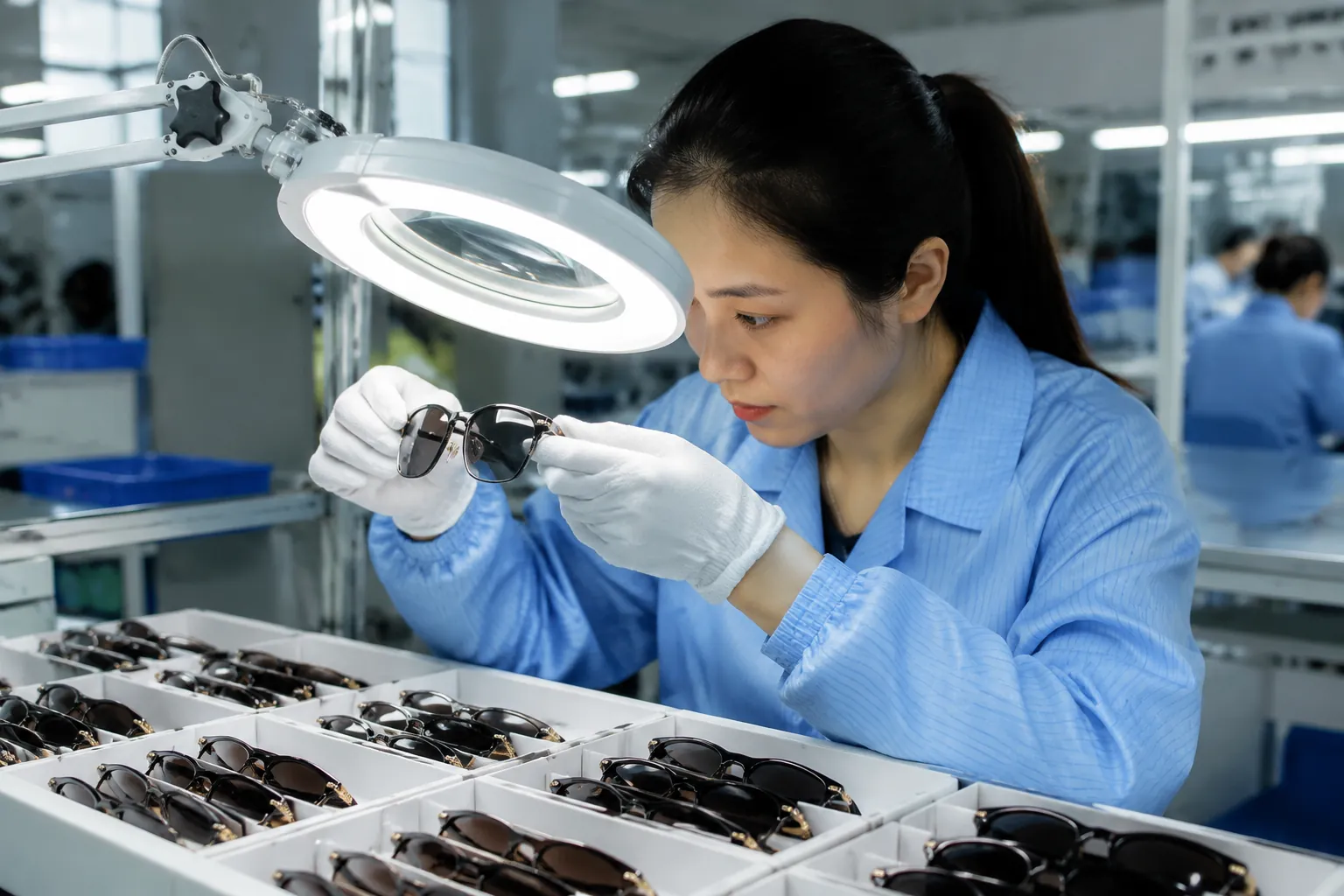
This guide is for brand owners, importers, distributors, and retailers sourcing custom sunglasses without seeing the factory in person. The job is not to collect polished claims. It is to find out whether a supplier can build your product the same way every time, hold the agreed tolerances, answer clearly, and ship on schedule once deposits, revisions, and production pressure show up. Good remote vetting is evidence-based. You need process proof, sample proof, document proof, and communication proof. If a supplier can explain how it controls material, tooling, decoration, assembly, and inspection in concrete terms, you have a real basis for deciding whether to move to sampling or place a first PO.
Build a scorecard before you compare prices
Do not start with the lowest quote. Start with a scorecard. Remote vetting works only if every supplier is judged against the same checkpoints and the same proof standard. Otherwise, the fastest reply or the smoothest salesperson wins, and weak suppliers stay in the mix longer than they should.
For custom sunglasses, a workable scorecard covers five areas: manufacturing scope, sample quality, compliance readiness, communication discipline, and production control. Score each area from 1 to 5. Require written or visual proof for every claim. If a supplier is weak in more than one area, cut it early and save your development time.
- Manufacturing scope: Map what is done in-house and what is outsourced. Ask whether they handle injection molding, acetate cutting, CNC shaping, polishing, lens processing, pad printing, laser engraving, metal logo application, assembly, and final QC on site. Each outsourced step adds handoff risk, lead-time uncertainty, and more lot-to-lot variation.
- Sample quality: Review fit, finish, hinge feel, lens seating, logo execution, and packaging accuracy. Ask for macro photos from several control points, not just styled product shots.
- Compliance readiness: Confirm which product and material documents they can support for your target market, and whether those documents match the exact construction you plan to buy.
- Communication discipline: Track reply time, file naming, revision control, and whether answers address the exact specification point you raised.
- Production control: Ask how they inspect incoming materials, what in-line checks exist, which sampling or visual standard they use, and how packed goods are verified before shipment.
A scorecard also helps you explain price gaps. If one supplier is cheaper, find out why. The difference may come from real process efficiency, but it may also come from simpler packaging, lower material cost, outsourced steps, or missing controls. That is the point. Remote vetting is useful only when you can explain why one supplier scored higher, not just why one quote looked lower.
Use a live video audit to confirm the factory is real
A video call is not a courtesy meeting. Treat it like a remote audit. Ask for a live walk-through, not a polished company reel. Real-time footage lets you compare the quotation with the actual floor and see whether the team can explain its own process under normal conditions.
Ask the supplier to move through the workflow in order: raw material storage, frame forming or molding, lens handling, decoration, assembly, packing, and QC. For injection programs, you should see material storage, material preparation where relevant, molding machines, molds, trimming, and bins of semi-finished parts. For acetate, you should see sheet stock, CNC milling, shaping, polishing, and hinge insertion. For mixed-material frames, ask how the joining step is done and where failures usually show up.
During the call, ask for close-up views of hinge rivets, temple alignment, frame-front symmetry, nose-area finishing, edge polish, and logo registration. A serious manufacturer can hold the camera on the problem area, answer technical questions, and explain what is acceptable. A trader or middleman usually falls back on vague lines like "no problem" or "same as sample" without showing the process behind the claim.
Use simple live checks to confirm the audit is current. Ask them to write today's date and your company name on paper and show it on camera. Then ask to see multiple departments in one continuous session. If the tour stays in one clean corner or keeps cutting away, assume you still do not have enough proof.
Test process knowledge too. Ask questions such as: How do you control frame warpage after injection molding? At what stage is acetate hinge insertion done? What is a common rejection reason in pad printing? Which defects are screened before packing versus during in-line inspection? The quality of the answer matters as much as the image.
Judge samples for repeatability, not looks
One attractive sample proves very little. It shows the supplier can make one acceptable piece. It does not show they can repeat that result across multiple cavities, color batches, or decoration runs.
Request two sample sets whenever possible. One is a sales sample for appearance and fit. The other is an engineering or process sample that shows how the product is built. For acetate or mixed-material programs, ask for pre-polish macro photos, hinge-area photos, and decoration photos before final cleaning. For injection frames, ask whether the sample came from production tooling, development tooling, or a hand-finished prototype. The defect pattern changes at each stage.
Check the following points in a structured way:
- Lens fit: The lens should seat evenly with no visible stress whitening, edge gaps, or insertion marks. Weak lens seating can turn into cracking in transit or deformation under heat.
- Frame symmetry: Place the frame on a flat surface. Excessive rocking usually points to temple imbalance, front distortion, or uneven heating during forming.
- Hinge action: Open and close both temples repeatedly. Resistance should feel consistent from left to right, without grinding or obvious loosening.
- Logo registration: Printed, engraved, or plated logos should sit in the same position on both temples relative to the approved artwork and placement reference.
- Surface finish: Watch for sink marks on injection parts, polish waves on acetate, dust in coated surfaces, glue smears near mixed-material joints, plating pits on metal trims, or burrs around cutouts.
Then ask the factory to define its tolerance language. Serious suppliers speak in measurable terms or with clear visual standards. Examples include logo position tolerance tied to an approved drawing, left-right opening angle checked against a master sample, lens color matched to an approved standard, and carton quantity checked before sealing. If the supplier cannot turn "looks good" into measurable criteria, bulk variation will be hard to control later.
Match the factory to your frame construction
Not every sunglasses factory is good at every build. A supplier that handles simple injection frames well may struggle with laminated acetate, plated metal trims, or mixed-material assemblies with glued joints. Remote vetting should match the factory to your product architecture, not just to your target cost.
| Construction | What to verify remotely | Typical tolerance or control point | Common failure mode | Best question to ask |
|---|---|---|---|---|
| Injection plastic | Molding machines, mold storage, color control, trimming, assembly line | Warpage check before lens fitting; color matched to approved standard | Sink marks, warped fronts, unstable color, lens stress after insertion | How do you control warpage after molding and before lens fitting? |
| Acetate | Sheet stock, CNC milling, polishing, hinge insertion method | Logo position checked against approved reference; even edge polish at temple tips and bridge area | Uneven polishing, poor lamination, hinge pull-out, asymmetry after heating | Do you install hinges before or after final polishing, and why? |
| Metal with coated finish | Bending fixtures, joining points, coating or plating control, scratch inspection | Symmetry check after forming; coating visual inspection under fixed lighting | Coating scratches, weak joints, crooked temples, plating defects | What final inspection checks do you use for symmetry and coating defects? |
| Mixed material | Joining process, adhesive use, assembly sequence, outsourced return checks | Joint gap visual standard; glue overflow control; pull-check at assembled connection | Gaps at joints, glue marks, inconsistent fit, separation during transport | Which step is outsourced, if any, and how is it checked on return? |
Also ask which decoration methods they run most often. Pad printing is efficient but sensitive to fixture accuracy and surface cleanliness. Laser engraving is durable but limited by substrate color and finish. Metal logo plates can look premium, but they add alignment and adhesive risk. A capable factory should be able to explain where each method works best, what preparation it needs, and which defects show up most during setup.
If your product uses multiple materials or a premium finish, ask the supplier to name the highest-risk step in the process. An experienced manufacturer should tell you where variation usually appears and what control is used to reduce it. If they cannot, that is useful information.
Match compliance documents to the exact product
Documents are easy to forward. Matching them to your product is the hard part. Ask for copies first. Then ask follow-up questions that force model-level detail.
For sunglasses programs, the conversation often includes CE EN ISO 12312-1, ANSI Z80.3, AS/NZS 1067, REACH-related material declarations, FDA registration where relevant, and factory-level systems such as ISO 9001 or BSCI. Do not treat them as interchangeable. Product performance standards, chemical declarations, and factory system audits prove different things.
- CE EN ISO 12312-1: Ask whether the tested lens category, visible light transmittance range, UV performance, and product labeling match the model you are buying.
- ANSI Z80.3: For U.S. programs, ask whether the report applies to the lens construction and tint actually quoted, not just to a similar style.
- AS/NZS 1067: If you sell into Australia or New Zealand, confirm both performance and labeling alignment because the market requirements are specific.
- REACH or material declarations: Ask which components are covered, including coatings, inks, plastic resin, metal trims, nose pads, and adhesives.
- FDA registration: Use this correctly. It is not a substitute for performance testing and should not be treated as proof that the sunglasses meet optical performance standards.
- ISO 9001 or BSCI: These relate to management systems or social compliance, not product performance. They support supplier evaluation, but they do not replace model-specific product testing.
Then compare the details line by line: company name, issue date, lab name, model description, lens category, and material references. If a document shows a different factory name, generic "eyewear" wording, or an unrelated construction, stop and ask for clarification. Evasion here tells you something about document reliability.
If your order is private label and customized, ask one more question: what can be inherited from an existing test report, and what may require fresh testing after logo, lens, or material changes? Even a small change in lens tint, coating, or material source can change the compliance path in some markets.
Pressure-test lead times, MOQ, and scaling
Remote vetting is incomplete until you test what happens when volume rises. Small trial orders can slide into spare capacity. Larger orders expose the real system.
Do not accept sample days or production days at face value. Ask what changes operationally between a small trial order and a larger production order. A strong answer should cover raw-material purchasing lead time, tooling readiness, approved color standards, line allocation, decoration fixture setup, and QC staffing. If the answer stays at the price-sheet level, the factory probably is not planning production in detail.
Ask for the exact trigger that starts the lead-time clock. Is it sample approval, deposit receipt, artwork sign-off, packaging approval, or all of them together? Many delays happen at those handoff points, not on the line. Also ask how the supplier defines on-time delivery. Some count factory-ready date. Buyers usually care more about booked shipment date or departure date.
If the supplier claims strong delivery performance, ask how it is measured. You need the definition of "on time," the time window used, and whether the calculation excludes buyer-caused approval delays. Precise language here prevents avoidable disputes later.
For MOQ, ask what the minimum is based on: frame color, lens color, logo setup, packaging purchase, or line efficiency. That answer tells you whether the MOQ reflects a real production constraint or just a quoting habit. It also shows which variables make a small first order harder to run.
Audit communication and QC as one system
Communication failures quickly become production failures. In remote sourcing, communication is part of quality control because every spec, revision, approval, and exception moves through messages, photos, and files before goods move through the factory.
Test this on purpose. Send a specification sheet with five exact points: frame material, lens color, logo method, packaging requirement, and ship target. Then see whether the supplier confirms all five points in one structured reply. If they answer the easy items and skip the risk points, expect more confusion after deposit.
Look for these behaviors alongside their QC claims:
- Revision control: Files are labeled by version and date, and the approved sample reference is clearly named.
- Technical specificity: They do not say only "grey lens" or "black frame." They refer to the approved sample, material, drawing, or color standard.
- Problem reporting: They raise risk early, such as a thin temple wall, unstable metallic ink, or a logo plate size that may drift during manual placement.
- Photo discipline: Inspection photos come from repeatable angles and include full-frame views plus close-ups of hinge, logo, and packing details.
On the QC side, ask what checks happen at incoming, in-line, and final stages. Incoming checks may cover acetate sheet color, metal trim finish, or lens tint consistency against approved references. In-line checks should screen defects after molding, after decoration, and during assembly. Final inspection should verify quantity, assortment, cosmetic defects, logo accuracy, and packaging compliance. If they mention only "we check before shipping," the control system is probably weak or poorly defined.
The best suppliers communicate in short, precise updates tied to evidence: sample ready, artwork revised, fixture adjusted, defect found, replacement piece prepared. That style usually signals process ownership, not sales reassurance.
Treat the first PO as a controlled production test
Even after a strong remote audit, your first order should be a repeatability test, not a full-season commitment. Keep it controlled. Keep it manageable. Avoid your most complex multi-material frame unless there is a clear strategic reason to start there.
A practical first PO uses one or two styles, clear approved samples, locked packaging specs, and a written inspection standard. Keep the number of variables low. Use one approved lens color per style and the simplest workable logo method, because every extra variable reduces the learning value of the trial.
Before deposit, confirm four points in writing: approved sample reference, measurable tolerance points, carton marks, and shipment timing. During production, request process evidence at three stages: after molding or cutting, after decoration, and before packing. Before balance payment, require final QC proof showing quantity count, assortment accuracy, visual inspection, and packaging check.
If the first PO performs well, you can expand style count, quantity, or complexity with more confidence. If it fails, you lose a limited amount of time and money instead of risking a full seasonal buy.
Remote vetting does not replace factory visits forever. It helps you decide which supplier is worth visiting later and which one should not receive your deposit now.
Have a custom sunglasses project in mind?
Send us your styles, target market and quantities and we will return a detailed quote with MOQ, lead time and a sample plan.
Get a QuoteWhy source this from Wenzhou with LumiShades
Wenzhou in Zhejiang Province is widely regarded as China’s eyewear manufacturing capital, producing a large share of the world’s sunglasses. That concentration matters to buyers: a deep local supply chain for acetate sheet, hinges, lens blanks, plating and packaging means shorter component lead times, easier color and material matching, and a workforce with decades of eyewear-specific skill. LumiShades has manufactured in this ecosystem since 2009, and our vertical integration — in-house injection molding, acetate cutting, CNC milling, lens tinting, decoration and quality control — means no part of your order is quietly subcontracted to a workshop you cannot audit.
For international buyers, that vertical control translates into accountability. When a single factory owns every step, defects are traced and fixed at source rather than bounced between vendors, and your specifications survive intact from first sample to bulk. We back this with 15+ years of experience, shipments to 60+ countries, more than 5 million pairs produced per year and a 98.5% on-time delivery rate. Our certifications — CE EN ISO 12312-1, FDA registration, ANSI Z80.3, AS/NZS 1067, REACH, ISO 9001 and BSCI audit — mean the compliance documentation your market requires already exists. Explore our manufacturing capabilities and quality control process to see how this works in practice.
Frequently asked questions
How can I tell if I am speaking to a factory and not just a trading company? Ask for a live video walk-through across real production steps, not a showroom tour or a pre-recorded clip. Request proof of the processes they claim to run in-house, such as molding, acetate machining, decoration, assembly, and QC. During the call, ask technical questions tied to what is on screen: how warpage is controlled, where hinge insertion happens, or which defects are rejected after printing. A real factory can usually show the process and explain it. If the contact avoids process questions, cannot move freely across departments, or keeps switching to generic answers, treat that as a warning sign and ask for more proof.
Is a good-looking sample enough to approve a bulk order? No. A good sample proves only that the supplier can make one acceptable piece under sample conditions. It does not prove bulk repeatability. Before approval, ask what sample type was used, confirm materials and decoration method, and find out whether the piece came from prototype or production tooling. Then set measurable checkpoints for bulk production: lens fit, frame symmetry, hinge feel, logo placement, surface finish, packaging, and the visual standard for acceptable defects. If possible, ask for more than one sample or for process photos from intermediate stages so you can judge consistency, not just appearance.
What compliance documents matter most for custom sunglasses? It depends on your destination market and product claim. Common documents include CE EN ISO 12312-1, ANSI Z80.3, AS/NZS 1067, REACH-related material declarations, FDA registration where relevant, plus ISO 9001 or BSCI for broader supplier evaluation. The key step is matching each document to the exact product you plan to buy. Check the model description, lens category, tint or transmittance data, company name, issue date, and covered materials. Also ask whether your customization changes the validity of any existing report. If the document does not match the actual product configuration, do not treat it as proof for your order.
What is a sensible first order size for a new factory? Use a controlled trial, not a full commercial rollout. The first order should be small enough to limit risk but large enough to test real production conditions, packaging, inspection, and shipment handling. Keep it to one or two styles, reduce color and decoration variables, and lock the approved sample and specification before deposit. The exact quantity depends on your business, but the rule is simple: buy enough to test execution, not so much that a preventable problem turns into a major inventory loss.
How do I check if quoted lead times are realistic? Ask what starts the lead-time clock: deposit, sample approval, artwork approval, packaging approval, or all of them together. Then ask what materials must be purchased, whether any process is outsourced, how line time is scheduled, and when final inspection happens. Request a step-by-step timeline, not one total number. You should also ask how the supplier defines shipment readiness and on-time delivery. A realistic lead time is one the supplier can explain in operational terms, with clear dependencies and approval points, not just one printed on a quotation.
Ready to start?
Explore our round sunglasses or request a quote — our sales team replies within 12 hours.
Request a Quote