
OEM vs ODM Sunglasses: Which Route Fits Your Brand?
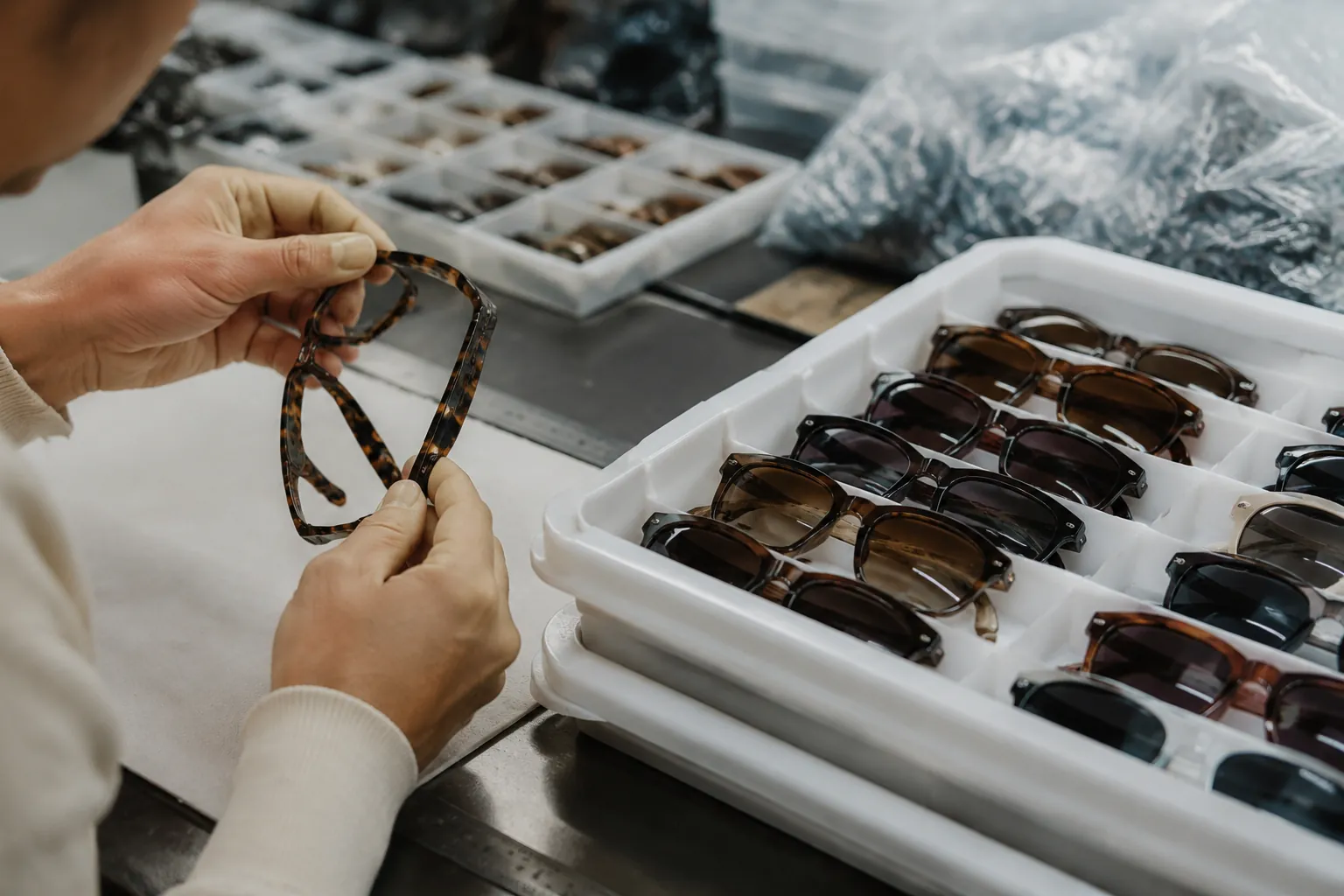
This guide is for brand owners, importers, distributors, promotional buyers, and retail teams choosing between OEM and ODM sunglasses production. The question is not which term sounds more premium. It is which route fits your design needs, budget, launch date, compliance duty, and reorder plan. Sunglasses are small products with many failure points: lens category, base curve, hinge position, temple spread, logo method, packaging, labels, and destination market can all change tooling, sampling, inspection, and documentation. Pick the wrong route and the problem shows up fast. Samples drag. Costs move. Test reports no longer match the product. Shipment dates slip.
The Short Version: OEM Gives Control, ODM Saves Time
OEM sunglasses manufacturing means the buyer defines the product and the factory builds to that specification. The buyer may provide drawings, CAD files, a physical reference sample, a measurement chart, material requirements, lens requirements, logo artwork, packaging files, or a full tech pack. OEM is the better route when frame shape, fit, hinge construction, temple profile, lens curve, or exclusive design language matters.
ODM sunglasses manufacturing starts from an existing factory design, mold platform, or proven construction. The buyer customizes selected elements: frame color, lens tint, logo placement, packaging, barcode labels, and sometimes small trim or hardware details. ODM is usually faster to sample because the base product already exists.
Use OEM when the product itself must be controlled. Use ODM when speed and lower starting risk matter more. Many buyers do both: start with ODM to test demand, then move best-selling shapes into OEM once the sales case is clear.
OEM vs ODM Comparison: Cost, Control, MOQ, and Timing
| Decision factor | OEM sunglasses | ODM sunglasses | Buyer risk to manage |
|---|---|---|---|
| Design ownership | High when the buyer owns the drawings, tooling terms, and approved specification. | Limited unless exclusivity is negotiated. The base design may be sold to other buyers. | Confirm who owns the design, tooling, artwork, and any exclusivity rights. |
| MOQ logic | Better for higher-volume programs because development, tooling, sampling, and approvals must be amortized. | Better for small tests, market trials, distributor samples, and seasonal drops. | Low MOQ can raise unit cost because setup, printing, packing, and QC are spread over fewer units. |
| Sampling time | Longer if prototypes, tooling, fit correction, or lens seating adjustment are needed. | Shorter when using available frames, colors, lenses, and decoration methods. | Late changes to shape, lens, logo, packaging, or compliance scope can reset the timeline. |
| Tooling cost | May require new injection molds, CNC programs, fixtures, lens tooling, or special assembly processes. | Usually avoids major frame tooling because the base product already exists. | Do not approve tooling without confirming cost, ownership, maintenance, storage, and expected life. |
| Unit price | Can become competitive at volume but often carries higher start-up cost. | Usually has lower entry cost because existing designs and processes are used. | Compare quotes using the same material, lens, logo method, packaging, test scope, and incoterm. |
| Exclusivity | Strongest when design rights and tooling ownership are documented. | Possible only if negotiated by style, region, channel, or time period. | Verbal exclusivity is not enough for private-label or retail programs. |
The rule is simple. Use ODM for speed and market testing. Use OEM when frame design, fit, and ownership justify the extra work.
Material Choices: What Changes in the Real Product
Material choice affects price, fit, finish, durability, sampling, and inspection. "Black frame with grey lens" is not a specification. Before sampling, define the frame material, lens material, lens category, color target, surface finish, hinge type, and packaging.
- PC injection frames: Polycarbonate is common for cost-sensitive and high-output programs. It supports consistent molded color and efficient production, but comfort depends on geometry, surface finish, weight, and temple fit.
- TR90 frames: TR90 is light and flexible. It is often used for sport, kids, travel, and comfort-led styles. Because it flexes, the supplier should check temple spread, hinge retention, and whether the frame loosens after repeated opening and closing.
- Acetate frames: Acetate gives stronger color depth, layered effects, tortoise patterns, and a more premium visual finish. It requires cutting, shaping, tumbling, polishing, fitting, and more manual work. Lead time and labor cost are usually higher than basic injection frames.
- Metal and mixed-material frames: These need close control of plating, soldering, screw retention, nose pad fit, corrosion resistance, symmetry, and surface finish. They can look premium, but defects are easy to see.
- Lenses: Common options include TAC polarized, PC, nylon, and acrylic. Choice depends on price point, optical expectation, durability, and style. Specify UV protection claim, lens category, color, gradient, mirror coating, polarization, and required markings before approval.
Fit must be measured, not guessed from photos. Check lens width, bridge, temple length, frame front width, temple spread, pantoscopic angle, and front curve. Agree tolerances by material and construction. Polished acetate may lose small amounts of material during finishing. Injection frames depend more on mold accuracy, shrinkage control, and assembly consistency.
Sampling and Approval: Where Launches Break
Most delays happen before bulk production. The reason is usually weak approval. The buyer changes lens tint after logo approval. Packaging changes after carton layout. A compliance requirement appears after materials have been ordered. Small changes become big delays.
ODM sampling is faster when the factory uses available frames, lenses, and decoration methods. OEM sampling takes longer when the project needs prototype work, tooling, fit adjustment, hinge changes, or lens seating correction. Ask the supplier to break the schedule into sample preparation, buyer review, revision, pre-production sample approval, material purchasing, production, inspection, and packing.
| Stage | ODM work | OEM work | What the buyer must approve |
|---|---|---|---|
| Brief review | Select from available frame designs, lens options, and decoration methods. | Review drawing, CAD, physical sample, reference photos, or measurement chart. | Target market, quantity, material, lens category, price level, compliance scope, and delivery target. |
| First sample | Apply selected color, lens tint, logo method, and packaging mock-up where practical. | Build prototype or first-tool sample. Check hinge, lens fitting, frame balance, and basic ergonomics. | Shape, comfort, color, lens darkness, logo position, and packaging direction. |
| Revision | Usually correct color, print, lens, packaging, or label details. | May include bridge adjustment, temple angle, mold correction, lens curve, hinge movement, or fit correction. | One combined change list with marked photos, measurements, and priority level. |
| Pre-production sample | Confirms final decoration, labels, packing, and carton information before mass production. | Confirms final tooling output, components, assembly process, and production standard. | Written approval sheet, photos, material details, lens category, logo artwork, barcode, carton mark, and test scope. |
Do not approve a sample just because a deadline is close. A weak approval can create thousands of identical defects. Treat the pre-production sample as the contract version of the product. Frame, lens, hinge, screw, logo, color, packaging, labels, warnings, and carton marks should be frozen before production starts.
Decoration Methods: Logo Quality Is a Process Choice
Private-label sunglasses often win or lose on small visible details. The logo must look deliberate, sit in the right place, and survive normal handling. The right method depends on frame material, order quantity, logo size, surface texture, color contrast, and brand position.
- Laser engraving: Clean, precise, and durable on suitable surfaces. Often used for subtle temple branding, metal parts, and some coated surfaces. The result may be tone-on-tone rather than high contrast.
- Pad printing: Flexible and cost-effective for temple logos, lens marks, and small graphics. Adhesion must be checked, especially on curved, glossy, rubberized, or coated surfaces.
- Heat transfer or screen printing: Useful for larger graphics, fashion colors, or promotional artwork. Alignment and edge sharpness need review on curved temples.
- Metal logo plates: Can add perceived value, but the frame must support accurate placement, recess depth, bonding strength, and consistent finish.
- Lens logo: Can look premium, but it must not affect optical clarity, required markings, user comfort, or retail appearance. Confirm whether the mark is permanent, removable, or display-only.
For OEM, decoration can be designed into the frame through recessed plates, molded logo zones, temple inserts, or CNC-cut features. For ODM, decoration must work within the existing temple shape and available surface area. Ask for logo size in millimeters, artwork file format, Pantone reference if printed, placement distance from hinge or temple tip, and the approval test, such as tape test, rub test, or visual inspection after handling.
Cost Logic: MOQ, Tooling, Unit Price, and Packaging
MOQ is a cost and risk decision, not just a factory rule. Small runs are useful for testing, influencer kits, corporate events, distributor samples, boutique drops, and color validation. But low quantities usually mean more line changeover, weaker material purchasing power, less efficient printing setup, and higher per-pair inspection and packing cost.
Price changes with quantity because materials, machine setup, printing plates, packing labor, inspection time, and documentation are spread over more units. A basic injection frame with a simple UV-protective lens and polybag cannot be compared with an acetate frame, polarized TAC lens, metal logo plate, microfiber pouch, retail box, barcode label, and market-specific test report. Quote comparisons only work when the specification is the same.
Use this planning logic:
- Small test runs: Best for ODM testing, color trials, event programs, and low-risk market validation.
- Mid-size replenishment runs: Suitable for semi-custom ODM with better packaging control, logo consistency, and carton efficiency.
- Higher-volume style programs: OEM becomes more realistic when fit, shape, exclusivity, or brand differentiation matters.
- Long-term repeat programs: Dedicated tooling, defined inspection plans, improved packaging, and stricter component control are easier to justify.
The cheapest quote is not always the lowest landed cost. Rework, weak packaging, missed ship dates, failed compliance, wrong barcode labels, loose hinges, or unclear tooling responsibility can erase a small unit-price saving.
Compliance Is a Specification, Not a Sticker
Define compliance by destination market before sampling. Common references for sunglasses include CE EN ISO 12312-1 for the EU, ANSI Z80.3 for the United States, AS/NZS 1067 for Australia and New Zealand, REACH for restricted substances, FDA registration where relevant to the US market, and factory management or social compliance systems such as ISO 9001 and BSCI when required by the buyer or retailer.
Do not ask a supplier to "add all certificates." Confirm what your importer, retailer, marketplace, or customs broker requires. A test report is useful only when it matches the final product: model, lens type, lens category, frame material, coating, color, and construction. A report for one frame and lens combination may not cover another material, mirror coating, gradient lens, plated trim, or children's version.
Compliance changes design decisions. Lens filter category must match intended use. Very dark lenses may carry use limits. Mirror coatings should be checked for abrasion and adhesion. Children's sunglasses need extra attention to small parts, sharp edges, material safety, and impact-related expectations. REACH can apply to frame materials, coatings, paints, nose pads, plated parts, and packaging components.
Before bulk production, ask for the exact standard, report number, model coverage, lens category, material scope, report date, issuing laboratory, and whether the report applies to your final approved sample. If compliance matters, freeze the tested construction. Do not substitute lens, coating, paint, plating, or nose pad material without review.
How to Brief a Factory and Choose the Right Route
A weak inquiry produces a weak quotation. "Please quote custom sunglasses with logo" forces the factory to guess. Guessing creates disputes. A useful brief helps the supplier quote OEM and ODM honestly, flag tooling risk early, and propose a realistic launch path.
- Target quantity per design and total program quantity.
- Destination market: EU, US, UK, Australia/New Zealand, Middle East, or other.
- Preferred route: OEM, ODM, or a request to quote both.
- Frame material: PC, TR90, acetate, metal, or mixed material.
- Reference photos, drawings, CAD files, or physical samples with notes on what must stay the same and what must change.
- Key dimensions: lens width, bridge, temple length, frame width, temple spread, and target fit.
- Lens requirement: UV protection claim, color, category, polarized or non-polarized, mirror, gradient, or solid tint.
- Logo method: laser engraving, pad printing, metal plate, temple insert, lens mark, or packaging-only branding.
- Packaging: polybag, pouch, microfiber cloth, case, retail box, barcode labels, hangtag, warning text, carton marks, and master carton quantity.
- Compliance requirement: applicable standard, test report expectation, labeling requirement, and whether third-party testing is required before shipment.
- Target ship date and whether it is tied to a launch, event, retail delivery window, or seasonal sale.
New DTC brands often reduce risk by starting with ODM, testing colors and return reasons, then moving to OEM after a style proves demand. Importers and distributors can use ODM for range breadth while focusing on carton accuracy, documentation, and reorder consistency. Established eyewear brands should reserve OEM for hero models where fit, frame language, and exclusivity matter. Retail chains can decide by planogram role: high-repeat core styles need tighter control, while short-term holiday, beach, festival, or promotional programs can often run through ODM.
Simple buying rule: choose ODM when speed, lower development cost, and faster market testing matter most. Choose OEM when frame design, fit, exclusivity, and long-term brand control matter more than the fastest launch.
Have a custom sunglasses project in mind?
Send us your styles, target market and quantities and we will return a detailed quote with MOQ, lead time and a sample plan.
Get a QuoteWhy source this from Wenzhou with LumiShades
Wenzhou in Zhejiang Province is widely regarded as China’s eyewear manufacturing capital, producing a large share of the world’s sunglasses. That concentration matters to buyers: a deep local supply chain for acetate sheet, hinges, lens blanks, plating and packaging means shorter component lead times, easier color and material matching, and a workforce with decades of eyewear-specific skill. LumiShades has manufactured in this ecosystem since 2009, and our vertical integration — in-house injection molding, acetate cutting, CNC milling, lens tinting, decoration and quality control — means no part of your order is quietly subcontracted to a workshop you cannot audit.
For international buyers, that vertical control translates into accountability. When a single factory owns every step, defects are traced and fixed at source rather than bounced between vendors, and your specifications survive intact from first sample to bulk. We back this with 15+ years of experience, shipments to 60+ countries, more than 5 million pairs produced per year and a 98.5% on-time delivery rate. Our certifications — CE EN ISO 12312-1, FDA registration, ANSI Z80.3, AS/NZS 1067, REACH, ISO 9001 and BSCI audit — mean the compliance documentation your market requires already exists. Explore our manufacturing capabilities and quality control process to see how this works in practice.
Frequently asked questions
Can I start with ODM and later switch the same style to OEM? Yes, but treat it as new development if you change the mold, frame dimensions, hinge position, lens curve, bridge fit, temple structure, or material. Use ODM sales data to identify the winning shape, preferred colors, return reasons, target price, and customer fit feedback. Then create an OEM brief with measured dimensions, approved changes, ownership terms, and compliance scope.
Is a low MOQ enough for a private-label sunglasses launch? It can be enough for market testing, events, influencer kits, boutique drops, distributor samples, or color validation. It is usually not the best route for the lowest unit cost or a full retail rollout. Before placing a low-MOQ order, confirm the exact frame, lens, logo method, packaging, test requirement, and reorder plan so the order can be repeated if it sells.
What should I approve before bulk production starts? Approve the physical frame, fit, lens color, lens category, UV protection claim, polarization if required, hinge feel, screw retention, logo size and position, packaging, barcode labels, warning text, carton marks, and compliance-related markings. Put these approvals into one written specification sheet with photos, measurements, artwork files, packaging files, and the signed pre-production sample reference.
Which compliance standards should I request for sunglasses? Base the request on the destination market and sales channel. Common references include CE EN ISO 12312-1 for the EU, ANSI Z80.3 for non-prescription sunglasses in the US, AS/NZS 1067 for Australia and New Zealand, REACH for restricted substances, and FDA registration where relevant to the US market. Ask whether the report covers your exact model, frame material, lens type, lens category, coating, and colorway.
Do polarized lenses change the OEM or ODM decision? Not by themselves. Polarized lenses can be used in either OEM or ODM programs. They do affect cost, sourcing, optical inspection, lens marking, and customer positioning. Specify polarization before sampling, approve lens darkness and color in person where possible, and confirm that the final lens category and test report match the selling market.
How long should I budget from inquiry to shipment? Ask the supplier for a project schedule broken into brief review, quotation, sampling, revision, pre-production sample approval, material purchasing, bulk production, inspection, packing, and shipment. ODM is usually faster because the base frame exists. OEM can take longer when tooling, prototype corrections, hinge changes, lens fitting, or fit revisions are required. Do not start counting the production timeline until the final sample, packaging, labels, deposit, and compliance requirements are approved.
Ready to start?
Explore our sport wrap sunglasses or request a quote — our sales team replies within 12 hours.
Request a Quote