
OEM Sunglasses Tooling Cost: Build a Mold or Use Stock?
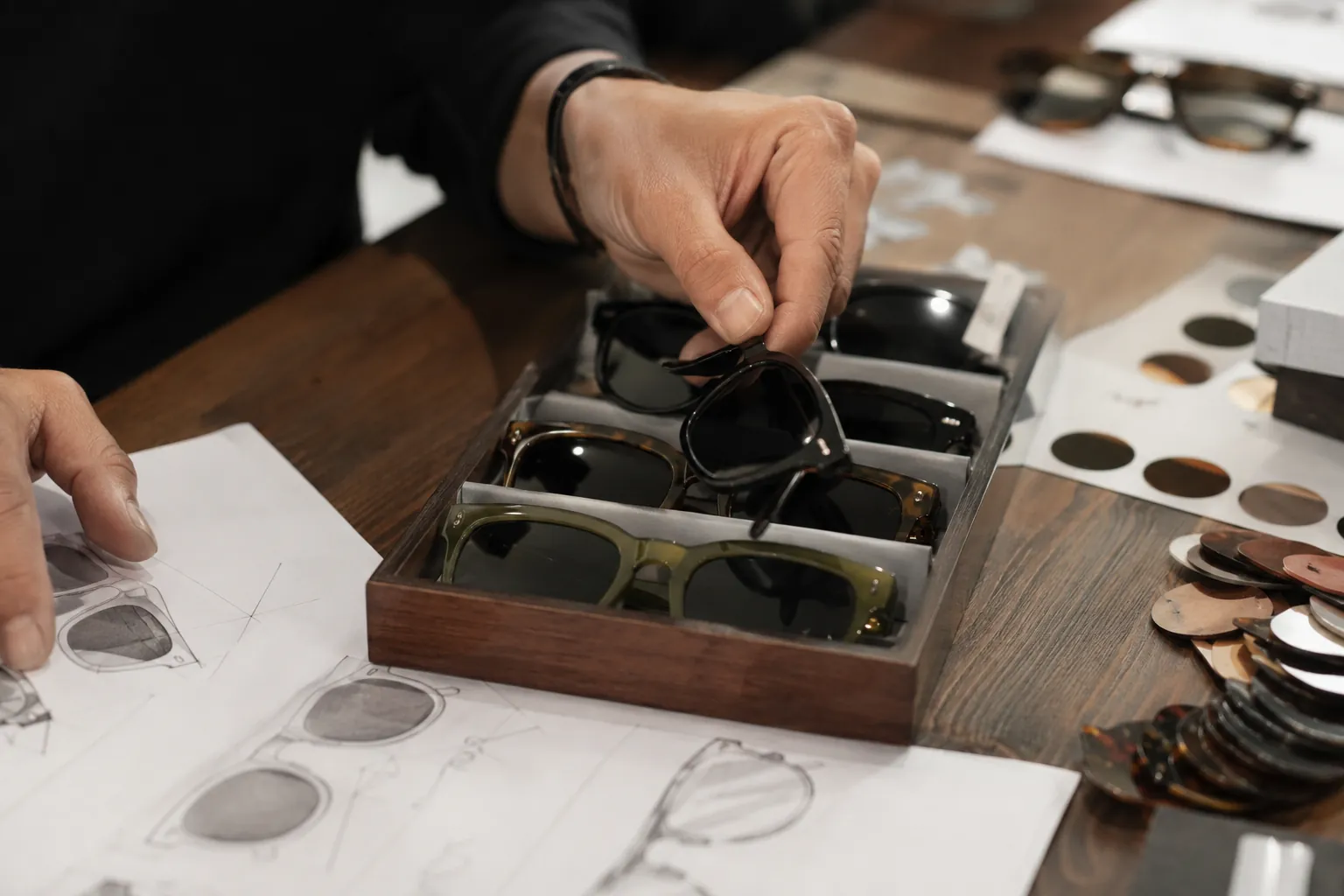
This guide is for brands, importers, distributors, and retailers deciding whether to pay for private sunglasses tooling or build a program from existing frame molds. The question is simple: will the design, order plan, margin, launch timing, testing needs, and compliance work justify the fixed development cost? A custom mold can protect a shape and support repeat sales. It can also trap cash in an unproven product. Below, we break down tooling decisions, MOQ pressure, development steps, material behavior, decoration limits, tolerances, QC, and sourcing options from a Wenzhou eyewear factory such as LumiShades.
The Fast Decision Rule Buyers Should Use
Build a custom mold only when the frame shape creates real commercial value. If the goal is a new frame color, lens tint, temple logo, hangtag, pouch, or retail box, stock tooling is usually the better first move. It samples faster. It costs less. It gives you room to adjust after the first market response.
Private tooling starts to make sense when you need geometry competitors cannot buy from the same catalog, or when the fit and structure cannot be achieved through decoration. Examples include a wider bridge, a flatter fashion front, a sport wrap with a defined base curve, a thicker temple for an embedded logo plate, a custom hinge position, or a frame designed around a specific polarized lens thickness.
Use a conservative rule. If the first purchase order is small and the product is not proven, do not rush into a new mold. Start with a stock mold and customize the colors, lenses, laser engraving, pad printing, metal logo plates, and packaging. For suitable stock programs, LumiShades can quote low-MOQ trial orders so buyers can test several SKUs before paying for private tooling.
Practical threshold: private tooling is easier to justify when the program has repeat orders, multiple colorways, retailer commitments, or a clear need for a frame shape stock molds cannot deliver.
Stock Mold, Modified Stock, or Private Mold
| Option | Best Use | Typical Factory Work | Normal Timing Impact | Commercial Risk |
|---|---|---|---|---|
| Stock mold | Market testing, promotional sunglasses, fast replenishment | Frame color, lens tint, logo, packaging, QC | Shortest route because the frame shape already exists | Low, because the shape is already proven in production |
| Stock mold with decoration upgrade | Brand differentiation without geometry changes | Pad print, laser logo, heat transfer, metal plate, pouch and box development | Usually limited to artwork approval, sample making, and adhesion checks | Low to medium, depending on logo position, surface curve, and finish |
| Stock mold with minor insert or fixture change | Small logo recess, adjusted plaque area, decoration alignment | Insert work, fixture setup, trial assembly, cosmetic review | Longer than decoration because localized tooling or fixture work may be required | Medium, because local changes can affect finish, assembly, or yield |
| Private injection mold | New PC, TR, TPE, or injected frame shape | 3D drawing, DFM review, steel mold, trial shots, fitting correction | Adds engineering, mold making, trial, measurement, and correction before bulk | Higher, because shrinkage, fit, hinge function, and lens seating must be validated |
| Private acetate tooling and CNC program | Premium acetate line with custom front and temple profiles | CNC program, cutting fixtures, tumbling, polishing, hinge drilling, lens pattern | Longer sampling cycle than simple decoration | Higher unit cost, but useful for brand-specific shapes and acetate patterns |
The common sourcing mistake is calling every customization request tooling. Most commercial differentiation in sunglasses does not need a new frame mold. Lens category, gradient tint, polarized lens choice, temple print, hinge color, acetate pattern, logo plate, pouch fabric, and box structure can all move a product away from a catalog look.
Save private tooling for structural changes: lens shape, bridge width, nose pad geometry, hinge location, temple thickness, wrap angle, front curve, or lens groove. If those dimensions must change, tooling belongs in the cost and timeline discussion.
What Tooling Actually Pays For
Tooling is not just a steel block. A serious OEM sunglasses quotation should separate design conversion, engineering review, mold manufacture, trial production, correction cycles, samples, and the final bulk unit price. For injected frames, the factory should review shrinkage, gate location, parting line, ejection marks, wall thickness, screw boss strength, hinge area, and the risk of temple warpage after cooling.
Small dimensional differences are easy to feel in eyewear. A temple opening difference can make a frame sit twisted. A shallow lens groove can cause lens movement or pop-out during flexing. A narrow bridge can create pressure marks. A temple that is too thin may not hold a metal logo plate after heat exposure, sweat, and repeated handling.
For acetate frames, the tooling picture changes. There may be no injection mold for the frame front, but there are CNC programs, cutting fixtures, polishing settings, hinge drilling fixtures, and lens pattern development. Acetate moves during cutting, tumbling, and polishing. The factory needs trial material to confirm final thickness, fit, edge finish, and balance.
LumiShades supports injection molding, acetate cutting, CNC milling, lens tinting, laser engraving, pad printing, metal logo plate application, and QC. Trials still matter. The benefit is that molding, cutting, decorating, tinting, and inspection feedback can be handled in one production workflow.
MOQ, Price, and Mold Amortization
Judge tooling against realistic order volume, not optimistic forecasts. Buyers often spread the tooling cost across a large projected quantity because the spreadsheet looks better. That is risky. Start with the committed purchase plan, then run upside scenarios separately.
Tooling and development costs are fixed. Spread that cost across a small order, and the added cost per pair can damage margin. Spread it across repeat orders or multiple colorways, and it may become acceptable. That is why MOQ tiers matter. LumiShades can quote low-MOQ stock programs for suitable designs, while larger orders may allow better unit pricing depending on frame material, lens type, decoration, packaging, inspection requirements, and delivery terms.
- Small trial orders: use stock molds unless there is a strategic reason to own the frame shape.
- Growing test programs: improve decoration, lenses, and packaging before paying for private tooling.
- First retailer placement: discuss private tooling only if repeat orders, exclusivity, or brand protection is realistic.
- Multi-color or multi-season programs: tooling can make financial sense if the same frame supports more than one SKU or replenishment cycle.
- Established volume programs: private tooling is easier to justify, but only after compliance, packaging, defect risk, and lead time are included.
A custom mold does not automatically lower the unit price. It may raise it if the frame uses thicker material, difficult lens curves, metal components, multi-step decoration, low-yield polishing, or special packaging. Ask the factory to quote tooling cost and unit cost separately. Then calculate landed cost with freight, duty, inspection, testing, and expected replacement allowance.
Lead Time and Development Steps
Stock molds keep the development path short: choose the frame, confirm material and color, select lenses, approve decoration artwork, make samples, test the packing method, then release bulk production. LumiShades can estimate sample and bulk production timing after confirming the selected frame, material availability, order quantity, packaging complexity, and compliance requirements.
Private tooling adds a front-end development loop. A realistic process normally includes:
- Buyer sends sketch, reference sample, 3D file, or measurement sheet.
- Factory checks wall thickness, hinge area, lens retention, bridge comfort, logo position, and packing risk.
- Engineering drawing is confirmed, including lens width, bridge, temple length, base curve, pantoscopic angle, and front angle.
- Mold, inserts, CNC fixtures, or lens patterns are made.
- First trial samples are produced and measured against the drawing.
- Corrections are made for shrinkage, surface marks, hinge movement, temple alignment, or lens seating.
- Golden sample is approved before bulk production starts.
Do not plan a retail launch around a perfect first trial. It may be close. It may also need correction. A small change to lens groove depth, hinge tightness, temple opening, or nose fit can decide whether the frame feels stable or becomes a return problem.
Materials, Decoration, and Fit Details
Material choice changes tooling behavior. PC is common for cost-sensitive fashion sunglasses and promotional programs, but injection marks, surface finish, and brittleness risk need control. TR materials are lighter and more flexible, which can work well for sport or active styles. That flexibility can also change how the lens seats and how the temple holds alignment. Acetate feels more premium and supports rich patterns, but it requires more cutting, tumbling, polishing, and hand adjustment.
Decoration has limits. Pad printing works best on controlled surfaces and can distort across a tight curve. Laser engraving is clean for subtle marks but depends on material and color contrast. Metal logo plates need a stable recess and enough temple thickness. Heat transfer and foil effects require adhesion testing because sunglasses face sweat, sunscreen, heat, abrasion, and repeated handling.
Fit details are where many custom projects fail. Lens seating needs consistent groove depth. Temple alignment should remain stable after repeated opening and closing. Nose pad geometry should match the intended wearer profile and target market. A thicker polarized lens may need a different groove than a basic tinted lens. Dark lenses must still meet the claimed lens category and applicable standard. Make tooling decisions with the final lens plan, not only an empty frame rendering.
Compliance and QC Before Mold Approval
Private tooling creates ownership of the shape. It also creates responsibility for performance. The frame still has to meet the requirements tied to the destination market and product claim. LumiShades works with compliance programs including CE EN ISO 12312-1, ANSI Z80.3, AS/NZS 1067, REACH, FDA registration, ISO 9001, and BSCI. Buyers should request documents that match the market, product type, and current production context. A generic certificate pack is not enough.
For sunglasses, confirm UV protection, lens category, optical quality, impact-related requirements where applicable, labeling, nickel or restricted substance concerns, and packaging warnings. CE EN ISO 12312-1 is relevant for many European sunglass programs. ANSI Z80.3 is commonly requested for the U.S. market. AS/NZS 1067 is used for Australia and New Zealand. REACH matters for restricted chemicals in materials sold into the EU. FDA registration can be relevant to the U.S. eyewear import context, but it is not product approval.
QC should happen in layers: incoming material check, first-piece inspection, in-process inspection during molding or cutting, lens tint confirmation, decoration adhesion check, hinge and screw check, final AQL inspection, and carton verification. For a new mold, add dimensional measurement against the approved drawing. Keep the golden sample at the factory and in the buyer's office so both sides judge bulk production against the same reference.
A Buyer Path That Avoids Expensive Guesswork
Use a staged path. Start with stock molds to prove the look, price point, packaging, and channel response. Use custom lenses, logo methods, and packaging to create enough differentiation for a market test. Let reorder data show which shapes deserve more investment.
Once a winner is clear, prepare a proper tooling brief. Include target retail price, expected order volume, lens type, frame material, face fit requirements, logo method, packaging dimensions, destination markets, and compliance needs. Send physical reference samples if fit matters. Photos are weak. They do not show weight, hinge feel, lens curve, or wearer comfort.
Then ask the factory for two quotes: one based on the closest stock mold and one based on private tooling. Compare unit price, tooling cost, sample timing, bulk timing, expected defect risks, compliance requirements, and whether the design can support more than one colorway. If the private tool does not create a visible or functional advantage, keep the stock mold and spend the money on better lenses, stronger packaging, testing, or inventory depth.
A mold is a business tool, not a trophy. Buy it when it protects margin, supports repeat orders, or gives the product a fit and shape that stock frames cannot deliver. Otherwise, stay flexible and let sales data lead the tooling decision.
Have a custom sunglasses project in mind?
Send us your styles, target market and quantities and we will return a detailed quote with MOQ, lead time and a sample plan.
Get a QuoteWhy source this from Wenzhou with LumiShades
Wenzhou in Zhejiang Province is widely regarded as China’s eyewear manufacturing capital, producing a large share of the world’s sunglasses. That concentration matters to buyers: a deep local supply chain for acetate sheet, hinges, lens blanks, plating and packaging means shorter component lead times, easier color and material matching, and a workforce with decades of eyewear-specific skill. LumiShades has manufactured in this ecosystem since 2009, and our vertical integration — in-house injection molding, acetate cutting, CNC milling, lens tinting, decoration and quality control — means no part of your order is quietly subcontracted to a workshop you cannot audit.
For international buyers, that vertical control translates into accountability. When a single factory owns every step, defects are traced and fixed at source rather than bounced between vendors, and your specifications survive intact from first sample to bulk. We back this with 15+ years of experience, shipments to 60+ countries, more than 5 million pairs produced per year and a 98.5% on-time delivery rate. Our certifications — CE EN ISO 12312-1, FDA registration, ANSI Z80.3, AS/NZS 1067, REACH, ISO 9001 and BSCI audit — mean the compliance documentation your market requires already exists. Explore our manufacturing capabilities and quality control process to see how this works in practice.
Frequently asked questions
What order quantity usually justifies a custom sunglasses mold? There is no universal quantity. Tooling cost, frame complexity, lens choice, packaging, and margin all change the calculation. Ask the factory to quote tooling cost separately from unit price, then divide the tooling cost across the quantity you are actually committed to buying. Private tooling is easier to justify when the same frame will support repeat orders, multiple colorways, or confirmed retailer demand. For first tests and small launches, stock molds with custom colors, lenses, logos, and packaging are usually lower risk.
Can I own the mold if LumiShades makes it? Yes, but ownership must be written into the quotation, purchase order, or tooling agreement. The agreement should state who pays for the mold, whether the mold is exclusive, whether it can be used for other customers, how long it will be stored, who pays for maintenance, what happens if there is no repeat order, and whether the buyer can request transfer or disposal of the tooling.
How much longer does private tooling add compared with stock sunglasses? Stock sunglasses move faster because the frame shape already exists and the main work is color, lens, logo, packaging, sampling, and QC. Private tooling adds engineering review, drawing confirmation, mold or fixture making, first trials, measurement, correction, and golden sample approval before bulk production should start. Ask for a written timeline that separates tooling development from bulk production so the launch date is not based on a perfect first-trial assumption.
Do I need a new mold for custom logos and lens colors? Usually no. Laser engraving, pad printing, metal logo plates, lens tinting, polarized lens selection, frame colors, pouch design, and retail packaging can normally be developed on stock molds. A new mold becomes relevant when the frame geometry changes, such as lens shape, bridge width, nose pad design, front curve, wrap angle, hinge position, temple thickness, or lens groove.
Which compliance documents should I ask for? Ask based on the destination market and product claim. CE EN ISO 12312-1 is relevant for many European sunglass programs, ANSI Z80.3 is commonly requested for the U.S. market, AS/NZS 1067 applies to Australia and New Zealand, and REACH is important for restricted substances in products sold into the EU. FDA registration may be relevant to the U.S. eyewear import context, but it should not be treated as product approval. ISO 9001 and BSCI relate to management system and social compliance context rather than sunglass lens performance.
What should be approved before bulk production starts on a new mold? Approve the golden sample, engineering measurements, lens fit, hinge movement, temple alignment, nose fit, logo placement, surface finish, packaging, labeling, and the compliance testing plan required for the sales market. Keep one approved sample with the factory and one with the buyer. Do not release bulk production from renderings, photos, or an unmeasured trial sample alone.
Ready to start?
Explore our shield & oversized sunglasses or request a quote — our sales team replies within 12 hours.
Request a Quote