
Retail-Ready Sunglasses Packaging Without Overbuying
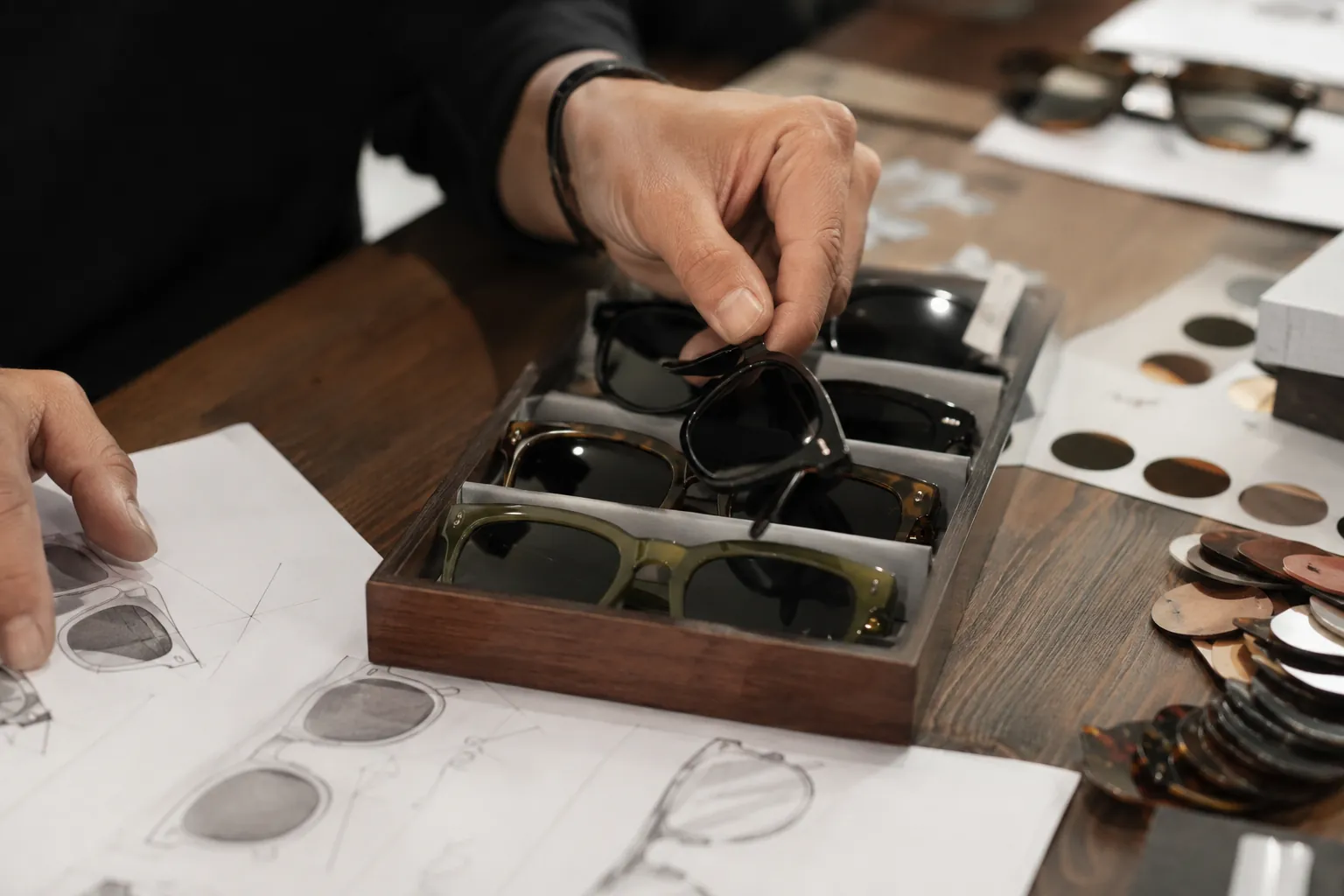
This guide is for brands, importers, distributors, and retailers sourcing custom sunglasses in volume. The aim is simple: specify packaging that looks ready for retail, protects the frame and lenses, supports labeling, and does not eat the margin. Buyers usually face the same choices: pouch or box, printed cloth or plain cloth, sticker or printed insert, standard structure or custom die line, low-MOQ flexibility or lower unit cost at scale. Each choice affects price, lead time, freight, and rework risk.
Start With the Sales Channel, Then Work Backward
Specify packaging from the selling environment backward. Not from a mood board. Sunglasses sold through a beach kiosk, airport gift shop, optical chain, ecommerce store, corporate promotion, or influencer mailer do not need the same packaging structure.
When the channel is vague, buyers often add parts that are not all commercially useful: rigid box, pouch, cloth, insert, sleeve, hang tag, barcode label, and outer carton marking. Each item looks small on its own. Together they raise unit cost, packing labor, carton volume, and replenishment time.
For shelf retail, packaging has three main jobs: identify the brand, survive repeated handling, and support receiving or SKU control. For ecommerce, pressure resistance, rub protection, and corner crush usually matter more than premium front-face finishing. For promotional sunglasses, reach and delivery efficiency often matter most. A microfiber pouch plus a scannable barcode or SKU label may be enough.
Small first orders are where packaging gets overbuilt fastest. Setup charges are spread over fewer units. Artwork changes hurt more. Custom structures are harder to justify. Control the risk by defining a base set for each channel, then adding only what that channel clearly needs.
- 50-100 pairs per design: use stock pouches, standard box sizes, plain or one-color decoration, and sticker labels where possible; avoid custom rigid boxes, molded trays, magnets, and multi-part inserts unless a retailer requires them.
- 300-1000 pairs per design: foldable printed boxes, printed insert cards, and printed cloths may make more sense because setup costs are spread across more units.
- 5000+ pairs per design: small savings in board grade, cloth weight, label format, and carton packing can matter, as long as protection and retailer requirements stay intact.
Match the packaging to the sunglasses. A low-price promotional frame should not automatically sit in a premium rigid box. A higher-value acetate frame, polarized lens program, or gift-oriented retail set may justify stronger packaging because the product value and sales context are different.
Choose the Stack by Cost and Material Limits
Each packaging component behaves differently on cost, freight, lead time, and production risk. A microfiber pouch is flexible and usually simple to source. A foldable paper box adds print control and shelf structure. A rigid paper box is less forgiving. It involves board, wrapping paper, glue, possible magnets, an inner tray, hand assembly, drying time, and larger carton volume.
Insert cards look simple, but they often slow the order. Market wording, translations, care text, and barcode placement can delay approval if they are handled late.
| Item | Common MOQ Pattern | Cost Behavior | Lead-Time Effect | Common Risk |
|---|---|---|---|---|
| Microfiber pouch, commonly 170-200 GSM | Often available at lower MOQs than custom boxes | Usually economical; decoration method drives cost | Low if logo method and fabric color are standard | Thin fabric can feel weak; heat-transfer logos may crack or shine if pressure and temperature are wrong |
| Foldable paper box, commonly SBS, CCNB, or similar carton board | Usually more efficient once quantities move beyond very small tests | Moderate; print coverage, finish, and die line affect price | Moderate; die line, artwork proofing, and print approval add steps | Panel crush, weak locking tabs, or poor fit if board grade and dimensions are vague |
| Rigid paper box, commonly greyboard wrapped with printed or specialty paper | Usually less suitable for very small test runs | High relative to pouches and folding cartons; freight volume also increases | Higher; hand assembly, drying, and QC take longer | Misaligned wrap corners, glue marks, magnet issues, and larger master cartons |
| Microfiber cleaning cloth, commonly 180-220 GSM | Moderate; printing and edge finish affect MOQ | Low unit cost at scale, but setup still matters | Low to moderate depending on print method and drying | Ink transfer, lint, edge fraying, or cloth that scratches coated lenses if quality is poor |
| Barcode or SKU sticker | Usually flexible for small batches | Low; useful when SKUs or destinations change | Very low if data is approved early | Adhesive lift, poor scan contrast, wrong quiet zone, or placement on a curved or textured surface |
| Printed insert card, commonly 250-350 GSM | Usually tied to print-house minimums and sheet efficiency | Low per unit at volume; review time can be the larger cost | Moderate; copy approval often delays it more than printing | Wrong market wording, unsupported claims, or text that is too small to read |
Decoration method changes the result. Screen printing usually works for bold one-color pouch logos. Heat transfer can hold finer detail on microfiber, but it needs controlled pressure and temperature. Foil stamping works best on smooth coated or laminated paper, not rough stock. Offset printing is the normal choice for full-surface paper box graphics.
Before approving any decoration, check the smallest logo line, text size, and registration tolerance on the actual material. A digital mockup is not enough.
For many first retail programs, the most balanced stack is a foldable printed box, microfiber pouch, cleaning cloth, barcode sticker, and one insert card. It gives the buyer a branded set without moving too early into rigid-box cost and freight behavior.
Use Three Packaging Tiers
Too many packaging options slow quoting, purchasing, artwork review, and reorders. Build three fixed tiers instead. Tie each tier to channel, order size, and product value. This reduces one-off distributor requests and keeps repeat orders easier to manage.
- Basic retail-ready set: microfiber pouch, plain or one-color printed cloth, barcode or SKU sticker, and polybag. Suitable for online bundles, beach retailers, events, corporate programs, and price-sensitive orders.
- Standard shelf set: foldable printed box, pouch, cloth, barcode sticker, and insert card. Suitable for mainstream private label sunglasses that need shelf presence while keeping landed cost under control.
- Premium or gift set: rigid box, inner tray, pouch, cloth, printed care card, barcode label, and outer sleeve if the retailer requires it. Suitable for higher-ASP retail, gift sets, optical programs, or launches where presentation is part of the offer.
Keep the frame and packaging tier linked. A basic injection-molded PC frame or low-price promotional style rarely needs a rigid magnetic box. A higher-value acetate frame, custom metal logo detail, polarized lens, or upgraded coating may justify stronger packaging if the channel and retail price support it.
For a first test order, use standard structures and sticker customization where possible. Custom dies, molded trays, magnets, specialty paper, and multi-part inserts make more sense after the program repeats or after the retailer confirms rollout. The first order should test sell-through. It should not trap the buyer in expensive packaging before demand is proven.
Lock Artwork and Dimensions Before Sampling
Most packaging delays come from incomplete input, not slow machines. Common problems include low-resolution logos, outdated Pantone references, box dimensions copied from another frame, missing barcode data, and insert wording that has not been approved by the buyer or retailer.
Once sampling starts, every correction can trigger new proofs, tooling checks, or a revised pre-production sample. That burns time.
Complete a packaging specification sheet before sampling begins. It should identify the frame SKU, lens type, destination market, packaging components, material, dimensions, decoration method, artwork file, barcode data, carton labeling, and approval responsibility. If the supplier is expected to align packaging with CE EN ISO 12312-1, ANSI Z80.3, AS/NZS 1067, REACH, FDA registration context, ISO 9001, or BSCI documentation, state that clearly and match it to the product and market.
- Provide vector artwork in AI, editable PDF, or EPS. Raster logos can create rough edges in foil stamping, pad printing, small inserts, and fine paper print.
- State Pantone references, print method, finish, and acceptable color variation. The same color will not look identical on microfiber, coated paper, uncoated paper, and labels.
- Confirm inner box dimensions against a physical folded frame sample, not only CAD or nominal frame measurements. Allow clearance for temple thickness, hinge hardware, nose pads, raised logos, and high-wrap lens shapes.
- Place barcodes on a flat, smooth surface with adequate quiet zone and contrast. Labels wrapped over edges, placed on textured pouches, or printed too small may fail scanning.
- Lock insert wording before mass production. Care instructions, warnings, market references, and retailer-specific text should be approved before printing.
- Confirm master carton count, carton dimensions, and gross weight before final packaging approval, because the unit box can change freight cost and warehouse handling.
Do not approve packaging artwork only on a phone screen. Print it at actual size. Text that looks acceptable at high zoom can become unreadable on a small insert card, especially when multilingual copy is compressed or printed on textured stock.
Match Decoration to Surface and Order Size
Decoration is where strong artwork often turns weak in production. The same logo behaves differently on microfiber, matte coated paper, uncoated kraft stock, PU pouch material, and textured rigid box wrap. Choose the method by substrate, line detail, durability, and order size.
For microfiber pouches and cleaning cloths, screen printing usually suits bold one-color logos. Heat transfer can deliver sharper detail or multicolor effects, but it adds a transfer-film process and requires controlled heat and pressure. If the setup is poor, the logo can turn glossy, brittle, uneven, or easy to crack.
Embroidery is rarely appropriate for cleaning cloths. Raised threads can create lens-contact risk if the cloth is used directly on eyewear.
For paper boxes, offset printing is the usual method for full-surface graphics. Foil stamping works well for brand marks and short copy on smooth stock. Fine lines, small text, and rough textures can produce broken edges. Spot UV can add contrast on coated cartons, but registration drift and fingerprints should be considered. Debossing or embossing can support a premium look on rigid boxes, but deep pressure on lightweight board can weaken panels or distort the structure.
Order size changes the logic. On a small test run, a stock box with a clean sticker or simple sleeve may be more practical than custom foil and embossing. On a repeat retail program with stable artwork, a printed box with a controlled decoration process is easier to justify because setup work is spread across more units and the package appearance can be standardized.
Keep Packaging From Creating Compliance Problems
Sunglasses compliance sits mainly with the eyewear. Packaging and inserts can still create problems if they make claims the product does not support. If a product refers to CE EN ISO 12312-1, ANSI Z80.3, AS/NZS 1067, REACH, FDA registration, ISO 9001, or BSCI, the wording must match the actual documentation, destination market, and tested product category.
Do not copy claims from another SKU. Do not paste retailer template language unless the current product supports it.
Use certification and registration references precisely. CE EN ISO 12312-1, ANSI Z80.3, and AS/NZS 1067 relate to sunglass performance and labeling expectations in specific markets. REACH relates to chemical compliance for products supplied into the EU market. FDA registration may be relevant to US-market supplier or product context, but it should not be presented as a performance certification. ISO 9001 and BSCI relate to quality management and social compliance systems, not lens protection performance.
Retailers may also review packaging materials. Inks, adhesives, coatings, pouch fabrics, soft-touch finishes, and printed inserts can be questioned if they have strong odor, unstable surfaces, or unclear composition. For Europe, avoid unnecessary decorative chemistry and keep REACH documentation available where required. For Australia and New Zealand, confirm the correct product labeling format for the shipped sunglasses. For the US, keep ANSI Z80.3 and FDA-related wording factual and limited to what the supplier can document.
Practical control: the frame SKU, lens category, destination market, carton label, insert card, barcode data, and test report should all match. A mismatch between carton sticker, insert text, and product documentation can cause retailer nonconformance, shipment holds, or costly relabeling.
Size the Pack Around the Frame
A packaging set is not finished until master carton packing has been checked. Buyers sometimes approve an attractive unit box and later discover that carton density dropped, gross weight changed, or pallet efficiency worsened. The result is higher freight cost, weaker stacking, and slower warehouse handling.
Start with the actual sunglasses in folded position. Injection-molded frames are often more consistent in thickness than hand-finished acetate styles, but every design needs a physical check. High-wrap lenses, thick temples, metal plaques, sculpted end pieces, spring hinges, and raised logos can all change the clearance required inside the pouch, tray, or box.
A tight box can press temples into lenses or stress hinges. A loose box can allow movement and rub marks during transit. Both are bad.
The fit target is practical: the folded frame, pouch or cloth, and insert should sit in the package without forcing the lid shut or creating pressure points. If a paper tray or inner support is used, check contact points at the bridge, temple tips, hinges, and lens edges after basic handling. Transparent, mirrored, high-polish, and dark glossy frames may show abrasion or fingerprints differently, so inspect the actual frame finish.
Carton validation should be part of pre-production approval. Pack the final consumer-ready set into the proposed master carton, record carton count, dimensions, and gross weight, then check stacking, corner crush, label placement, and random unit condition after handling. Do this before freight booking. Packaging changes after carton calculation can affect cost and delivery planning.
Spend Where It Matters
Spend on packaging elements that reduce damage, improve handling, meet retailer requirements, or help the product sell. Save on parts that look expensive in a presentation but add little commercial value for the channel.
The goal is not the cheapest packaging set. It is the lowest-cost set that still protects the sunglasses, supports the sales environment, and keeps documentation accurate.
| Decision | Spend If | Save If | Buyer Note |
|---|---|---|---|
| Rigid box | The sunglasses sell as a gift, premium optical item, or high-ASP retail set | The frame is promotional, seasonal, or price-led | Rigid boxes increase carton volume, assembly time, storage space, and freight exposure |
| Printed cloth | The brand wants visibility after purchase and the cloth is part of the user experience | The cloth stays hidden in a low-price pouch program | A plain cloth plus branded pouch is often enough for early or price-sensitive runs |
| Foil logo | The box front is part of shelf presentation and the artwork is stable | The stock is rough, the logo is very small, or artwork may change | Foil needs clean vectors, stable pressure, and enough flat area to avoid broken edges |
| Custom insert card | Care, compliance, warranty, retailer policy, or multilingual information requires it | The same approved content can be handled through a standard insert or label | Short, market-specific copy is easier to control than one universal insert for all markets |
| Sticker barcode | SKUs, colorways, destinations, or retailer data change frequently | The program is stable and high-volume enough for printed packaging data | Stickers preserve flexibility during early runs, but placement and scan quality still need approval |
Before bulk packing, approve the full packed set, not loose components arranged on a table. Ask for one consumer-ready sample and one shipper-ready sample. Retail appearance and warehouse practicality are different checks.
- Confirm the sunglasses fit without lens pressure, temple stress, hinge pressure, or forced closure.
- Check logo position, color, size, and finish on the box, pouch, cloth, label, and insert against approved artwork.
- Scan the final barcode from its actual label position using the scanner or phone app the warehouse or retailer will use.
- Rub printed pouch and cloth logos to check flaking, tackiness, cracking, or ink transfer.
- Verify insert text, warnings, certification references, and market wording only where they apply.
- Review master carton count, carton weight, dimensions, label format, and carton strength before freight booking.
- Approve a golden sample and keep controlled copies with both buyer and supplier for comparison during production.
For early runs, avoid custom packaging parts unless the retail price, retailer requirement, or product value clearly supports them. For stable repeat programs, printed boxes and inserts are easier to justify. For large programs, small savings in board grade, cloth weight, tray style, label format, or carton count can matter. Make those savings only after the packaging has passed fit, handling, labeling, and compliance checks.
Have a custom sunglasses project in mind?
Send us your styles, target market and quantities and we will return a detailed quote with MOQ, lead time and a sample plan.
Get a QuoteWhy source this from Wenzhou with LumiShades
Wenzhou in Zhejiang Province is widely regarded as China’s eyewear manufacturing capital, producing a large share of the world’s sunglasses. That concentration matters to buyers: a deep local supply chain for acetate sheet, hinges, lens blanks, plating and packaging means shorter component lead times, easier color and material matching, and a workforce with decades of eyewear-specific skill. LumiShades has manufactured in this ecosystem since 2009, and our vertical integration — in-house injection molding, acetate cutting, CNC milling, lens tinting, decoration and quality control — means no part of your order is quietly subcontracted to a workshop you cannot audit.
For international buyers, that vertical control translates into accountability. When a single factory owns every step, defects are traced and fixed at source rather than bounced between vendors, and your specifications survive intact from first sample to bulk. We back this with 15+ years of experience, shipments to 60+ countries, more than 5 million pairs produced per year and a 98.5% on-time delivery rate. Our certifications — CE EN ISO 12312-1, FDA registration, ANSI Z80.3, AS/NZS 1067, REACH, ISO 9001 and BSCI audit — mean the compliance documentation your market requires already exists. Explore our manufacturing capabilities and quality control process to see how this works in practice.
Frequently asked questions
What is the lowest-risk packaging set for a first 50-pair test order? Use stock components: a microfiber pouch, plain or one-color printed cloth, barcode or SKU sticker, and protective polybag. Keep dimensions standard, avoid custom trays and rigid boxes, and approve the barcode position on the actual packed sample. This keeps setup cost low while still allowing the buyer to test sell-through and handling.
When should I move from stickers to fully printed boxes? Move to printed boxes when the SKU structure, artwork, destination market, and retail channel are stable enough for the same packaging to be reused. Stickers are better for early runs, changing colorways, mixed destinations, and retailer-specific barcode data. Printed boxes make more sense for repeat programs where setup, proofing, and inventory risk can be spread across volume.
Can the same packaging work for the US, EU, and Australia? The physical package may work across markets, but inserts, labels, and claims often need market-specific control. Match the wording to the destination and documentation, such as CE EN ISO 12312-1 for relevant EU sunglasses, ANSI Z80.3 for US-market performance references, AS/NZS 1067 for Australia and New Zealand, and REACH where chemical compliance is required. Do not use one generic compliance statement unless it is accurate for every shipped market.
How much time should I allow for packaging samples? Allow time for artwork proofing, material sourcing, decoration setup, physical sampling, and approval. Simple stock packaging with a logo is usually faster than a custom rigid box or new die line. The buyer can reduce delays by providing vector artwork, confirmed dimensions from a physical frame sample, approved barcode data, and final insert wording before sampling starts.
What packaging detail most often causes late rework? Insert wording and barcode placement are common causes. Legal, care, or market text is often reviewed too late, and barcodes can fail if they are too small, placed on a curve, printed with low contrast, or wrapped over an edge. Approve both on a full-size packed sample before bulk printing or packing begins.
Should I order premium packaging for all frame styles? No. Match packaging to the sales channel, retail price, and frame value. A low-cost promotional frame may only need a pouch, cloth, and label. A higher-value acetate frame, polarized lens program, gift set, or optical retail product may justify a stronger box, tray, insert, and more controlled decoration. The packaging should support the product promise without consuming margin unnecessarily.
Ready to start?
Explore our rimless sunglasses or request a quote — our sales team replies within 12 hours.
Request a Quote