
Build One Sunglasses Frame Into Many Looks
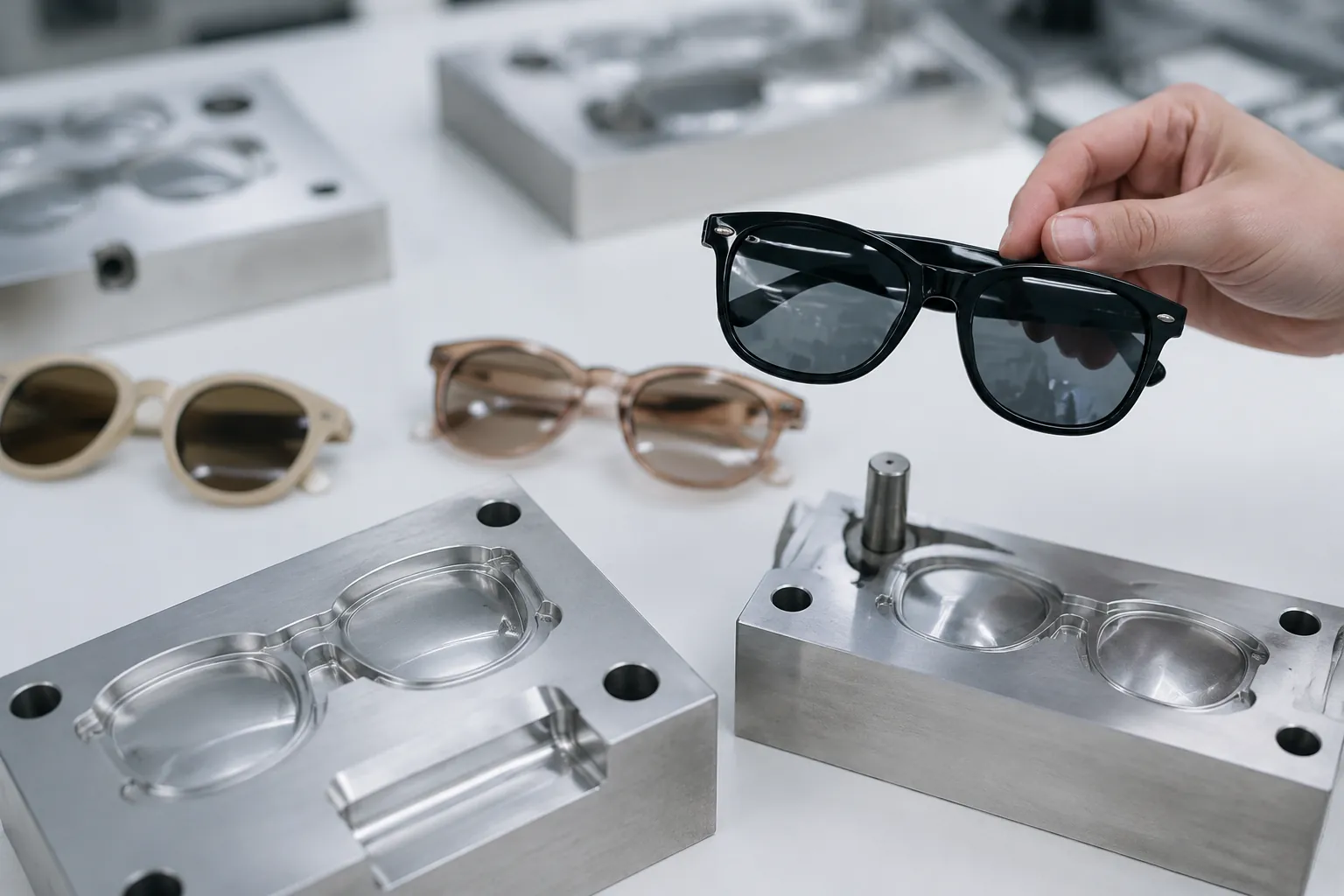
For brand owners, importers, and retail buyers, one of the most efficient ways to expand assortment without multiplying development risk is to build around a single proven frame platform. Keep the core geometry stable, then create distinct looks through frame color, surface finish, lens tint, polarization, and branding details. Done well, this lowers development cost, shortens sample cycles, and makes repeat orders easier to manage. It also gives production a cleaner path because the same base mold, lens shape, and inspection standard can support multiple SKUs.
Start With A Platform, Not A Full Collection
Many first-time buyers build too many unrelated frames at once. Each new shape can require its own tooling, fit validation, spare-part planning, and reorder logic. That adds cost before the market has shown what will sell. A better approach is simple: choose one frame platform with proven geometry and use it as the base for multiple commercial looks.
In factory terms, a platform means the front shape, temple construction, hinge specification, lens groove, and basic fit stay unchanged across the program. The visible changes happen in the parts buyers notice first: frame color, transparency, lens tint, mirror coating, logo treatment, and packaging. Keep the structure fixed. Change the look.
This approach works across different channels. A fashion retailer may want gradient lenses and translucent frames. A surf account may want polarized smoke lenses and a matte finish. A promotional client may only need a black frame with a simple pad print. The same base shape can support all three. That avoids separate mold programs, separate fit standards, and separate spare-part inventories.
Control matters. A platform strategy only works if the core specification stays stable from sample approval through bulk and reorder. If the lens groove, hinge behavior, or temple alignment shifts from one run to the next, the product is no longer truly platform-based. It is just the same shape with new problems.
Choose The Core Frame Before You Change The Finish
Not every style should become a platform. Pick a frame that can survive repetition in the market and in the factory. You want broad fit acceptance, predictable manufacturing behavior, and enough surface area for decoration without looking crowded.
For adult sunglasses, common commercial dimensions usually sit in a moderate range rather than at the extremes. The key is not chasing a magic size. It is choosing one that sits comfortably within your target customer base and can be manufactured repeatably. Ask the supplier what dimensional tolerances it can hold consistently for the exact material and process. Use the approved spec. Not a guess.
Material choice matters just as much as size. Injection-molded TR90 or similar nylon-based materials are often efficient for higher-volume platform programs because they support consistent color injection and repeat replenishment. Acetate gives stronger visual depth, especially for tortoise and translucent patterns, but the process usually needs tighter control over sheet consistency, cutting yield, polishing, and edge finish. If the program depends on heavier metal trims or precise decoration placement, confirm that the front thickness and temple width can carry the hardware without making the frame feel bulky.
Before approval, ask for checks that reflect how the product will actually be used. Review opening and closing feel on the hinge, lens seating stability, total weight, logo area clearance, and distortion under stress. A frame can look fine in a sample box and still fail in bulk if lens insertion force is too high or hinge behavior is uneven. That is where reorder programs slow down.
The best platform is one that tolerates cosmetic variation without changing mechanical behavior. If the same front can carry a solid lens, a polarized lens, and a gradient lens without changing groove depth or retention, you have a useful commercial base. If every visual change forces a structural adjustment, the frame is not ready.
Where The Variety Should Come From
Once the base frame is fixed, build variety through controlled changes. That is where assortment depth comes from. You are not paying for a new frame architecture each time, but the consumer still sees a distinct product on shelf or online.
| Variable | What Changes | Cost Impact | Lead-Time Impact | Typical Buyer Use |
|---|---|---|---|---|
| Frame colorway | Solid black, crystal, tortoise, translucent fashion shades | Low to medium | Low | Seasonal refreshes and channel segmentation |
| Lens tint | Smoke, brown, green, gradient, mirror, polarized | Low to high depending on lens structure | Low to medium | Price ladder from entry product to premium SKU |
| Decoration | Pad print, laser engraving, foil stamp, metal logo plate | Low to medium | Low | Private label branding and retailer exclusives |
| Surface finish | Gloss, matte, soft-touch, brushed effect where applicable | Low | Low | Style change without changing the mold |
The rule is plain: change what the buyer sees first, keep what controls tooling and fit stable. A black frame with a standard smoke lens belongs at entry level. The same frame in a translucent olive with a brown gradient lens and a metal logo plate can sit higher in the assortment. The shape is unchanged, but the retail read is different enough to support a stronger price.
Decoration is where buyers often underestimate complexity. Pad printing works well on flat or gently curved areas and is efficient for one- or two-color logos, but it needs proper surface preparation and curing to reduce rub-off risk. Laser engraving is better on metal components or coated surfaces where the mark needs to stay precise, though it adds setup time. Metal plates create a stronger premium read, but they need flush seating, controlled adhesive thickness, or reliable pin fixing. Otherwise they lift or catch on packaging.
Side by side samples help. They show how color, finish, and decoration change the product without losing the underlying fit and build standard.
Build A Price Ladder Buyers Can Reorder
A platform strategy should do more than simplify development. It should create a price ladder buyers can understand and reorder without re-learning the fit or production risk every time. One platform gives you a cleaner way to structure entry, core, and premium variants.
A workable model looks like this: an entry SKU with a standard molded frame, solid lens tint, and one-color pad print; a core SKU with a custom translucent or seasonal frame color, gradient lens, and laser logo; and a premium SKU with acetate or a higher-detail surface finish, polarized lens, and metal logo plate. Each step changes perceived value without forcing a new platform.
MOQ should be treated as a planning tool, not a fixed rule. Lower MOQs help you test a new colorway or logo placement. Higher quantities usually improve unit economics because setup time, packing, and inspection are spread across more pairs. The real question is not whether the MOQ is low or high. It is whether it matches the job. Testing demand calls for a smaller run. Replenishing a proven SKU calls for a larger one.
Compare total landed cost by variant, not only frame cost. A lower-cost frame with an expensive lens or heavily customized pack-out can wipe out the margin advantage quickly. Polarized lenses, metal hardware, special coatings, and custom packaging all change the final number. Test narrowly. Then reorder the winners in larger runs once demand is clearer.
How To Keep Reorders Fast
The real value of a platform strategy shows up after launch. First orders get attention, but repeat orders decide whether the program stays clean operationally. If the base frame stays fixed, replenishment becomes a materials and scheduling exercise instead of a full redevelopment project.
For custom sunglasses, lead time after approval and deposit depends on factory workload, material availability, and spec complexity. Reorders on the same platform are usually faster because the mold, fit, lens size, and assembly sequence have already been proven. The remaining variables are usually resin color availability, lens tint batching, decoration artwork, and packaging stock. If those inputs are stable, the factory can plan around them efficiently.
Before the first bulk order ships, lock these items in the master specification:
- Frame material, approved color standard, and finish level
- Lens material, tint reference, polarization requirement, and UV target
- Logo method, logo size, and exact position tolerance
- Hinge construction, screw finish, and any metal trim specification
- Carton pack-out, barcode rules, assortment ratio, and master carton count
That level of specificity matters because reorders usually fail for ordinary reasons: the artwork file changed, the color expectation was not written down, or the packaging buyer decided to mix colorways after sample approval. A disciplined factory should work from a signed specification and retained golden sample, then inspect against that standard before packing. Without that, every reorder turns into a new negotiation.
Once the base frame is fixed and the spec is complete, a reorder is mostly a scheduling problem. That is where you want the program.
Compliance Has To Carry Across Every Variant
This is where many buyers get careless. They approve one sample and assume every later colorway or lens version is automatically covered. That is not safe. A frame platform helps with production consistency, but compliance still depends on the final construction, lens performance, and materials used in each variant.
For sunglasses sold into multiple markets, the relevant requirements can include CE EN ISO 12312-1, ANSI Z80.3, AS/NZS 1067, REACH, and FDA registration where applicable to the program. Factory systems such as ISO 9001 and BSCI are useful indicators of process control and social compliance, but they do not replace product-level validation.
Cosmetic changes can still affect test behavior. A dark smoke lens, a mirrored lens, and a gradient lens may transmit light differently enough to affect category results. Polarization changes optical performance and usually changes cost structure too. Soft-touch coatings, paint systems, inks, and metal trims can also raise REACH questions because chemical exposure and migration risk may change with the finish.
Before bulk, confirm at least the following for each SKU:
- Lens category and transmittance for each SKU
- UV protection consistency across the range
- Chemical compliance for coatings, inks, soft-touch finishes, and metal parts
- Mechanical retention if lens thickness, edge polish, or coating changes
Short version: treat each meaningful lens or finish change as something to verify, not something to assume.
The Factory Checklist Before You Approve Bulk
A platform strategy still fails if approvals are sloppy. Before bulk starts, the buyer should review the range as a system, not as isolated samples. The goal is to make sure every SKU can be built, packed, and reordered without surprises.
- Approve the master frame first. Confirm dimensions, fit, hinge feel, weight, and left-right alignment.
- Review all planned variants side by side. Some colors make the same frame look heavier or cheaper than expected, especially under retail lighting.
- Check the branding method against the material. Pad print behaves differently on matte plastic than on polished acetate, and metal plates need stable seating.
- Inspect lens appearance under direct light. Gradient transitions, mirror uniformity, and edge defects are easier to catch before mass production.
- Confirm packing logic by SKU. Mixed assortments create warehouse problems if the carton ratio is not written clearly.
- Retain a golden sample for each approved look. One master frame is not enough when decoration and lens appearance differ across SKUs.
Also check packaging dimensions against the final frame height and temple width. A frame can meet product spec and still force a larger pouch or carton if the temples are unusually thick. That can increase freight cost and reduce the margin you expected. Final approval is not just about appearance. It is about how the SKU behaves from assembly to shelf.
Because a factory that handles molding, acetate work, CNC, tinting, decoration, and QC in-house can keep more of the process under one control system, many of these checks can be completed without moving the job between separate workshops. That makes corrective action faster when the first sample misses target.
What This Strategy Gets You In Buying Terms
For overseas buyers, one platform with multiple looks is not just a design idea. It is a purchasing tool. It lowers the cost of testing new looks, gives you cleaner MOQ management, and reduces the operational mess that comes from too many unrelated frame constructions.
You get more assortment depth from the same development base. You can test at a lower quantity per design, then move winning variants into larger repeat runs where the unit economics usually improve. You shorten the path from concept to sample because the shape is already fixed. And when a retailer wants an exclusive version, you can often create it through lens, color, finish, and branding changes instead of opening a new mold project.
That is the logic. One frame does not mean one look. If the platform is chosen well and the specifications are disciplined, one frame can carry a full collection without turning your supply chain into a one-off development cycle every time you need a reorder.
Questions To Ask Before You Commit
Before placing bulk, ask questions that show whether the supplier understands platform production. A good supplier should be able to explain how the frame will be held consistent, how variants will be controlled, and how repeat orders will be handled without reworking the base design.
Ask how the factory records the master frame specification, how it tracks lens and decoration changes by SKU, and how it distinguishes a cosmetic update from a structural change. Ask which parts are kept as retained samples, how often the line checks dimensional consistency, and what happens if the color standard does not match the approved reference. These are practical process questions, not formalities.
It is also worth asking how the supplier handles certification by market and by variant. A supplier that treats all sunglasses as identical will eventually create a problem. A supplier that separates product-level validation from general factory credentials is far more likely to keep the program controlled.
If the answers are vague, the platform concept may still be sound, but the execution risk is higher than it needs to be. If the answers are specific, documented, and tied to samples and specifications, the program is much more likely to hold up through bulk and reorder.
Have a custom sunglasses project in mind?
Send us your styles, target market and quantities and we will return a detailed quote with MOQ, lead time and a sample plan.
Get a QuoteWhy source this from Wenzhou with LumiShades
Wenzhou in Zhejiang Province is widely regarded as China’s eyewear manufacturing capital, producing a large share of the world’s sunglasses. That concentration matters to buyers: a deep local supply chain for acetate sheet, hinges, lens blanks, plating and packaging means shorter component lead times, easier color and material matching, and a workforce with decades of eyewear-specific skill. LumiShades has manufactured in this ecosystem since 2009, and our vertical integration — in-house injection molding, acetate cutting, CNC milling, lens tinting, decoration and quality control — means no part of your order is quietly subcontracted to a workshop you cannot audit.
For international buyers, that vertical control translates into accountability. When a single factory owns every step, defects are traced and fixed at source rather than bounced between vendors, and your specifications survive intact from first sample to bulk. We back this with 15+ years of experience, shipments to 60+ countries, more than 5 million pairs produced per year and a 98.5% on-time delivery rate. Our certifications — CE EN ISO 12312-1, FDA registration, ANSI Z80.3, AS/NZS 1067, REACH, ISO 9001 and BSCI audit — mean the compliance documentation your market requires already exists. Explore our manufacturing capabilities and quality control process to see how this works in practice.
Frequently asked questions
How many looks can I realistically build from one frame platform? For most commercial programs, four to eight variants is a practical upper range before the assortment starts to feel repetitive. A sensible mix is usually a small number of frame colorways, a small number of lens treatments, and one or two branding methods. Beyond that, the differences often become too small to justify extra SKUs unless you have clearly separate channels or price tiers. The real test is whether each version can be sold and reordered on its own terms.
Does using one frame platform make the product look too generic? Not if the platform is selected carefully. The problem is usually a weak frame shape, not reuse itself. Lens tint, transparency, finish, and logo treatment change the visual read more than many buyers expect, especially when the same core frame is presented in different channels or packaging. To keep the line from looking repetitive, vary the elements visible first and keep the base geometry consistent.
What MOQ should I use for a new collection launch? Use the MOQ that matches the purpose of the order. A smaller run is appropriate when you are testing a colorway, a logo placement, or a new lens treatment. A larger run is more efficient once you know which variants are likely to repeat. The key decision is whether the order is for validation or replenishment. Those two jobs do not need the same quantity.
Do I need new testing for every color and lens change? Not for every cosmetic change, but you should verify any meaningful change in lens category, coating, material, or chemical finish. A dark fashion lens, a mirrored lens, and a polarized lens can behave differently in testing, so do not assume one approved sample automatically covers every later variant. The safest workflow is to review the final SKU as sold, not only the base frame.
What usually causes delays on platform-based reorder programs? The most common causes are late artwork approval, color mismatch, changed packaging requirements, and lens tint batch issues. Reorders stay fast when the buyer has a locked specification, approved golden samples, and stable carton rules before production starts. Delays usually begin when a reorder is treated like a fresh design brief instead of a repeat of an already approved platform.
Ready to start?
Explore our shield & oversized sunglasses or request a quote — our sales team replies within 12 hours.
Request a Quote