
OEM Sunglasses Tooling: Stock, Modified, or Custom?
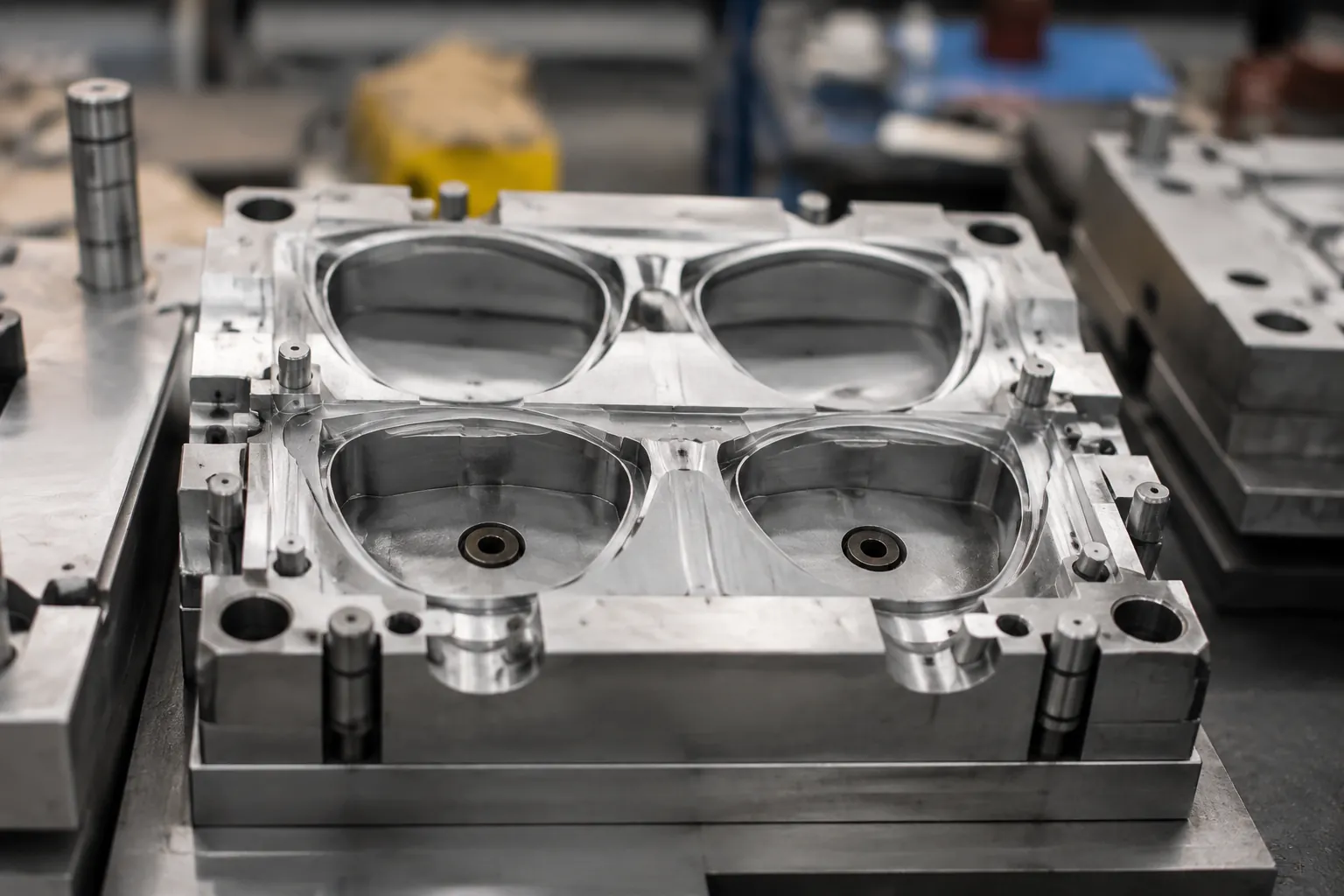
This guide is for brand owners, importers, distributors, and retail buyers choosing between an existing sunglass frame, a modified mold, and full custom tooling. The wrong path costs time and cash. It can also leave you with a frame that looks too close to everyone else's. The practical job is simple: compare unit cost, exclusivity, lead time, compliance risk, and mold payback before you issue the purchase order.
Start with the three sourcing paths
Most OEM sunglass projects fit one of three paths: stock frame with branding, modified existing mold, or full custom tooling. Many buyers start with a sketch. That is backward. Start with annual demand, define the level of exclusivity you need, then test the engineering case.
| Option | Typical use case | Upfront cost to verify | Lead time to first sample | Bulk lead time after approval | Exclusivity |
|---|---|---|---|---|---|
| Stock frame with branding | Fast launch, promotion, market test, chain retail, private label program | Usually limited to sample fees, logo setup, packaging artwork, and decoration tooling if needed | Usually fastest because the frame geometry already exists | Depends on material, order quantity, decoration, lens work, packaging, inspection, and factory capacity | Low unless a written exclusivity agreement covers the exact style, market, and period |
| Modified existing mold | Visible differentiation without paying for a completely new tool | Quoted case by case based on steel changes, fixture work, logo inserts, sample rounds, and testing needs | Longer than stock because engineering review and sample correction are required | Often similar to stock after approval, unless the change affects yield, assembly, or finishing time | Medium; only as strong as the written agreement covering the modified version and the remaining base mold |
| Full custom tooling | Own shape, own fit, repeat program, channel protection, recognizable hero style | Highest upfront commitment; buyer should confirm tooling cost, ownership terms, storage terms, maintenance, and sample-round scope in writing | Longest path because design, engineering, tooling, sampling, and correction happen before bulk production | Starts only after tool approval, pre-production sample approval, and material and packaging readiness | High if ownership, use rights, maintenance, and market restrictions are clearly written |
Cost and timing depend on material, construction, lens requirements, decoration, packaging, and open production capacity. A simple injected PC, nylon, or TR90-style frame with standard hinges is usually less complex than a multi-part fashion front with logo hardware, a tight lens groove, unusual lens shape, or strong wrap. Acetate is different. You may avoid a steel injection mold for the front shape, but CNC time, polishing labor, sheet yield, and finishing consistency become major cost drivers.
If you only need a temple logo, custom lens tint, and retail-ready packaging, new frame tooling is usually unnecessary. If you need a protected silhouette, a fit corrected for a target market, or hardware details that define the range, tooling needs a formal review. Use drawings, tolerances, sample stages, and written ownership terms. Do not rely on verbal alignment.
Decision framework: volume first, then exclusivity
Use this sequence before you ask a factory to quote a mold.
- How many pairs will you realistically buy in 12 months? A supplier may accept a low MOQ for sampling or a trial order. That does not make the unit price efficient. Setup, color preparation, decoration, inspection, and packaging work are spread across fewer units.
- What creates the brand value? If the value comes from packaging, lens color, merchandising, or logo execution, start from a stock frame. If the frame silhouette is the product, tooling becomes more reasonable.
- Do you need market exclusivity? Define whether protection is global, regional, channel-specific, customer-specific, or limited to a set period.
- Can gross margin absorb tooling recovery? Tooling is paid before sell-through is proven. Know how many pairs you need to recover the spend.
- How fixed is the launch date? Custom tooling adds design lock, engineering review, tool work, sample review, and correction time before normal bulk production can begin.
A practical rule set helps:
- Trial quantity or uncertain reorder path: use a stock frame unless exclusivity is central to the business model.
- Moderate repeat volume: consider a modified existing mold if the change is visible, manufacturable, and protected by written use restrictions.
- Repeatable multi-order demand: consider full tooling when the style is expected to stay in the line and the margin or channel protection can repay the investment.
Rule of thumb: if you cannot identify a credible reorder path beyond the first production run, do not approve a new mold for appearance alone.
What you can change without a full new mold
Many product changes sit outside the core frame mold. Review these first. They may give you enough difference without tying up cash in steel.
- Decoration: pad printing, screen printing, laser marking where suitable, foil stamping on packaging, and metal logo plates can change the retail impression without changing frame geometry.
- Lens work: smoke, brown, green, gradient, mirror coating, polarized lenses, and visible light transmission targets can often be specified without changing the frame mold, provided the lens shape and retention remain suitable.
- Color and finish: gloss, matte, soft-touch finishes, transparent colors, tortoise-like effects, and acetate sheet selection can create clear visual separation.
- Packaging: barcode labels, hang tags, microfiber pouch, EVA case, gift box, PDQ display, warning text, and carton marking often matter as much as frame changes for retail buyers.
Modified mold programs sit between stock and full custom. Common changes include temple thickness, bridge detail, logo plate recesses, bevel lines, or a front curve adjustment within manufacturable limits. Engineering should review each change before approval. Small changes can create large problems.
Be careful near hinges, bridges, and lens grooves. Removing too much material can cause warpage, weak screw retention, poor lens seating, or inconsistent assembly.
Useful tolerance language prevents vague sample disputes. For mass-production sunglasses, buyers often define critical dimensions such as:
- overall front width, measured at a stated reference point
- lens width, lens height, and bridge opening
- temple length and temple tip shape
- left and right temple alignment when opened and folded
- logo position relative to the hinge or another fixed datum
- lens retention, hinge function, screw tightness, and cosmetic acceptance criteria
For acetate styles, CNC milling allows flexibility in surface detailing, edge shaping, and pattern placement. Hand finishing still introduces variation. Control it with approved samples and inspection criteria. For injection styles, repeatability can be strong once the tool is stable, but geometry changes depend on tool design, steel work, cooling behavior, and material flow.
Cost recovery: break-even math buyers should use
Tooling is not justified by taste. It needs measurable margin recovery, channel protection, or strategic value. Build a simple worksheet before approval.
- Record the quoted tooling or modification cost, including sample rounds and decoration tooling.
- Compare unit cost under each path: stock, modified mold, and full custom.
- Estimate the incremental gross margin from better retail pricing, exclusivity, distributor protection, or reduced direct comparability.
- Subtract any higher unit cost caused by the custom version.
- Divide tooling spend by the net per-pair gain to estimate break-even volume.
Example calculation:
A stock frame is quoted at $3.40 FOB per pair. A full custom version is quoted at $4.20 FOB per pair. The custom path adds $0.80 per pair. If exclusivity and improved positioning allow the buyer to earn $1.70 more gross profit per pair downstream, the net gain versus stock is $0.90 per pair. A $6,000 tooling cost breaks even at about 6,667 pairs. Formula: $6,000 divided by $0.90.
If the realistic 12-month forecast is 800 pairs, the case is weak. If the forecast is 8,000 pairs across repeat orders and the style will remain active, the case is stronger.
Pricing ladders matter. Ask for step pricing at quantities you may actually buy: trial quantity, first production quantity, reorder quantity, and annual volume. Low-MOQ pricing can look high because setup, color mixing, lens preparation, logo work, inspection, and packaging overhead are spread across fewer pairs.
Do not use one low-price benchmark for all sunglasses. Material grade, lens specification, polarization, hinge quality, decoration method, compliance work, packaging, inspection level, and defect allowance can all change the FOB price.
A unique mold does not guarantee higher sell-through. Fit, quality, branding, labeling, and compliance documents often matter more than an aggressive sketch.
Lead time: where projects slow down
Tooling delays are often caused by unclear approvals, missing specifications, and repeated sample revisions. Tool work is only one part of the timeline. A disciplined approval process cuts avoidable delay.
- Design lock: confirm front width, bridge, lens width, lens height, temple length, base curve, pantoscopic angle if applicable, hinge type, material, color, lens type, and logo method.
- Engineering review: the factory checks wall thickness, material flow, ejection, lens retention, hinge seat strength, screw position, assembly feasibility, and finishing risk.
- Tooling or mold modification: steel changes should begin only after dimensions, logo placement, and construction are approved in writing.
- First sample review: evaluate fit balance, temple alignment, lens seating, hinge function, surface finish, logo position, color, and workmanship.
- Pre-production sample: confirm the approved frame, lenses, decoration, packaging, barcode, warning labels, carton marks, and compliance target before bulk.
- Bulk production: production timing depends on order quantity, material readiness, lens work, decoration, packaging, inspection requirements, and current factory load.
Common avoidable delays include:
- approving lens color from a screen image instead of a retained physical standard
- asking for a shape change without a dimensioned drawing or target measurement
- changing artwork after logo plates, screens, or print fixtures have been prepared
- leaving barcode placement, warning text, carton marks, or destination-market labeling until after the pre-production sample
- approving a cosmetic sample before confirming lens retention, hinge function, and packaging details
Good tech packs use numbers and physical standards. Include temple outside thickness at the logo zone, logo center location from the hinge datum, lens category or visible light transmission target based on an approved standard sample, Pantone reference where appropriate, and packaging dieline with barcode placement. These details shorten the sample loop because the supplier can measure against an agreed standard.
Materials, decoration, and compliance
Tooling decisions are tied to material behavior and compliance. Appearance is only one input.
Injection materials can be efficient for repeat production when the tool, material, and process are stable. Thin sections, sharp transitions, strong wrap, and weak hinge areas can create warpage, sink marks, stress whitening, poor screw retention, or assembly problems. Review wall-thickness changes for cooling and part stability before steel work starts.
Acetate can offer rich color depth, polish, and pattern variety. It also depends on sheet quality, cutting yield, hand finishing, heat adjustment, and polishing control. Narrow bridges, sharp corners, very thin temples, and complex laminated details can increase scrap or finishing time.
Decoration choices should match the surface, wear expectation, and price position:
- Pad print: common for simple logos; confirm adhesion and abrasion expectations on the selected surface.
- Screen print: useful for certain larger marks or packaging applications; approve artwork and color control before bulk.
- Laser marking: clean and durable on suitable materials and coatings; confirm the result on the actual production surface.
- Metal logo plate: strong premium signal, but it needs recess design, adhesive or mechanical retention planning, positional control, and assembly inspection.
- Foil stamping or print on packaging: can improve retail presentation without changing frame tooling.
Set compliance targets early by destination market and product type. Relevant items may include CE EN ISO 12312-1, ANSI Z80.3, AS/NZS 1067, REACH, and FDA registration where applicable. Keep product requirements separate from factory system or social compliance documents such as ISO 9001 and BSCI.
Shape changes can require new evaluation if they affect lens coverage, optical category, lens retention, hinge strength, structural performance, labeling, or user safety. A frame that looks correct but fails retention, hinge, labeling, or documentation checks can delay shipment and increase cost. For regulated or retailer-controlled markets, confirm test requirements before tooling approval.
Three buyer scenarios and the right path
Scenario 1: Boutique brand testing a new line. Forecast is small. Launch timing is tight. The main goals are speed, low cash exposure, and retail presentation. Correct path: stock frame with custom logo, approved lens tint, barcode labels, and upgraded packaging. Tooling should wait until reorder demand is proven.
Scenario 2: Distributor needs channel protection. Forecast is moderate and concentrated around one hero style. The silhouette matters, but budget is controlled. Correct path: modified existing mold if the change is visible, technically feasible, and covered by a written agreement. The agreement should state whether the modified version is restricted, whether the original base mold can still be sold, and which markets or customers are protected.
Scenario 3: Established brand with repeat volume. The buyer expects repeat orders, and retail positioning depends on a recognizable front, temple architecture, or fit. Correct path: full custom tooling, provided the brand has approved drawings, defined tolerances, clear compliance targets, and a realistic recovery plan. At this stage, tooling can behave like a product asset rather than a launch expense.
Before approving any tooling, ask:
- Is this a full new tool, a modified existing mold, or a CNC-based acetate development?
- Who owns the tool, who stores it, who maintains it, and who can use it?
- What happens to the tool if there are no reorders for a defined period?
- Which dimensions are critical, and what inspection tolerances will be used?
- How many sample rounds are included, and what costs apply after that?
- What compliance target applies to this SKU and destination market?
- What is the MOQ after tooling, and how does pricing change at realistic reorder quantities?
- Can the supplier provide retained samples and inspection records for bulk comparison?
The pattern is simple. The more repeatable the demand, the more tooling can behave like an investment. The less certain the reorder volume, the more a stock base protects cash and schedule.
Do not buy a new mold to solve a packaging problem, a branding problem, or a forecasting problem.
Have a custom sunglasses project in mind?
Send us your styles, target market and quantities and we will return a detailed quote with MOQ, lead time and a sample plan.
Get a QuoteWhy source this from Wenzhou with LumiShades
Wenzhou in Zhejiang Province is widely regarded as China’s eyewear manufacturing capital, producing a large share of the world’s sunglasses. That concentration matters to buyers: a deep local supply chain for acetate sheet, hinges, lens blanks, plating and packaging means shorter component lead times, easier color and material matching, and a workforce with decades of eyewear-specific skill. LumiShades has manufactured in this ecosystem since 2009, and our vertical integration — in-house injection molding, acetate cutting, CNC milling, lens tinting, decoration and quality control — means no part of your order is quietly subcontracted to a workshop you cannot audit.
For international buyers, that vertical control translates into accountability. When a single factory owns every step, defects are traced and fixed at source rather than bounced between vendors, and your specifications survive intact from first sample to bulk. We back this with 15+ years of experience, shipments to 60+ countries, more than 5 million pairs produced per year and a 98.5% on-time delivery rate. Our certifications — CE EN ISO 12312-1, FDA registration, ANSI Z80.3, AS/NZS 1067, REACH, ISO 9001 and BSCI audit — mean the compliance documentation your market requires already exists. Explore our manufacturing capabilities and quality control process to see how this works in practice.
Frequently asked questions
Is a stock frame always cheaper than a custom mold over time? At low volume, stock is usually the lower-risk path because there is little or no frame tooling spend. Over time, a custom mold can make financial sense if repeat demand is high enough and the custom version creates measurable margin, channel protection, or retail differentiation. Ask the supplier for stock and custom unit prices at your expected quantities. Add the tooling cost. Then calculate break-even pairs before approving the mold.
Can I get exclusivity on a modified existing mold? Sometimes, but it must be written into the agreement. Confirm whether exclusivity applies only to your modified version or also restricts the original base mold. Define the protected markets or channels, the length of the restriction, and any minimum annual order quantities required to keep exclusivity active. Verbal assurances are not enough for channel protection.
How fast can I get samples and bulk production? Stock-frame samples are usually fastest because the frame already exists. Modified molds and full custom tooling add engineering review, tool work, sample approval, and possible correction rounds. Ask the factory for a timeline that separates design lock, first sample, revised sample if needed, pre-production sample, material readiness, bulk production, inspection, and shipment. Bulk lead time should not start until the pre-production sample and packaging details are approved.
What certifications or standards should I ask for on sunglasses for export? Ask based on destination market and product type. Relevant product requirements may include CE EN ISO 12312-1, ANSI Z80.3, AS/NZS 1067, REACH, and FDA registration where applicable. Factory system or social compliance documents such as ISO 9001 and BSCI are different from product compliance. Request current documents, confirm the tested model or product scope, and check that labeling and packaging match the target market.
What is the real minimum order for a custom sunglass design? The commercial MOQ depends on the supplier, material, color count, lens specification, decoration, and packaging. A factory may accept a small trial order, but that does not mean the price is efficient or that tooling recovery is realistic. Ask for step pricing at your trial quantity, first reorder quantity, and expected annual volume. Then compare the extra unit cost and tooling spend against your margin plan.
Ready to start?
Explore our aviator sunglasses or request a quote — our sales team replies within 12 hours.
Request a Quote