
Sourcing Sunglasses for Resort & Travel Retail
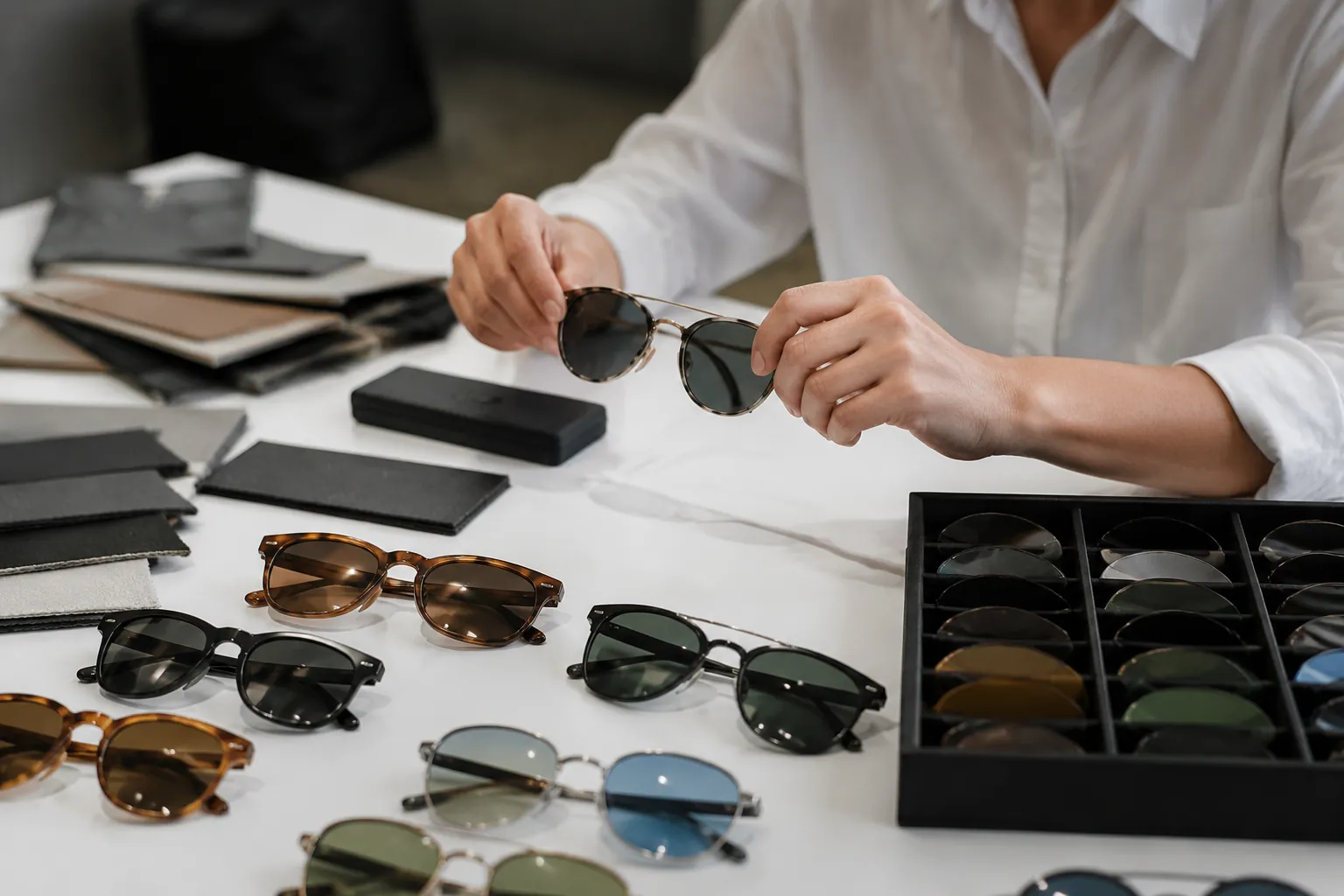
This guide is for buyers building sunglasses programs for resorts, cruise shops, airports, hotel retail, and tourist gift channels. These stores sell fast, seasonal, impulse-led products. Sunglasses are tried on often, dropped, exposed to heat, and bought with little hesitation when the offer is clear. Styling matters. It is not enough. A strong sourcing brief also needs a clear retail price ladder, materials that survive repeated handling, packaging that protects lenses without wasting space, compliance matched to the selling market, and a reorder plan built from real in-store dates. The sections below focus on sourcing decisions buyers can check during development, approval, production, and replenishment.
Start with the channel, not the frame
Resort, cruise, and travel retail do not buy like fashion boutiques or prescription optical stores. The shopper is often in bright sun, short on time, and ready to buy if the choice is easy. That changes the sourcing logic.
A frame that works in a city fashion store may fail in an airport kiosk. The packaging may be too bulky. The price may sit outside the impulse range. The assortment may be too fragmented for a small fixture. Start with the store reality, then choose frames.
Build the program from four inputs before approving any style:
- Target retail price: define opening, core, and premium tiers before sampling.
- Shopper dwell time: a cruise boutique can support more story and comparison than a compact airport counter.
- Handling and abuse risk: pool shops, beach stores, and shipboard retail generate heavy try-on traffic and frequent drops.
- Replenishment speed: if reorders are slow, the opening range must stay focused and easy to repeat.
For most tourism channels, a tight opening range is easier to manage. Use a small set of proven shapes, a disciplined color palette, and a consistent packaging footprint. Store teams can merchandise it quickly. Stockrooms stay cleaner. Repeat orders become more accurate.
A practical opening set often includes:
- 2 proven unisex shapes, such as square and wayfarer-inspired frames
- 1 women-led shape, such as a soft cat-eye or oversized round-square hybrid
- 1 wrap or active style for pool, beach, excursion, or sports demand
- 1 kids or teen option where family traffic is high
- 1 premium-looking style in acetate or mixed material for margin lift
Keep hero colors simple: black, tortoise, translucent smoke, beige, navy, and one seasonal accent. Too much overlap weakens the offer. If two SKUs look almost the same on shelf, one of them usually does not belong in the first order.
Build the price ladder backward from landed cost
Many travel retail programs get into trouble early. The buyer fixes a retail target, then cuts the specification until the product feels cheap. That is backwards.
Work from landed cost, required margin, and channel role. Ex-factory price is only one part of the calculation. Buyers also need packaging cost, freight, duty where applicable, retailer margin, markdown risk, and expected damage or return allowance. A low factory price can still produce the wrong retail offer if the full cost picture is ignored.
Think in tiers, not isolated item costs.
| Program tier | Typical ex-factory build | Common retail use | Typical spec details | Main trade-off |
|---|---|---|---|---|
| Entry | PC injection frame, standard tinted lenses, polybag or microfiber pouch | Impulse counters, hotel gift shops, promo-heavy beach stores | 1-color temple print, basic hinge, simple barcode label | Lowest cost but less premium hand feel |
| Mid | TR90 or better-finish PC frame, upgraded lens tint, folding box | Resort boutiques, cruise shops, branded destination retail | Pad print or laser logo, cleaner edge finish, inner protection bag | Higher perceived value with moderate cost increase |
| Premium | Acetate or CNC-finished frame, metal logo plate, stronger packaging set | Higher-end resorts, duty-adjacent travel retail, capsule programs | Polished edges, branded case, tighter color control, enhanced QC | Higher cost and tighter process control needed |
Do not overbuild the opening tier. A rigid gift box on a low-price beach-store SKU can add cost and carton cube without improving sell-through. Do not underbuild the premium tier either. If the frame is positioned as premium but ships in weak packaging or shows cosmetic defects, customers will notice. So will store teams.
Ask suppliers to quote by component set, not just finished pair. A useful quote separates frame, lens, logo method, pouch or case, carton, labeling, and any special packing. This makes cost cuts more controlled. Remove the parts that do not matter. Protect the parts that affect perceived quality, compliance, and damage rate.
Choose materials by abuse level, finish target, and repeat risk
Material choice affects more than appearance. It drives breakage risk, tolerance control, color consistency, tooling, lead time, and repeat-order reliability. In tourist retail, weak decisions show up quickly because the product is handled hard.
PC injection is often the most efficient option for value-driven programs. It scales well, repeat orders are easier to control once tooling is stable, and molded parts can deliver consistent geometry. It is often the safest route for large seasonal buys where speed and unit consistency matter more than luxury feel.
TR90 adds flexibility and comfort. It suits sport wraps, excursion styles, and any SKU likely to be bent during try-on. If the program needs a softer wear feel without moving into acetate pricing, TR90 is a practical middle option.
Acetate gives stronger shelf presence, deeper pattern, and better hand feel. It also adds process steps: sheet cutting, CNC shaping, polishing, manual fitting, and tighter color control across sheet lots. Reorders need more planning. Raw-material matching is less forgiving than standard molded colors.
Ask the supplier for material-specific tolerance standards before approval. Typical checkpoints include:
- Frame front width tolerance
- Temple length tolerance
- Temple opening symmetry and spread consistency
- Hinge alignment and screw tightness
- Lens fit with no visible gap, rattle, or stress whitening
With acetate, agree on acceptable color variation between sheet lots before sign-off. With molded frames, focus on hinge alignment, flash cleanup, and temple angle consistency. These problems are easy to miss in a photo. They are hard to fix after goods arrive.
For repeat business, record the exact material designation, color reference, lens specification, and finishing standard from the approved sample. Do not rely on memory. Do not rely on a short invoice description. Build a usable benchmark for the next order.
Decoration and packaging must survive store handling
In travel retail, decoration and packaging have to work under real conditions. Wet hands. Sunscreen residue. Direct light. Frequent shelf refills. Compressed stockrooms. A showroom sample does not prove enough.
Choose the logo method by abuse level and retail tier:
- Pad print: economical and flexible for temple logos; common on entry and mid-tier builds, but rub resistance must be tested.
- Screen print: useful for larger graphics on pouches or cartons.
- Laser marking: cleaner and often more durable on suitable surfaces; a good option for a subtle premium look.
- Metal logo plate or insert: strong perceived value, but it adds cost and needs tighter assembly control.
Packaging should pass five practical tests: barcode readability after friction, enough stiffness to resist corner crush, lens protection during refill, compact storage cube, and easy opening for staff. If a unit is slow to re-box, staff may stop re-boxing it properly. Scratch risk rises from there.
Common options by channel:
- Microfiber pouch plus belly band for fast-turn entry programs
- Folding carton with inner bag for mid-tier branded retail
- Hard case only for premium SKUs or gift sets, not broadline assortments
- Hang tag plus anti-scratch bag for peg displays in compact travel shops
Before mass production, request a transit-packed sample set. Not just a display sample. Check logo rub resistance, lens scratching inside the pack, carton durability, and barcode scan reliability after warm or humid storage. For cruise programs, also test folds, tabs, and closures after repeated open-close cycles by store staff.
Common mistake: spending on decorative outer packaging while underinvesting in lens separators, soft inner bags, or scratch protection. Scratched lenses kill sell-through faster than plain packaging does.
Match compliance to the selling market
Tourism retail often crosses jurisdictions faster than standard domestic retail. A cruise line may load inventory for several destinations. A resort group may split stock across countries. An airport operator may require consistent paperwork across concession partners. Compliance must be addressed during sourcing, not after production.
For sunglasses, confirm the exact standard and document set required by the selling market and retail partner. Common frameworks buyers may encounter include CE EN ISO 12312-1, ANSI Z80.3, AS/NZS 1067, REACH, FDA registration, ISO 9001, and BSCI. Not every program needs all of them. Match the paperwork to the markets, claims, age group, and retailer requirements.
At minimum, clarify:
- Lens category and visible-light-transmission labeling requirements
- UV protection claim wording on packaging and inserts
- Chemical compliance expectations, such as REACH where applicable
- Testing distinctions for adult versus kids styles
- Retailer-specific carton marks, barcode formats, and document templates
Tie compliance approval to the pre-production sample. The approved sample should show the actual lens tint, markings, warning text, and packaging claims used in mass production. If category labeling or UV wording is wrong at that stage, production speed will not save the order.
Ask what the test report covers. Is it for the specific style, a representative construction, or a production lot? Buyers need to know whether documentation is based on style approval testing, batch checks, or both. Retailers may later ask for traceability tied to shipped goods.
Treat ISO 9001 and BSCI correctly. They are not product-safety standards for sunglasses. They relate to supplier management systems or social-compliance review. Useful, yes. A replacement for eyewear product testing, no.
Plan QC and reorders around the selling window
Tourism demand is seasonal and uneven. It rises around school holidays, summer travel periods, cruise-season shifts, and destination events. Stockouts often happen because buyers reorder when shelves already look thin. That is too late.
Use backward planning. Start with the required in-store date. Subtract receiving time, customs clearance buffer where applicable, international transit, production time, sample approval time, and internal decision time. Then add a safety margin. A late delivery can miss the season entirely.
| Stage | Typical timing | Critical checkpoint | Buyer action |
|---|---|---|---|
| Assortment review | Planned by buyer calendar | Sell-through by shape and color | Drop slow colors and confirm repeat quantities |
| Sample or approval set | Supplier dependent | Color, logo, packaging, carton marks | Approve all visible and compliance-facing details |
| Bulk production | Supplier dependent | Material lock, decoration consistency, in-line QC | Avoid spec drift once production starts |
| Freight and receiving | Route dependent | Customs, port delays, warehouse intake | Build conservative arrival buffers |
QC should not be limited to a final visual check. Ask what is inspected in-line and before packing. Typical pre-pack checks include alignment, hinge function, temple symmetry, lens cosmetic defects, logo position, packaging count, and barcode scan. For larger travel programs, ask how defects are classified. Cosmetic faults and functional faults should not be treated the same.
If a style is a proven winner, reorder before the shelf is close to empty. For peak-season programs, consider pre-booking raw materials or standard lens colors for top sellers. This matters most for acetate patterns, custom-tinted lenses, and any SKU where lot matching is demanding.
Use one workflow for first orders and another for repeats
First orders and repeat orders have different jobs. Treat them differently.
A first order is about proving the assortment, checking the supplier, and preventing avoidable mistakes. A repeat order is about speed, accuracy, and protecting winners. If the process stays the same, buyers either move too slowly on repeats or take too much risk on new items.
For a first order:
- Set the retail ladder and channel mix before choosing styles.
- Limit the opening assortment to proven shapes with controlled color counts.
- Request samples with actual packaging options, not frame-only approvals.
- Approve compliance labeling, logo method, and barcode placement at pre-production stage.
- Confirm carton pack ratios that match store allocation, not just factory convenience.
- Record the approved construction in a specification sheet that can be reused for repeats.
For repeats:
- Review sell-through by shape and color, not only by style family total.
- Protect top sellers first. One weak color should not delay replenishment of winning variants.
- Keep the packaging footprint stable where possible so shelves and stockrooms do not need rework.
- Consolidate proven variants where volume improves purchasing efficiency without widening the range unnecessarily.
- Freeze approved specs in a repeat-order sheet: frame material, lens tint, logo method, barcode location, inner pack, and master carton count.
Before committing to a supplier, ask direct questions:
- What is the exact MOQ by design, color, and logo variation?
- How does pricing change by volume and by packaging option?
- Which styles are best suited to PC injection, TR90, or acetate for my target retail?
- What packaging has already been validated for transit and repeated store handling?
- What is the realistic sample lead time and production lead time for this exact construction?
- Which compliance files can you support for my selling markets?
- What QC points are checked before packing, and how are defects classified?
Strong travel retail programs are usually simple in the right places: clear assortment logic, protective packaging, market-specific compliance, controlled specifications, and reorder decisions made early enough to protect the season.
Have a custom sunglasses project in mind?
Send us your styles, target market and quantities and we will return a detailed quote with MOQ, lead time and a sample plan.
Get a QuoteWhy source this from Wenzhou with LumiShades
Wenzhou in Zhejiang Province is widely regarded as China’s eyewear manufacturing capital, producing a large share of the world’s sunglasses. That concentration matters to buyers: a deep local supply chain for acetate sheet, hinges, lens blanks, plating and packaging means shorter component lead times, easier color and material matching, and a workforce with decades of eyewear-specific skill. LumiShades has manufactured in this ecosystem since 2009, and our vertical integration — in-house injection molding, acetate cutting, CNC milling, lens tinting, decoration and quality control — means no part of your order is quietly subcontracted to a workshop you cannot audit.
For international buyers, that vertical control translates into accountability. When a single factory owns every step, defects are traced and fixed at source rather than bounced between vendors, and your specifications survive intact from first sample to bulk. We back this with 15+ years of experience, shipments to 60+ countries, more than 5 million pairs produced per year and a 98.5% on-time delivery rate. Our certifications — CE EN ISO 12312-1, FDA registration, ANSI Z80.3, AS/NZS 1067, REACH, ISO 9001 and BSCI audit — mean the compliance documentation your market requires already exists. Explore our manufacturing capabilities and quality control process to see how this works in practice.
Frequently asked questions
What is a sensible MOQ for testing a new resort or cruise style? Start by confirming how the supplier defines MOQ: by style, color, lens, logo variation, or packaging set. For a test order, keep the range narrow and use a few commercial colors so volume is not diluted across too many SKUs. Ask for MOQ breakpoints in writing, including any separate minimums for custom logos or packaging. Also check that the test quantity is large enough to support real store allocation and a meaningful sell-through read.
How many styles should a first travel retail assortment include? A first assortment should cover the main demand states without duplication: core unisex, a women-led fashion option, an active style, and kids only where family traffic justifies it. Build the line by role, not by style count alone. Start compact, keep color overlap low, and make each SKU earn its space by serving a different shopper need or price tier. In small store formats, reduce color count before adding more shapes.
Which material is safest for high-turn tourist retail? There is no single safest material for every program. PC injection is often the most repeatable choice for value-driven volume because it supports consistent production once tooling is stable. TR90 is strong for active or excursion styles where flexibility matters. Acetate is better for premium placements where the higher cost and tighter process control can be justified. Match material to handling risk, target retail, and reorder predictability, then confirm tolerance standards before approval.
How early should I reorder before peak season? Count backward from the date goods must be on shelf. Subtract production, transit, customs if applicable, warehouse intake, and internal approval time. Then add a delay buffer. For proven seasonal winners, do not wait for visible stock depletion. Reorder while sales data still leaves enough time to absorb production or freight disruption. Review even earlier for acetate patterns, custom lens colors, or special packaging because those elements can limit flexibility.
What compliance documents matter most for export sunglasses? Start with the destination market and the retailer requirement sheet. Confirm which product standard applies, such as CE EN ISO 12312-1, ANSI Z80.3, or AS/NZS 1067, and whether chemical compliance such as REACH is required. If the supplier references FDA registration, ISO 9001, or BSCI, treat those correctly: they may support supplier review, but they do not replace product testing to the applicable sunglass standard. Before mass production, verify that the approved sample matches the final lens tint, category marking, UV claim wording, warning text, and packaging labels.
Ready to start?
Explore our sport wrap sunglasses or request a quote — our sales team replies within 12 hours.
Request a Quote