
ODM vs OEM Sunglasses: B2B Sourcing Guide
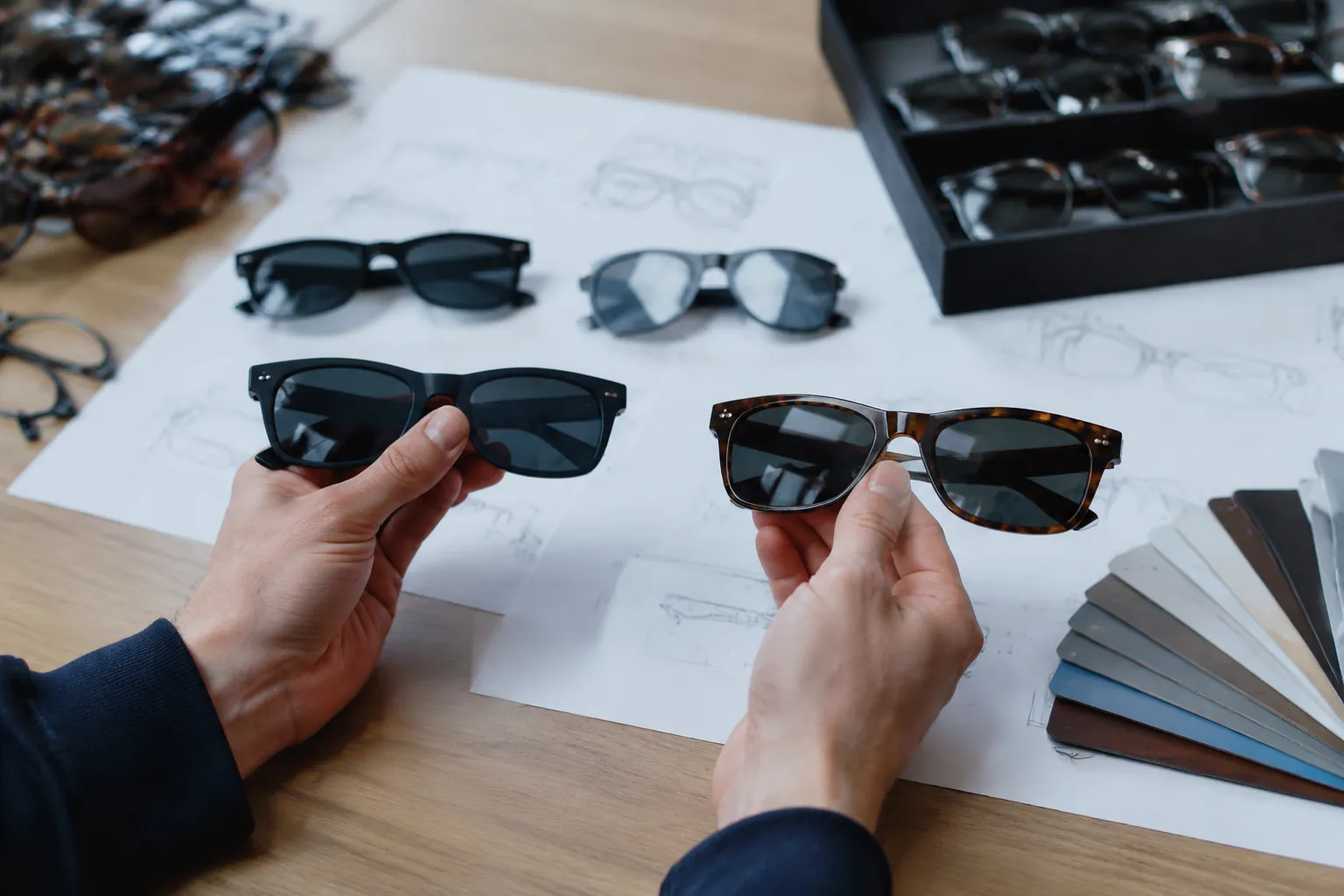
This guide is for overseas brands, importers, distributors, promotional buyers, and retailers choosing between an existing factory sunglass and a custom frame. The real question is not which option is cheaper. It is which model fits your launch date, order volume, compliance duties, cash flow, approval workload, and margin target. ODM is usually faster and lower risk because the base frame, tooling, lens fit, and production route already exist. OEM can create a more distinctive product, but only if the buyer can manage tooling, sampling, fit approval, tolerances, compliance review, and a longer development calendar.
The Decision in One Line
ODM means you start from an existing factory style and customize commercial details: frame color, lens tint, lens category, logo method, temple printing, pouch, box, barcode label, and carton marks. OEM means you provide or co-develop a new frame, usually with new drawings, tooling or fixtures, prototypes, tolerance checks, and a longer approval loop.
For many first orders, ODM is the practical choice. It lets a buyer test shape, price point, color response, and sell-through before paying for molds or proprietary engineering. OEM fits better when the frame shape, bridge fit, temple design, hinge behavior, sport geometry, or brand silhouette carries the product value.
At LumiShades in Wenzhou, ODM projects can start from 50 pairs per design when an existing frame and available production process are used. Pricing is normally reviewed at higher quantity breaks such as 300, 1,000, and 5,000+ pairs, because setup, procurement, inspection, and packing costs spread differently at each volume. ODM samples usually take 7-10 days when artwork, lens choice, color reference, and packaging requirements are ready. Standard bulk production is typically planned at 25-35 days after sample approval and deposit, depending on order size, material availability, decoration method, inspection requirements, and shipping schedule.
OEM is different. Even when a factory has in-house processes such as injection molding, acetate cutting, CNC work, lens tinting, laser engraving, pad printing, metal logo plate assembly, and QC, a new frame still needs engineering time. The buyer and factory must confirm front width, bridge fit, temple angle, hinge torque, lens curve, material shrinkage, logo position, color standard, and destination-market requirements before mass production. This is not admin. It is risk control before the same defect repeats across a bulk order.
ODM vs OEM: Time, Cost, Control, Risk
| Decision factor | ODM sunglasses | OEM sunglasses | Buyer takeaway |
|---|---|---|---|
| Best use case | Fast launch, seasonal range, retail test, distributor preview, promotional program | Long-term product line, proprietary design language, exact fit, sport or fashion geometry | Use ODM to prove demand before funding hard development. |
| MOQ logic | Can start from 50 pairs/design at LumiShades when using existing styles; stronger pricing usually appears at higher quantity breaks | Usually requires a higher commitment because drawings, fixtures, molds, corrections, and repeated sampling must be amortized | OEM makes more sense when reorder volume is likely. |
| Sample timing | Usually 7-10 days when artwork, color, lens, and packaging details are confirmed | Often 20-45+ days before a reliable approved sample, depending on mold complexity, drawing quality, and revision rounds | Do not build a retail launch around the first OEM prototype. |
| Bulk lead time | Commonly planned at 25-35 days after approved sample and deposit | Bulk production may follow a similar production window after final approval, but development before approval takes longer | The production clock starts after approval, not after the first inquiry. |
| Upfront cost | Lower because existing tooling and known processes are used | Higher because molds, CNC setup, test fixtures, extra samples, or fit corrections may be needed | ODM protects cash flow. OEM protects differentiation. |
| Technical risk | Lower because the frame has already been produced and checked in normal factory conditions | Higher around shrinkage, lens seating, hinge strength, temple alignment, comfort, and repeatability | OEM needs tighter specifications and stricter approvals. |
The common misunderstanding is lead time. A buyer may hear 25-35 days for production and assume development is included. It is not. For ODM, sample approval can move quickly because the frame already exists. For OEM, the calendar must include drawing review, prototype making, fit testing, tooling correction, color confirmation, lens testing, compliance review, and final approval.
Choose ODM When Speed Matters More Than Exclusivity
ODM is not lazy sourcing. It is controlled sourcing. You choose a frame that already runs through known molds, cutting paths, hinge assembly, lens fitting, polishing, and final QC. Then you customize the visible commercial parts: color, lens, logo, packaging, labeling, and assortment.
This works well when the buyer needs stock quickly or wants to test several looks without putting cash into tooling. A resort retailer can test several colors of one proven frame. A distributor can compare polarized and non-polarized versions in the same shape. A promotional buyer can add pad printing or laser engraving without changing frame geometry.
- Use ODM for market testing: 50 pairs/design can support small retail trials, distributor previews, influencer kits, or color validation before moving to larger quantities.
- Use ODM for deadline orders: 7-10 day samples and 25-35 day bulk production are realistic only when artwork, lens choice, packaging, labeling, and shipping marks are approved quickly.
- Use ODM for price control: existing tooling keeps cost focused on material, lens, decoration, order volume, inspection, and packing instead of mold development.
- Use ODM for assortment planning: one proven frame can be split into selected colorways and lens treatments while fit and construction stay stable.
- Use ODM for compliance planning: the selected product can be reviewed against destination-market requirements such as CE EN ISO 12312-1, ANSI Z80.3, AS/NZS 1067, REACH, or FDA registration expectations.
The trade-off is exclusivity. Competitors may be able to buy a similar base style unless exclusivity is agreed in writing. Buyers can reduce overlap with stronger color direction, lens combinations, temple decoration, packaging, retail naming, and SKU planning. Do not describe an ODM catalog frame as a protected shape unless exclusivity terms are documented and supported by the required volume.
Choose OEM When the Frame Is the Product
OEM is the right path when the shape, fit, hinge behavior, bridge, temple angle, or lens profile is central to the product promise. If customers are paying for a signature silhouette, a precise low-bridge fit, a sport wrap angle, or a fashion frame that should not look like a catalog item, ODM may not give enough control. OEM gives control. It also demands time, samples, decisions, and a clear specification.
A serious OEM project starts with a spec pack. At minimum, provide front width, lens width, bridge width, temple length, lens height, base curve, pantoscopic angle if relevant, hinge type, material, color references, logo files, lens category, packaging, destination market, and target price. If the buyer sends only a mood board, the factory has to interpret the design. Interpretation creates sample rounds.
For injection frames, material shrinkage and mold flow matter. PC, nylon-based materials, and other plastics behave differently during cooling. A small change in wall thickness can affect temple straightness, lens groove stability, or hinge area strength. For acetate frames, CNC cutting, tumbling, hand polishing, and lamination quality affect edge finish, thickness tolerance, and color consistency. For metal components, plating, soldering, screw quality, and hinge alignment become risk points when the design leaves little production tolerance.
Discuss practical tolerances before approval. Logo placement may need a defined tolerance, commonly around +/-0.5 mm to +/-1.0 mm depending on method and surface. Lens color and frame color should be checked against an approved physical sample, not only a screen image. Temple opening should feel consistent left to right. Lenses should sit flush without visible gaps, edge popping, or stress marks. A rendering does not prove manufacturability.
OEM is slower because problems appear one by one. The drawing may look correct, then the prototype may pinch at the bridge. The lens edge may sit proud. The hinge may feel loose after repeated opening. These issues are normal in custom development. That is why OEM should be managed as product development, not simple purchasing.
Where Cost Really Moves
Buyers often ask for a target price before defining the product. That makes quoting weak. Sunglasses cost is shaped by frame material, lens type, decoration method, packaging, order quantity, SKU split, inspection standard, and shipping volume.
At LumiShades, pricing is normally reviewed at quantity levels such as 300, 1,000, and 5,000+ pairs because setup time, color change waste, inspection handling, packing labor, and component procurement spread differently across the order. A low unit price is possible only when the style, lens, decoration, packaging, and order structure support it. Thick acetate, polarized lenses, mirror coatings, custom boxes, metal trims, multiple logo positions, and small color splits all add cost.
| Cost driver | Lower-cost choice | Higher-cost choice | Risk if ignored |
|---|---|---|---|
| Frame material | Existing injection frame | Thick acetate, metal combination, or new molded frame | The quote looks low until tooling, polishing, plating, or scrap is included. |
| Lens | Standard tinted lens, common color, known category | Polarized, mirror, gradient, special tint, custom curve | Color mismatch, VLT failure, or retesting can delay approval. |
| Logo | One pad print or laser engraving position | Metal logo plate, embossed mark, multiple temple marks | Rejects increase if the placement area is small, curved, or poorly defined. |
| Packaging | Polybag, standard pouch, simple barcode label | Custom rigid box, microfiber cloth, case, retail insert | Freight volume, carton strength, and packing labor can change the landed cost. |
| Order split | Few SKUs with deeper quantity | Many colors at small quantities | More changeovers, more QC sorting, weaker price, and higher mismatch risk. |
The cleanest way to protect margin is to limit SKU spread on the first buy. Three colors at 300 pairs each usually create a more stable production plan than twelve colors at 75 pairs each. The sales team may want range. The factory floor needs stable batches. Both concerns are valid, so choose the order structure deliberately.
Decoration, Packaging, and Approval Details Buyers Miss
Decoration is where many simple ODM orders lose time. Pad printing is cost-effective for temple logos, but it needs a suitable surface and clean vector artwork. Laser engraving is durable, but contrast depends on the actual frame material and surface finish. Metal logo plates can look premium, but recess depth, adhesive area, plating color, and edge finish must be checked. Heat transfer or foil effects may work for fashion programs, but they need abrasion review and color approval.
Supply artwork as vector files, not screenshots. Define logo size in millimeters, position from a fixed reference point, and acceptable placement tolerance. If the logo is 18 mm long on a narrow temple, a 1 mm shift is visible. If the logo is inside the temple, confirm whether it must remain readable when worn or only when displayed.
Packaging also affects cost and timing. A standard pouch is faster than a custom retail box. A custom box requires dieline approval, print proof, material confirmation, barcode position, country-of-origin wording, importer details where required, warning text, and carton packing method. Retailers may also require inner carton quantities, master carton marks, polybag warnings, hangtags, or SKU labels. Freeze these details before sample approval, not after bulk goods are ready.
For a clean approval process, keep one signed or clearly photographed approved sample with the buyer and one retained sample at the factory. Record lens tint, frame color, logo position, hinge feel, packaging, and label content. If a dispute appears later, both sides need a physical reference. Chat history is not enough.
Compliance Is Not a Logo on the Box
Define compliance before sampling. Sunglasses going into the EU should be planned around CE EN ISO 12312-1. For the United States, buyers should review ANSI Z80.3 and FDA registration relevance for the product and supplier role. Australia and New Zealand buyers should specify AS/NZS 1067. Chemical restrictions such as REACH matter for materials, coatings, and components entering the EU.
Do not ask the factory to make a generic sunglass and choose the destination later. Lens category, visible light transmission, UV protection, labeling, warnings, and test documents can differ by market. A fashion tint that looks good in a showroom may not be suitable for every use case. A very dark lens can create labeling requirements. A mirror coating can change transmission performance. Polarized lenses need checks for axis consistency and visual distortion.
LumiShades works with applicable certifications and systems including CE EN ISO 12312-1, FDA registration, ANSI Z80.3, AS/NZS 1067, REACH, ISO 9001, and BSCI. The word applicable matters. Buyers should request documents that match the sunglass product, destination market, and retail channel. Certificates from unrelated product categories do not reduce risk.
- Tell the factory the sales market: EU, US, Australia/New Zealand, or mixed distribution.
- Confirm lens category early: especially for dark, gradient, mirror, and polarized lenses.
- Check artwork before bulk: CE marks, warnings, importer details, barcode labels, and origin wording must match channel needs.
- Ask for product-specific evidence: test reports, declarations, registration information, or system certificates should match the product and order where applicable.
- Retain approved samples: one at the factory and one with the buyer for dispute control.
A Practical Sourcing Process That Avoids Rework
- Set the commercial target: launch date, destination market, target landed cost, expected reorder quantity, retail channel, and inspection level.
- Pick ODM or OEM: choose ODM if the launch date is fixed or volume is unproven. Choose OEM if the design is strategic and the business can support development time.
- Freeze the specification: frame material, lens type, color references, logo method, packaging, labeling, carton marks, and compliance market should be written down.
- Sample correctly: for ODM, approve color, lens, logo, and packaging. For OEM, approve drawing, prototype fit, lens seating, hinge behavior, and comfort before focusing on decoration.
- Inspect the sample like bulk goods: check hinge tightness, lens seating, temple alignment, logo sharpness, color match, surface defects, screw security, and comfort on different face shapes where possible.
- Approve with measurable limits: define color reference, logo position tolerance, lens tint range, packaging standard, and acceptable defect boundaries.
- Run bulk production: confirm the production route, in-process QC points, final QC method, packing plan, and shipment booking before the order enters mass production.
- Keep reorder notes: record what sold, what returned, what scratched, what customers complained about, and what should change in the next batch.
The practical recommendation is simple. New brands should usually start with ODM unless the brand depends on a distinctive frame shape. Importers supplying retailers often get the best balance from ODM because their value is range planning, compliance control, packaging, and reliable delivery. Funded eyewear brands with a clear design system can move into OEM, but they must budget for sampling and make decisions quickly. Choose ODM to learn the market. Choose OEM after the market has shown what is worth owning.
Have a custom sunglasses project in mind?
Send us your styles, target market and quantities and we will return a detailed quote with MOQ, lead time and a sample plan.
Get a QuoteWhy source this from Wenzhou with LumiShades
Wenzhou in Zhejiang Province is widely regarded as China’s eyewear manufacturing capital, producing a large share of the world’s sunglasses. That concentration matters to buyers: a deep local supply chain for acetate sheet, hinges, lens blanks, plating and packaging means shorter component lead times, easier color and material matching, and a workforce with decades of eyewear-specific skill. LumiShades has manufactured in this ecosystem since 2009, and our vertical integration — in-house injection molding, acetate cutting, CNC milling, lens tinting, decoration and quality control — means no part of your order is quietly subcontracted to a workshop you cannot audit.
For international buyers, that vertical control translates into accountability. When a single factory owns every step, defects are traced and fixed at source rather than bounced between vendors, and your specifications survive intact from first sample to bulk. We back this with 15+ years of experience, shipments to 60+ countries, more than 5 million pairs produced per year and a 98.5% on-time delivery rate. Our certifications — CE EN ISO 12312-1, FDA registration, ANSI Z80.3, AS/NZS 1067, REACH, ISO 9001 and BSCI audit — mean the compliance documentation your market requires already exists. Explore our manufacturing capabilities and quality control process to see how this works in practice.
Frequently asked questions
Can I start with ODM and later make the frame exclusive? Sometimes, but exclusivity should never be assumed on a catalog frame. Ask the factory what type of exclusivity is possible, whether it covers a market, customer channel, colorway, decoration, or full frame shape, and what order volume or agreement is required. A practical route is to use ODM sales data to identify the winning shape, then fund OEM changes to geometry, bridge fit, temples, hinges, materials, or decoration for a more ownable product.
Is 50 pairs per design enough for a serious B2B order? It is enough for market testing, small retail trials, distributor previews, influencer kits, or color validation. It is not the best structure for aggressive unit pricing or complex packaging. For cleaner production economics, buyers should compare quotes at 300, 1,000, and 5,000+ pairs and reduce the number of colors or SKUs if the first order is price-sensitive.
What slows sunglasses sampling the most? The main delays are late artwork, missing vector files, unclear lens category, changing colors after sampling starts, undecided packaging, missing destination-market requirements, and approving appearance before checking fit. For OEM, delays also come from incomplete drawings, no tolerance guidance, uncertain material choice, and repeated changes to bridge, lens curve, hinge, or temple geometry.
Which compliance documents should I ask for? Ask based on destination and product type. For the EU, request evidence aligned with CE EN ISO 12312-1 and REACH where applicable. For the US, review ANSI Z80.3 and FDA registration relevance. For Australia and New Zealand, specify AS/NZS 1067. For factory management or social compliance, ISO 9001 and BSCI may be relevant, but they do not replace product test evidence. The document should match the sunglasses being ordered, not a different product category.
Can OEM still ship bulk in 25-35 days? Bulk production may be planned in that range after the final approved sample, deposit, materials, packaging, and compliance requirements are confirmed. The uncertain part is the development stage before approval. Build extra calendar time for drawings, prototypes, fit checks, tooling corrections, color approval, lens testing, and any required retesting.
How do I keep unit cost down without making the product look cheap? Use an existing proven frame, limit the first order to a few strong colors, choose one clean logo method, avoid oversized custom packaging, and place deeper quantity on the best SKUs. Spend first on lens quality, UV protection, fit, hinge feel, surface finish, and correct compliance. Add decorative extras only after the core product is stable.
Ready to start?
Explore our square sunglasses or request a quote — our sales team replies within 12 hours.
Request a Quote