
Sunglasses Sample Fees Buyers Should Actually Pay
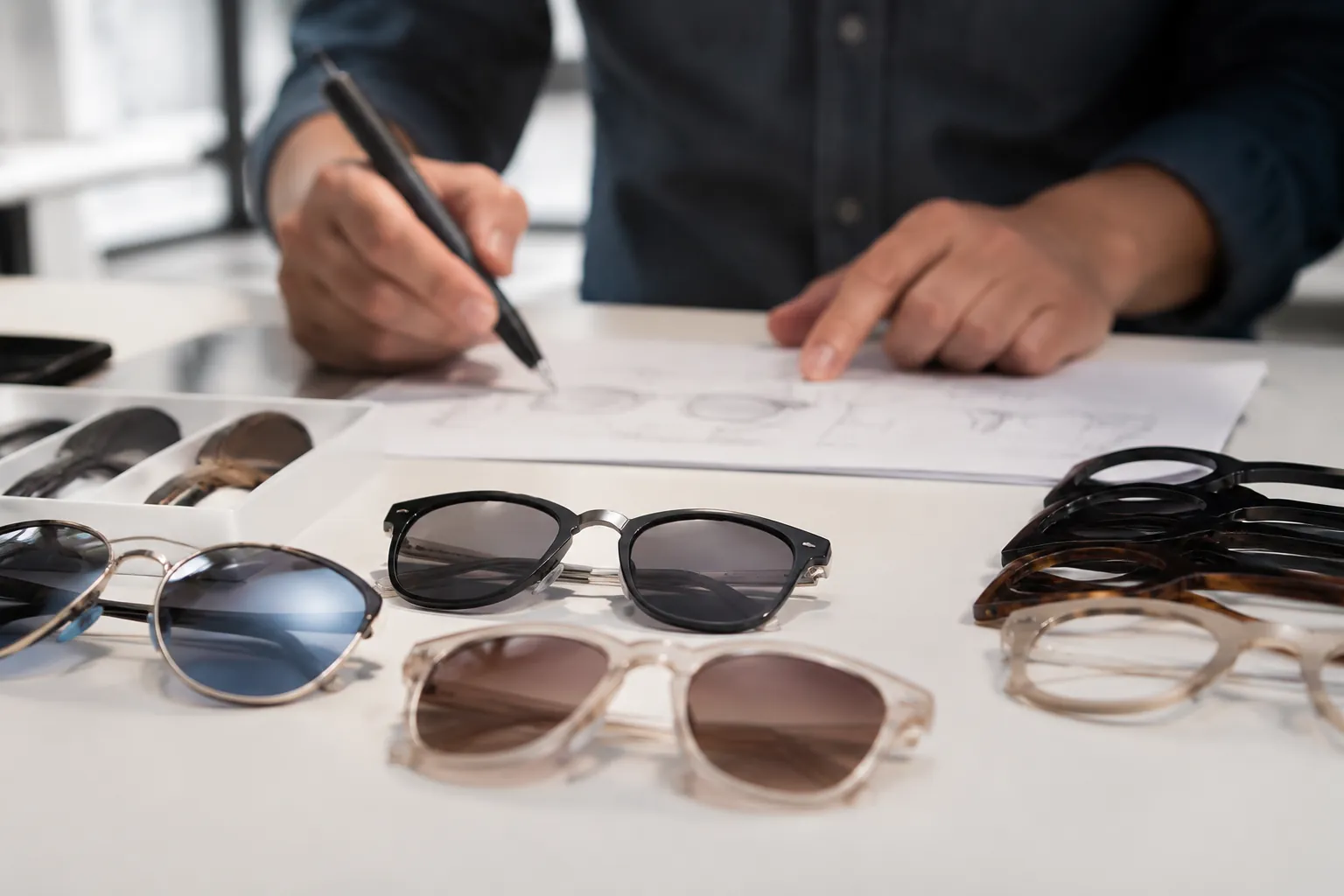
This guide is for brand owners, importers, distributors, and retail buyers developing custom sunglasses with overseas factories. It explains which sample charges usually reflect real production work, which fees should stay modest or be credited against a bulk order, and where padding often shows up. Use it to control development spending before placing 300, 1,000, or 5,000 pairs.
Start with one rule: pay for real process change
Sample charges in eyewear should match actual work. Nothing else. In valid cases, the cost usually comes from one or more of these sources: tooling or machining setup, technician labor, small-lot material use, outsourced proofing, or freight. If a charge does not tie to a clear production step, question it.
Custom sunglasses may require frame shaping, hinge fitting, lens cutting or tinting, logo application, and packaging proofing. If one supplier handles most of this in-house, the logic is easier to follow. If the supplier is coordinating several subcontractors, costs and lead times usually rise because each step adds handling and margin.
Split sample charges into two buckets:
- Development costs: new frame prototype, custom temple profile, hinge position revision, metal logo tooling, lens base-curve trial, acetate pattern sourcing, custom packaging die-line proof.
- Verification costs: color swatch confirmation, print-position check, pre-production sample, courier charges, and any requested third-party testing.
Development costs can be real because they involve trial work and rework. Verification costs should stay controlled. If a factory charges a full prototype fee every time you adjust a Pantone reference, shift a logo slightly, or request updated photos, ask for a process-based reason.
Use a simple test: if there is no change in tooling, geometry, material, or process route, why is there a fee? A credible answer sounds like "new laser fixture," "new acetate sheet purchase," or "new metal badge die." "Engineering fee" on its own is not enough.
What each sample type should cost and why
Not every sample has the same job. Buyers waste money when they ask for multiple rounds of "samples" without defining the purpose. Do you need a fit prototype, a color confirmation, a sales sample, or a final pre-production approval piece? Decide first.
| Sample type | What it verifies | Typical fee range | Normal lead time |
|---|---|---|---|
| Prototype sample | Frame structure, fit, hinge position, construction method | US$80-250 for a modified existing shape; US$200-600+ for net-new development | Usually about 7-10 days, depending on complexity |
| Color/lens sample | Frame color, lens tint, finish, mirror effect | US$20-80 if using an approved shape and standard materials | Often about 5-7 days |
| Logo sample | Pad print, laser, foil, or metal plate placement | US$15-100 depending on setup; more if new metal tooling is required | Often about 5-7 days |
| Packaging sample | Box size, artwork, print layout, case or pouch material | US$30-150 for a mockup or proof; higher for molded case tooling | Often about 5-10 days |
| Pre-production sample (PPS) | Final bulk standard using approved materials and process | Often free, low-cost, or credited against the bulk order | Usually prepared after materials are ready |
The cost depends on whether the sample uses an existing platform or a new structure. A catalog frame with only color and logo changes should be cheap. A new front curve, temple section, hinge location, or lens-groove profile is different. That may require CAD revision, CNC work, hand finishing, and assembly checks.
Ask one direct question on every quote: Is this sample based on an existing mold, a modified platform, or a fully new structure? That answer tells you whether the fee is reasonable and whether the bulk timeline is likely to stay short or stretch out.
Prototype fees: where the money really goes
The first prototype is usually the most expensive sample. That is normal. It carries the most uncertainty, and the factory is not just making a piece. It is checking whether the design can be produced consistently.
For injection-molded sunglasses in materials such as PC, TR90, or nylon-based blends, prototype work may include file review, dimensional adjustment, machining, hinge-seat checks, and hand assembly. For acetate styles, the cost structure is different. The supplier may need to source a suitable sheet, cut the front and temples, machine the lens groove and hinge area, polish the parts, fit the hinges, and adjust the frame by hand.
What buyers should usually expect to pay for:
- New shape development from a sketch, reference sample, or 3D file
- Bridge, angle, or hinge-placement correction after the first fit review
- Lens-groove rework when the lens fit is not correct
- Special temple-tip geometry, embedded metal core, or custom nose profile
- New stamped or die-cast metal logo tooling
What buyers should challenge:
- Repeated "engineering fees" on every small revision of the same frame
- High prototype fees for stock shapes with only custom color or print
- Extra charges for standard QC photos, basic measurements, or ordinary fitting checks
- Separate "startup" fees with no process explanation
One useful negotiation point: get sample-credit terms in writing before development starts. Many factories will credit part or all of an initial prototype fee against the first bulk order, especially if the program moves into real volume. The clearer your order plan, the easier this gets.
Color, lens, and logo samples: small fees add up fast
Most buyers do not overspend on the first prototype. They overspend later. One extra colorway looks minor, but several lens effects, finish options, and logo methods can push total sample spend above the original prototype cost.
Frame color charges depend on material and process. For injection frames, a color change may require material prep and machine purging. For acetate, the fee may reflect the need to buy a specific sheet pattern or color that is not available in small quantity. Spray-coated, rubberized, or soft-touch finishes often cost more to sample because the supplier must confirm both appearance and adhesion.
Lens sample costs need careful review. Standard solid tints on common sunglass lenses are usually low risk if the supplier already runs that spec. More complex options can justify higher fees because the failure risk is higher:
- Gradient tint: both lenses must show a consistent transition.
- Mirror coating: color, reflectivity, and surface consistency must be checked.
- Polarized lens: the supplier must confirm the intended lens specification and assembly quality.
- Category matching: visible light transmission must align with the target market requirement.
Logo sample fees should follow the same logic. Pad printing usually requires artwork setup and a plate. Laser marking is mainly machine time and fixture positioning. Hot foil and screen printing depend on the part shape and finish. Metal logos may require separate tooling and manual placement. Ask the supplier to split one-time tooling cost from per-sample application cost. If you paid for a logo die once, that fee should not quietly come back later.
Compliance matters here. Lens changes are not only cosmetic. If your target market requires testing to standards such as CE EN ISO 12312-1, ANSI Z80.3, or AS/NZS 1067, changes to lens tint, mirror coating, polarization, or transmission category can affect the test path and may require retesting.
Packaging and PPS: cheap compared with bulk mistakes
Packaging samples and PPS approvals are usually inexpensive compared with the cost of reworking bulk goods. Skipping them to save a little money is a bad trade.
Packaging samples confirm details that do not appear on the eyewear itself: box dimensions, folding structure, insert fit, pouch or case material, cleaning-cloth print clarity, barcode position, country-specific warning text, and carton marking. For multi-market shipments, packaging review is often where language errors, label mistakes, and missing warnings are caught.
Packaging sample fees vary by complexity. A printed paper-box mockup may be inexpensive. A rigid gift box, molded EVA case, or embossed PU case may cost more because the supplier may need cutting dies, heat-press forms, or inserts. Even then, the cost is usually small compared with finding out after production that packaging does not fit, scan, or protect the product correctly.
The pre-production sample, or PPS, should be made with the actual approved material set and intended production process. It is the physical benchmark for bulk production.
- Confirm frame material, finish, and color reference
- Confirm lens type, tint, coating, polarization, and any markings
- Check logo method, size, placement, and adhesion or print sharpness
- Check the full packaging set, not only the eyewear
- Match the sample to the approved spec sheet, photos, and revision notes
If the PPS differs from the earlier approved sample, stop the production release. Ask why. Common causes include alternate raw material, a different coating route, or packaging sourced from another vendor.
How to keep sample spending under control
The lowest sample spend usually comes from a disciplined approval process. Factories do not charge only for materials. They charge for repeated setup, rework, and fragmented communication.
Use this sequence instead:
- Lock the structure first. Approve shape, dimensions, hinge type, and fit before comparing multiple lens colors.
- Limit the first round. Start with one frame color and one lens color on the approved shape.
- Choose one decoration path. Do not test pad print, laser, and metal plate unless your brand decision is not yet made.
- Build a real spec sheet. Include front width, bridge, temple length, material, hinge type, logo size, lens target, packaging list, and target compliance market.
- Bundle revisions. Send one consolidated correction list instead of daily piecemeal comments.
- Negotiate credits in writing. Define which fees will be deducted from the first order at 300, 1,000, or 5,000 pairs.
MOQ affects sample negotiation. A factory may accept a low starting MOQ for a simple private-label program, but sample credits are usually easier to get at higher volumes. If you expect the program to scale, say so clearly and ask the supplier to reflect that in the sample policy.
Also check the supplier's operating basics. Ask whether the factory has a documented quality system such as ISO 9001 and whether social compliance is supported by audits such as BSCI, if those matter to your sourcing requirements. These do not remove sample cost, but they help you judge process control and reporting discipline.
Warning signs in a padded sample quote
Not every high sample charge is unreasonable. Some are justified. But experienced buyers watch for patterns that point to markup without process value.
- Vague line items: "development fee" with no explanation of machining, tooling, polishing, or labor.
- No split between one-time and recurring charges: logo tooling, print plates, and cutting dies should be identified clearly.
- Flat pricing for every sample type: a simple color check should not cost the same as a new structural prototype.
- No credit policy at all: for a serious volume program, at least some sample charges are often negotiable.
- Compliance charges without a product change: if material and lens specifications are unchanged, ask what new work is being done.
Also confirm whether the sample is made on the same process route intended for bulk. A hand-finished showroom sample can look better than production output if it gets extra polishing, manual coating touch-up, or unusually careful logo placement. That gap causes disputes.
Ask specific process questions:
| Question | Why ask it | Good answer sounds like |
|---|---|---|
| Is this based on an existing mold or a new structure? | Clarifies whether prototype cost is justified | "Existing front mold, new temple machining and logo tooling" |
| Is the logo charge one-time or recurring? | Prevents double billing later | "Metal badge die is one-time; placement labor is per sample and per order" |
| Will bulk use the same finish process as the sample? | Avoids approval mismatch | "Yes, same spray line and curing process" |
| What is credited back on bulk? | Defines true development cost | "PPS free, logo setup credited at 300 pcs, prototype partly credited at 1,000 pcs" |
Reliable suppliers are usually direct about limits. They may warn about variation in acetate patterns, mirror-lens appearance, or logo placement on sharply curved temples. That is useful. Claims of perfect uniformity are not.
Final approval checklist before you release bulk
Before approving mass production, tie sample approval to production control. This is where buyers protect margin and reduce claims.
| Checkpoint | What to verify | Why it matters |
|---|---|---|
| Dimensions | Front width, bridge, temple length, lens fit, opening symmetry | Helps prevent fit complaints, remake cost, and assembly issues |
| Material and finish | Frame resin or acetate type, gloss or matte level, color consistency | Reduces appearance drift and durability disputes |
| Lens specification | Tint, category, polarization, mirror or hard coating, visual clarity | Affects compliance, wearability, and safety |
| Decoration | Logo method, placement, color density, metal plate adhesion | Prevents brand rejects and rework |
| Packaging set | Box, pouch or case, cloth, insert, barcode, carton mark | Stops shipping and retail receiving errors |
For regulated markets, confirm that the approved sample matches the compliance path you need: CE EN ISO 12312-1, ANSI Z80.3, AS/NZS 1067, REACH, and FDA registration where relevant to your import setup and product category. Compliance is not just paperwork. Lens specification, labeling, and material controls must match the approved sample and final bill of materials.
Then approve one golden sample and store it properly. Photograph it, record the specification revision, and use it during inline and final QC. If the supplier, inspector, and buyer all work from the same standard, disputes are easier to resolve.
Working rule: in custom eyewear, the approved sample is not a formality. It is the physical reference for what the bulk order must match.
Have a custom sunglasses project in mind?
Send us your styles, target market and quantities and we will return a detailed quote with MOQ, lead time and a sample plan.
Get a QuoteWhy source this from Wenzhou with LumiShades
Wenzhou in Zhejiang Province is widely regarded as China’s eyewear manufacturing capital, producing a large share of the world’s sunglasses. That concentration matters to buyers: a deep local supply chain for acetate sheet, hinges, lens blanks, plating and packaging means shorter component lead times, easier color and material matching, and a workforce with decades of eyewear-specific skill. LumiShades has manufactured in this ecosystem since 2009, and our vertical integration — in-house injection molding, acetate cutting, CNC milling, lens tinting, decoration and quality control — means no part of your order is quietly subcontracted to a workshop you cannot audit.
For international buyers, that vertical control translates into accountability. When a single factory owns every step, defects are traced and fixed at source rather than bounced between vendors, and your specifications survive intact from first sample to bulk. We back this with 15+ years of experience, shipments to 60+ countries, more than 5 million pairs produced per year and a 98.5% on-time delivery rate. Our certifications — CE EN ISO 12312-1, FDA registration, ANSI Z80.3, AS/NZS 1067, REACH, ISO 9001 and BSCI audit — mean the compliance documentation your market requires already exists. Explore our manufacturing capabilities and quality control process to see how this works in practice.
Frequently asked questions
Should sample fees be refunded on the first bulk order? Often, at least in part. Ask the supplier to break fees into three categories before you approve development: <strong>one-time tooling</strong>, <strong>sample making</strong>, and <strong>verification</strong>. One-time tooling for a new metal logo die or new structure may not be fully refundable. But color samples, logo application charges, packaging proofs, and PPS charges are often credited or waived once you place a bulk order. Action step: request a written line on the quotation stating exactly which fees are credited back, at what order quantity, and whether the credit is full or partial.
Is it normal to pay separately for frame, lens, and packaging samples? Yes. These usually involve different processes, and sometimes different departments or outside vendors. Separate charges are reasonable if the supplier is doing frame development, lens tint or polarization trials, and packaging proofing. Action step: require each line item to show what it covers, whether it is one-time or recurring, and whether it will be reused for later orders. That makes duplicate charges easier to spot.
How many sample rounds are reasonable before bulk? For most private-label sunglasses, 2 to 3 rounds is a practical target: first prototype, one revised approval sample if needed, then PPS. More rounds may be necessary for a new structure or difficult finish, but repeated rounds often mean the specification was not locked early or too many variables changed at once. Action step: freeze the frame structure first, then approve color and logo, then request the PPS only after the bill of materials is stable.
Can I skip the pre-production sample if the sales sample looks good? You can, but it raises risk. A sales sample may be hand-finished, made before materials were finally booked, or assembled outside the standard production flow. The PPS should reflect the actual approved materials, lens specification, decoration method, and packaging set. Action step: if timing is tight, ask for a photo-confirmed PPS plus courier shipment, but do not release bulk production without written confirmation that the PPS matches the final specification.
Do color changes affect compliance testing? Sometimes. Frame color changes may have limited impact unless they involve coatings, paints, or substances that affect restricted-material requirements such as <strong>REACH</strong>. Lens changes are more sensitive. A change in tint, mirror coating, polarization, or visible light transmission category can affect the compliance path for <strong>CE EN ISO 12312-1</strong>, <strong>ANSI Z80.3</strong>, or <strong>AS/NZS 1067</strong>. Action step: before approving any late lens change, ask the supplier or test lab whether existing reports still apply or whether retesting is required.
Ready to start?
Explore our sport wrap sunglasses or request a quote — our sales team replies within 12 hours.
Request a Quote