
OEM Sunglasses for Museum & Destination Shops
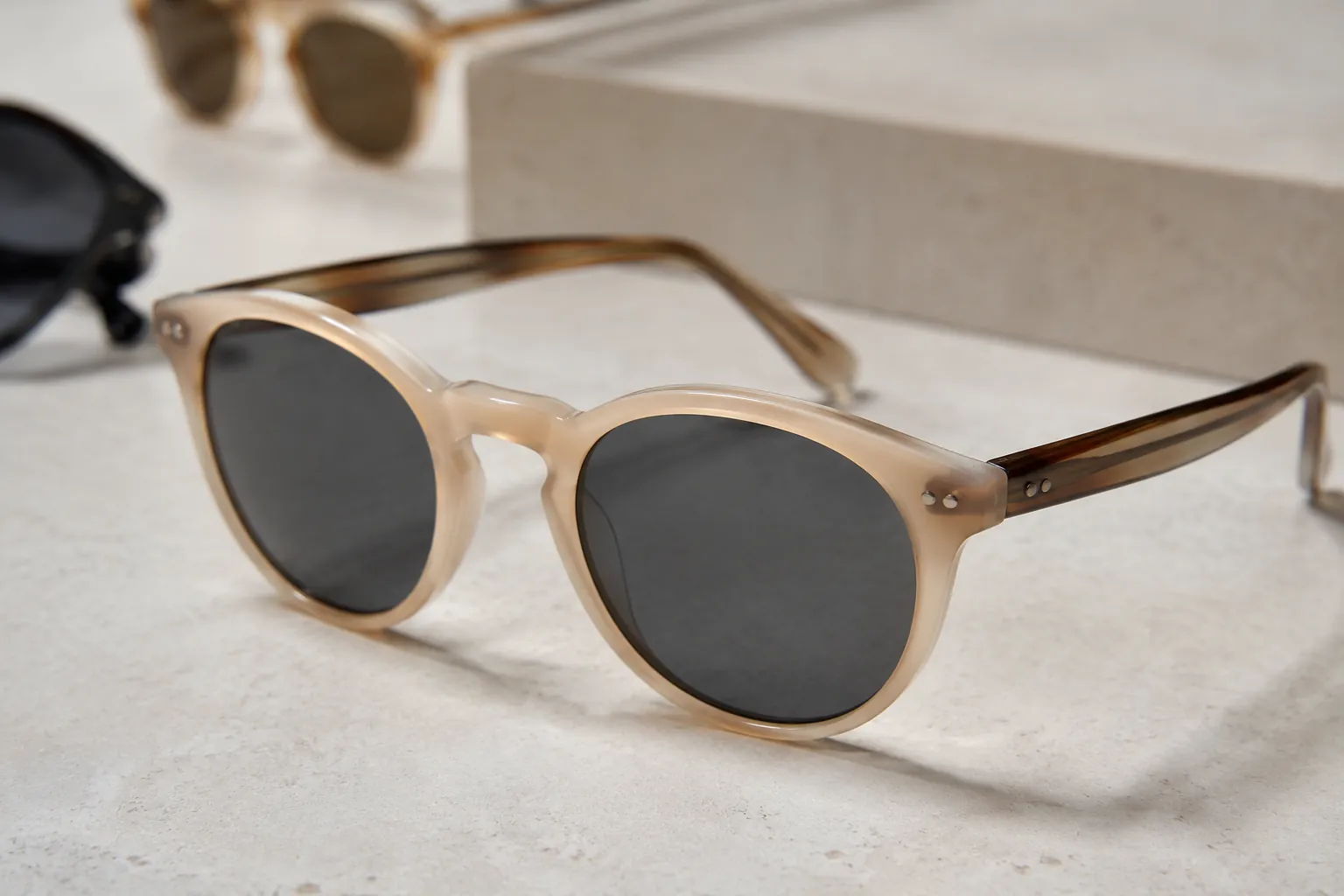
This guide is for museum stores, destination gift shops, airport souvenir buyers, cultural retailers, hotel boutiques, attraction stores, and distributors developing private-label sunglasses without overbuying. It shows how to plan a tight range, choose frame materials, specify lenses, control artwork, set MOQ logic, approve samples, and reduce compliance and inventory risk. The aim is simple: fewer dead SKUs, cleaner approvals, better shelf conversion, and reorders based on sell-through rather than guesses.
Start With the Fixture, Not the Catalog
Weak souvenir eyewear programs often fail before production starts. The buyer selects twelve colors, four lens tints, three logo methods, and two packaging versions because each option looks small on a spreadsheet. Then the shipment arrives. The counter display holds 96 pairs. Half the range sits in the stockroom.
Plan backward from the selling space. Count pegs, trays, shelf facings, and counter slots. If the fixture holds 72 to 120 pairs, a first OEM sunglasses range should usually contain 3 to 5 SKUs, not 15. A practical opening mix is one adult unisex core frame, one smaller or youth-friendly fit if needed, one premium-look style, and one event or landmark design. Each SKU needs enough depth to look intentional. Six pairs of a color rarely create a strong display.
LumiShades supports low-MOQ development from 50 pairs per design. That helps museum stores and seasonal destinations test location-specific graphics, exhibition tie-ins, or new retail price points. Use 50 to 100 pairs to validate a design. Increase production only when sell-through, margin, and replenishment timing support it. Larger quantities can lower unit cost because decoration setup, material purchasing, packaging preparation, and QC overhead are spread across more units. Final pricing still depends on frame material, lens specification, decoration method, packaging, testing needs, and order quantity.
Buyer rule: if the fixture cannot show the SKU clearly, do not produce it yet. Hidden inventory does not sell souvenirs.
Build a Tight Range That Still Looks Custom
Destination retail needs variety. It does not need a new mold for every idea. The efficient route is to standardize the base frame and vary color, lens tint, temple print, pouch artwork, hangtag, or barcode by location. This keeps MOQ lower, approvals faster, and reorders cleaner.
| Range role | Recommended specification | Retail use | Inventory guidance |
|---|---|---|---|
| Core adult SKU | Injected PC or similar plastic frame, smoke UV400 lens, one-color temple logo | Broadest fit and strongest impulse purchase | Buy deepest; often 40-60% of opening quantity |
| Premium museum SKU | Acetate or thicker injected frame, brown or gradient lens, subtle metal plate, laser mark, or restrained temple branding | Higher perceived value for design-led shops | Limit to 1-2 colors until sales are proven |
| Youth or small-fit SKU | Smaller lens width, lighter frame, compliant lens category, soft pouch | Family add-on purchase at attractions and museums | Confirm age positioning, labeling, and market requirements before ordering |
| Event or landmark SKU | Shared base frame with pad print, laser mark, printed pouch, or hangtag artwork | Exhibitions, festivals, anniversary dates, city icons | Start shallow unless demand is known; dated designs are harder to reorder |
Customization should feel wearable, not like a billboard. For cultural retail, a small outer-temple logo, inner-arm date, geographic coordinate, collection-inspired pattern, or printed microfiber pouch often sells better than a large front logo. Visitors want a memory they can use after the trip.
Set the target retail price before choosing components. A lower-priced souvenir wall can use a standard injected frame and printed pouch. A higher-priced museum shop item may justify better hinges, thicker temples, acetate color depth, a stronger pouch, or a rigid card sleeve. The specification should support the price. Not fight it.
Choose Materials by Cost, Feel, and Risk
Frame material affects cost, weight, surface finish, decoration quality, lead time, and defect risk. Confirm the exact material and construction in the quotation. Do not rely on vague labels such as plastic frame or premium frame. Clear specs make sampling, compliance review, QC inspection, and reorders easier.
- Injected PC or similar plastic: practical for bright tourist colors, lower cost, repeatability, and lightweight impulse products. Check for flash at parting lines, sink marks near thick sections, stress whitening around hinges, lens fit, and color variation between batches.
- TR-style flexible frames: useful where comfort and lower breakage risk matter. They can fit a wider range of face shapes, but decoration may be harder if the surface is highly flexible or has release-agent residue. Request a decoration strike-off on the actual production material.
- Acetate: stronger perceived value, richer color depth, and better hand feel. It requires cutting, tumbling, polishing, hinge insertion, and more handwork, so lead time and unit cost usually rise. Check edge polishing, hinge alignment, temple balance, and left-right consistency.
- Metal parts and logo plates: can improve premium perception but add plating, corrosion, alignment, and attachment checks. A plate that looks fine on the first sample can loosen after heat, shipping vibration, or repeated handling if the attachment method is weak.
- Lenses: smoke and brown are the safest commercial choices for many gift-shop programs. Fashion colors can add display impact, but visible light transmission, UV protection, optical quality, and required labeling must match the target sunglass standard and sales market.
Ask the quotation to state lens width, bridge, temple length, overall frame width, frame weight, hinge type, frame material, lens material, lens tint, UV claim, and lens category where applicable. For adult souvenir sunglasses, many unisex frames fall around 140-145 mm overall width. Smaller fits may be closer to 125-135 mm. Width is not enough. Bridge shape, pantoscopic angle, temple curve, and hinge tension all affect comfort and return risk.
Set Compliance Before Artwork Approval
Compliance is not a decoration step. It depends on where the product is placed on sale, not on the nationality of the visitor who buys it. Decide the sales market before approving lens color, label copy, warning text, hangtag, or packaging.
For Europe, sunglasses should meet CE requirements under EN ISO 12312-1 and carry the required product information for the market. For the United States, buyers commonly request ANSI Z80.3 performance alignment. Nonprescription sunglasses entering the U.S. market may also be subject to FDA requirements for impact-resistant lenses and relevant establishment registration or listing obligations. For Australia and New Zealand, AS/NZS 1067 applies. REACH is relevant for restricted chemicals in plastics, coatings, inks, and metal finishes when products are sold into the EU.
Do not accept UV protected as the only evidence. The purchase order should state the target sales market, required standard, UV400 or UV protection requirement, lens category, visible light transmission range where applicable, labeling language, country of origin, importer or responsible-party details, barcode placement, and restricted-substance expectations.
LumiShades can work to common eyewear and buyer documentation requirements, including CE EN ISO 12312-1, ANSI Z80.3, AS/NZS 1067, REACH, FDA registration-related documentation where applicable, ISO 9001, and BSCI. Ask for current documents tied to the actual product type, material, and lens color where possible. A certificate or test report for a different frame, different lens tint, or previous material batch should not automatically approve a new SKU.
Before bulk production, request confirmation of lens category and VLT for the chosen tint; UV protection on the production lens material; frame, coating, ink, and plating material declarations; required warning text; country-of-origin wording; and any impact, durability, optical, or restricted-substance checks required by the target market. Small exhibition runs are still products placed on sale. The same rules apply.
Match Decoration to the Material
Custom sunglasses fail in visible ways. A crooked logo on 1,000 temples is not a small issue. It can become a claim, a markdown, or a rejected delivery. Decoration must match the material, surface curve, artwork size, color contrast, and expected handling.
| Method | Best use | Common failure | Control point |
|---|---|---|---|
| Pad printing | One- or two-color logos on injected frames, temples, and some packaging items | Ink rubs off, shifts on curved temples, or color differs from the approved reference | Approve a production-material strike-off; run tape and rub checks before bulk production |
| Laser engraving | Subtle marks on acetate, coated metal, or dark surfaces where the contrast is suitable | Low contrast, burnt edge, inconsistent depth, or poor visibility on shelf | Review under store-like lighting, not only factory bench lighting |
| Metal logo plate | Premium temple branding and museum boutique programs | Misalignment, weak adhesive, plating defects, or edge lifting | Set position tolerance and review attachment after heat exposure and handling |
| Printed pouch or card | Artwork-heavy cultural designs, maps, exhibition graphics, donor programs, and location storytelling | Color shift, blurry linework, incorrect copy, or missing usage text | Use vector files and approve a 1:1 print proof before mass printing |
| Lens mark | Limited-edition detail or small event logo where permitted by the target market | Obstructs vision, distracts the wearer, or creates a compliance concern | Keep outside the normal field of view and approve exact size and position |
Set tolerances in plain language. Example: temple logo centered within ±0.5 mm; no visible ink break at 30 cm normal viewing distance; left and right temple color difference not obvious under D65 light; lens seated with no visible gap at the rim; hinge opens smoothly without looseness; barcode scans on first pass with a standard retail scanner. These instructions are better than writing high quality.
If the artwork is based on a collection object, licensed character, architectural pattern, artist estate, or cultural asset, provide vector files, usage limits, Pantone or approved color references, credit-line requirements, and approval authority at the start. Factories cannot fix low-resolution artwork by guessing. They should not be asked to interpret rights or cultural-use rules.
Use MOQ, Cost, and Lead Time as One Plan
The goal is not the cheapest possible sunglasses. The goal is protected margin without inventory that survives three tourist seasons. A small unit saving does not matter if the frame, lens, or packaging misses the store's retail position.
LumiShades can start from 50 pairs per design. Sample timing is typically 7 to 10 days after artwork, frame selection, lens choice, packaging copy, and compliance requirements are complete. Bulk production is usually 25 to 35 days after sample approval for standard projects. Timing can change with frame complexity, decoration method, packaging, testing, material availability, and factory queue. Add time for freight booking, customs clearance, importer review, distribution, and store allocation.
| Order level | Best use | Cost behavior | Recommended buyer action |
|---|---|---|---|
| 50 pairs/design | Test SKU, exhibition item, niche location graphic, limited retail trial | Highest unit cost because setup is spread over few units | Use existing frames, simple decoration, and standard pouch or card packaging |
| 300 pairs/design | First serious retail run after local demand is proven | Better purchasing and decoration efficiency than a test run | Split across a few clear roles, not too many shallow options |
| 1,000 pairs/design | Multi-store rollout, distributor program, or proven evergreen design | Stronger unit economics; QC plan should be formal | Lock golden sample, barcode file, carton specification, and packaging master |
| 5,000+ pairs/design | Airport group, national chain, large attraction group, or repeat core SKU | Best suited to negotiated component purchasing and planned replenishment | Confirm cartons, shipment schedule, inspection standard, and spare parts or replacement policy |
Packaging is part of the cost model. A microfiber pouch with a printed logo is often enough for impulse retail and protects lenses in a basket or counter tray. A rigid box can raise perceived value, but it also increases freight volume, carton size, and stockroom pressure. For small museum backrooms, confirm carton dimensions, units per inner box, units per export carton, gross weight, and barcode placement before production.
Control Approvals and QC Checkpoints
A clean OEM process is deliberately boring. Do not rely on scattered chat messages across time zones. Use one approval sheet covering frame code, material, color, lens tint, lens category, logo method, logo position, packaging, barcode, compliance market, quantity, carton marks, delivery address, document requirements, and approval date.
- Brief: define retail price, store type, sales market, fixture capacity, brand rules, target launch date, and whether the SKU is evergreen or dated.
- Frame selection: choose existing molds or proven acetate shapes where possible. Custom tooling changes cost, lead time, risk, and reorder dependency.
- Artwork preparation: provide vector logos, approved color references, placement drawings, barcode files, packaging copy, country-of-origin wording, and any cultural or licensing usage rules.
- Compliance setup: confirm target standard, lens category, UV requirement, warning text, importer or responsible-party details, and document expectations before the sample is built.
- Sample build: allow 7 to 10 days when standard components are used and all inputs are complete.
- Sample review: check fit, weight, lens tint, lens category information, hinge tension, decoration position, pouch or packaging, labeling, barcode scan, and carton-mark draft.
- Pre-production approval: sign off a physical sample or agreed golden sample with photos, measurements, decoration placement notes, and any approved deviations.
- Bulk production: plan 25 to 35 days for many standard orders after approval, with extra time when testing, special packaging, or nonstandard components are required.
- QC and shipment: inspect appearance, lens fit, lens scratches, decoration adhesion, hinge function, screw tightness, frame symmetry, packaging count, barcode scan, carton marks, and required documents before shipment.
Buyer discipline matters as much as factory execution. Late artwork, barcode changes after packing, replacement lens tints, changed warning copy, or unresolved compliance questions can delay a shipment even when production capacity is open. Treat every approved detail as controlled data. Not a suggestion.
Plan Reorders for Seasons and Exhibitions
Tourism demand is uneven. Weather, school holidays, cruise ship arrivals, exhibition openings, airport delays, and local festivals can change weekly sales. Separate evergreen designs from dated designs before ordering. A landmark silhouette, city coordinate, neutral museum mark, or regional pattern can reorder. A limited exhibition title with a closing date may not.
For a first buy, assign roles before placing the PO. Put the greatest depth into evergreen adult styles. Keep seasonal colors and youth fits controlled. Keep true novelty shallow until sell-through is known. If the group operates multiple stores, test the assortment in the highest-traffic location first before rolling it out everywhere.
Track sell-through by SKU, location, week, and fixture position. A design that sells well at a beach-facing attraction may not work in an indoor museum shop. Record markdowns separately from full-price sales so reorder decisions are based on real demand, not clearance movement. If sunglasses are sold through both counter trays and wall fixtures, compare performance by placement before changing the product.
Reorders are fastest when nothing changes. Keep the approved sample, production photos, color references, packaging layout, barcode file, carton specification, compliance documents, and inspection notes in one shared folder. If the frame color, lens tint, logo position, packaging copy, or sales market changes, treat it as a new approval. Plastic batches and lens tints can shift slightly. A verbal same as last time is not enough.
The strongest OEM sunglasses programs for museum stores and destination gift shops are small, controlled, compliant, and repeatable. Start with a few clear SKUs. Approve physical samples. Measure sell-through. Reorder what visitors actually buy.
Have a custom sunglasses project in mind?
Send us your styles, target market and quantities and we will return a detailed quote with MOQ, lead time and a sample plan.
Get a QuoteWhy source this from Wenzhou with LumiShades
Wenzhou in Zhejiang Province is widely regarded as China’s eyewear manufacturing capital, producing a large share of the world’s sunglasses. That concentration matters to buyers: a deep local supply chain for acetate sheet, hinges, lens blanks, plating and packaging means shorter component lead times, easier color and material matching, and a workforce with decades of eyewear-specific skill. LumiShades has manufactured in this ecosystem since 2009, and our vertical integration — in-house injection molding, acetate cutting, CNC milling, lens tinting, decoration and quality control — means no part of your order is quietly subcontracted to a workshop you cannot audit.
For international buyers, that vertical control translates into accountability. When a single factory owns every step, defects are traced and fixed at source rather than bounced between vendors, and your specifications survive intact from first sample to bulk. For procurement review, buyers can request process records, approved samples, quality checkpoints and project-specific compliance files before placing a bulk order. Required testing and documentation are confirmed against the destination market and product specification rather than assumed from a generic certificate list. Explore our manufacturing capabilities and quality control process to see how this works in practice.
Frequently asked questions
What is a sensible first order for one museum store? Start with fixture capacity and the retail goal, not the factory catalog. For a store that has not sold custom sunglasses before, a practical first order is usually 3 to 5 SKUs at 50 to 100 pairs each. Put the deepest quantity into one adult unisex core style. Add one smaller or youth-friendly fit only if the visitor profile supports it. Keep event-specific or dated designs shallow until sell-through is proven. Confirm lens category, UV requirement, labeling, barcode, packaging, and carton quantity before placing the PO.
Can we customize several locations without holding large inventory? Yes. The safest method is to use the same approved base frame, lens tint, lens category, and packaging format, then change only controlled items such as the temple print, laser mark, pouch artwork, hangtag, barcode, or location name. This reduces sample variables and helps keep MOQ manageable. Treat each changed artwork or barcode as a separate design for approval and inventory tracking. Keep one master file per location with artwork, approved sample photos, barcode, carton marks, and reorder notes.
How long should we allow from concept to delivery? For a standard project, allow 7 to 10 days for samples after artwork, specifications, packaging copy, and compliance requirements are complete. Bulk production is commonly 25 to 35 days after sample approval, but special materials, custom packaging, testing, holidays, or factory queue can extend the schedule. Also add time for compliance review, freight booking, customs clearance, warehouse receiving, price labeling, and allocation to stores. Do not schedule a launch date based only on production days.
Which compliance standards should we request? Specify requirements by sales market. For Europe, request CE compliance under EN ISO 12312-1 and required product information. For the United States, many buyers request ANSI Z80.3 alignment, and sunglasses may also be subject to FDA requirements such as impact-resistant lens rules and applicable establishment registration or listing obligations. For Australia and New Zealand, request AS/NZS 1067. For EU chemical restrictions, address REACH for plastics, coatings, inks, and metal finishes. Ask for documents that match the actual frame, lens tint, material, and production batch where possible.
Is acetate worth the higher cost for gift shops? Acetate can be worth it for museum stores, hotel boutiques, design-led destinations, and programs with a higher retail price because it offers richer color depth, better hand feel, and stronger perceived value. It is less suitable when the priority is the lowest unit cost, bright tourist colors, fast replenishment, or very high-volume impulse selling. Before choosing acetate, confirm target retail price, margin, lead time, hinge quality, polishing standard, packaging level, and reorder quantity.
What artwork files should we send to the factory? Send vector logos or patterns, approved color references, placement drawings, barcode files, packaging text, country-of-origin wording, warning or usage text, and any rules for licensed, cultural, artist, or exhibition artwork. Include the approved retail brand name and exact capitalization. For pouch or card printing, request a 1:1 proof. For temple logos, approve a strike-off on the actual production material. Low-resolution images slow sampling and increase the risk of poor print quality or unauthorized artwork interpretation.
Ready to start?
Explore our round sunglasses or request a quote — our sales team replies within 12 hours.
Request a Quote