
Launching Retailer-Exclusive Sunglass Colorways
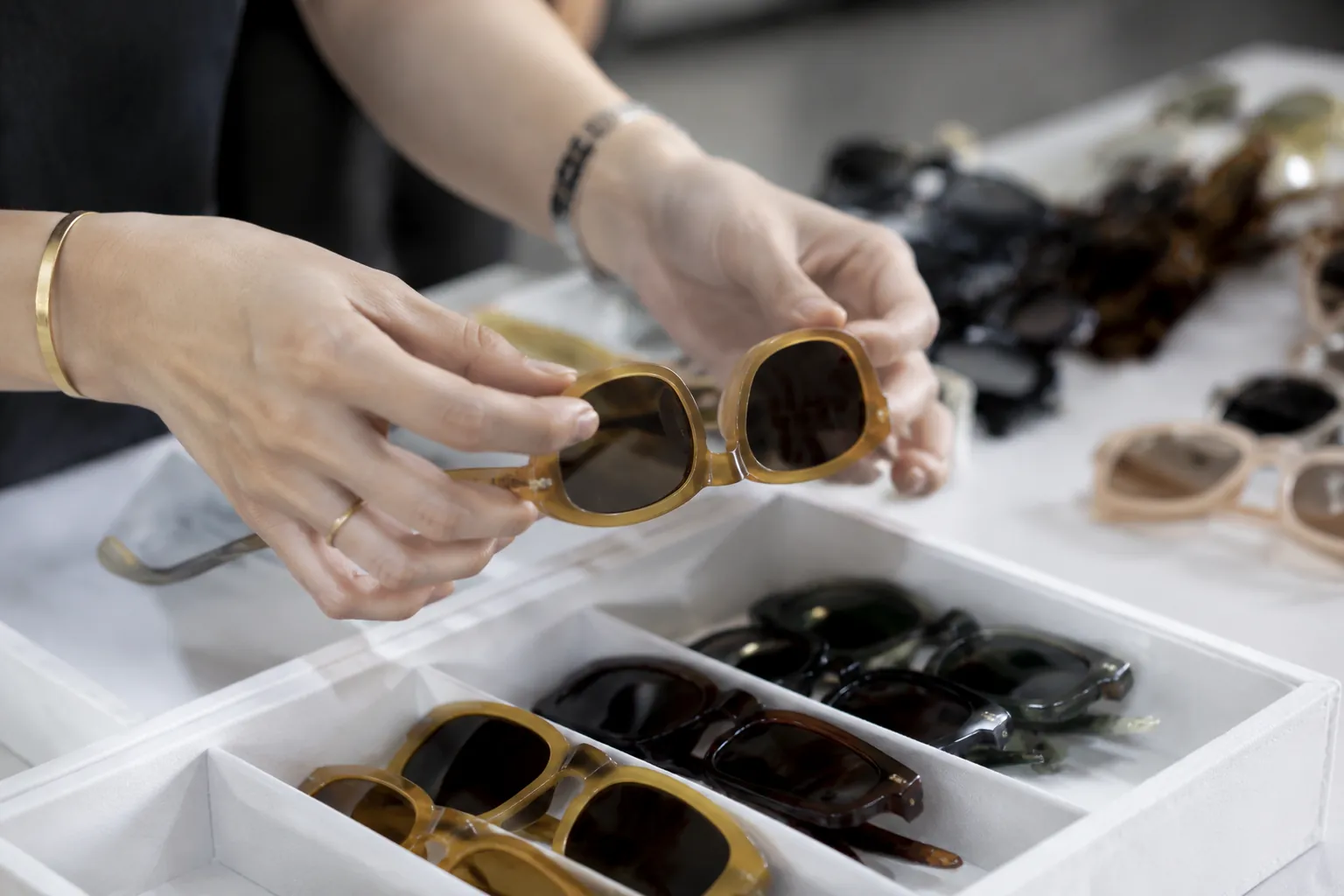
This guide is for brands, importers, distributors, and retailers that want color exclusivity without paying for fresh tooling. Start with a proven stock mold. Change what shoppers see first, and leave the structure alone. That usually means faster sampling, lower setup cost, and less risk than launching a new shape for a new shade. The hard part is not inventing a colorway. It is deciding what is truly exclusive, what can vary within tolerance, and what changes would turn a quick program into full product development.
Why stock molds are the right place to start
A stock mold is usually the lowest-risk way to launch a sunglass style. The frame geometry, lens size, hinge position, and temple structure have already been proven in production. You are not paying for tooling just to learn whether the shape works. Good. That saves time and money.
Retailer-exclusive colorways work because shoppers read sunglasses visually first. Most buyers do not care whether the frame came from a new mold or an existing platform. They notice the front color, lens tint, logo treatment, and packaging. If those parts are controlled well, the product feels custom enough for a retailer capsule, seasonal drop, or private-label line.
One practical advantage of a single-factory setup is color control. If the frame is molded in one place, tinted elsewhere, and decorated later by a third party, shade drift is harder to manage. A vertically integrated supplier can usually hold one approved sample more consistently because the same team controls molding, tinting, decoration, and final inspection. Still, stock molds are not a shortcut for vague specs. They only work when you decide early which details create real exclusivity and which ones are just noise.
For a fast launch, think in terms of one proven base model, one approved frame color, one lens family, and one decoration method. Everything else should support that decision. Not fight it.
What you can change without new tooling
The mistake many buyers make is asking for too many custom touches at once. That slows sample approval and makes a stock-mold order behave like a full development program. If speed matters, change the parts that are visible, stable, and practical to control.
- Frame color: opaque, translucent, frosted, marbled, two-tone, or gradient finishes in acetate or injected nylon.
- Lens color: gray, brown, green, fashion tints, mirror lenses, or flash coatings, subject to the target market rules.
- Logo decoration: laser engraving, pad print, hot stamp, or a metal logo plate on the temple.
- Small hardware details: hinge finish, screw color, rivet tone, and temple-tip color when the base model allows it.
- Packaging: box art, insert cards, pouch material, barcode labels, and carton marks for channel separation.
What usually should not change if you want speed is the core mold geometry, hinge architecture, and lens size. Those are the parts that trigger fit checks and rework. A small change to lens width or bridge shape can lead to a new sample round, and a new sample round usually adds both time and cost. The goal is to create a different-looking product without changing the mechanical shell that already works.
Material behavior matters. Acetate can look clean in a color chip and slightly deeper after polishing because the surface gloss changes the perceived shade. Darker injected colors often hide knit lines better than pale shades, while pale colors can reveal gate marks, sink marks, or gloss variation more easily. Mirror lenses usually need extra coating steps and quality checks compared with standard solid tints. The design may be simple. The process is not.
Choose the right exclusivity model
Not every buyer needs full SKU exclusivity. Sometimes you only need color protection in one account, one region, or one season. If you promise too much exclusivity, you can block future sales or end up with dead stock that cannot move anywhere else. Match the exclusivity model to the commercial plan.
| Model | What is exclusive | Typical cost impact | Best use case | Main risk |
|---|---|---|---|---|
| Color-only exclusivity | Frame shade and lens tint | Lowest; usually no new tooling | Retailer capsules, seasonal drops | Competitors can still copy the shape |
| Color + logo exclusivity | Frame color plus decoration package | Low to moderate | Private label and chain stores | Logo placement can fail on thin temple walls |
| Channel-limited SKU | Colorway, packaging, and barcode set | Moderate | One retailer, one region, one season | Forecast mistakes create leftover stock |
| Full custom tooling | Shape and color | Highest | Hero styles with long life cycles | Slower launch and tooling payback risk |
For many retail accounts, color-only exclusivity is enough to protect margin. If the buyer wants a stronger brand story, add a custom logo treatment and channel-specific packaging. If the retailer wants hard separation from the open market, lock the SKU code, artwork, carton label, and purchase order wording too. Do not pay for a new mold unless the shape itself is the reason the item will sell.
Simple rule: if the shape drives the sale, full custom tooling may make sense. If the story is mostly color and presentation, stock tooling is the smarter start.
Build the color spec like a production document
A useful color brief is more than a Pantone reference. It should tell the factory what must match, what can vary slightly, and how the approved sample will be judged. The stronger the brief, the fewer sample loops you need.
Start with the base model name, mold code, and reference photos from multiple angles. Then specify the frame material, finish, lens tint, and logo method. If you want repeatable production, define a color tolerance in writing and tie it to the approved master sample. Agree on the exact tolerance with the supplier and test it under consistent light. If gloss is part of the look, specify that too. Matte and semi-gloss can read like different colors once the surface changes.
- Identify the base model by photos, drawings, and mold code.
- State the frame material: acetate, injected plastic, nylon, or mixed material.
- Define the color target in plain language, plus a Pantone reference and a physical swatch if available.
- Specify the finish: gloss, matte, frosted, translucent, marble, or two-tone.
- Confirm lens tint, coating type, and whether mirror or gradient effects are needed.
- List logo method, size, placement, depth, and acceptable contrast.
- Set the variance limit against the approved sample and note who signs it off.
For decoration detail, be precise. A pad print can work on a flat temple area, but one-color and two-color prints are not the same job; each color adds a setup step and a failure point. Laser engraving is crisp on acetate and metal, but a shallow engraving on a curved glossy temple can disappear after polishing. A metal logo plate needs enough flat area and wall thickness to avoid lifting or warping. If the temple is thin, ask for a cross-section check before you approve artwork.
Keep one physical master sample and label it clearly. Do not rely on screenshots or phone images. Screen color lies. Compare the approved sample under the same light every time, ideally with the same gloss condition and the same lens coating. If multiple retailers will carry the same mold in different colorways, assign each one a unique code and keep the spec sheet version-controlled so production does not mix them up later.
How to run sample approval without losing time
The fastest programs do not move to bulk until the sample set answers the right questions. A sample is not just a prettier version of the final product. It is the first proof that the color, finish, decoration, and packaging can be built consistently on the chosen platform.
Ask the supplier to send the first sample with all visible elements represented: frame color, lens tint, logo method, and packaging proof if packaging is part of the launch. Review the sample against the master under the same light source, then record what must be corrected and what is already approved. If one item changes, confirm whether that change affects any other step. A lens tint correction may affect the whole visual balance; a logo shift may affect artwork or carton marks.
The most efficient approval process usually follows this sequence:
- Approve the base model and confirm the exact mold code.
- Approve the frame color against a physical master sample.
- Approve the lens color and coating sample separately if the lens is not standard.
- Approve the logo artwork, placement, and decoration method.
- Approve the packaging proof, including barcode and carton marks.
- Sign one master sample and keep it as the production reference.
If the supplier cannot show which version is current, the project is not controlled enough for a retailer-exclusive launch. Version control matters as much as color taste. Without it, the production team can mix approvals later and no one notices until goods are packed.
MOQ, price, and lead time: what changes and why
With stock molds, the economics are simpler than with new tooling. The mold cost is already sunk, so your price is driven by material, labor, decoration steps, packaging, and how much setup time is spread across each unit. That is why a small colorway order and a larger retail run can look like different products on the quotation sheet.
There is no universal MOQ for stock-mold sunglasses. Some suppliers will support very small development runs, while others will require a higher volume once decoration, packaging, or export paperwork is added. A buyer should ask the factory for pricing at the exact quantities they plan to buy, then compare how the unit cost changes as setup is spread across more pairs.
Price usually changes with four inputs: frame material, lens type, decoration complexity, and packaging. A simple black frame with a standard lens and one decoration method will usually be easier to quote than a translucent frame with a mirror lens, a metal plate, and channel-specific packaging. Packaging complexity also matters; a custom carton, insert card, and pouch can cost more than a plain polybag and sticker set.
Lead time should be quoted in separate steps rather than one catch-all number. Ask the supplier to break out:
- sample preparation time
- color matching or correction time
- logo or decoration setup time
- material sourcing time
- bulk production time
- packing and final inspection time
That breakdown shows where the schedule can slip. Mirror lenses, special coatings, and multiple decoration steps usually add complexity because each step needs its own approval. Protect the schedule early, before the order enters bulk.
QC and compliance cannot be an afterthought
Retailer-exclusive colorways still have to pass the same compliance checks as any other sunglasses order. Color does not reduce risk. In some cases it adds it, because pigments, coatings, and decoration materials can affect surface quality, adhesion, and documentation.
For export programs, the supplier should identify the applicable standard before production starts. The common references are CE EN ISO 12312-1 for the EU, ANSI Z80.3 for the US market, and AS/NZS 1067 for Australia and New Zealand. If the product or supply chain touches restricted substances, ask for REACH-related material controls. FDA registration is a facility-level requirement where it applies; it is not the same thing as product approval. ISO 9001 and BSCI can help as supplier-quality or social-audit signals, but they are not proof that a pair of sunglasses meets a product standard.
- Check UV protection and tint requirements against the target market standard.
- Inspect lens clarity, distortion, coating defects, and edge finish after tinting and polishing.
- Verify pad print, laser engraving, or metal plate placement against the approved artwork.
- Confirm temple alignment, hinge action, and open-close consistency before packing.
- Run carton, barcode, and label checks if the retailer needs channel-specific packaging.
Good QC on a colorway program is repetitive by design. It checks shade consistency, gloss, logo position, lens quality, and packing accuracy every batch. Ask the supplier for in-process photos, final inspection photos, and a record that ties those images back to the signed master sample. If that record does not exist, the launch is not controlled enough.
One practical check is symmetry and fit. The frame front, temples, and hinge action should be consistent from unit to unit, and any tolerance you set should be written in the spec before production begins. The number should be agreed with the factory and matched to the style.
Common failure modes and how to avoid them
Most bad custom colorway programs fail for the same few reasons: the buyer over-specs the design, under-specs the tolerance, or assumes the factory will guess correctly. None of those assumptions survives production pressure.
Blunt rule: if the brief cannot survive a factory handoff, it is not a brief.
Watch for these failure modes: the same frame looks different under daylight and warehouse lighting; matte samples turn glossier after polishing; translucent acetate reveals flow lines; mirror lenses vary from lot to lot; and logo plates lift on curved temples because the wall is too thin or the adhesive was never tested. These are not rare edge cases. They are normal process risks when color and decoration are the main selling points.
Prevent problems by locking the master sample, limiting the number of changes per round, and asking for batch photos before shipment. If the retailer wants a color run for only one store group, keep the purchase order, artwork, and carton labeling separate from other accounts so the warehouse can pack cleanly. If the same base mold will be reused later, archive the approved color chip, lens reference, and decoration file under one version number.
The fastest programs are usually the boring ones. One base mold. One approved frame color. One lens family. One logo method. Clear carton marks. Tight QC. If you need to open a new market later, you can still add variants. The first launch should be controlled, not ambitious.
Have a custom sunglasses project in mind?
Send us your styles, target market and quantities and we will return a detailed quote with MOQ, lead time and a sample plan.
Get a QuoteWhy source this from Wenzhou with LumiShades
Wenzhou in Zhejiang Province is widely regarded as China’s eyewear manufacturing capital, producing a large share of the world’s sunglasses. That concentration matters to buyers: a deep local supply chain for acetate sheet, hinges, lens blanks, plating and packaging means shorter component lead times, easier color and material matching, and a workforce with decades of eyewear-specific skill. LumiShades has manufactured in this ecosystem since 2009, and our vertical integration — in-house injection molding, acetate cutting, CNC milling, lens tinting, decoration and quality control — means no part of your order is quietly subcontracted to a workshop you cannot audit.
For international buyers, that vertical control translates into accountability. When a single factory owns every step, defects are traced and fixed at source rather than bounced between vendors, and your specifications survive intact from first sample to bulk. For procurement review, buyers can request process records, approved samples, quality checkpoints and project-specific compliance files before placing a bulk order. Required testing and documentation are confirmed against the destination market and product specification rather than assumed from a generic certificate list. Explore our manufacturing capabilities and quality control process to see how this works in practice.
Frequently asked questions
Can I get retailer-exclusive sunglasses colorways from a stock mold without paying for new tooling? Yes. If the mold already exists, exclusivity usually comes from frame color, lens tint, decoration, and packaging rather than new tooling. To make that work, ask the factory to confirm the exact mold code, then lock a signed master sample for the frame, lens, logo, and carton version before bulk production starts.
What is the smallest practical MOQ for a stock-mold colorway program? There is no universal minimum. The smallest workable run depends on the supplier, the decoration method, and whether packaging is customized. Ask for pricing at the exact quantity you want to buy, plus the next higher tier, so you can see whether a slightly larger order improves unit cost enough to justify it.
How long should I budget for samples and bulk production? Do not rely on one generic timeline. Ask the supplier to separate sample preparation, color correction, decoration setup, bulk production, and final packing. That breakdown shows where the schedule can slip and tells you whether mirror lenses, special coatings, or multiple logo steps will extend the project.
What should I lock first: frame color, lens tint, or logo decoration? Lock the frame color first, then the lens tint, then the logo method and placement. If the frame shade changes, the whole product can look different, and the other approvals should be checked again against the new sample.
Which compliance documents matter for export sunglasses? Ask for the standard that matches the destination market, such as CE EN ISO 12312-1, ANSI Z80.3, or AS/NZS 1067. If restricted substances are relevant, ask for REACH-related material controls. Use ISO 9001 or BSCI as supplier-quality or social-audit signals only, and remember that FDA registration applies to the facility where relevant, not to product approval.
How do I keep a retailer-only colorway from leaking into other channels? Use a unique SKU, separate packaging, clear carton marks, and a written exclusivity scope that names the account, territory, and time period. Put the same language in the purchase order, artwork files, and shipping labels, and ask the factory to keep finished goods and packaging physically segregated from open-market stock.
Ready to start?
Explore our aviator sunglasses or request a quote — our sales team replies within 12 hours.
Request a Quote