
Metal Sunglasses: Alloys, Plating, Finish Testing
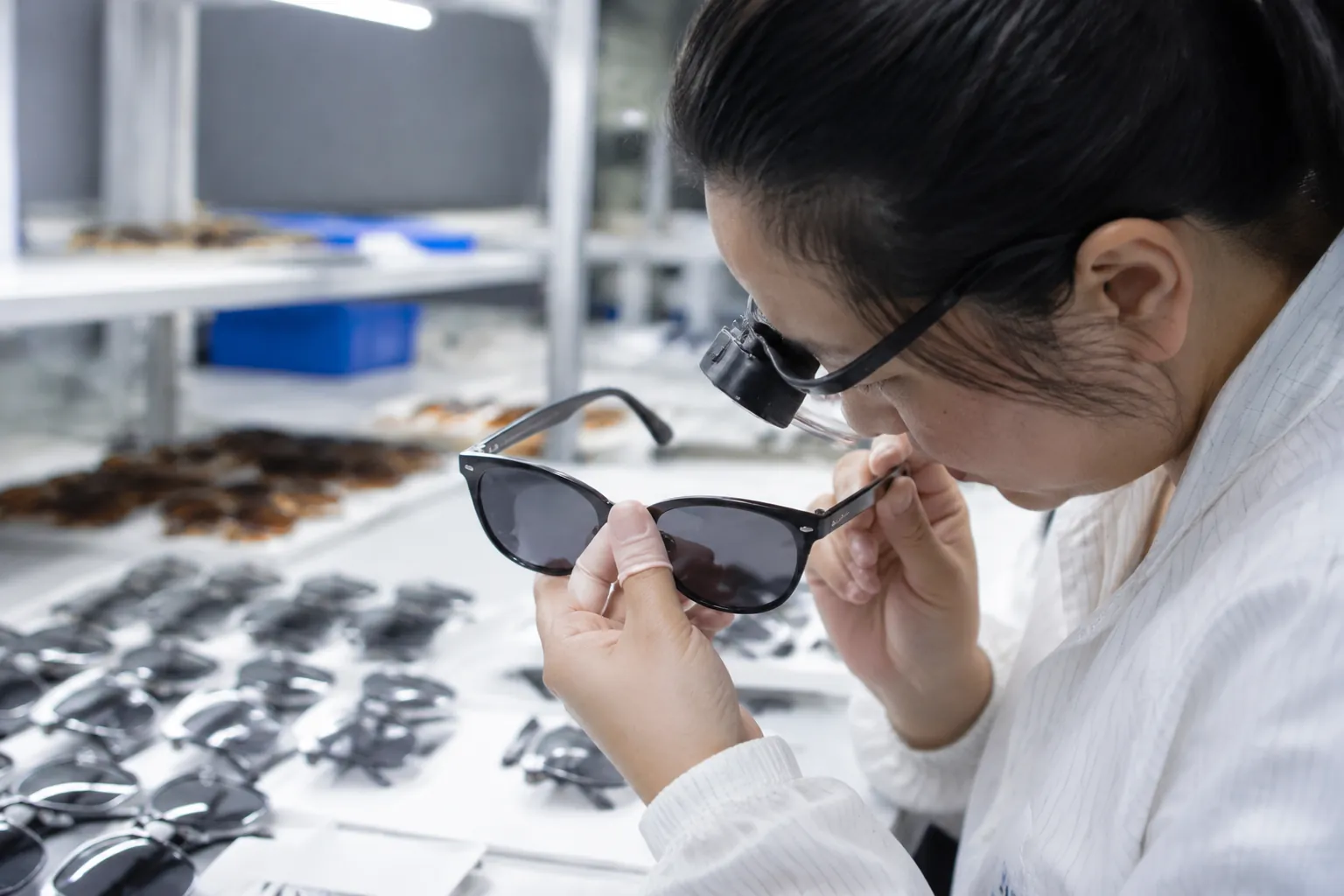
This guide is for brands, importers, distributors, and retailers sourcing metal sunglasses for higher perceived value and longer service life. It explains how alloy choice, plating stack, hinge construction, and finish testing affect cost, comfort, corrosion resistance, and warranty risk. The goal is practical: clearer specs, fewer finish failures, and better quoting conversations with a factory before you approve tooling.
Start With The Buyer Scenario, Not The Metal Name
Metal sunglasses are often bought because they feel more expensive in the hand. Part of that is weight. Part is finish. Part is hinge action. Part is how the frame holds shape after weeks in a car, a beach bag, or a display tray. Pick the wrong metal and the sample can still look fine. Bulk will tell a different story.
A fashion brand launching a 300-pair capsule faces different risk from a distributor ordering 5,000 pairs per color for resort retail. The capsule buyer may accept a heavier zinc alloy temple if it gives a strong logo area and richer plating. The distributor should care more about corrosion resistance, nose-pad screw retention, and how the finish behaves after sweat exposure.
At LumiShades in Wenzhou, we usually start metal frame discussions with four commercial questions: target retail price, wear environment, logo method, and forecast volume. MOQ starts at 50 pairs per design, but metal frames become more cost-efficient at 300, 1,000, and 5,000+ pairs because plating fixtures, component purchasing, and QC setup are spread over more units. At volume, mixed-material sunglasses can move toward about $2.10 per pair depending on frame complexity, lens, packaging, and finish.
Do not choose stainless steel or alloy just because it sounds premium. Choose it because it fits the job.
Alloy Choices And The Real Tradeoffs
Most commercial metal sunglasses use stainless steel, nickel silver or monel-type alloys, aluminum, or zinc alloy components. Titanium is used in eyewear, but it changes the cost structure and processing route. It is not the default for most promotional or mid-premium programs. For many B2B buyers, the practical decision is stainless steel versus copper-based alloy versus zinc alloy parts.
| Material option | Best use | Main advantage | Main risk | Buyer note |
|---|---|---|---|---|
| Stainless steel | Thin rims, temples, bridge parts | Good corrosion resistance and spring feel | Harder forming; plating adhesion needs control | Good for cleaner premium designs and lower allergy risk |
| Nickel silver or monel-type alloy | Rims, bridges, decorative temples | Easy forming, soldering, and plating | Nickel content can be a compliance concern | Specify REACH review for nickel release where sold in Europe |
| Aluminum | Lightweight fronts or temples | Low weight and good anodized color options | Less adjustable; dents can show | Works for sporty styles, less ideal for heavy adjustments |
| Zinc alloy | Logo plates, decorative temple blocks, some fronts | Low tooling cost and strong molded detail | Heavier; poor plating will pit or bubble | Use carefully for accents, not every structural part |
| Metal plus acetate or PC | Combination frames | Balances cost, weight, and visual value | Joint tolerances matter | Useful when full metal is too heavy or too expensive |
Weight matters. A frame that feels premium at 28 grams can feel tiring at 42 grams, especially with larger lenses. Ask for finished frame weight during sampling, not just the material name. A small aviator and an oversized square frame behave differently even if both are metal.
Metal also affects adjustment. Stainless can spring back. Zinc alloy does not like repeated bending. Copper-based alloys adjust well, but they need proper coating control. If your retailers often adjust nose pads or temples in store, material choice affects after-sales complaints.
Plating Stack: The Part Buyers Usually Underspecify
Most finish failures come from a weak plating stack, not from the top color alone. Gold, gunmetal, silver, black, antique bronze, and rose gold are only the visible layer. Under that surface are cleaning, activation, base plating, leveling, color plating, and protective coating steps. If any step is rushed, the frame may pass visual inspection and still fail after a few weeks of sweat, sunscreen, and salt air.
A typical metal sunglasses finish process includes degreasing, ultrasonic cleaning, acid activation, copper or nickel base plating where appropriate, color plating, rinsing, drying, and a clear protective coating. For stainless steel, surface activation is critical because poor activation causes peeling. For zinc alloy, casting quality and pre-plating control are critical because pinholes can become bubbles.
- Base layer: improves adhesion, fills small surface marks, and supports the color layer.
- Color layer: creates the visible finish such as gold, silver, gunmetal, matte black, or rose gold.
- Clear coat: helps resist sweat, abrasion, and color change, especially on high-contact temple areas.
- Masking: protects hinge barrels, screw holes, and nose-pad areas from excess coating buildup.
Ask the factory to quote by finish grade, not just by color. A cheap gold finish and a durable gold finish can look similar in a sample photo. They are not the same product. If you sell at a higher retail price, spend on plating durability before you spend on decorative trim that customers may never notice.
Finish Options: Bright, Matte, Brushed, And PVD-Like Looks
Finish is a commercial choice. Bright gold gives strong shelf impact, but it shows fingerprints and fine scratches. Matte black looks modern, but it exposes edge rub if coating thickness and curing are weak. Brushed metal hides small handling marks, but it needs consistent brushing direction from part to part. Antique finishes can hide wear, but they must be controlled so bulk production does not look dirty.
For premium collections, buyers often want low-gloss metal with clean lens color pairing: smoke lenses with gunmetal, brown gradient lenses with gold, green lenses with silver, or champagne plating with warm tortoise acetate. Lens tinting can be done in-house at LumiShades, which helps align lens color with frame finish before sample approval. The same gold frame can look cheap with the wrong yellow lens. That happens more often than people admit.
Decoration changes the finish risk. Laser engraving cuts through or marks the surface and holds up well when placed correctly. Pad printing on metal needs ink adhesion testing. Metal logo plates feel premium, but they add assembly steps and possible sharp-edge issues. If the logo area gets handled daily, engraving usually outlasts surface printing.
Keep delicate printing off the highest-friction part of the temple unless you have tested it. Hands, hair products, sunscreen, and sweat are rough on decoration.
Durability Tests To Put In The Purchase Spec
A metal sample should not be approved only because it photographs well. Put durability checks into the purchase spec before bulk production. The exact test plan depends on the market and price point, but a serious buyer should define corrosion, adhesion, screw security, hinge function, and lens compliance expectations.
- Cross-hatch adhesion check: used to screen coating adhesion on plated or painted areas before shipment.
- Sweat resistance check: important for temples, nose bridge, and pad arms that contact skin.
- Salt spray screening: useful for beach, resort, and coastal retail programs where corrosion complaints are common.
- Hinge cycle check: confirms temple opening and closing remains smooth and screws do not back out too quickly.
- Drop and twist checks: identify weak solder joints, brittle cast parts, and lens retention issues.
- Lens inspection: verifies tint consistency, visible defects, UV protection requirements, and category marking where applicable.
For compliance, sunglasses sold into regulated markets need the correct lens and frame documentation. LumiShades works with CE EN ISO 12312-1, ANSI Z80.3, AS/NZS 1067, FDA registration, REACH, ISO 9001, and BSCI. Do not ask a supplier to add certificates after production. Confirm the target market first, then match the lens category, labeling, test report, and restricted substance requirements before the production order is released.
REACH matters for metal eyewear sold in Europe because skin-contact materials and restricted substances can create trouble. For metal frames, nickel release and coating stability are not paperwork details. They affect whether the goods can be sold without relabeling, replacement, or withdrawal risk.
Cost And Lead-Time Logic For Metal Programs
Metal sunglasses usually require more process steps than simple injection-molded plastic frames. Cutting, stamping, forming, soldering, polishing, plating, lens fitting, temple alignment, and final adjustment all add labor. Small cosmetic defects are also easier to see on polished metal. That increases inspection time.
For LumiShades orders, sample lead time is typically 7 to 10 days when the design uses existing components, standard lenses, and available finish routes. New tooling, unusual plating, custom logo plates, or special lens colors can extend development. Bulk production is normally 25 to 35 days after approved sample, deposit, and confirmed packaging files. Peak season and compliance testing can add time, so importers should not place the PO on the last safe shipping date.
MOQ starts at 50 pairs per design, which helps brands test a metal style before committing. The real price improvement usually appears at 300, 1,000, and 5,000+ pairs. At 50 pairs, setup cost is heavy. At 300 pairs, plating and component purchasing become more sensible. At 1,000 pairs, QC and packaging setup are more efficient. At 5,000+ pairs, a buyer can often negotiate stronger component pricing and dedicated production planning, with volume pricing down toward about $2.10 per pair depending on the build.
Buyer rule: if the finish is the main reason customers will pay more, do not squeeze the plating budget first. Reduce a secondary trim, simplify packaging, or use an existing hinge before weakening the surface finish.
Factory Process Points That Affect Bulk Consistency
Metal eyewear consistency depends on process control more than sales promises. On the factory floor, the problems are usually ordinary: rim shape drifting after forming, solder color showing through plating, temple tips not aligned, screw torque inconsistent, or coating buildup inside hinge barrels. None of these sound dramatic. All of them create returns.
LumiShades has in-house injection molding, acetate cutting, CNC milling, lens tinting, decoration, and QC, which is useful for combination frames and mixed-material collections. For metal sunglasses, in-house control helps with lens matching, logo placement, temple tip fitting, and final inspection. Some plating steps may still be managed through specialized plating lines depending on finish and material, but the factory must own the standard and reject bad work before assembly.
A good production file should include front width, lens width, bridge, temple length, hinge type, screw type, nose pad material, lens base curve, lens category, frame color code, logo size and position, packaging, barcode needs, and compliance market. Tolerances should be realistic. For example, visible logo placement should normally be controlled tighter than an internal temple tip length. Lens fit must be tight enough to prevent rattle but not so tight that the lens chips during assembly.
Ask for pre-production samples from the actual bulk route. A hand-polished sales sample made outside normal production is not enough. Nice samples can lie.
Approval Checklist Before You Release Bulk Production
Metal sunglasses reward disciplined approval. Before the deposit or bulk release, freeze the spec and remove vague language. High quality gold is not a spec. Polished light gold frame, smoke category 3 lens, laser logo on left temple outside, clear coat required, REACH market, CE EN ISO 12312-1 documentation needed is closer to a usable instruction.
- Confirm target market and required standards: CE EN ISO 12312-1, ANSI Z80.3, AS/NZS 1067, FDA, or REACH as applicable.
- Approve physical samples for weight, hinge feel, lens color, frame color, logo position, and packaging.
- Request finish durability checks for coating adhesion, sweat exposure, and corrosion risk based on selling environment.
- Lock artwork files, logo method, color references, and barcode or carton marking requirements.
- Define AQL level, critical defects, major defects, minor defects, and whether third-party inspection is required.
- Confirm production lead time, shipping method, Incoterms, and any testing time before final delivery date.
For a premium metal collection, the smartest buyers treat the finish as an engineered feature, not decoration. Alloy, plating, lens, logo, and QC all need to work together. That is how a frame keeps looking expensive after the first month of real use.
Have a custom sunglasses project in mind?
Send us your styles, target market and quantities and we will return a detailed quote with MOQ, lead time and a sample plan.
Get a QuoteWhy source this from Wenzhou with LumiShades
Wenzhou in Zhejiang Province is widely regarded as China’s eyewear manufacturing capital, producing a large share of the world’s sunglasses. That concentration matters to buyers: a deep local supply chain for acetate sheet, hinges, lens blanks, plating and packaging means shorter component lead times, easier color and material matching, and a workforce with decades of eyewear-specific skill. LumiShades has manufactured in this ecosystem since 2009, and our vertical integration — in-house injection molding, acetate cutting, CNC milling, lens tinting, decoration and quality control — means no part of your order is quietly subcontracted to a workshop you cannot audit.
For international buyers, that vertical control translates into accountability. When a single factory owns every step, defects are traced and fixed at source rather than bounced between vendors, and your specifications survive intact from first sample to bulk. We back this with 15+ years of experience, shipments to 60+ countries, more than 5 million pairs produced per year and a 98.5% on-time delivery rate. Our certifications — CE EN ISO 12312-1, FDA registration, ANSI Z80.3, AS/NZS 1067, REACH, ISO 9001 and BSCI audit — mean the compliance documentation your market requires already exists. Explore our manufacturing capabilities and quality control process to see how this works in practice.
Frequently asked questions
What metal is best for premium sunglasses? For most premium commercial programs, stainless steel is a strong choice for thin, clean frames because it resists corrosion and has good spring. Copper-based alloys are easier to form and plate. Zinc alloy is better for decorative parts than high-stress adjustable areas.
Is matte black more durable than polished gold? Not automatically. Matte black can show edge rub if coating and curing are weak. Polished gold can last well with a proper base layer and clear coat. Ask for adhesion, sweat, and corrosion checks instead of judging only by color.
Can I start with 50 pairs for a metal sunglasses design? Yes. LumiShades MOQ starts at 50 pairs per design. Expect better pricing at 300, 1,000, and 5,000+ pairs because plating setup, component purchasing, QC, and packaging labor become more efficient.
How long do custom metal sunglasses samples and bulk orders take? Samples usually take 7 to 10 days when using available components and standard finish routes. Bulk production is typically 25 to 35 days after sample approval, deposit, and confirmed packaging files. Special tooling, testing, or finishes can add time.
What compliance should I request for metal sunglasses? Match compliance to the selling market. LumiShades supports CE EN ISO 12312-1, ANSI Z80.3, AS/NZS 1067, FDA registration, REACH, ISO 9001, and BSCI. For Europe, pay special attention to REACH and skin-contact metal requirements.
Should logos be printed, engraved, or made as metal plates? Laser engraving is usually the most durable on high-contact metal temple areas. Pad printing can work if ink adhesion is tested. Metal logo plates give a premium feel but add assembly cost and must be checked for edge comfort and secure attachment.
Ready to start?
Explore our square sunglasses or request a quote — our sales team replies within 12 hours.
Request a Quote