
Hinge Torque for Premium Sunglasses: Buyer Guide
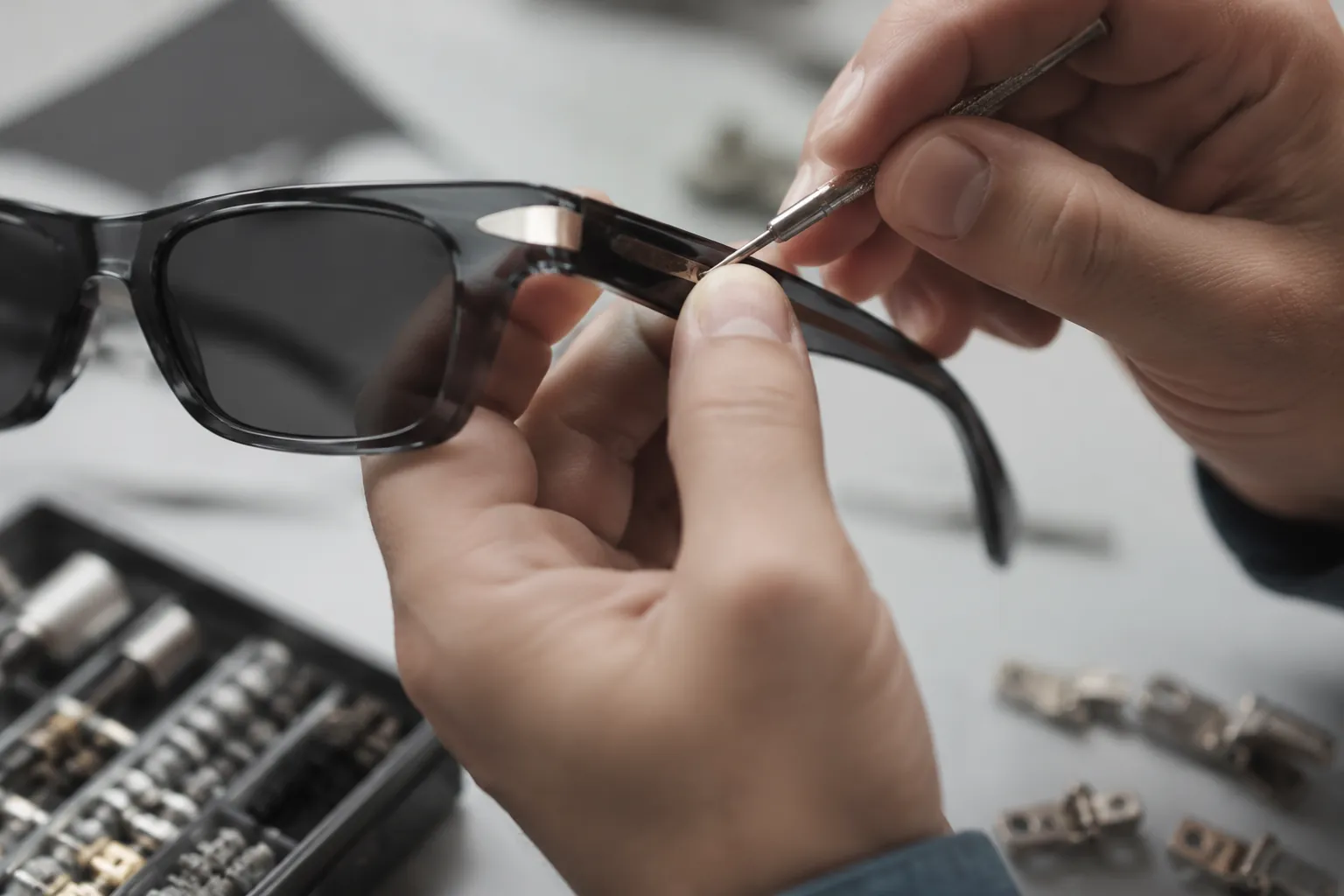
For brand owners, importers, distributors, and retailers, hinge feel is not a small detail. It affects how the frame opens on first touch, how it sits after months of wear, and how often customers send it back. If you source sunglasses at volume, you should specify hinge performance the same way you specify lens tint, logo decoration, and compliance. This guide explains what to ask for, what to test, and how to brief a factory clearly.
Why hinge torque changes buyer perception
Hinge torque is the resistance you feel when opening and closing the temples. In practical terms, it is the force required to move the temple through the first part of travel and through the mid-swing point where the hinge should feel stable rather than loose or gritty. If the hinge is too light, the frame can feel cheap or unfinished. If it is too tight, the user may have to force it open, which can increase wear and create a poor first impression.
Retail customers do not measure torque with a gauge. They judge the frame in seconds: does it open smoothly, stop cleanly, and stay where it is placed? That first-hand feel is a major quality cue in sunglasses because the hinge is one of the few moving parts the consumer touches every day. A well-set hinge can make a frame feel more expensive even when the logo, case, and lens are all similar to a competitor's.
For private label programs, hinge feel also affects returns and reviews. A frame that arrives loose after transit, or one that feels stiff because screw preload is inconsistent, creates complaints even if it passes basic compliance. A better spec is not "strong hinge." It is a repeatable target for opening feel, closing feel, left-right symmetry, allowable variation, and stability after repeated use. That spec should be tied to the exact model, because an acetate front, a metal frame, and an injected frame will not behave the same way.
Blunt version: if the hinge feel is wrong, the customer notices before they notice your lens spec.
What actually controls the opening feel
Hinge torque is not one variable. It is the result of design, materials, assembly, and finishing working together. If one of those elements is off, the whole frame can feel wrong.
- Hinge design: a 2-barrel hinge usually feels lighter and simpler, a 3-barrel hinge usually feels more planted, and a spring hinge adds return force and extra movement range.
- Screw preload: a loose screw can create wobble and rattling; an over-tightened screw can bind the barrel, raise opening force, and damage threads.
- Barrel alignment: even small misalignment can create drag or a gritty sensation during opening.
- Temple material: acetate, injected plastic, and mixed-material temples flex differently around the hinge pocket and change how resistance is perceived.
- Surface finish: dry metal-on-metal contact feels harsher than a hinge with clean deburring, proper polishing, and consistent plating or coating.
- Assembly consistency: torque variation across a lot usually comes from process variation, not hinge design alone.
In factory production, the detail work matters. Molding, cutting, CNC milling, lens tinting, and decoration can all happen in the same supply chain, but hinge feel is often determined in the final assembly step. If screw torque is set by hand without a gauge, a limit sample, or incoming inspection on the barrels, the result can drift from batch to batch.
For sourcing teams, the right move is to define acceptable feel with a reference sample and a clear written target, then lock both into the purchase spec. Do not leave it at "comfortable opening." That phrase is too vague for bulk production and too easy to dispute when the finished goods feel different from the approved sample.
Common hinge types and how they feel
The hinge style sets the baseline, but the actual feel also depends on part geometry, screw control, and frame material. Still, most programs fall into a few recognizable categories.
| Hinge type | Typical feel | Typical torque range | Best use | Trade-off |
|---|---|---|---|---|
| Standard 2-barrel metal hinge | Simple, moderate resistance, easy to open | About 0.03–0.06 N·m | Value and mid-range sunglasses | Less refined if tolerances are loose |
| 3-barrel metal hinge | Stiffer, more stable, more controlled mid-swing | About 0.05–0.09 N·m | Private label retail frames | Needs accurate alignment to avoid binding |
| Spring hinge | Flexible, forgiving, adds return force | About 0.07–0.12 N·m initial feel, depending on design | All-day wear, comfort-focused programs | More parts, higher cost, more QC points |
| Integrated injected hinge | Light, lower resistance, simpler motion | Often below 0.04 N·m equivalent feel | Promotional or light-use styles | Can feel less premium if overused |
For premium sunglasses, many buyers prefer a stable metal hinge or a spring hinge, depending on the intended retail price and user profile. A 3-barrel hinge often gives the clean, controlled opening feel buyers associate with better construction, especially when the temple is acetate or a composite with a metal core. Spring hinges can improve comfort by reducing pressure at the side of the head, but they add more hardware, more wear points, and more opportunities for uneven left-right behavior.
If your retail program targets a higher-end presentation, the hinge should not fight the temple. It should guide it. That usually means tighter tolerance control at the barrel centerline, consistent barrel length, polished mating surfaces, and limited variation in screw tightening from unit to unit. In practice, a premium-looking hinge often depends on small details: clean edge finishing, no visible burrs, no plating defects, and no lateral play when the temple is half-open.
How to specify torque without guessing
Most buyers do not need to engineer the hinge from scratch, but they do need a usable spec. Start with three things: opening feel target, closing feel, and acceptable variation across the sample set. Then add the test method so the factory knows how the number was measured.
A practical spec should say the temple opens with a defined resistance when evaluated at the hinge centerline, using the same setup for every sample. If the factory uses a torque gauge, note the measurement point and angle. If it uses a spring-scale style fixture, note the pull angle and the speed of motion. Without those details, two factories can interpret the same number differently.
- Pick one physical reference sample that feels right and keep it sealed as the master.
- Measure opening and closing force on both temples with a torque gauge or equivalent fixture.
- Record the target by model, not only by product line, because shape and temple length change the feel.
- Set acceptance criteria for first article, pilot run, and mass production.
- State whether the feel should stay stable after a specified number of cycles, based on the program requirement.
A useful buyer spec often reads like this: "Temple opens with medium-firm resistance, no free swing, no hard stop before full extension, no wobble at mid-open, left-right symmetry within the approved sample range, and no visible screw back-out after repeated opening tests." If you want a firmer feel, say so. If your target customer is older users or people who remove glasses frequently, specify a lighter opening force with the same stability requirements. The key is to define both the feel and the failure mode you do not want.
For branded retail, consistency matters more than chasing the stiffest hinge. A hinge that feels nearly identical across a large order builds trust. One that varies by carton creates returns, slows replenishment approvals, and forces the buyer to re-approve every reorder.
Material and frame interaction
Hinge torque does not exist on its own. The frame material changes how resistance feels in the hand and how the hinge holds up after use.
Acetate frames can support a more premium, slightly firmer opening feel because the temple stock has enough body to hold the hinge pocket cleanly. They also tend to mask minor hardware variation better than very thin injected temples. The trade-off is that the hinge slot must be cut accurately. A poor cut creates misalignment, which users feel as drag or a temple that opens harder on one side than the other. In a good acetate build, the hinge sits square, the screw seats flush, and the temple closes with a controlled stop instead of a snap.
Injected frames usually feel lighter and less dense. That is fine for fashion or value programs, but if the hinge is too loose, the frame can feel hollow and low grade immediately. These frames need controlled screw tightening, proper barrel alignment, and careful control of the molded hinge seat. They are also more sensitive to heat and shipping stress if the hinge assembly is not stabilized before packing.
Mixed-material frames are often the hardest to tune. A metal core inside an injected temple, or a metal hinge fixed into acetate, needs stable insertion depth and strong dimensional control. If the factory also does CNC milling, laser engraving, hot stamping, pad printing, or metal logo plate attachment in-house, that can reduce handling and keep alignment tighter. But decoration still cannot compensate for a poor hinge pocket. A sharp logo or polished plate does not hide a temple that binds at mid-open or rattles in the box.
Decoration methods can also affect hinge assembly order. For example, pad printing or hot stamping before final hinge insertion can expose nearby plastic to heat or pressure. Laser engraving near the barrel area can change the surface finish if the setup is too aggressive. If your style uses tinted lenses, mirror coatings, or metallic accents, ask the factory to confirm the sequence: machining, decoration, hinge insertion, screw tightening, cleaning, and final fit check. That sequence matters because every extra handling step introduces another chance to shift hinge feel.
What to test in samples and pre-production
Samples should not just look right. They should survive repeated opening and closing without losing feel, and they should do it on both sides of the frame.
At sample stage, test the hinge the way a customer uses it, then test it harder than a customer would. A sample that feels good once but loosens after a few cycles is a problem waiting to happen.
- Check opening force on both temples, not just one side, and compare left-right feel by hand before measuring.
- Open and close each sample at least 20 to 30 times before approval; for premium programs, run a longer repeated-use check on the master sample.
- Look for asymmetry: one temple tighter than the other is a red flag for barrel alignment or screw inconsistency.
- Inspect screw heads for stripping, back-out, uneven seating, or signs that the screw was over-driven during assembly.
- Confirm the hinge still feels stable after lens installation, final cleaning, and packing, because those steps can shift stress in the temple.
- For spring hinges, check that both sides return with similar force and do not catch at the end of travel.
At production stage, ask for pilot-run confirmation before mass output. A good factory will compare units from the first cartons against the approved reference, then check whether the hinge feel changed after packing and transit handling. That matters because vibration, carton compression, and temperature changes can shift feel slightly, especially if the hinge was set near the loose or stiff end of the acceptable range.
For large orders, request AQL-based hinge checks in the final inspection plan and ask for photos or short video clips showing hinge action on random units. If the program is sensitive, add a cycle test such as 50 or 100 open-close motions on a sample from the pilot batch. The buyer still has to define what "good" means. Without a sample standard, QC becomes subjective, and that is how disputes start.
Cost, lead time, and MOQ trade-offs
Hinge choice affects cost, but not always in the way new buyers expect. The hinge hardware itself is only part of the bill. The bigger cost often comes from assembly attention, rework risk, and the time needed to hit consistent feel across the lot.
As a rule, standard metal and injected hinges are the fastest and cheapest to sample because they use fewer components and fewer QC checkpoints. A 3-barrel hinge adds hardware and alignment sensitivity, while a spring hinge adds more parts, more labor, and more opportunities for variation. If the hinge target is especially narrow, the factory may need an extra sample round to tune screw preload and barrel fit.
| Program level | Typical hinge choice | Indicative MOQ | Cost logic | Lead-time impact |
|---|---|---|---|---|
| Entry private label | Standard metal hinge or injected hinge | 50 pairs per design | Lowest unit cost, fewer parts, lower setup burden | Fastest to sample and bulk |
| Mid-range retail | 3-barrel metal hinge | 300 pairs or more | Moderate increase from hardware, assembly time, and inspection | Usually fits a normal 25–35 day bulk window |
| Premium comfort line | Spring hinge or tighter-tolerance metal hinge | 1,000 pairs or more | Higher unit cost and more QC time because of extra moving parts | May need an extra sample approval cycle |
| Scaled branded program | Custom hinge spec with tighter control | 5,000+ pairs | Better pricing per unit once tooling and assembly are locked | Lead time is more stable if the spec does not change |
For reference, some suppliers start at 50 pairs per design, which is useful if you want to test hinge feel before scaling. Price usually improves at higher volumes, and samples often take about 7–10 days while bulk production can take several weeks depending on the program and the final spec. If your hinge requirement is unusually tight, build one extra sample round into the schedule and confirm whether the factory wants a dedicated hinge-check step before packing.
Do not treat the hinge as a last-minute tweak. A torque change can affect assembly sequence, screw sourcing, inspection time, and carton-out testing. If you want a quieter, firmer, or more premium feel, decide before finalizing the pilot run. That is the cheapest point to make the decision.
Buyer checklist for private label programs
Use this as the working checklist before PO release. It keeps the hinge discussion grounded in measurable details instead of vague comfort language.
- Approve one physical reference sample for opening feel and keep it as the master comparison piece.
- Write the hinge spec into the tech pack or purchase order with the measured range, not just the descriptive feel.
- State whether the frame should open light, medium, or firm, and define what that means at the hinge.
- Confirm the hinge type, barrel count, screw size, and whether the style uses a spring function.
- Require pre-production samples, pilot-run checks, and left-right symmetry checks before bulk release.
- Ask for compliance to the correct market standard for your destination market: CE EN ISO 12312-1, ANSI Z80.3, AS/NZS 1067, REACH, and, where applicable, FDA registration, ISO 9001, and BSCI.
- Request QC photos or a short video of hinge action if the order is large, the style is premium, or the opening feel is a key selling point.
- Specify whether the hinge must retain feel after a stated number of cycles so the factory understands durability expectations.
One more thing: if a supplier cannot explain how they control screw tension, barrel alignment, and final inspection, keep looking. A capable eyewear factory can tell you exactly where the tolerance risk sits. Usually it is not the hinge part alone. It is the combination of tooling, assembly, and end-of-line inspection, plus how consistently the team repeats those steps from one lot to the next.
How to brief the factory without wasting rounds
Give the factory a short, direct brief. Use product language, not marketing language. The best brief says what the hinge must do, what it must not do, and what sample is the standard.
Example: "Temple opening should feel medium-firm, stable, and even on both sides. No free-swing opening. No tight spot at mid-travel. No left-right mismatch beyond approved sample A. Check first article units, then AQL on mass production. Keep hinge performance consistent after lens fitting, cleaning, and packing."
If you want more control, add a simple test instruction: "Measure hinge feel on both temples, confirm no screw back-out after repeated open-close cycles, and reject any unit with visible barrel misalignment or grinding." That gives the factory something concrete to follow and gives you something concrete to inspect against.
For overseas buyers, the best hinge spec is the one a factory can repeat on the next order. If you can reorder months later and get the same opening feel, you have a stable program. If the second order feels different, the spec was not tight enough or the process was not locked. That is why premium sunglasses sourcing has to treat hinge performance as part of the product definition, not as a finishing detail.
Have a custom sunglasses project in mind?
Send us your styles, target market and quantities and we will return a detailed quote with MOQ, lead time and a sample plan.
Get a QuoteWhy source this from Wenzhou with LumiShades
Wenzhou in Zhejiang Province is widely regarded as China’s eyewear manufacturing capital, producing a large share of the world’s sunglasses. That concentration matters to buyers: a deep local supply chain for acetate sheet, hinges, lens blanks, plating and packaging means shorter component lead times, easier color and material matching, and a workforce with decades of eyewear-specific skill. LumiShades has manufactured in this ecosystem since 2009, and our vertical integration — in-house injection molding, acetate cutting, CNC milling, lens tinting, decoration and quality control — means no part of your order is quietly subcontracted to a workshop you cannot audit.
For international buyers, that vertical control translates into accountability. When a single factory owns every step, defects are traced and fixed at source rather than bounced between vendors, and your specifications survive intact from first sample to bulk. We back this with 15+ years of experience, shipments to 60+ countries, more than 5 million pairs produced per year and a 98.5% on-time delivery rate. Our certifications — CE EN ISO 12312-1, FDA registration, ANSI Z80.3, AS/NZS 1067, REACH, ISO 9001 and BSCI audit — mean the compliance documentation your market requires already exists. Explore our manufacturing capabilities and quality control process to see how this works in practice.
Frequently asked questions
What hinge feel do most premium sunglasses buyers prefer? Usually a medium-firm, controlled opening with no loose swing and no hard binding. The hinge should feel stable in the hand, and both temples should feel the same. For purchase control, approve one reference sample and describe the feel in writing so the factory can repeat it.
Should I specify hinge torque in numbers or by sample? Use both if possible. A physical reference sample sets the feel, and a written range or test method helps the factory repeat it. If your supplier can measure torque, state where and how it is measured so both sides are talking about the same result.
Does a spring hinge always feel more premium? No. Spring hinges can feel comfortable and forgiving, but they also add cost and QC complexity. Some premium programs still use 3-barrel metal hinges because they want a cleaner, more controlled opening feel with fewer moving parts.
How many sample cycles should I test before approval? Start with at least 20 to 30 open-close cycles on each sample, checking both sides for symmetry and smooth motion. For a premium launch, also run a longer repeated-use check on the approved master sample so you can see whether the feel changes after repeated movement.
Can hinge feel change after packing and shipping? Yes. Vibration, carton pressure, heat, and small screw movement can change feel slightly. That is why you should check hinge action after packing and include a pilot-run review before mass release, especially when the feel target is tight.
What should I ask the supplier to prove on a hinge-sensitive order? Ask for the approved reference sample, pre-production confirmation, screw retention control, alignment checks, cycle-test results, and the relevant market compliance documents for your destination market. For sunglasses, that usually means the appropriate combination of CE EN ISO 12312-1, ANSI Z80.3, AS/NZS 1067, REACH, FDA registration, ISO 9001, or BSCI, depending on what applies to the factory and market.
Ready to start?
Explore our sport wrap sunglasses or request a quote — our sales team replies within 12 hours.
Request a Quote