
Metal Sunglasses Frames: Private Label Sourcing Guide
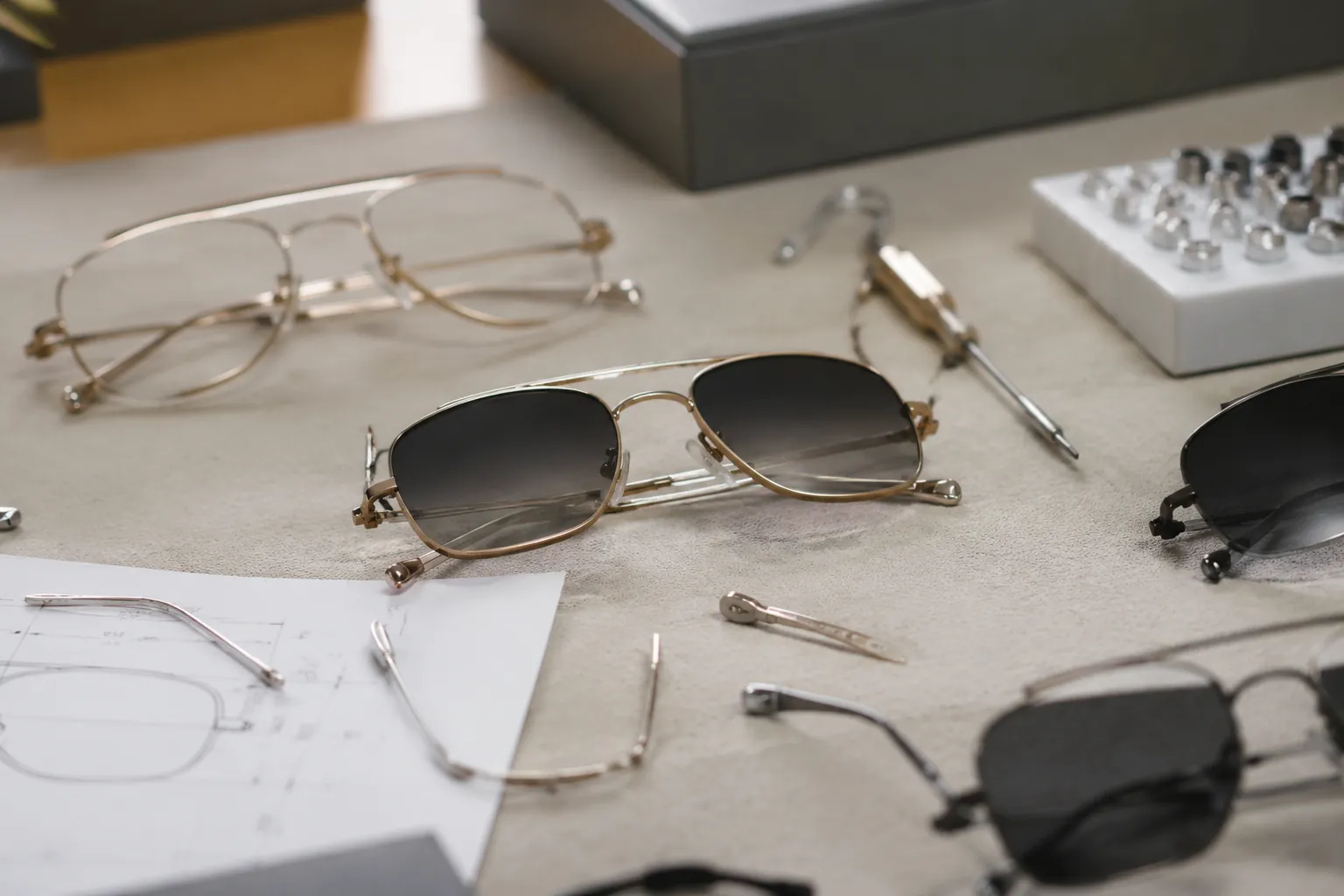
Private label buyers need clear material guidance, not vague premium language. This guide compares stainless steel, memory metal, and titanium-style sunglasses frame constructions for brands, importers, distributors, and retailers buying in volume. It explains how each build affects weight, durability, manufacturability, MOQ planning, finishing, lead time, defect risk, and retail positioning so buyers can specify the right frame for the right channel.
Start with the buying problem, not the metal name
If you source custom sunglasses in volume, frame material is not just a styling choice. It affects weight, hinge behavior, corrosion resistance, manufacturing consistency, packaging risk, and landed cost. The right frame is the one that fits your target price, handling needs, and channel.
Do not start with what sounds premium. Start with how the product will be used, what the customer expects to feel, and how much production complexity your program can handle. Stainless steel is usually the most practical base for mass-market frames. Memory metal helps when flex recovery matters. Titanium-style builds suit buyers who want a lighter, more premium feel without moving to full titanium across the line.
The factory process matters just as much as the material. Hinge spec, temple thickness, surface finish, and joining quality all affect whether the frame holds its shape and arrives saleable. A simple frame with tight process control often beats a more expensive-looking sample that is hard to repeat.
Think in trade-offs. A lighter frame is not automatically better if the hinge is weak or the finish scratches fast. A sample that looks premium but cannot be repeated in bulk is not a win. It is risk.
Stainless steel: the default workhorse
Stainless steel is the most common starting point for private label sunglasses frames. Factories know it well. It is usually stable in production and easier to repeat across runs than more specialized metal builds. For buyers launching several SKUs in one season, it is often the simplest platform for changing lens color, plating, or branding while keeping the core frame structure intact.
In production, stainless steel is specified by thickness, forming method, finish, and fit, not by marketing language. Frame members are often designed in the sub-millimeter range, but the right thickness depends on geometry, target weight, and whether the part is stamped, laser-cut, or formed. Too thin, and the frame feels soft or drifts out of alignment. Too thick, and it starts to feel heavy.
Use stainless steel when you want:
- A slim, consistent metal look at mid-market cost
- Good corrosion resistance for normal retail use
- Reliable mass production with fewer process surprises
- Compatibility with laser engraving, pad printing, or logo plates
Quality control should focus on symmetry, hinge function, bridge alignment, and lens fit. Ask how the supplier checks each one. Be specific. If the answer stays vague, slow down. A crooked frame, a rubbing temple, or a part that needs heavy hand correction creates hidden cost later.
For many private label programs, stainless steel is still the best cost-to-performance choice. It is easy to source, easy to repeat, and easy to position. That matters.
Memory metal: for flex, not for vanity pricing
Memory metal is the practical choice when breakage risk matters more than a rigid, jewelry-like feel. It tolerates bending better than standard stainless steel, which is why it is often used in kids' eyewear, travel frames, and products handled roughly or carried loose in bags and pockets.
The trade-off is real. Memory metal can raise material and processing complexity, and it usually demands tighter assembly control. The factory needs accurate jigging, clean alignment, and careful handling during forming and joining. If the hinge, nose pad arms, or temple geometry is off, the flex properties can work against the frame instead of helping it.
Memory metal fits best when function comes first. It is useful when you need:
- Higher flex tolerance for temples and bridge areas
- Lower risk of permanent bending during shipping or try-on
- A stronger story for active, travel, or family-focused ranges
- Less after-sales friction from shape distortion
Do not ask only for a "strong" or "flexible" frame. Ask how the supplier controls hinge function, return-to-shape behavior, and alignment after forming. A frame can still fail if the joint is weak, the screw spec is poor, or the joining process creates stress in the wrong place. Memory metal improves resilience. It does not replace engineering.
Sample the actual production structure, not just the appearance. Flex performance depends on the full build, including member thickness, hinge design, and assembly quality. A good memory metal frame should still open smoothly, sit evenly, and return to shape without twist.
Titanium-style builds: premium feel, stated clearly
Many buyers ask for "titanium-style" frames because the market likes the word titanium. The sourcing question is simple: does the product actually use titanium components, or is it a lighter metal structure designed to create a similar look and feel at lower cost? Those are not the same thing.
True titanium is valued for low weight, corrosion resistance, and a premium hand feel. It also costs more and can be harder to process cleanly. Titanium-style frames may use lighter geometry, careful surface finishing, and simpler structures to create a refined impression without using titanium throughout the frame.
For private label buyers, the titanium-style route makes sense if:
- Your target shelf price sits above entry level
- You want a lighter carry feel for daily wear
- Your customer compares weight in hand before buying
- You can support tighter finish control and more precise assembly
This premium story only works if the product feels refined in hand and survives close inspection. Specify surface finish, edge quality, hinge alignment, and cosmetic acceptance criteria before production starts. Thin or highly polished surfaces can show scratches quickly, so packaging and handling matter too. A frame that looks good in a sample photo but shows tool marks or haze in bulk will weaken the product story.
Defect control matters most here. If the factory is not disciplined, the frame may look premium in a sample and inconsistent in production. That gap is expensive.
Head-to-head comparison for sourcing decisions
| Option | Typical buyer use | Weight feel | Durability profile | Relative cost | Sourcing risk |
|---|---|---|---|---|---|
| Stainless steel | Core mass-market fashion | Medium | Stable, with good corrosion resistance and repeatable production | Lowest of the three | Low if the spec is clear |
| Memory metal | Kids, travel, active use | Medium to light | Best for flex recovery and shape retention after bending | Mid to higher | Medium; assembly control matters |
| Titanium-style build | Premium retail and lighter-feel programs | Light | Good if finish, geometry, and hinge alignment are controlled | Higher than stainless in most programs | Medium to high; finish defects show quickly |
| True titanium | High-end optical and premium sunglass lines | Very light | Excellent corrosion resistance and comfort when properly processed | Highest overall | High; processing and inspection are less forgiving |
Use the table as a sourcing map, not a sales chart. Stainless steel is usually the most cost-efficient and repeatable. Memory metal is the better fit when flex recovery matters. Titanium-style builds work when perceived quality and lightness matter. None of them wins automatically. Hinge design, plating quality, and QC still decide the result.
Plan MOQ and pricing around structure complexity. A factory offering a low minimum for sample testing is not saying every design is equally economical in bulk. Simple structures with standard finishing are easier to repeat than frames with multi-step plating, special textures, or complex decoration. MOQ is one input. Not the whole decision.
Separate fixed cost from variable cost. Fixed cost includes design confirmation, sample adjustment, and tooling changes. Variable cost includes material thickness, plating cycles, decoration steps, and rework. The more complex the build, the more important it is to confirm those costs before approving the first sample.
How the frame is actually made in factory
Metal sunglasses frames move through a process chain, and each stage adds tolerance risk. If one step is off, the result can be twisted temples, uneven lens seating, or a frame that looks aligned on the bench but sits crooked on the face.
- Material selection and incoming inspection: verify material type, thickness, surface condition, and flatness.
- Cutting and forming: CNC milling, laser cutting, or stamping prepares bridge, rim, and temple parts.
- Bending and shaping: parts are formed to the target radius and angle before joining.
- Welding or joining: bridges, end pieces, and hinge attachment points are assembled.
- Surface preparation: deburring, polishing, and cleaning remove tool marks and sharp edges.
- Decoration: laser engraving, pad printing, or logo plate application adds branding.
- Plating or coating: the final color and surface protection are applied.
- Assembly: hinges, screws, nose pads, temple tips, and lens seating are fitted and adjusted.
- QC: visual, dimensional, fit, and function checks are completed before packing.
Tolerances decide whether a program succeeds or fails. A frame can look fine in photos and still cause problems if temple opening varies, the bridge is off-center, or lens retention is uneven. Ask how the supplier measures flatness, hinge torque, temple symmetry, and lens fit. The answer should be concrete, not just "we check quality carefully."
Decoration method matters too. Laser engraving is durable and clean for simple branding or serial marks. Pad printing gives more color flexibility, but it depends on ink adhesion and wear resistance. Logo plates can look premium, but they add placement steps and more inspection points. Surface finishes such as PVD or plated coatings can improve appearance, but they also make scratches and substrate defects more visible, so process control has to be stronger.
Factory capability shortens the correction loop. When sampling, finishing, decoration, and QC are connected closely, problems get fixed before bulk production. That is the goal.
Spec the frame to the market, not to your ego
Different channels punish different mistakes. A distributor selling into value channels wants stable quality and low returns. A brand building a higher-ticket line wants cleaner finishing and a better hand feel. A retailer with fast turns wants a design that does not drift from lot to lot.
Use this rough matching logic:
- Discount and promo: stainless steel, simple finishing, durable hinges, conservative thickness, minimal decoration.
- Family and travel: memory metal, flex recovery, controlled nose pad fit, lower deformation risk in transit.
- Premium private label: titanium-style build, tighter cosmetic QC, higher finish standards, cleaner branding execution.
Ask for the right sample, not just a pretty one. The sample should include the final finish, logo treatment, lens tint, temple tip detail, and hinge feel. A bare metal prototype is not the same product as a finished retail unit. Approve the real spec, not a stripped-down test piece that hides risk.
Packaging and decoration should stay simple unless there is a clear reason not to. Laser engraving and pad printing are usually easier to control than more complex decoration stacks. Logo plates can look premium, but they add assembly time and another chance for misalignment. If the frame is meant for low-cost retail, every extra step needs a reason. If it is meant to look premium, the surface finish, alignment, and hinge quality must support that story.
Returns matter too. A frame with a good material spec but weak carton protection can still arrive bent. Inner trays, temple retention, sleeve fit, and carton strength all affect whether the product reaches market in saleable condition. Packaging is part of the spec.
Compliance, sampling, and order planning
For overseas B2B buyers, compliance is part of market access. It determines which destinations you can sell into and what documentation belongs in the file. For metal sunglasses programs, ask for the standards that apply to your destination market rather than asking a supplier to "just make it pass." The requirement should match the destination, test scope, and product category.
LumiShades holds certifications and registrations including CE EN ISO 12312-1, ANSI Z80.3, AS/NZS 1067, REACH, FDA registration, ISO 9001, and BSCI. Buyers should still confirm which documents apply to their own market. A supplier's certificate list is useful, but it does not replace destination-specific requirements.
Sampling and production planning should match build complexity. A practical timeline often looks like this:
- Sample development: 7 to 10 days for a standard structure, longer if new finishes or tooling changes are involved
- Bulk production: 25 to 35 days after sample approval, depending on plating queue and order volume
- MOQ: 50 pairs per design
- Better pricing tiers: 300, 1000, and 5000+ pairs
If you compare frame options, change one variable at a time: material, then finish, then decoration, then packaging. That is the cleanest way to see where cost, feel, and defect rate move. Controlled comparisons are better than scattered samples.
Also ask for the factory's inspection logic. A good supplier should explain incoming inspection, in-process checks, final random inspection, and packaging checks in plain language. It should also describe how it tests hinge operation, finish quality, and packing abrasion risk. If it cannot explain those steps clearly, the product may still look fine at approval and fail later at scale.
In private label eyewear, the lowest-priced frame is not always the lowest-cost program. The better sourcing decision is the one that stays stable through production, freight, shelf display, and consumer use. That protects margin and brand reputation at the same time.
Have a custom sunglasses project in mind?
Send us your styles, target market and quantities and we will return a detailed quote with MOQ, lead time and a sample plan.
Get a QuoteWhy source this from Wenzhou with LumiShades
Wenzhou in Zhejiang Province is widely regarded as China’s eyewear manufacturing capital, producing a large share of the world’s sunglasses. That concentration matters to buyers: a deep local supply chain for acetate sheet, hinges, lens blanks, plating and packaging means shorter component lead times, easier color and material matching, and a workforce with decades of eyewear-specific skill. LumiShades has manufactured in this ecosystem since 2009, and our vertical integration — in-house injection molding, acetate cutting, CNC milling, lens tinting, decoration and quality control — means no part of your order is quietly subcontracted to a workshop you cannot audit.
For international buyers, that vertical control translates into accountability. When a single factory owns every step, defects are traced and fixed at source rather than bounced between vendors, and your specifications survive intact from first sample to bulk. We back this with 15+ years of experience, shipments to 60+ countries, more than 5 million pairs produced per year and a 98.5% on-time delivery rate. Our certifications — CE EN ISO 12312-1, FDA registration, ANSI Z80.3, AS/NZS 1067, REACH, ISO 9001 and BSCI audit — mean the compliance documentation your market requires already exists. Explore our manufacturing capabilities and quality control process to see how this works in practice.
Frequently asked questions
Which metal frame is safest for a first private label launch? Stainless steel is usually the safest first choice because it is easier to source, easier to repeat, and generally more forgiving in production. Start with a simple structure, standard finish, and one logo method so you can validate quality before adding complexity.
Is memory metal worth the extra cost? It is worth considering when your customers care about flex recovery, travel durability, or fewer shape-deformation complaints. It is usually not worth it for a pure fashion program if the added cost and assembly control do not improve your market result.
Can I get metal sunglasses frames at 50 pairs per design? Yes. A 50-pair MOQ is useful for testing a style before scaling, provided the design is simple and the finish is standard. Use the sample run to confirm hinge feel, alignment, lens fit, and packaging protection before increasing volume.
What sample and bulk lead times should I plan for? Plan 7 to 10 days for samples on a standard structure and 25 to 35 days for bulk after approval if the spec is clear. Add time if you change the finish, request new tooling, or revise decoration after the sample is approved.
Which compliance standard should I ask for first? Ask for the standard required by your destination market. For example, CE EN ISO 12312-1 is relevant for many EU-oriented programs, ANSI Z80.3 for the US, and AS/NZS 1067 for Australia and New Zealand. REACH, FDA registration, ISO 9001, and BSCI may also matter depending on the market and buyer requirements.
How do I keep a titanium-style frame from looking cheap? Keep the geometry clean, specify the finish clearly, and avoid over-decoration. A titanium-style frame looks premium only if alignment is consistent, the surface is well controlled, and the hinge motion feels smooth in hand.
Ready to start?
Explore our square sunglasses or request a quote — our sales team replies within 12 hours.
Request a Quote