
Metal-Free Sunglasses: Materials, Specs, and Risk Checks
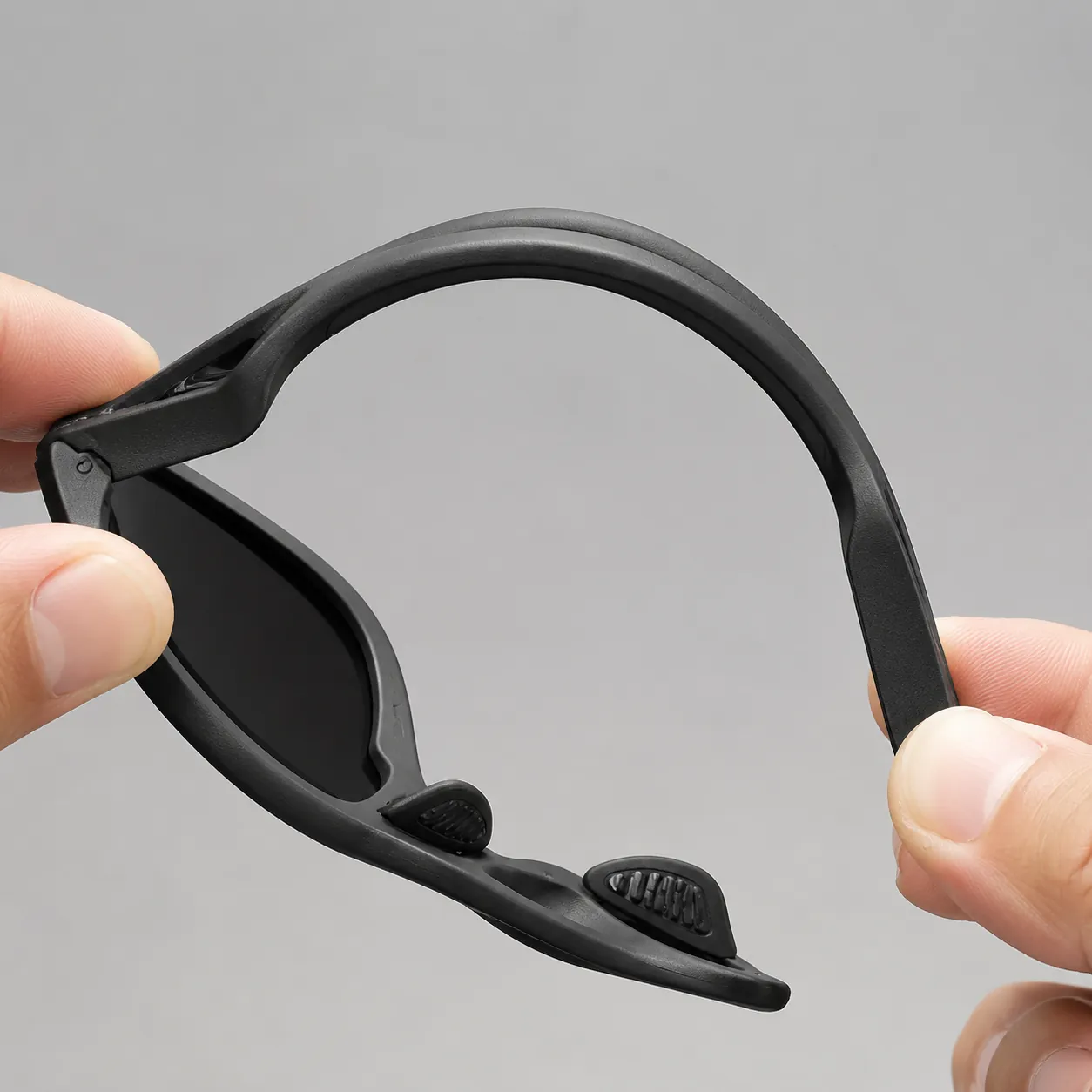
If you buy sunglasses for markets that care about skin contact, nickel exposure, or conservative compliance review, frame material is not a cosmetic detail. It affects comfort, breakage rate, tooling cost, decoration quality, and what you can claim on the spec sheet. This guide is for brands, importers, distributors, and retailers that need metal-free options without creating recall risk, warranty noise, or sample churn.
What "metal-free" means in a buyer spec
"Metal-free" is not a formal certification. In sourcing terms, it usually means the frame does not use exposed metal in the front, bridge, temples, or hinge system that the wearer can touch in normal use. That definition matters more than the phrase itself. The complaint point is skin contact, not whether a hidden screw sits inside the mold line.
Be exact in the purchase order. If you mean no metal on the front only, say "front frame plastic, temples plastic, standard hinge screws permitted." If you mean no exposed metal at all, say "no exposed metal on front, bridge, temples, logo, or nose contact points." If you allow metal screws but not a wire core or metal nose piece, spell that out too. A one-line spec that says "metal-free" is too loose for production, QA, and customs paperwork.
The common risk points are metal hinges, decorative temple plates, wire-core reinforcement, nose pads, and logo badges. A genuine metal-free build usually relies on plastic hinges, molded bridge structures, or integrated temple joints. That design is stricter. It also makes the claim easier to defend in retail, marketplace listings, and customer service scripts.
Many buyers use a part-by-part approval sheet. List the front, temples, hinge, bridge, logo, and any reinforcement separately, then mark each as allowed or prohibited. That reduces sample confusion and helps the factory quote the right tooling from day one.
Buyer rule: do not use "metal-free" as a vague sales phrase. Put the allowed and prohibited parts in writing, and make the sample sign-off match the production BOM.
Material options that actually work
Not every plastic frame material behaves the same way in production or in hand. Some are easy to polish. Some are more forgiving in daily wear. Some look premium but are hard to keep consistent across a large batch. The table below is the practical sourcing view.
| Material | Best use | Typical behavior | Buying risks | Process notes |
|---|---|---|---|---|
| Acetate | Premium fashion and lifestyle frames | Dense feel, strong color depth, excellent surface finish after polishing | Heavier than injection plastics; can warp if machining, cooling, or storage is sloppy | Common thickness range is 4–8 mm for fronts; CNC, tumbling, polishing, and laser engraving are all standard |
| TR90 / nylon-based injection | Lightweight daily-wear and sport-influenced styles | Flexible, light, impact-resistant, and comfortable over long wear periods | Surface feel is more technical; decoration adhesion and gloss level need testing | Works best with controlled mold temperature, balanced gate design, and color masterbatch consistency |
| Injected PP/PC blends | Price-sensitive volume programs | Fast to mold, easy to scale, lower material cost | Can feel cheaper, scratch more visibly, and lose premium perception quickly | Best for simplified shapes; wall thickness and sink-mark control are critical |
| Bio-based plastics | Eco-positioned lines | Useful for sustainability messaging, but performance varies by resin chemistry | Not automatically stronger, lighter, or more heat-resistant | Needs lab verification for tensile, heat distortion, and finish stability based on the specific resin used |
Material choice and process choice go together. An acetate frame cut too aggressively will show edge chatter. An injection frame that cools unevenly can twist enough to affect lens fit and temple alignment. The material is only half the story.
Use a simple rule of thumb: acetate usually supports a more premium look, TR90 usually supports better wear comfort, and basic injected plastics usually support lower cost. The right answer depends on what your market values most and what defect level you can tolerate at scale.
Comfort matters more than buyers expect
Allergy-sensitive customers often blame "metal" when the real issue is pressure, heat, sweat, or rough finishing. A frame can be metal-free and still feel bad if the geometry is wrong or the edges are not controlled. Comfort complaints turn into returns fast.
Watch four things closely:
- Temple pressure: too much clamp force causes headaches and makes the frame feel cheap even when the material is good.
- Nose bridge shape: a wide bridge can be stable, but if the contact area is too narrow or too flat it will slide and irritate skin.
- Edge finishing: internal edges on acetate or injection parts should be broken and polished; sharp edges create hot spots within minutes.
- Weight balance: a heavy front with light temples tips forward and sits badly, especially during walking or heat exposure.
For metal-free programs, temple springiness is limited by the plastic hinge design. That means you need to test real wear, not just drawing dimensions. A common approval mistake is checking only front width and temple length while ignoring open/close torque. If the hinge is too soft, the temples flop. If it is too stiff, the frame feels brittle and can crack after repeated flexing.
Fit should also be checked across nose widths and head shapes. If your program targets broad distribution, request at least one round of wear testing with 5–10 users, not just one internal fit check. Two hours of wear in warm conditions will reveal problems that a ten-second bench test will not.
Do not overlook finishing consistency. A matte temple next to a glossy front can be intentional. A mismatch caused by mold variation or polishing drift reads as poor quality. Small visual inconsistencies become major issues once the product is sold in batches of hundreds or thousands.
Compliance-sensitive markets need tighter evidence
Metal-free does not remove compliance work. It changes the proof you need. You still need the right documents for the target market, and you still need to control claims on packaging, product pages, and retailer sell sheets.
For sunglasses, the relevant standards commonly include CE EN ISO 12312-1 for the EU market, ANSI Z80.3 for the U.S., and AS/NZS 1067 for Australia and New Zealand, depending on destination and product category. REACH matters for restricted substances in the EU supply chain, especially if you want to avoid contamination or restricted chemical surprises from pigments, coatings, or printing inks. FDA registration or related U.S. compliance handling may apply depending on how the product is categorized and imported, while ISO 9001 and BSCI support process and social compliance but do not replace product-performance testing.
Be careful with wording. Do not say a metal-free frame is automatically safer or hypoallergenic. That is too broad and hard to support. What you can say is that the design reduces exposed metal contact points and is suitable for allergy-conscious positioning if the material and construction support that claim. The claim must match the build. If a sample uses plastic hinges but bulk switches to a metal-core hinge, the claim is no longer accurate.
Ask for the exact test scope before you approve artwork or carton copy. Confirm whether the test was run on the final frame, the final lens combination, and the final decoration method. Also ask whether the report covers dimensional checks, lens impact where applicable, UV transmittance, and labeling accuracy. Compliance is not just a certificate PDF. It is a chain of matched details.
For buyers serving conservative retailers, request a construction declaration that lists every material used in the frame system. That one page can prevent misunderstandings later when the merch team, compliance team, and factory all use different language.
A practical comparison for sourcing teams
Use this as a decision aid. It is blunt on purpose, because sourcing decisions get expensive when everyone talks around the trade-offs.
| Buyer priority | Best frame path | Why it works | Main risk |
|---|---|---|---|
| Lowest complaint rate on skin contact | True plastic-frame construction with plastic hinge system | No exposed metal contact points in normal wear | Hinge durability and torque retention must be tested hard |
| Premium look with metal-free positioning | Acetate frame with hidden or molded plastic reinforcement | Better surface depth, color richness, and perceived value | Heavier feel and slower machining cycle time |
| Lightweight everyday retail line | TR90 / nylon-based injected frame | Comfortable, flexible, and suitable for long wear in warm climates | Decoration adhesion, gloss control, and scratch appearance need validation |
| Lowest unit cost at scale | Simple injected plastic frame | Fast production and lower tooling complexity | Can look generic unless design lines and color are strong |
If your market is highly price-driven, do not chase premium surface treatment before you lock the base material and hinge design. A fancy finish on an unstable structure only raises cost and still leaves failure risk in the frame. Decide first: comfort, price, or appearance. You rarely get all three at once.
For large programs, use a clear trade-off matrix. If you need a 300–500 pair pilot, TR90 or injected plastic may give you faster sampling and lower risk. If you need a premium retail story and can accept slower production, acetate may be worth the extra cost. If you need aggressive pricing, reduce decoration complexity first before you reduce structural quality.
How to spec a program with fewer surprises
Good sourcing starts with a clear spec. Bad sourcing starts with "something similar to the sample." That phrase causes sample drift, decoration mistakes, and disputes over what "close enough" means.
Build the spec in layers. First define the no-metal rule: none at all, or no visible metal parts only. Then choose the frame family: acetate, TR90, injected plastic, or hybrid plastic-only construction. Then define dimensional targets, finish level, and acceptable weight range. A useful fit spec might include front width tolerance of ±0.3–0.5 mm, temple length tolerance of ±0.5–1.0 mm, and lens box alignment within a tight visual check window, depending on your factory's capability and price tier.
Next, lock decoration limits. Laser engraving works well on acetate and some coated plastics, but it can look faint or inconsistent on very glossy injection surfaces. Pad printing is flexible and cost-effective, but adhesion should be verified with the supplier's standard rub or tape test. Heat transfer, hot stamping, and metal logo plates are only appropriate if your "metal-free" definition allows them. If the claim matters, assume the logo detail matters too.
Request sample confirmation on hinge type, bridge construction, temple reinforcement, and surface finish. For metal-free projects, ask the supplier to mark the approved sample with the exact resin, color code, and decoration method. If the factory cannot tell you whether the temple is TR90, nylon, or PP/PC blend, the risk is already too high.
Any lead time or MOQ discussion should be treated as program-specific, not universal. Samples, bulk timing, and minimum order quantities depend on tooling status, color matching, decoration complexity, and packaging. Ask the supplier to quote those details against the exact approved spec and revision number.
The more custom the color, lens tint, and decoration stack, the more likely the schedule shifts from mold time into approval and rework time. If you want a faster launch, simplify the finish and keep the first production run close to the approved sample.
Failure modes that cost money
Most problems in metal-free sunglasses are not dramatic. They are boring, repeatable, and expensive. That is exactly why they are worth preventing early.
Common failure modes include hinge cracking after repeated opening, temple twist from uneven cooling, poor pad print adhesion on smooth plastic, and color mismatch between sample and bulk. On acetate, overcut edges can leave a rough feel even if the frame looks fine in a photo. On injected materials, gate marks and sink marks can ruin a clean retail look. In TR90, the issue is often not strength but finish: a frame can perform well and still get rejected because the surface gloss or texture shifts from cavity to cavity.
Another frequent problem is approval drift. A buyer approves one gloss level, one temple thickness, and one bridge profile, then asks for a "small" change in bulk without rechecking decoration, fit, or lens seating. Even a small change can affect ink adhesion, scratch visibility, or perceived quality. If the front is matte and the temple is glossy by accident, you will hear about it from the market immediately.
QC should check dimensional consistency, hinge action, surface defects, print alignment, color matching, and packaging accuracy against the approved reference. That means not only visual inspection but also a repeatable checklist for open/close cycles, temple symmetry, and sample-to-bulk color comparison under standard light. If your factory has a simple go/no-go gauge for temple spread and front width, use it. If they do not, ask for one before the order scales.
It also helps to set AQL expectations before production starts. Many buyers use AQL-style inspection for general appearance and a tighter internal check for critical fit points. The exact numbers depend on your category and customer promise, but the important thing is to decide in advance.
What to ask your factory before you place the PO
Ask direct questions. The answers tell you whether the supplier understands compliance, material behavior, and production control, or whether they are improvising. A good supplier can explain the trade-off between weight, cost, hinge life, and finish without drifting into sales talk.
- Which parts are truly metal-free, and which parts may still contain metal?
- What material is used for the front, temples, hinges, and reinforcement?
- What are the exact tolerances for front width, temple length, bridge fit, and lens seating?
- What is the sample lead time and what exactly is included in the sample fee?
- Which test standard is being used for the target market: CE EN ISO 12312-1, ANSI Z80.3, AS/NZS 1067, or another route?
- How is REACH substance control handled in raw material purchasing, inks, and coatings?
- What decoration methods are stable on the selected surface, and what adhesion test do you use?
Also ask about tooling. Does the factory already have a mold base that can support the geometry, or is this a new mold with longer lead time? Are hinge inserts standard or custom? Can they provide a pre-production sample, a golden sample, and a production reference sample? Those details matter because a small change in tooling strategy can add days or weeks to launch timing.
For a conservative market, the right choice is rarely the fanciest material. It is the one that matches your claim, your market price, your defect tolerance, and your lead-time reality. Keep the design honest, the spec tight, the sample approval disciplined, and the compliance file clean.
Have a custom sunglasses project in mind?
Send us your styles, target market and quantities and we will return a detailed quote with MOQ, lead time and a sample plan.
Get a QuoteWhy source this from Wenzhou with LumiShades
Wenzhou in Zhejiang Province is widely regarded as China’s eyewear manufacturing capital, producing a large share of the world’s sunglasses. That concentration matters to buyers: a deep local supply chain for acetate sheet, hinges, lens blanks, plating and packaging means shorter component lead times, easier color and material matching, and a workforce with decades of eyewear-specific skill. LumiShades has manufactured in this ecosystem since 2009, and our vertical integration — in-house injection molding, acetate cutting, CNC milling, lens tinting, decoration and quality control — means no part of your order is quietly subcontracted to a workshop you cannot audit.
For international buyers, that vertical control translates into accountability. When a single factory owns every step, defects are traced and fixed at source rather than bounced between vendors, and your specifications survive intact from first sample to bulk. For procurement review, buyers can request process records, approved samples, quality checkpoints and project-specific compliance files before placing a bulk order. Required testing and documentation are confirmed against the destination market and product specification rather than assumed from a generic certificate list. Explore our manufacturing capabilities and quality control process to see how this works in practice.
Frequently asked questions
Is "metal-free" the same as "hypoallergenic"? No. Metal-free describes construction. Hypoallergenic is a broader claim about the likelihood of causing a reaction, and it is harder to support. If you want to market toward sensitive users, keep the claim narrow: say the frame reduces exposed metal contact points, and only use any allergy-related wording if your legal or compliance team has approved it for the target market.
Which material is best for metal-free sunglasses? There is no single best material. Acetate is usually the strongest choice for a premium look and deeper color. TR90 or nylon-based injection is often better for lightweight, everyday wear. Pick the material based on the price point, the hinge design, the finish you want, and the wear profile you need to support.
Can a plastic frame still fail compliance tests? Yes. Plastic construction does not guarantee compliance. The frame can still fail on product-performance requirements, lens category, UV-related requirements, labeling, dimensional consistency, restricted substances, or general build quality. Ask for the final test report tied to the exact sample you approved.
What should I approve before bulk production? Approve the exact construction, material names, hinge type, finish level, decoration method, color reference, target standard, and inspection criteria. Also approve the final lens specification and packaging copy if they are part of the compliance file. Do not rely on "similar to sample" language without a written revision note.
How fast can a custom metal-free program move? Timing depends on whether tooling already exists and how much customization is involved. A standard program can move quickly when the geometry, color, and decoration are already defined. Before you place the PO, ask the factory to quote sample time, bulk time, and any tooling lead time against the exact approved specification.
Ready to start?
Explore our aviator sunglasses or request a quote — our sales team replies within 12 hours.
Request a Quote