
TR90 Sunglasses OEM Manufacturing Guide
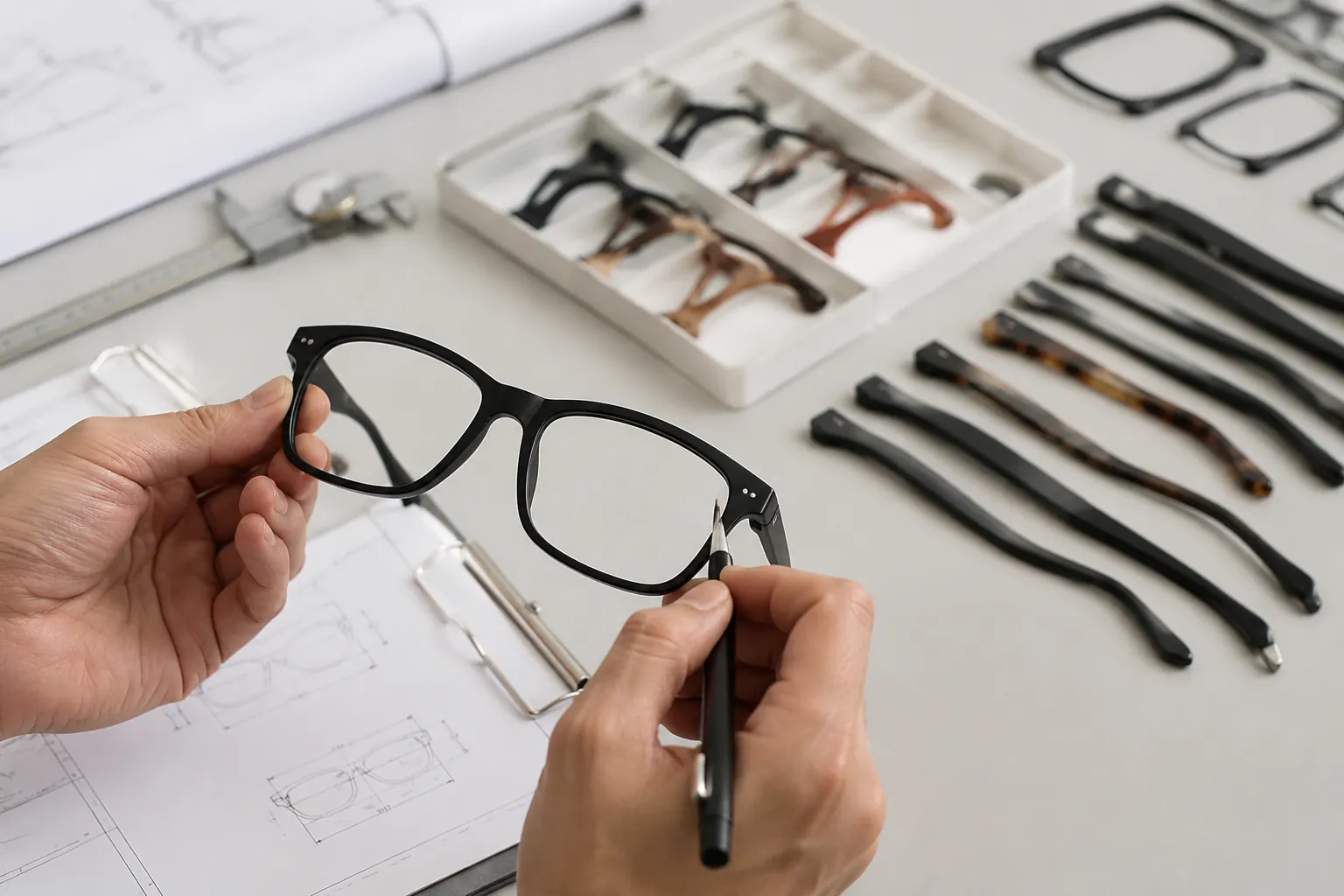
This guide is for eyewear brands, importers, distributors, and retailers planning lightweight TR90 sunglasses. It explains where TR90 works, where it does not, and what buyers should confirm before sampling or bulk production. The focus is practical: material choice, tooling, MOQ, colors, tolerances, lenses, decoration, compliance, QC, and delivery planning. Clear decisions early mean fewer rejected samples, cleaner purchase orders, and a TR90 program that can grow from a market test to repeat production without changing direction halfway through.
Start With the Right TR90 Use Case
TR90 is a nylon-family thermoplastic used for eyewear frames that need low weight, controlled flexibility, and impact resistance. It is common in sport sunglasses, kids sunglasses, travel retail styles, safety-inspired frames, and lightweight daily sunglasses. A good TR90 frame bends where it should, holds shape after normal use, and feels stable on the face. A bad one twists after lens insertion, shows stress whitening near the hinge, or feels thin and cheap.
Do not choose TR90 just because the material sounds technical. Choose it when the brief calls for a lightweight molded frame, moderate temple flex, good drop resistance, and repeatable production. Frame weight still depends on lens size, wall thickness, hinge system, lens material, and decoration. Confirm it on approved samples. Do not assume it from the material name.
TR90 is not the best answer for every design. Oversized fashion frames with deep tortoise effects usually suit handmade acetate better. Very thin profiles with adjustable nose pads may look cleaner in stainless steel, titanium, or aluminum.
For an OEM project, start with the wearing scenario: sport wrap, lightweight unisex rectangle, kids flexible frame, travel retail style, or private-label promotional range. That choice affects bridge width, temple thickness, hinge type, lens base curve, mold structure, and color plan. A sport wrap may need a higher lens base curve and more temple grip. A casual rectangle may need lower curvature, cleaner logo placement, and a smoother surface finish. If the first discussion is only unit price, the project is already short on engineering detail.
TR90 Versus Acetate, PC, and Metal
Material choice is not just a unit-price decision. Tooling, surface finish, color range, assembly labor, repair rate, and customer returns all affect real cost. TR90 works best when the design can use injection molding efficiently and does not need the layered depth or hand-polished finish of acetate.
| Material | Best Use | Main Strength | Typical Buyer Risk |
|---|---|---|---|
| TR90 | Sport, kids, travel, lightweight daily sunglasses | Flexible, light, good impact resistance when properly engineered | Tooling cost, color limits versus acetate, and fit issues if tolerances are loose |
| Acetate | Fashion, premium color layering, thicker optical-inspired shapes | Rich sheet colors, polishable surface, handmade feel | More labor, heavier frame weight, longer finishing process |
| PC injection | Low-cost promotional sunglasses and simple retail programs | Low unit cost and fast molding for simple designs | Can feel stiff, brittle, or overly glossy if resin grade and mold finish are poor |
| Metal | Aviator, rimless, thin fashion frames | Slim profile, adjustable nose pads, fine detailing | Plating, soldering, corrosion resistance, and nickel release need tight control |
TR90 is a functional material, not a luxury shortcut. If your brand depends on laminated colors, transparent depth, and hand-polished bevels, forcing that look into TR90 will likely disappoint. If customers complain about heavy frames, sliding fit, travel breakage, or kids breaking frames quickly, TR90 may be a strong option. The design still has to be right.
Mold Cost, MOQ, and Price Logic
TR90 sunglasses are injection molded, so tooling drives cost, timing, and design freedom. A new shape requires 3D modeling, mold engineering, steel cutting, trial injection, shrinkage correction, fitting adjustment, and pre-production sample approval. This is not the same as adding a logo to a stock frame.
Once steel is cut, changes become expensive. Bridge width, lens shape, hinge position, and wall thickness are not casual edits. Some changes require mold rework. Others require a new mold component.
MOQ depends on the supplier, mold status, color plan, lens specification, logo process, packaging, and inspection requirements. Small orders are easier when the buyer selects an existing mold and limits customization to frame color, lens option, logo, and packaging. Larger orders improve material preparation, color mixing, decoration setup, production scheduling, and QC efficiency. Quote price against a full specification, not quantity alone.
- Existing mold: best for market tests and faster sampling when the buyer accepts the available frame geometry.
- Existing mold family: useful for color, lens, logo, hinge finish, or temple decoration changes, but not reliable for bridge, front shape, or lens size changes unless the mold supports them.
- New mold: suitable for protected brand shapes, exclusive retail programs, or repeat orders, but requires drawings, fit approval, and a realistic volume plan.
- Tooling control: approve 3D views, face width, bridge, lens size, temple length, hinge area, lens base curve, and logo position before steel cutting.
The rule is simple. For a small test order, stay close to an existing frame. For repeat orders with a distinctive shape, dedicated tooling may make sense. For a new mold, allow at least one trial and correction round. The first injected parts are not always final.
Color and Surface Decisions
TR90 color is usually controlled with pigmented resin before injection. Spraying, coating, rubberized finishes, and surface decoration may also be used. Solid black, matte black, navy, grey, translucent smoke, white, and basic bright colors are usually easier than marble, crystal, gradient, sprayed, or multi-tone effects. A physical color chip or molded sample is more reliable than a Pantone number alone, especially for translucent colors.
TR90 is not acetate sheet. Acetate can show pattern depth inside the material. TR90 depends on resin color, wall thickness, mold texture, coating, spraying, or decoration. If a buyer sends an acetate tortoise sample and asks for the same result in TR90, expectations must be reset before sampling. The TR90 version can be inspired by the sample. It will not have the same internal layering.
A clean approval process has three steps: approve color references, approve injected front and temple parts, then approve complete sunglasses. Translucent colors can look darker in thick bridge zones and lighter near thin rim edges. Matte treatment can make a color look lighter. Gloss treatment can make it look deeper. For bulk orders, set color tolerance with signed and sealed physical samples. Screens are not enough.
Factory-floor note: Pantone is printed on paper. TR90 is molded plastic with wall-thickness variation. For translucent or special-effect frames, approve physical molded parts before bulk production.
Frame Engineering and Tolerances
A good TR90 frame flexes in controlled areas and stays stable where alignment matters. The front must hold lens geometry. The bridge must not collapse. Temples can flex, but hinge barrels must stay aligned and screws must hold after repeated opening and closing. If the frame twists after lens insertion, the wearer gets a fit problem. The material name will not save it.
Key engineering points include rim thickness, groove depth, hinge insert position, screw engagement, temple cross-section, and wall-thickness balance. Lens groove dimensions must match the chosen lens thickness, edge profile, tinting process, coating, polarization, and base curve. Check lens fitting after final lens processing. Edge tolerance and curvature can change assembly pressure.
Useful OEM checks include front width, bridge width, lens size, temple length, temple symmetry, visible color match against sealed samples, hinge movement, screw tightness, no sharp edges, and no obvious parting-line burrs. TR90 also needs controlled injection conditions. Excess molding stress can later show as whitening near hinges or cracks around sharp internal corners. Proper radii, balanced wall thickness, and controlled cooling reduce the risk.
- Confirm face width, bridge, lens size, temple length, and lens base curve before tooling.
- Review 3D drawings for hinge area thickness, lens groove design, screw position, wall thickness, and logo area.
- Run trial injection and inspect shrinkage, warpage, parting line, sink marks, stress marks, and color consistency.
- Install final-spec lenses and test opening, closing, screw tightness, temple symmetry, lens retention, and frame balance.
- Approve a sealed pre-production sample before bulk molding starts.
Lenses, Decoration, and Branding
TR90 frames are often paired with TAC polarized lenses, PC lenses, nylon lenses, or basic tinted lenses. Lens choice affects price, optical performance, claims, and compliance. TAC polarized lenses are common for anti-glare retail sunglasses. PC lenses are impact resistant and widely used for sport or promotional programs. Nylon lenses are often selected for better optical positioning in lightweight premium products. If the sunglasses carry UV protection claims, UV performance and lens category must match the test report and labeling.
Define the lens before quoting: material, tint color, filter category, UV claim, polarization, mirror coating, gradient effect, base curve, thickness, and lens logo. A grey category 3 lens and a brown gradient category 2 lens are not interchangeable just because both look dark in a photo. Approve lens color with physical samples and, where required, test data.
Decoration is where many small orders become complicated. Laser engraving is clean and durable for subtle logos. Pad printing supports color logos but needs adhesion and abrasion checks. Metal logo plates can look more premium, but they require insert placement, adhesive control, or mechanical fixing. Heat transfer, temple inlay, and custom lens marks can work. Test them before bulk production.
- Laser engraving: low defect risk and suitable for subtle tone-on-tone branding.
- Pad printing: useful for colored logos, but should pass tape, rub, or abrasion checks agreed before production.
- Metal plate: premium appearance, higher setup control, and better suited to repeat programs than one-off tests.
- Lens mark: useful for polarized or UV claims, but must match the actual lens specification and approved artwork.
Send vector artwork, logo size in millimeters, logo color, and exact placement measured from a fixed point such as the hinge, temple tip, or lens edge. Avoid "same as sample" unless the physical sample is sealed, labeled, photographed, and linked to the purchase order.
Compliance and QC for Export Orders
Connect product design to the target market before placing the purchase order. Sunglasses exported to Europe, the United States, Australia, or New Zealand may need different documents and test focus. Relevant requirements and references may include CE EN ISO 12312-1 for Europe, ANSI Z80.3 for the United States, AS/NZS 1067 for Australia and New Zealand, REACH for restricted substances, FDA registration for applicable U.S. import documentation, and supplier management systems such as ISO 9001 or BSCI where requested. Ask for documents that match your market and product type. Do not accept a random certificate list copied from another buyer's form.
For Europe, CE marking based on EN ISO 12312-1 is central for non-prescription sunglasses. For the U.S., ANSI Z80.3 is commonly referenced for non-prescription sunglasses, and FDA registration may be relevant to the supplier or importer process. For Australia and New Zealand, check AS/NZS 1067. REACH is relevant for restricted substances, especially coatings, colorants, rubberized finishes, and metal parts.
QC should not wait until cartons are closed. In-house and final inspection should check incoming resin or components, molded frame appearance, hinge movement, screw tightness, lens color, UV performance, polarization if applicable, assembly alignment, decoration adhesion, pouch or case quality, barcode placement, carton marks, and quantity accuracy. For bulk orders, define AQL level and defect classifications before production.
Critical defects should include failed UV claim, wrong lens category, cracked hinge, sharp edge, loose lens, incorrect logo, major color mismatch, and wrong market labeling. Factory capacity does not replace a written specification. A clear spec sheet, current compliance documents, approved test scope, and sealed pre-production sample are the buyer's strongest protection against shipment disputes.
Lead Time, RFQ Checklist, and Order Planning
Lead time depends on mold availability, material availability, lens processing, decoration, packaging, inspection requirements, and factory schedule. Existing-mold samples are usually faster because the frame geometry has already been proven. New mold development takes longer. It needs 3D confirmation, mold cutting, trial injection, correction, lens fitting, and sample approval.
Do not start bulk production too early. Begin only after sample approval, deposit or payment terms, packaging confirmation, and compliance requirements are clear.
| Order Stage | Typical Timing | Buyer Decision Needed | Common Delay |
|---|---|---|---|
| Concept and quotation | Supplier dependent | Frame type, lens type, quantity, destination market | Missing lens, logo, or compliance specification |
| Existing-mold sample | Usually faster than new tooling | Color, lens tint, logo method, packaging direction | Late artwork or unclear color reference |
| New mold development | Project dependent | 3D approval, dimensions, fit comments | Changing bridge, lens shape, or hinge position after steel cutting |
| Bulk production | Supplier and order dependent | Approved sample, payment terms, packaging files, inspection standard | Packaging, barcode, carton marks, or inspection criteria not finalized |
| Price optimization | Driven by order structure | Volume forecast by style and color | Too many colors, lenses, or logo versions split across tiny quantities |
A strong RFQ includes frame reference, target dimensions, quantity by color, lens material and tint, UV or polarized claim, logo method, packaging, destination country, target compliance, inspection standard, and whether the buyer wants existing tooling or new tooling.
Keep the first launch tight: a limited number of frame shapes, controlled color options, and one consistent lens family. After sell-through data arrives, add colors, adjust lenses, or invest in exclusive tooling with lower risk.
Have a custom sunglasses project in mind?
Send us your styles, target market and quantities and we will return a detailed quote with MOQ, lead time and a sample plan.
Get a QuoteWhy source this from Wenzhou with LumiShades
Wenzhou in Zhejiang Province is widely regarded as China’s eyewear manufacturing capital, producing a large share of the world’s sunglasses. That concentration matters to buyers: a deep local supply chain for acetate sheet, hinges, lens blanks, plating and packaging means shorter component lead times, easier color and material matching, and a workforce with decades of eyewear-specific skill. LumiShades has manufactured in this ecosystem since 2009, and our vertical integration — in-house injection molding, acetate cutting, CNC milling, lens tinting, decoration and quality control — means no part of your order is quietly subcontracted to a workshop you cannot audit.
For international buyers, that vertical control translates into accountability. When a single factory owns every step, defects are traced and fixed at source rather than bounced between vendors, and your specifications survive intact from first sample to bulk. For procurement review, buyers can request process records, approved samples, quality checkpoints and project-specific compliance files before placing a bulk order. Required testing and documentation are confirmed against the destination market and product specification rather than assumed from a generic certificate list. Explore our manufacturing capabilities and quality control process to see how this works in practice.
Frequently asked questions
What is the practical MOQ for custom TR90 sunglasses? MOQ depends on mold status, color, lens, logo, packaging, and inspection requirements. Existing molds usually support smaller tests. New molds need higher commitment because tooling, trials, and setup time are involved. For a first order, keep customization limited and consolidate quantity by style, color, and lens.
Can I make a new TR90 frame shape without paying for a mold? No. A new injection-molded TR90 shape requires tooling. To avoid mold cost, choose an existing mold and customize approved options such as frame color, lens type, logo method, and packaging. If you need a unique bridge, lens shape, hinge position, or front profile, budget for new tooling and at least one correction round.
Is TR90 better than acetate for sunglasses? It depends on the product brief. TR90 is usually better for lightweight, flexible, impact-resistant sunglasses such as sport, kids, travel, and comfort-focused styles. Acetate is usually better for premium fashion frames that need deep color layering, laminated patterns, thicker profiles, and a hand-polished finish. Compare approved samples, not material names.
How long do TR90 sunglasses samples and bulk orders take? Timing depends on mold status, material availability, lens processing, decoration, packaging, and factory schedule. Existing-mold samples are normally faster because the frame structure already exists. New mold projects take longer because 3D approval, steel cutting, trial injection, correction, and lens fitting are required. Schedule bulk production only after sample approval, payment terms, packaging files, and compliance requirements are confirmed.
Which compliance documents should I ask for? Ask based on the market where the sunglasses will be sold. For Europe, request CE documentation supported by EN ISO 12312-1. For the U.S., check ANSI Z80.3 and whether FDA registration is relevant to your import process. For Australia and New Zealand, check AS/NZS 1067. For materials and coatings, ask about REACH where applicable. ISO 9001 and BSCI relate to factory management and social compliance, not lens performance.
What details should I send for an accurate quotation? Send the frame reference or drawing, target dimensions, quantity by color, lens material, lens tint, filter category if known, UV or polarized claim, logo artwork, logo size and position, packaging, destination country, required compliance, inspection standard, and whether you prefer existing tooling or new tooling. A complete RFQ reduces price changes after sampling.
Ready to start?
Explore our round sunglasses or request a quote — our sales team replies within 12 hours.
Request a Quote