
TR90 Sunglasses Manufacturing: Specs, MOQ, QC Guide
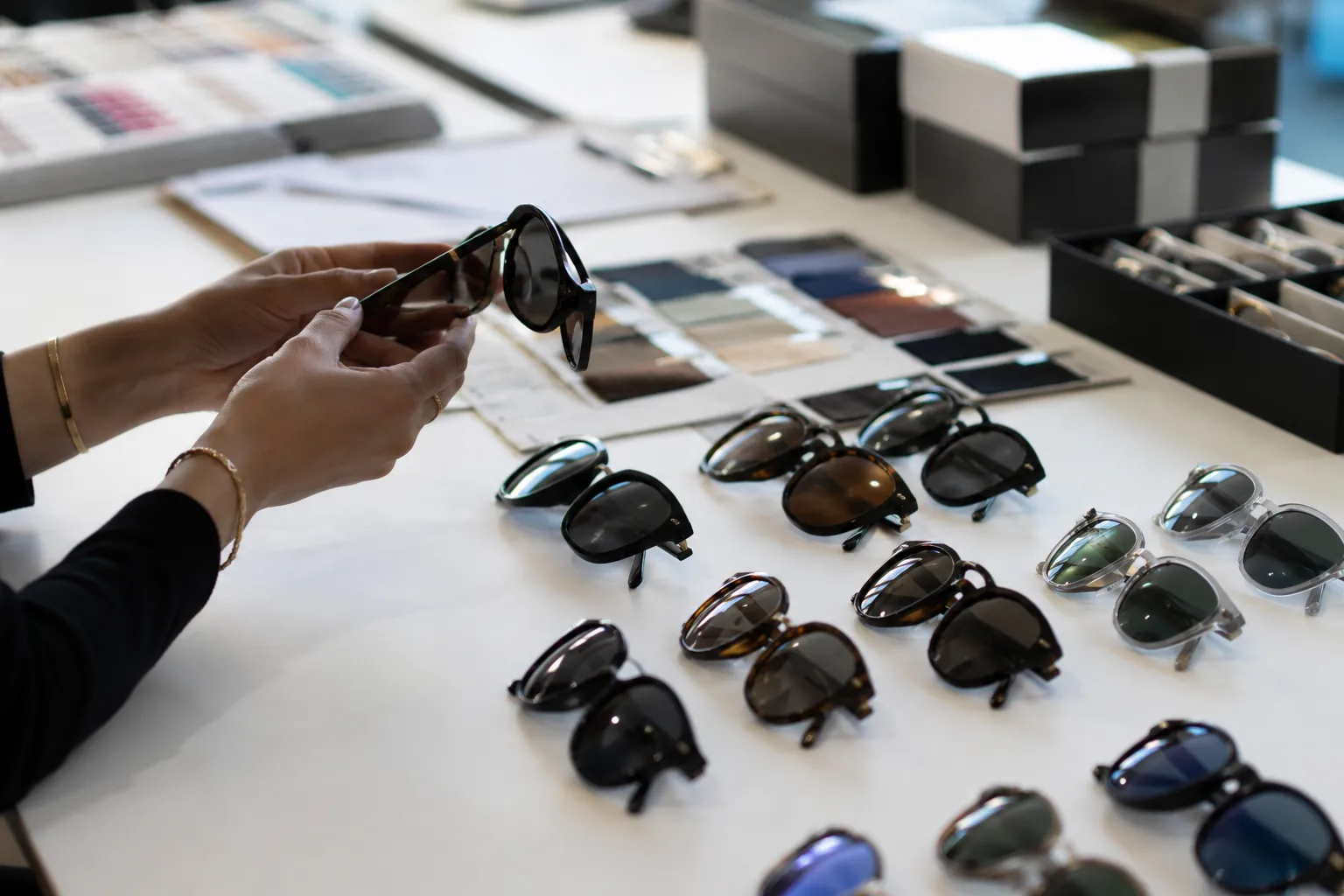
This guide is for eyewear brands, importers, distributors, travel retail buyers, and promotional buyers deciding whether TR90 fits a sunglasses program. TR90 is a thermoplastic polyamide used for lightweight, flexible injected eyewear frames. It is not right for every fashion brief. It works best when the product needs low weight, flex recovery, impact resistance, and fewer breakage complaints in normal consumer use. The buyer advantage comes from locking the specification before sampling and tooling. Wall thickness, hinge structure, lens groove, color process, decoration method, compliance target, MOQ, packaging, and inspection standard all affect cost, timing, and quality risk.
Choose TR90 for Performance, Not Decoration
TR90 makes sense when a sunglasses frame must flex during normal handling without cracking easily. That is why it is common in sports sunglasses, kids sunglasses, travel retail ranges, resort and event promotions, and lightweight everyday styles where comfort and durability affect repeat orders.
The material name alone does not create value. The value comes from a frame platform that can reduce common complaints: snapped temples, cracked fronts, uncomfortable weight, poor fit recovery, and damage from bags, displays, or repeated handling. Performance depends on resin grade, frame geometry, hinge construction, lens fit, assembly quality, and final QC.
TR90 is not magic. It is harder to decorate than acetate. It cannot reproduce true laminated acetate depth. It is also less rigid than many metal or thick acetate frames. If the design depends on deep tortoise layering, visible lamination, sharp sculpted bevels, high-gloss hand polishing, or heavy metal trim, acetate or metal may be a better choice. If the brief is lightweight comfort, flexible handling, broad fit, and practical durability, TR90 deserves a close look.
At LumiShades in Wenzhou, TR90 projects usually follow an injected-frame production flow: resin preparation, color matching, injection molding, trimming, hinge installation, lens cutting or fitting, tinting when required, decoration, assembly, and QC. The key work happens early. Wall thickness, bridge geometry, hinge boss size, lens groove depth, temple curvature, lens material, and lens base curve should be confirmed before tooling or bulk production. Do not wait for defects to reveal weak engineering.
Where TR90 Makes Commercial Sense
| Buyer Use Case | Why TR90 Helps | Typical Spec Direction | Watch Point |
|---|---|---|---|
| Sports sunglasses | Low weight, flex recovery, and comfort during movement | Wrap or semi-wrap front, secure lens groove, grip temple option, UV400 lens, category selected by market use | Flexible rims must still hold lenses during torsion and repeated handling |
| Kids sunglasses | Better resistance to twisting, bag pressure, and rough handling than brittle rigid plastics | Rounded edges, no small detachable trim, smooth temple tips, UV400 lenses, age-appropriate labeling | Hinges, screws, and temple tips still need pull, bend, and retention checks |
| Travel retail | Lightweight frames suit spinner racks, luggage use, and frequent handling | Durable pouch or case, barcode label, stable colorway program, clear replacement plan | Packaging must prevent lens scratches, not only frame breakage |
| Everyday lightweight styles | Comfortable for longer wear and broad face shapes | Moderate front thickness, balanced temple pressure, matte or gloss solid colors | Over-thin fronts can feel weak, distort, or lose lens retention |
| Outdoor promotional runs | More durable than many low-cost brittle injected plastics when designed correctly | Existing mold, simple logo print, UV400 lens, low-cost pouch | Color consistency must be approved on molded parts before bulk resin mixing |
Strong TR90 programs start with a clear commercial reason. A sports brand may need a frame that survives gym-bag handling. A kids retailer may want fewer cracked-frame returns. A travel retailer may need a lightweight style that tolerates display handling and shipping.
The risky approach is simple: copy an acetate fashion shape in TR90 and ignore the engineering. TR90 flexes. Long flat fronts, narrow bridges, shallow grooves, and stiff lenses can cause lens pop-out or shape distortion. A good supplier should push back when a drawing looks attractive in CAD but creates risk for bend recovery, hinge retention, lens seating, or wearer comfort.
Material Behavior and Specs to Lock
TR90 is a flexible polyamide. For buyers, that usually means lower frame weight than many thick fashion constructions, better bend recovery than brittle injected plastics, and useful impact resistance for everyday handling. It also means the frame moves during assembly and use. Tolerance planning matters.
- Wall thickness: Confirm structural thickness for the front, bridge, end pieces, and temples during design review. Over-thin sections can increase warpage, bridge weakness, and lens retention problems.
- Dimensional tolerance: Agree practical production tolerances before tooling. Tolerance depends on mold quality, resin shrinkage, cavity design, part geometry, and post-molding adjustment.
- Lens groove: Match groove depth and width to lens thickness, material, and base curve. Wrap, polarized, mirrored, or thicker lenses may need different clearance and retention checks.
- Bridge strength: Thin bridges can look clean but may become a failure point. Confirm repeated flex recovery and compare bulk measurements with the approved physical sample.
- Hinge area: The hinge boss must provide enough material for screw retention, insert stability, and repeated temple opening. Weak hinge areas lead to loose temples, stripped screws, and poor opening feel.
- Color: TR90 supports solid, translucent, sprayed, and coated finishes, but it does not realistically reproduce true acetate lamination, deep layered tortoise, or polished laminated edges.
Before tooling, ask the supplier to confirm resin grade, color method, hinge type, lens material, lens base curve, expected finished frame weight range, surface finish, and decoration method. For sports frames, also confirm whether the design uses standard hinges, spring hinges, rubber temple sleeves, molded grip zones, or one-piece flexible temples. Each choice affects tooling cost, assembly work, lead time, and QC.
Production Flow: Drawing to Bulk Order
- Design review: The factory checks CAD drawings, tech packs, or physical references for molding feasibility, lens fit, hinge structure, bridge strength, logo area, surface finish, and packaging requirements.
- Mold planning: Injection molds are planned for the front and temples. Complexity, cavity count, sliders, hinge design, texture, and expected order volume affect tooling cost and lead time.
- Resin and color matching: TR90 pellets are prepared with the selected color. For Pantone-style matching, approve molded chips or molded sample parts, not only paper swatches or digital images.
- Injection molding: Parts are molded, cooled, trimmed, and inspected for sink marks, flow lines, short shots, warpage, flash, color streaks, and visible surface defects.
- Secondary processing: Hinge installation, screw fitting, CNC adjustment when needed, pad printing, laser engraving, hot stamping, or metal logo installation follows the approved sample.
- Lens work: Lenses are cut or fitted, tinted if required, and checked for UV protection, category, scratches, coating marks, optical distortion, edge quality, and frame fit.
- Assembly and adjustment: Frames are assembled, screws are tightened, temples are aligned, lens seating is checked, and the finished frame is compared with the approved physical sample.
- Final QC and packing: Finished goods are inspected, cleaned, packed, labeled, and checked against carton marks, barcode requirements, retail packaging instructions, and shipping documents.
LumiShades coordinates injection molding, CNC milling, lens tinting, decoration, assembly, and QC in-house. That helps when an order includes mixed lens colors, several logo versions, or retail packing requirements because issues can be traced to a specific process faster.
Lead time depends on the final spec. As a planning range, samples may take about 7 to 10 days when an existing mold, material, lens, logo, and packaging direction are clear. New tooling usually adds several weeks, depending on mold complexity and revision rounds. Bulk timing depends on quantity, color splits, lens type, decoration, packaging, and inspection requirements. Late changes to lens color, logo size, barcode labels, retail boxes, or compliance claims often cause delay.
MOQ, Price, and Tooling Logic
TR90 pricing depends on material weight, mold complexity, hinge type, lens specification, coating, decoration, packing, inspection level, order quantity, and color split. LumiShades can support small pilot runs from 50 pairs per design when the project fits existing mold and production conditions. Small orders cost more per unit because setup time, color matching, lens preparation, logo setup, and packing work are spread over fewer units. Price improves when quantity rises and the specification becomes easier to produce.
| Order Level | Commercial Use | Cost Behavior | Buyer Advice |
|---|---|---|---|
| 50 pairs/design | Fit test, influencer seeding, retail trial, buyer sample program | Highest unit cost because setup, color, lens, logo, and packing work are spread over few units | Use existing molds, simple colors, and simple decoration |
| 300 pairs/design | Small wholesale batch or regional launch | Better efficiency for color mixing, lens cutting, logo setup, and packing | Limit colorways and lens variations to protect cost and timing |
| 1000 pairs/design | Main seasonal order or distributor program | Better balance of price, customization, and production control | Lock inspection standard, packaging, and compliance target before deposit |
| 5000+ pairs/design | Chain retail, distributor, travel retail, large promotion | Best efficiency when the design, color split, packaging, and QC plan are stable | Use pre-production samples, inline checks, carton-level inspection, and retained control samples |
Compare landed cost, not only ex-factory price. Polarized lenses, mirror coatings, rubber parts, spring hinges, metal logos, printed cases, custom boxes, individual barcodes, and multiple colorways all change unit cost and freight efficiency. Packaging volume and carton quantity can move margin as much as the frame price.
Treat tooling as a separate investment. If repeat orders are likely, build the mold properly with strong hinge areas, controlled shrinkage, stable lens fit, and documented sample approval. If the order is a one-time campaign, an existing mold is often smarter. Put the budget into lens quality, UV testing, packaging protection, and final inspection.
Decoration, Color, and Branding Options
Decoration is where many TR90 projects get too complicated. TR90 can look clean and commercial, but it is not the best material for every premium surface effect. Choose decoration methods based on order size, target price, surface shape, handling conditions, and brand position.
- Pad printing: Common for temple logos. It is cost-effective for simple one- or two-color marks but needs adhesion testing, especially on curved, matte, or textured surfaces.
- Laser engraving: Suitable for subtle, durable marks when the contrast works on the chosen frame color.
- Hot stamping: Useful for metallic logo effects, but placement tolerance, surface flatness, and abrasion resistance should be checked before bulk approval.
- Metal logo plates: More premium in appearance but add part cost, assembly time, and detachment risk if the fixing method is weak.
- Spray finish: Can create matte, gradient, or special color effects, but increases scratch, adhesion, and color-consistency risks.
- Rubber parts: Nose pads or temple sleeves improve grip for sports styles but add tooling, assembly, bonding, and color-matching complexity.
For many wholesale and retail programs, the safest route is a molded solid-color frame with pad printing or laser engraving on the temple. For higher-spec sports programs, rubber grip parts, polarized lenses, and a controlled matte finish may justify the extra cost. For promotional orders, simple logo printing on an existing mold usually gives the best balance of speed, price, and risk.
Approve color on molded TR90 parts, not on a screen, paper swatch, or resin pellet alone. Color can shift with wall thickness, surface texture, polishing, spray coating, and lighting. For repeat orders, keep a signed color chip or approved physical sample as the control reference. If the program uses multiple colorways, confirm whether each color reaches the required production quantity. Small color splits can raise setup cost and extend lead time.
Compliance: Set the Market First
Compliance is not paperwork added after production. Lens category, UV performance, impact requirements, labeling, packaging claims, children's safety concerns, and chemical restrictions should be specified before sampling. A buyer selling in Europe commonly requests CE compliance to EN ISO 12312-1 for sunglasses. For the United States, ANSI Z80.3 and FDA registration may be requested depending on sales channel and product category. Australia and New Zealand buyers should confirm AS/NZS 1067 requirements. REACH may apply to frame materials, coatings, inks, rubber parts, and decorative components sold into Europe.
LumiShades can support CE EN ISO 12312-1, ANSI Z80.3, AS/NZS 1067, REACH, FDA registration, ISO 9001, and BSCI documentation where applicable to the order and market. Do not request random certificates because a marketplace listing mentioned them. Ask for the standard that fits the destination market, product claim, and distribution channel.
- UV claim: Confirm UV400 or the required test result for the destination market before approving lens color or tint density.
- Lens category: Category selection must match intended use and labeling. Very dark lenses may be unsuitable for driving or general use in some markets.
- Polarization: Useful for glare reduction, but check readability with phones, dashboards, navigation screens, and sports watches.
- Mirror coating: Adds style and glare reduction but increases scratch and handling risk during assembly, cleaning, and packing.
- Children's use: Avoid small detachable decorations and confirm local labeling, warning, chemical, and mechanical safety requirements.
Do not approve a dark lens just because it looks good. Dark tint without verified UV protection is a product risk, a compliance risk, and a brand risk.
Quality Checks and Supplier Briefing
TR90 failures are usually predictable. The bridge is too thin. The hinge area does not hold screws. The lens pops during torsion. The color shifts between batches. The temple angle becomes loose after repeated opening. These are inspection points, not surprises.
A practical QC checklist should include frame weight, front width, temple length, bridge width, lens size, hinge opening and closing, screw torque or screw retention, lens retention, surface defects, logo position, color match, lens tint consistency, coating condition, lens cleanliness, packaging condition, barcode accuracy, and carton marking. For flexible frames, add bend recovery and torsion checks. Bend temples outward and inward within a defined range, then confirm the frame returns close to the approved sample. Twist the front gently and check that the lenses stay seated.
For bulk orders, use three inspection stages. First, inspect molded parts before assembly so warpage, sink marks, flow lines, flash, and color problems are caught early. Second, inspect assembled frames before packing so hinge, lens, logo, and alignment issues can still be reworked. Third, inspect packed goods against carton marks, barcode labels, pouches, cases, insert cards, retail boxes, and shipping instructions.
Factory-floor rule: A flexible frame still needs controlled geometry. If the approved sample is not measured and retained, the bulk order becomes a guessing contest.
A clean RFQ should include the frame reference, target size, color, finish, hinge type, lens material, tint, UV claim, category, polarized or non-polarized requirement, logo method, packaging, destination market, required standards, quantity by color, target delivery date, and inspection requirement. For first orders, approve physical samples, not only photos. Check fit on several face shapes if the product is for sports or kids. For travel retail, test the package as it will ship and display. A frame can pass factory QC and still arrive with scratched lenses if the pouch, insert, or carton packing is wrong.
Have a custom sunglasses project in mind?
Send us your styles, target market and quantities and we will return a detailed quote with MOQ, lead time and a sample plan.
Get a QuoteWhy source this from Wenzhou with LumiShades
Wenzhou in Zhejiang Province is widely regarded as China’s eyewear manufacturing capital, producing a large share of the world’s sunglasses. That concentration matters to buyers: a deep local supply chain for acetate sheet, hinges, lens blanks, plating and packaging means shorter component lead times, easier color and material matching, and a workforce with decades of eyewear-specific skill. LumiShades has manufactured in this ecosystem since 2009, and our vertical integration — in-house injection molding, acetate cutting, CNC milling, lens tinting, decoration and quality control — means no part of your order is quietly subcontracted to a workshop you cannot audit.
For international buyers, that vertical control translates into accountability. When a single factory owns every step, defects are traced and fixed at source rather than bounced between vendors, and your specifications survive intact from first sample to bulk. For procurement review, buyers can request process records, approved samples, quality checkpoints and project-specific compliance files before placing a bulk order. Required testing and documentation are confirmed against the destination market and product specification rather than assumed from a generic certificate list. Explore our manufacturing capabilities and quality control process to see how this works in practice.
Frequently asked questions
Is TR90 better than acetate for sunglasses? Not always. Choose TR90 when the priority is lightweight comfort, flexibility, and resistance to normal bending or rough handling. Choose acetate when the priority is premium hand feel, laminated color depth, polished edges, sharper sculpting, and a more rigid fashion frame. If you are unsure, ask the supplier to quote both materials against the same lens, hinge, logo, packaging, and inspection requirements.
What MOQ should I use for a first TR90 order? Use 50 pairs per design only for fit testing, sales testing, seeding, or buyer approval when an existing mold and simple decoration are acceptable. For a commercial launch, 300 pairs per design is usually more efficient because color setup, lens cutting, logo setup, and packing work are spread across more units. Move to 1000+ pairs only after the frame fit, lens specification, packaging, compliance target, and QC checklist are approved with physical samples.
Can TR90 sunglasses be polarized? Yes. TR90 frames can be fitted with polarized lenses, but the frame and lens must be checked together. Confirm lens material, thickness, base curve, tint category, UV performance, mirror coating if used, and edge fit before bulk production. Because TR90 fronts flex, include lens retention and torsion checks in the inspection plan to make sure the polarized lenses stay seated during normal handling.
How long does TR90 sunglasses production take? Timing depends on whether the order uses an existing mold or new tooling. As a planning guide, samples may take about 7 to 10 days when the mold, lens, color, logo, and packaging direction are clear. New tooling can add several weeks depending on complexity and revisions. Bulk timing should be confirmed after sample approval because quantity, color splits, lens coatings, decoration, packaging, compliance testing, and inspection requirements can all affect the schedule.
Which certifications should I request for TR90 sunglasses? Request only the standards that match your sales market and product claim. For Europe, buyers commonly request CE compliance to EN ISO 12312-1 and may also need REACH for materials and components. For the United States, ANSI Z80.3 and FDA registration may be requested depending on the channel. For Australia and New Zealand, confirm AS/NZS 1067. ISO 9001 and BSCI relate to factory management and social compliance, not lens performance, so they should not replace product testing.
What defects are most common in TR90 frames? Common defects include lens popping, weak hinge retention, bridge deformation, warpage, flow marks, sink marks, color mismatch, poor logo adhesion, scratched lenses, and loose temple action after repeated opening. To control these risks, approve a physical control sample, define measurement points, inspect molded parts before assembly, test hinge and screw retention, run bend recovery and torsion checks, and inspect packed goods for lens protection and barcode accuracy.
Ready to start?
Explore our square sunglasses or request a quote — our sales team replies within 12 hours.
Request a Quote