
Magnetic Clip-On Sunglasses OEM QC Guide
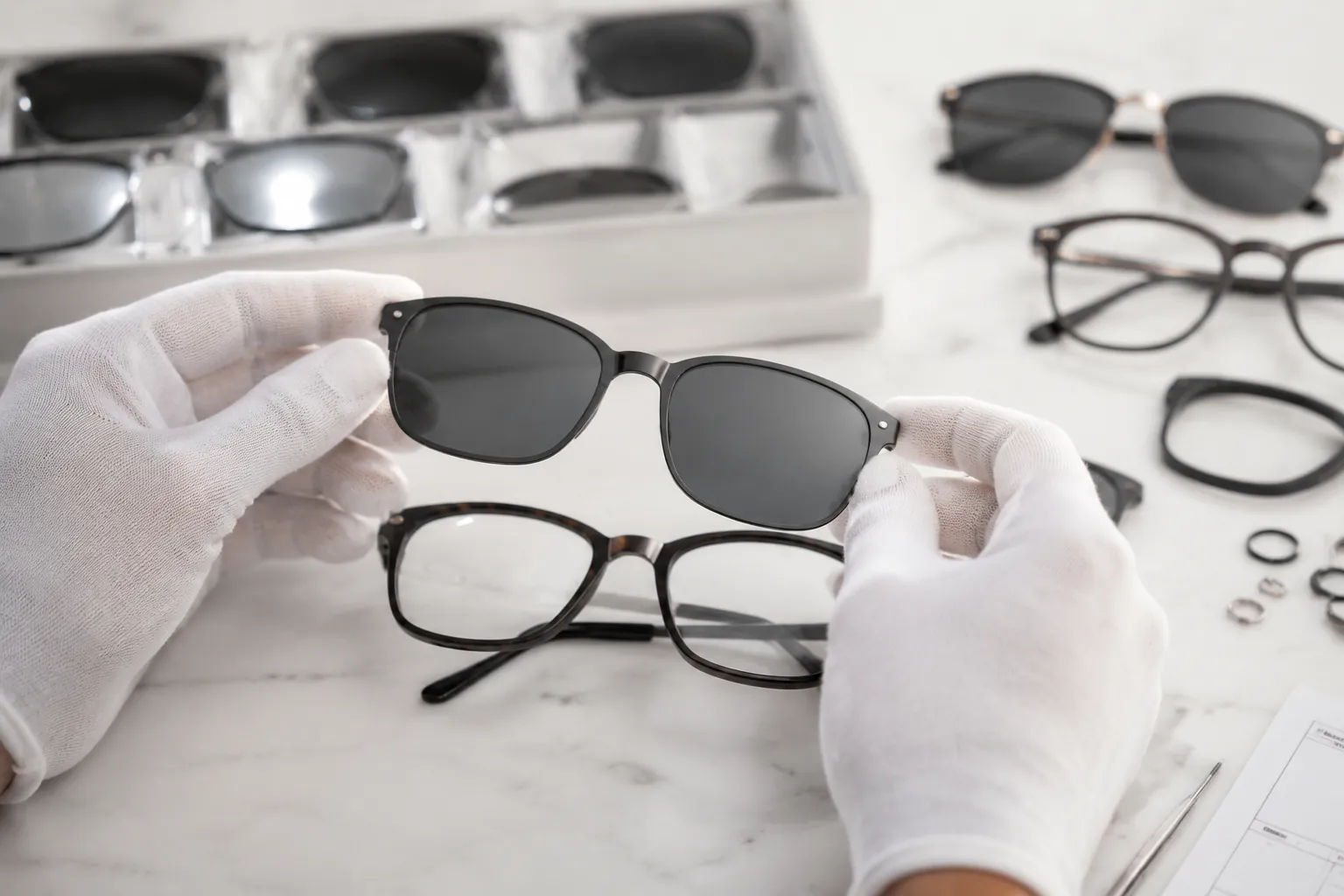
This guide is for eyewear brands, importers, distributors, optical chains, and retail buyers sourcing optical frames with magnetic sun clips. Most problems appear at the same points: magnet polarity, retention, lens alignment, frame curve, weight balance, lens clearance, coating durability, SKU control, and replacement-clip fit. Get those points wrong and returns follow. Use this guide to write a tighter RFQ, approve samples with measurable checks, and reduce avoidable after-sales issues before bulk production starts.
Start With the Structure, Not the Color Card
A magnetic clip-on model is not just an optical frame with an accessory. It is a matched system: optical front, sun clip, magnet pockets, lens edges, bridge geometry, temples, case, and replacement-control rules. If the clip is developed after the optical frame is finished, problems are likely. Expect visible side gaps, lens rubbing, weak retention, poor self-location, or a front-heavy fit.
Most OEM programs use one of four structures. A full-rim optical frame with a full sun clip is usually the safest starting point because the clip follows a clear lens shape and gives more room for magnet placement. A half-rim or nylon-rim optical frame can look lighter, but the bridge and lower lens line need tighter control. TR90 or injected PC fronts can hold consistent dimensions at volume when tooling, molding, and cooling are stable. Acetate gives a stronger retail feel, but it needs accurate CNC magnet pockets and close control of warpage. Thin stainless-steel clip bridges can look premium, but burrs, rough edges, and weak plating can scratch the optical front.
For first development, keep the geometry moderate. Oversized square, flat-top, cat-eye, and pilot shapes can work, but they expose tolerance problems fast. A higher-base sun clip over a flatter optical front may leave an outer-edge gap. A very flat clip over a wrapped frame may touch the prescription lens area. Before tooling, CNC programming, or mold adjustment, confirm frame front curve, lens base curve, bridge width, lens thickness, magnet layout, and temple balance.
At LumiShades in Wenzhou, the useful starting point is a technical drawing, CAD file, or physical reference sample. Not just a photo. A photo can show color and style, but it cannot prove front curve, bridge contact, lens clearance, or magnet behavior. Treat the optical frame and sun clip as one engineered set from the first sample.
Magnet Design: Specify the Small Parts
Many clip-on complaints start with magnets. If retention is too weak, the clip may fall off in a bag, car, or during daily handling. If retention is too strong, users may twist the frame to remove the clip. That can stress screws, hinges, adhesive joints, or the frame front. Wrong polarity is worse. One side attracts while the other side repels. This should never reach final inspection.
Do not write only "strong magnet" in an RFQ. Define magnet grade or supplier standard where possible, diameter, thickness, plating, pocket depth, adhesive type, polarity orientation, and test method. Small neodymium magnets are common in eyewear clip-ons, but the right size depends on frame material, clip weight, magnet position, and the mechanical locating design. Do not copy a magnet spec from another model without testing it on the new structure.
| Magnet layout | Best use | Main risk | Buyer QC check |
|---|---|---|---|
| 2 magnets near bridge | Small to medium optical fronts, light clips | Outer lens edges can lift or vibrate | Side-gap check and shake test after repeated attach-remove cycles |
| 2 magnets near upper outer rims | Simple full-rim injected frames | Bridge area may feel loose or click | Bridge contact, top-line alignment, and lens clearance |
| 4 magnets | Wide fronts, square shapes, heavier polarized clips | Added weight, reversed polarity, higher tolerance stack-up | Polarity fixture record, retention test, and weight approval |
| Magnet plus nose hook | Models needing stronger mechanical location | Hook may scratch coating or chip acetate | Repeated attach-remove test and coating abrasion check |
A practical process uses a polarity jig at assembly, followed by a go/no-go retention check after adhesive curing. Adhesive overflow must not lift the clip, shift the magnet, or leave visible residue. Pocket depth should be checked at the start of production and after any tooling, cutter, material, or operator change that could affect fit. For acetate CNC pockets, verify both position and depth because sheet behavior and tool wear can change results.
The goal is not maximum pull force. The goal is stable retention, easy one-hand removal, no frame distortion, no lens contact, and repeatable self-location across the approved batch.
Lens Alignment: Set Tolerances Before Sampling
Customers notice crooked clips immediately. A sun clip must align with the optical lens shape, bridge center, brow line, and left-right lens height. Even a small height difference becomes obvious when a dark tinted lens sits over a clear optical frame.
Set measurable tolerances in the purchase file before sample approval. For standard fashion and optical-plus-sun models, useful targets often include left-right top-line height difference, bridge center offset, side gap, and clearance from the expected prescription lens position. Write the limits down. If a buyer requires tighter tolerances, confirm them during sampling. Overly strict requirements can raise scrap, rework, and cost.
Alignment is affected by more than magnet position. Injection shrinkage, cooling conditions, acetate sheet relaxation, tumbling, lens edging, tinting heat, screw torque, hinge pressure, and metal bridge bending can all change final fit. Acetate fronts are especially sensitive because the material can relax after cutting and polishing. TR90 and PC injected fronts depend on mold accuracy, material preparation, and cooling consistency. Metal clip bridges depend on stamping or bending control. A small angle change can create a visible edge gap.
During sample approval, request straight-on, top-view, and side-view photos of the same unit, plus a short video showing attachment and removal. Ask one blunt question: does the clip locate itself, or does the wearer have to slide it into place? If hand adjustment is needed on samples, expect bulk complaints.
- Check top-line parallelism against the optical frame, not against the table surface.
- Confirm clearance from demo lens and expected prescription lens positions; the clip must not rub during attachment.
- Inspect both open and closed temple positions because hinge pressure can twist the frame front.
- Approve the optical frame and sun clip as a matched set, not as separate SKUs.
- Keep a sealed golden sample showing accepted side gap, bridge contact, clip height, removal feel, and surface finish.
Material, Weight, and Comfort Are Engineering Choices
A clip-on design can look fine in photos and still feel bad after ten minutes. The common issue is front weight. Magnets, a second pair of lenses, and a metal or plastic clip structure shift weight toward the nose. For online brands and optical retailers, this often becomes a return reason: "slides down," "too heavy," or "uncomfortable."
Approve three weights, not one: optical frame alone, sun clip alone, and complete set. There is no universal ideal weight. Comfort depends on frame size, nose-pad design, bridge fit, temple length, temple tension, prescription lens weight, and the wearer's face. If the frame will be sold through optical channels, test with representative prescription-lens weights. Demo lenses are not enough.
Lens material drives both weight and QC risk. PC is light and impact resistant, but scratch resistance depends on hard-coating quality. TAC polarized lenses are common for clip-ons because they are thin and light, but the lamination edge must be clean to reduce delamination risk after edging. Nylon lenses can suit premium or performance programs when specified correctly. CR-39 can offer good optical quality, but it is usually heavier and may not suit very thin magnetic clips.
Frame material matters too. Injected TR90 or PC can give repeatable dimensions when tooling, material drying, molding, and cooling are controlled. Acetate offers richer color and higher perceived value, but magnet pockets must be CNC-machined accurately and bonded cleanly. Stainless steel clip parts can create a thin attachment, but burr removal, plating quality, and edge polishing need inspection. Packaging is also part of the design. If the clip is forced into a tight pouch or pressed against the frame during transit, it may bend. Specify an insert, separate sleeve, or case groove that keeps the clip flat and prevents lens abrasion.
Lens Options, Decoration, and Compliance Claims
Magnetic clip-on sunglasses can use solid tint, gradient tint, mirror coating, or polarized lenses. Each choice changes cost, inspection, and compliance wording. Before sampling, define lens category, visible light transmission target, UV claim, sales market, and whether the lens is polarized. Do not approve packaging copy until test requirements are clear.
For sunglasses, relevant compliance references may include CE EN ISO 12312-1, ANSI Z80.3, AS/NZS 1067, REACH, FDA registration, ISO 9001, and BSCI, depending on market and buyer requirements. Use these terms accurately. CE EN ISO 12312-1 relates to sunglass requirements for European markets. ANSI Z80.3 applies to non-prescription sunglasses and fashion eyewear in the United States. AS/NZS 1067 is relevant for Australia and New Zealand. REACH concerns restricted substances for the EU. FDA registration is not a product performance certificate. ISO 9001 is a quality management system standard. BSCI relates to social compliance auditing, not lens performance.
Claims must match the exact lens used in production. "UV400" needs transmission testing. "Polarized" should be verified for polarization axis and effect after tinting, coating, and edging. Lens category markings must match actual visible light transmission. Very dark lenses without confirmed UV protection are not premium. They are a safety risk.
| Option | Buyer advantage | QC focus | Cost and process note |
|---|---|---|---|
| Solid tint PC | Lightweight, cost controlled | UV transmission, scratches, color consistency | Suitable for many entry and mid-volume programs when coating is controlled |
| TAC polarized | Light clip weight and glare reduction | Polarization axis, delamination, edge chipping | Common for driving, outdoor, and optical retail sets |
| Gradient tint | Fashion appearance | Left-right gradient height and color drift | Needs tighter visual inspection and batch control |
| Mirror coating | Stronger shelf impact | Adhesion, pinholes, scratches, shade consistency | Higher reject risk when color standards are vague |
Lock decoration early. Laser engraving works well for metal parts and some temple materials, but the mark can be subtle on certain finishes. Pad printing is flexible for logos and size markings, but adhesion should be tested after rubbing. Metal logo plates can improve perceived value, but they add assembly steps and alignment risk. If the clip has a visible bridge logo, set position tolerance, color standard, and rub-resistance requirements before bulk production.
Cost, MOQ, and Lead-Time Logic
Magnetic clip-on sunglasses cost more than standard sunglasses because they require two aligned components, magnets, extra bonding or assembly, additional lens edging, and more final inspection. A low quote that ignores clip alignment is not a saving. It usually reappears as rework, rejected samples, replacement clips, or after-sales claims.
LumiShades' MOQ starts at 50 pairs per design for pilot runs, small brand launches, or retailer testing. Request pricing by tier, such as 50, 300, 1000, and 5000+ pairs, using the same specification at each quantity. Unit price will vary with frame material, lens type, magnet count, decoration, case or pouch, compliance documentation, and inspection requirements. Polarized lenses, mirror coatings, acetate fronts, metal logo plates, custom cases, and four-magnet layouts will usually cost more than a basic injected model with standard tinted lenses.
Ask for tiered pricing using the same bill of materials at each quantity. Otherwise, a supplier may quote a small quantity with one lens assumption and a high quantity with another. The RFQ should separate frame cost, clip cost, lens upgrade, decoration, packaging, and testing or documentation cost where practical. Cleaner cost breakdowns make comparison and negotiation easier.
Sample timing is usually shorter when using available materials and an existing or simple structure. New mold work, special acetate sheets, custom metal clip parts, unusual mirror colors, special packaging, or added testing can extend development. Bulk production timing should be confirmed after sample approval, deposit, artwork confirmation, material lock, and compliance-document requirements. Freeze lens color, logo position, packaging, barcode, and SKU rules early. Late revisions delay orders.
- Send drawing, reference sample, target market, lens type, and expected order quantity.
- Confirm material, magnet layout, clip structure, decoration, packaging, and compliance target.
- Approve samples using fit, retention, lens, weight, and appearance checks.
- Seal the golden sample and written tolerances before bulk production starts.
- Run in-process QC on magnets, lens edging, clip alignment, decoration, and packing.
QC Plan: Inspect Before the Cartons Close
Final inspection cannot repair a weak development file. It can only catch what the file defines. Magnetic clip-ons need standard eyewear checks plus clip-specific checks.
Start with incoming materials. Check magnets for size, plating condition, polarity, and surface damage. Check lenses for tint, category, UV performance, polarization if applicable, and visible defects. Check frame fronts for warpage before assembly. If warped fronts enter production, workers may force clips to fit. That creates inconsistent retention and side gaps.
In-process checks matter more than end-line inspection alone. Magnet pockets need correct depth, clean glue control, and correct polarity before curing. Excess adhesive can push the magnet proud and change clip fit. Too little adhesive can lead to loose magnets after temperature cycling or repeated removal. For acetate models, check CNC pocket position at first piece, during production, and after any cutter or sheet change. For injected models, check shrinkage and front curve after cooling and stabilization, not only right after demolding.
Final QC should include attachment and removal function, shake retention, top-line alignment, side gap, lens surface inspection, hinge movement, temple symmetry, screw tightness, logo position, packing pressure, barcode accuracy, and SKU matching. If replacement clips will be sold separately, interchangeability testing is critical. A clip that fits one color or material batch may not fit another if shrinkage, curve, or acetate sheet behavior changes.
Blunt rule: if the sun clip is not interchangeable within the approved production batch, do not promise easy replacement to retailers.
Use an AQL plan where appropriate, but define critical and major defects in writing. Reversed magnet polarity, loose magnets, lens contact with the optical lens, unverified UV claims, cracked lenses, wrong clip packed with frame, failed polarization claims, and incorrect compliance markings should be classified according to market risk and buyer policy. Keep inspection photos and records tied to production date, color, batch number, and SKU.
RFQ Details That Remove Guesswork
A good RFQ for magnetic clip-on sunglasses does not need to be long. It needs to be precise. The supplier should not have to guess lens category, magnet count, logo method, frame material, packaging, target market, or documentation needs. Guesswork can make a quote look attractive and fail at sampling.
Include the retail channel and sales market. A pharmacy optical program has different requirements from a beachwear promotional line. State whether the optical frame will later receive prescription lenses. If yes, lens clearance, frame stability, weight balance, and replacement-clip control become more important than on a pure fashion set.
For LumiShades or any Wenzhou eyewear factory, send frame dimensions, CAD or reference sample if available, material preference, lens type, required market documentation, magnet layout preference, logo artwork, packaging requirement, order quantity by color, inspection standard, and target ship date. Physical samples are strongly preferred for clip-on projects because photos hide curvature, bridge contact, lens clearance, and magnet behavior.
- Specify CE EN ISO 12312-1, ANSI Z80.3, AS/NZS 1067, REACH, or FDA-related documentation only where your sales market requires it.
- Define whether lenses are non-polarized, polarized, gradient, mirrored, or category-specific.
- Request sample weight for the optical frame, sun clip, and complete set.
- Ask for magnet grade or supplier standard, size, pocket depth, adhesive, retention method, and polarity-control process.
- Lock decoration method: laser engraving, pad printing, hot stamping, or metal logo plate.
- Confirm MOQ by design and color before approving artwork and packaging.
- Require a sealed golden sample, measurement sheet, packing method, and defect classification before bulk production.
The best approval file contains a golden sample, dimensional tolerances, lens test requirements, magnet-control method, decoration standard, packaging layout, and SKU rules. With that file in place, bulk production is easier to control and after-sales support is easier to manage.
Have a custom sunglasses project in mind?
Send us your styles, target market and quantities and we will return a detailed quote with MOQ, lead time and a sample plan.
Get a QuoteWhy source this from Wenzhou with LumiShades
Wenzhou in Zhejiang Province is widely regarded as China’s eyewear manufacturing capital, producing a large share of the world’s sunglasses. That concentration matters to buyers: a deep local supply chain for acetate sheet, hinges, lens blanks, plating and packaging means shorter component lead times, easier color and material matching, and a workforce with decades of eyewear-specific skill. LumiShades has manufactured in this ecosystem since 2009, and our vertical integration — in-house injection molding, acetate cutting, CNC milling, lens tinting, decoration and quality control — means no part of your order is quietly subcontracted to a workshop you cannot audit.
For international buyers, that vertical control translates into accountability. When a single factory owns every step, defects are traced and fixed at source rather than bounced between vendors, and your specifications survive intact from first sample to bulk. We back this with 15+ years of experience, shipments to 60+ countries, more than 5 million pairs produced per year and a 98.5% on-time delivery rate. Our certifications — CE EN ISO 12312-1, FDA registration, ANSI Z80.3, AS/NZS 1067, REACH, ISO 9001 and BSCI audit — mean the compliance documentation your market requires already exists. Explore our manufacturing capabilities and quality control process to see how this works in practice.
Frequently asked questions
What MOQ should we expect for custom magnetic clip-on sunglasses? LumiShades starts at 50 pairs per design, which suits pilot runs, small brand launches, or retailer testing. Before comparing quotes, ask whether the MOQ applies per design, per color, or per lens option. Request tiered pricing at 50, 300, 1000, and 5000+ pairs using the same frame material, lens type, magnet layout, decoration, packaging, and compliance-document assumptions.
How long do samples and bulk production usually take? Timing depends on whether the project uses existing materials and an existing structure or requires new tooling, special acetate, custom metal parts, unusual mirror colors, packaging development, or testing. Ask the supplier to separate sample lead time, test-document timing, material preparation, and bulk production timing. Bulk production should be scheduled only after sample approval, deposit, artwork confirmation, material lock, packaging approval, and SKU confirmation.
Should we use two magnets or four magnets? Use two magnets when the frame is small to medium, the clip is light, and the sample self-locates without hand adjustment. Consider four magnets for wider fronts, heavier polarized clips, or shapes with outer-edge lift. Four magnets are not automatically better. They add weight, assembly steps, polarity-control risk, and tolerance stack-up. For either option, approve the layout only after checking retention, side gap, removal feel, lens clearance, and comfort.
Can magnetic clip-ons be made with polarized lenses? Yes. TAC polarized lenses are common because they are thin and light, but they still need proper QC. Check polarization axis, glare-reduction effect, UV transmission, tint match, lamination edge quality, delamination risk, edge chipping, coating condition, and left-right color consistency after edging and assembly. Do not print "polarized" on packaging until the production lens has been verified.
Which certifications or documents can be relevant for overseas markets? Relevant references may include CE EN ISO 12312-1 for European sunglass requirements, ANSI Z80.3 for U.S. non-prescription sunglasses and fashion eyewear, AS/NZS 1067 for Australia and New Zealand, REACH for EU restricted substances, FDA registration for U.S. regulatory registration context, ISO 9001 for quality management, and BSCI for social compliance auditing. Match each document request to the actual sales market and product claim. FDA registration, ISO 9001, and BSCI should not be presented as sunglass lens performance certificates.
Can replacement sun clips be sold separately? Yes, but only if interchangeability is controlled. Test replacement clips across the approved production batch, not only on one sample frame. Keep color, lens type, model code, production batch, and packaging barcode strictly matched. Do not promise compatibility across different production runs, materials, or colors unless fit has been tested and documented.
Ready to start?
Explore our rimless sunglasses or request a quote — our sales team replies within 12 hours.
Request a Quote