
Polarized, Photochromic, and Mirrored Lenses by Channel
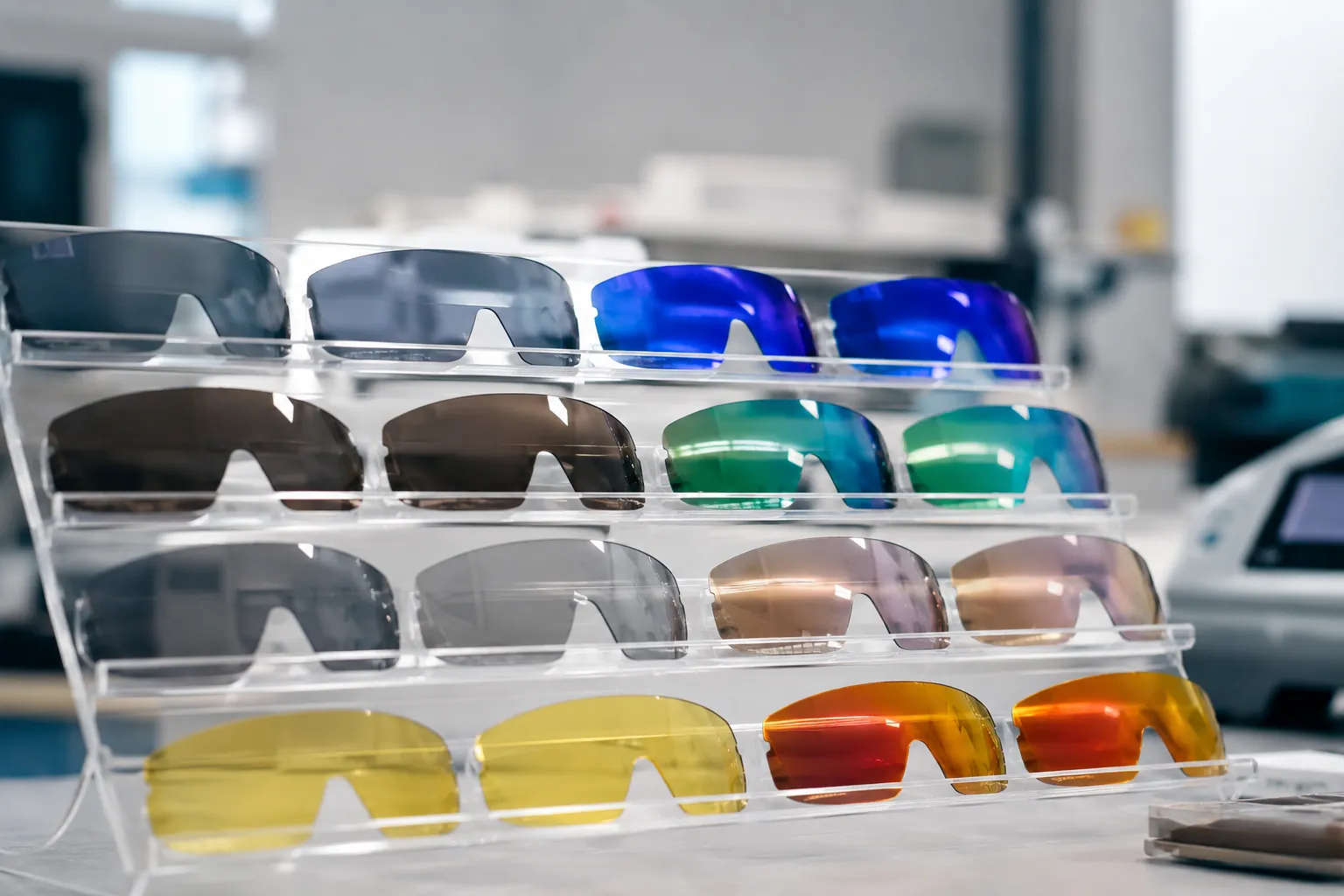
If you buy sunglasses for retail, travel, sports, or promotional programs, lens choice often affects sell-through more than frame color does. Polarized, photochromic, and mirrored lenses solve different buying problems. Pick the wrong one, and you get slow stock, margin pressure, and avoidable quality issues. This guide compares them by channel and focuses on the sourcing, production, and compliance checks overseas buyers should verify. Use it to decide what to stock, what to custom-run, and what to leave out.
The short answer by channel
There is no universal winner. The right lens depends on how the customer uses the product, how fast the benefit can be explained at point of sale, and how much production risk the buyer will carry.
Retail fashion usually favors mirrored lenses. They have strong shelf impact, support color-led merchandising, and raise perceived value without much explanation. Travel and leisure programs often do better with polarized lenses because the benefit is direct: less glare for driving, beach use, boating, and bright outdoor conditions. Sports buyers often want polarized lenses for fishing, boating, and general outdoor use. Photochromic lenses make more sense when all-day wear and changing light matter more than a fixed tint. Promotional programs usually need the lowest practical landed cost and the simplest spec, so a basic UV-protective tinted lens or a mirrored lens is often easier to place than a feature-heavy option.
| Channel | Best-fit lens | Why it sells | Main risk |
|---|---|---|---|
| Fashion retail | Mirrored | Strong shelf impact, easy color blocking, higher perceived value | Style can outrun function |
| Travel / leisure | Polarized | Immediate glare control for driving, beach, boating, and bright-day use | Higher cost than plain tint |
| Sports | Polarized or photochromic | Utility for glare control or changing-light adaptation | Polarized lenses may reduce visibility of some LCD or digital screens |
| Promotional | Mirrored or simple tint | Lower cost, easy logo presentation, faster repeat orders | Over-specifying features can weaken margin |
For one SKU that needs to cover multiple channels, start with mirrored as the visual base and add polarized as the functional upgrade. That keeps the product story clear. It also separates fashion appeal from functional value instead of forcing one lens to do both jobs.
Polarized lenses: strongest for utility-driven sell-through
Polarized lenses reduce reflected glare by filtering light in a specific orientation. In practice, they matter most anywhere the buyer feels discomfort right away: driving, water sports, fishing, beach use, mountain travel, and bright-road commuting. The sales conversation gets shorter. Features become outcomes.
That helps in channels where the end customer will pay more for a clear function benefit. A retailer can explain the value in one sentence. An importer can justify a better margin because the feature is visible and testable in store. The tradeoff is cost and process sensitivity. Polarized lens blanks usually cost more than standard tinted lenses, and the polarization structure adds more control points than a simple dye tint or surface mirror coating.
At factory level, the polarization layer has to survive cutting, edging, and finishing without edge defects, delamination, or visible optical issues. Good production teams also track alignment during lens orientation. Incorrect orientation can affect both performance and appearance. For custom runs, specify an acceptable tint variation window and reject anything outside it after final assembly. Ask for samples in the exact frame shape. A lens that looks fine in a demo shape can show stress or fit problems at the final bevel line.
QC should focus on surface clarity, polarization consistency, lens thickness tolerance, and edge finish. For wholesale programs, verify thickness against the supplier's stated tolerance and check color consistency across the production lot, not just the first sample. If this is a first order, ask for a sample set in the actual frame shape and compare it under indoor light, direct sun, and a reflective surface such as water or a polished floor.
Best fit: travel retail, outdoor lifestyle, fishing, and premium private-label programs where the buyer wants a clear function story. Weak fit: pure fashion promo where the customer will not pay for the feature or where screen visibility matters more than glare control.
Photochromic lenses: best for all-day wear, not impulse buys
Photochromic lenses change darkness with UV exposure. That makes them useful for customers moving between indoor and outdoor conditions during the day. The appeal is simple: one pair can handle shade, sun, and transition wear without a second pair. That fits commuters, casual cyclists, and consumers who value convenience over a strong shelf story.
Commercially, photochromic is usually not the strongest impulse product. The benefit is harder to show in a few seconds. A mirrored lens wins the visual sale. A photochromic lens wins when the shopper understands the use case and is willing to pay for convenience. It can also reduce SKU fragmentation for buyers who would otherwise stock multiple tint levels for the same frame.
There are real operating variables. Activation speed, final darkness, and return-to-clear performance all change with temperature, UV intensity, and lens chemistry. In hot climates, many photochromic lenses darken and fade differently than they do in colder markets. That is normal. It also means product copy should avoid absolute claims such as "instant" or "fully clear indoors." Buyers should test finished samples before scaling an order. A clear lab swatch is not enough. Frame shape, curvature, and coating stack can change the final appearance.
For overseas sourcing, photochromic lenses need tighter communication on target tint, activation range, and acceptable response time. If you are selling into multiple regions, confirm the relevant compliance standard before scale-up. Real product documentation may include CE EN ISO 12312-1, ANSI Z80.3, AS/NZS 1067, REACH, FDA registration where applicable, and ISO 9001 quality system documentation from the manufacturer. That matters more here than on simple fashion tints because the use case is stronger and the performance claims are more likely to be checked.
Define the operating behavior in plain terms: target visible-light transmission at rest, approximate darkened state under UV, and whether the lens should keep working behind a car windshield, where some formulas activate less strongly. If the use case is commuter or all-day lifestyle, photochromic can work well. If the use case is a shelf-driven fashion drop, it usually loses to mirrored lenses on speed of sale.
Mirrored lenses: strongest shelf appeal, easiest to commercialize
Mirrored lenses sell because they look complete. The reflective front face creates an immediate premium cue. No technical pitch is needed. For fashion retailers and private-label programs, that matters. The customer sees color, shine, and finish at a glance, and the product often feels more expensive than a plain smoke tint at the same frame price.
Mirrored lenses are also easy to scale across multiple frame colors. They work well in acetate, injection-molded, and mixed-material frames, and they pair cleanly with laser engraving, pad printing, or metal logo plates on the frame. That makes them useful for wholesale buyers who need one core design to support several colorways. In production, the main controls are coating adhesion, haze, edge chipping, and consistency from lens to lens. A reflective coat can look fine in the center and still fail at the rim after edging if the process window is too loose.
Typical mirror production uses a reflective coating layer, followed by a protective topcoat to improve abrasion resistance and color stability. The supplier should be able to explain the coating stack, the curing method, and the expected abrasion performance. If the coating chips after cutting or shows uneven flash at the edge, the pair can look low quality quickly, even if the frame is well made. Ask for a small edge-exposure sample if you plan deep-wrap shapes or aggressive bevels. Those designs expose defects faster than flatter lens shapes.
For promo programs, mirrored lenses often strike the best balance of perceived value and unit cost. A buyer can keep the frame simple, add a reflective lens, and still present a product that feels more premium than a standard tinted pair. That matters when the landed cost is tight and the order quantity is small. If the program needs fast reorders and simple branding, mirror is often the safest first choice.
The limit is plain. Mirror does not cut glare as well as polarization, and it does not adapt to light like photochromic. Use it where appearance carries most of the commercial weight and where the channel does not need a deep performance story.
Cost, MOQ, and lead-time logic buyers should plan around
The lens choice changes the cost stack more than many first-time buyers expect. Plain tinted lenses are usually the least expensive. Mirrored lenses add coating and curing cost. Polarized lenses add material and process cost. Photochromic lenses usually sit highest because the chemistry is more expensive and the performance has to be controlled more tightly at batch level.
For custom programs, pricing usually improves as order quantity rises because setup, sample approval, and process stabilization are spread across more pairs. Sample production often takes about 7 to 10 days, and bulk production often takes about 25 to 35 days. Actual timing depends on frame material, lens specification, decoration method, and current factory load. For mixed programs, the schedule usually follows the slowest component. If the lens, frame, and decoration are different parts of the process, assume the critical path is the step with the longest QC or curing requirement.
Order size changes the economics in a predictable way. At low quantities, setup and color matching carry a high cost per unit. At mid-range quantities, the supplier can spread tooling and testing costs more efficiently. At larger quantities, the buyer usually has more room to negotiate packaging, freight planning, and repeat-order terms.
| Lens type | Typical cost position | Best order size | Production note |
|---|---|---|---|
| Plain tinted | Lowest | Promo, trial runs, value retail | Fastest to stabilize |
| Mirrored | Low to medium | Fashion, promo, private label | Watch coating adhesion and edge finish |
| Polarized | Medium to high | Travel, outdoor, premium retail | Needs tighter optical QC and orientation control |
| Photochromic | Highest | Specialty retail, commuter programs | Validate activation behavior in real conditions |
Do not start a weak-forecast program with photochromic. Start with mirrored or polarized, test sell-through, and then upgrade the winners. That is how importers reduce dead stock and keep cash tied to what actually moves.
What to ask the factory before you place the order
Good buyers do not ask for the lowest price first. They ask for the process details that protect sell-through and reduce return risk. Start with a short spec sheet and get clear answers on lens material, coating type, UV category, lens thickness, and the exact compliance target. Then lock the frame-lens combination before asking for final pricing.
- Confirm the target channel and use case: retail fashion, travel, sports, or promo.
- Choose the lens type and define the commercial reason for it.
- Request samples in the actual frame color and lens tint, not a generic demo pair.
- Ask for compliance documentation matched to your market: CE EN ISO 12312-1, ANSI Z80.3, AS/NZS 1067, REACH, FDA registration, or ISO 9001 documentation as applicable.
- Check decoration compatibility if you need laser engraving, pad printing, or metal logo plates.
- Approve the pre-production sample before bulk starts.
For decorated sunglasses, specify placement tolerances. A logo that drifts by 1 to 2 mm on a small temple can look off in a retail set even if the product is usable. If the supplier offers laser engraving, ask about depth consistency and whether the mark stays visible after normal abrasion and cleaning. If using pad printing, confirm ink adhesion, curing conditions, and color matching under indoor light and daylight.
A manufacturer with in-house injection molding, acetate cutting, CNC milling, lens tinting, decoration, and QC reduces handoff error. That matters in mixed programs where a mirrored lens and a printed logo both need to land correctly in the same pair. If one step is outsourced, lead time and defect risk both increase, especially when the program includes multiple frame colors or lens finishes in the same order.
For importers, the key point is simple: do not pick a lens feature in isolation. Pick the lens feature that matches your channel price point, then make the factory prove it in sample and bulk with the actual frame, actual tint, and actual decoration method.
Channel-by-channel buying recommendation
If you want the highest chance of sell-through, keep the range narrow and match the lens to the channel.
- Fashion retail: mirrored first, polarized as a premium tier.
- Travel and leisure: polarized first, with mirrored for lower-cost adjacencies.
- Sports: polarized or photochromic, depending on whether the customer wants glare control or all-day adaptation.
- Promotional: mirrored or simple tinted lenses, because margin and speed matter more than technical claims.
The pattern is steady. Mirrored sells the look. Polarized sells the use case. Photochromic sells convenience, but only in channels where the buyer understands it and will pay for it. If you are building a private-label line, test one hero SKU per channel instead of mixing all three features in one launch. Too many lens stories in one catalog usually weakens replenishment on all of them.
In practical merchandising terms, the strongest programs usually separate entry, core, and premium lens tiers. Entry can be a plain tint or light mirror. Core can be mirrored or polarized depending on channel. Premium can be polarized or photochromic with upgraded packaging. That ladder helps distributors protect margin because buyers can trade up without making the assortment confusing.
For overseas sourcing, the cleanest answer is still the same: match the lens to the channel, keep the spec honest, and use factory process control to protect repeat orders. If the sample looks good but the process is weak, the first shipment may sell and the second one may not. Consistency turns a lens choice into a real program.
Have a custom sunglasses project in mind?
Send us your styles, target market and quantities and we will return a detailed quote with MOQ, lead time and a sample plan.
Get a QuoteWhy source this from Wenzhou with LumiShades
Wenzhou in Zhejiang Province is widely regarded as China’s eyewear manufacturing capital, producing a large share of the world’s sunglasses. That concentration matters to buyers: a deep local supply chain for acetate sheet, hinges, lens blanks, plating and packaging means shorter component lead times, easier color and material matching, and a workforce with decades of eyewear-specific skill. LumiShades has manufactured in this ecosystem since 2009, and our vertical integration — in-house injection molding, acetate cutting, CNC milling, lens tinting, decoration and quality control — means no part of your order is quietly subcontracted to a workshop you cannot audit.
For international buyers, that vertical control translates into accountability. When a single factory owns every step, defects are traced and fixed at source rather than bounced between vendors, and your specifications survive intact from first sample to bulk. We back this with 15+ years of experience, shipments to 60+ countries, more than 5 million pairs produced per year and a 98.5% on-time delivery rate. Our certifications — CE EN ISO 12312-1, FDA registration, ANSI Z80.3, AS/NZS 1067, REACH, ISO 9001 and BSCI audit — mean the compliance documentation your market requires already exists. Explore our manufacturing capabilities and quality control process to see how this works in practice.
Frequently asked questions
Which lens type is easiest to sell in fashion retail? Mirrored lenses usually move fastest in fashion retail because they create the strongest shelf impact and are easy to color-match across frames. If you are launching a fashion line, start with one mirrored hero style, then add polarized only if the audience is willing to pay for function.
Is polarized always the better choice for travel programs? Not always, but it is usually the best functional choice when the buyer wants glare reduction for driving, beach use, boating, or general outdoor wear. If your target price is very low or the program is mostly visual, a mirrored lens may fit better.
Can photochromic work for sports sunglasses? Yes, if the wearer moves between indoor and outdoor light and wants one pair for changing conditions. It is a weaker choice when the buyer needs a strong shelf story or when the activity depends on predictable lens darkness in all conditions.
What MOQ should I plan for custom lens programs? Ask the factory for a written MOQ by lens type, frame material, and decoration method. For planning, many suppliers will offer lower minimums for simple tinted or mirrored programs and higher practical minimums for polarized or photochromic runs because those require tighter process control.
What certifications should I request for export orders? Request only the documents that apply to your market and product claim: CE EN ISO 12312-1, ANSI Z80.3, AS/NZS 1067, REACH, FDA registration, and ISO 9001 quality system documentation where relevant. If the factory claims compliance, ask for the test report or certificate number and verify that it matches the exact model you are buying.
Ready to start?
Explore our cat-eye sunglasses or request a quote — our sales team replies within 12 hours.
Request a Quote