
Polarized vs Non-Polarized Sunglasses: Buyer Math
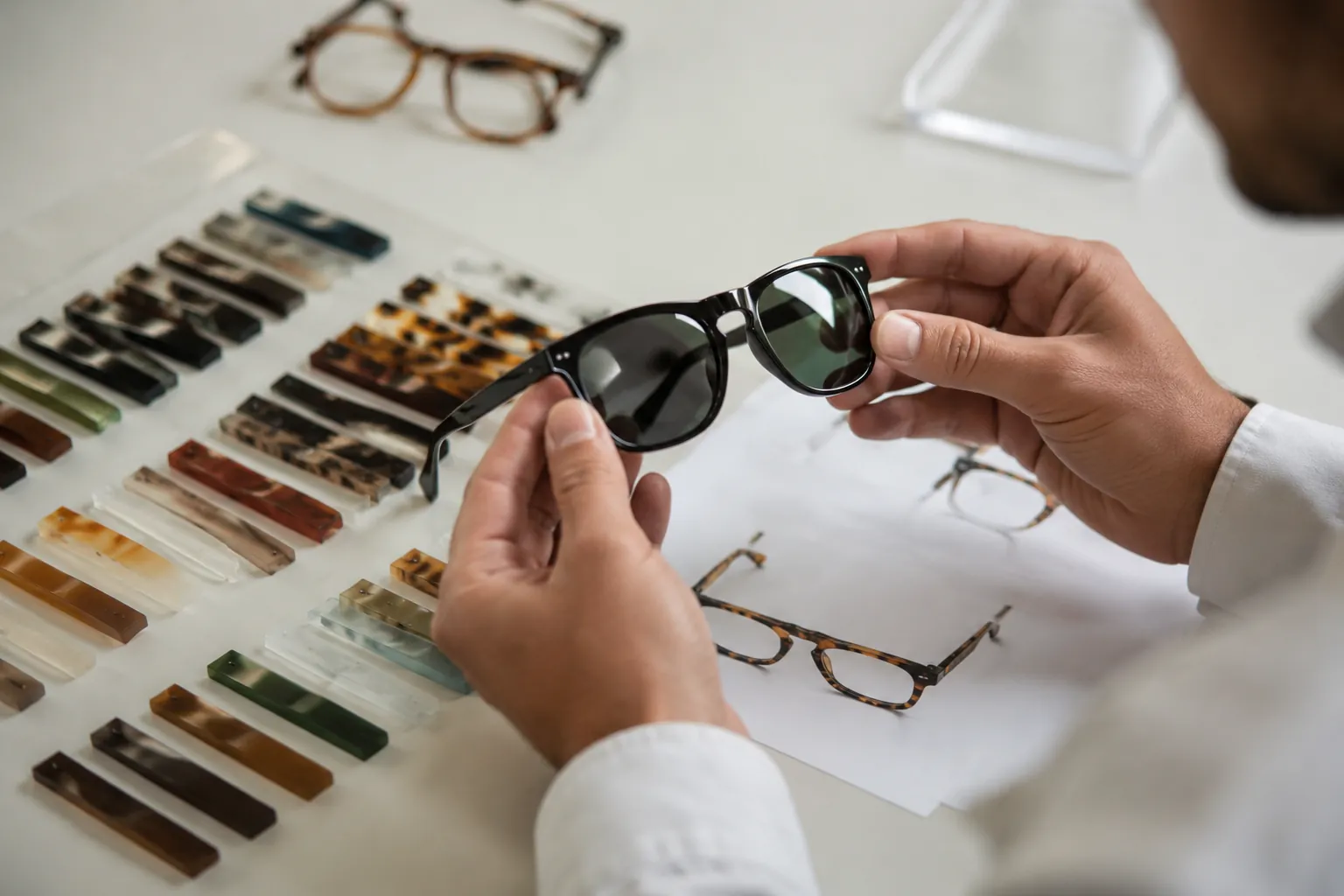
This guide is for overseas brands, importers, distributors, and retail buyers deciding whether polarized lenses belong in a sunglasses program. The question is not whether polarized sounds premium. It is whether the channel can explain the benefit, the product can pass the right tests, and the landed cost still leaves room for margin. Polarization can support a higher retail price, but it also adds sourcing, QC, and approval work that should be priced into the order.
The Buyer Decision in One Sentence
Polarized lenses make sense when the customer understands glare reduction, the channel can sell that benefit, and the factory can hold alignment, tint consistency, and optical quality tightly enough to avoid rejects. They do not make sense just because the word sounds more premium.
For wholesale buyers, the decision is commercial first and technical second. A fishing brand, marina retailer, driving accessory line, golf pro shop, or outdoor distributor can usually explain glare reduction at shelf level. A festival giveaway, low-price fashion capsule, hotel amenity program, or impulse checkout display often cannot. In those cases, non-polarized UV400 lenses usually protect margin better.
Look at what can be verified: approved lens material, target tint, polarization effect, finished-goods inspection, and the compliance documents required for the destination market. The right answer depends on the channel, the claim, and the inspection burden. Not on a generic rule.
A good buyer decision starts with one question: will the channel recover the extra cost through price, conversion, or repeat purchase? If not, keep the line simple and reserve polarized options for a later reorder or a narrower SKU set.
What Polarization Actually Changes
A non-polarized sunglass lens reduces brightness through tint and UV absorption. A polarized lens adds a filter layer that reduces reflected glare from water, wet roads, snow, glass, and car hoods. The visible benefit is clearer vision in glare-heavy environments, not automatically darker lenses.
Most wholesale polarized lenses use TAC, PC, or nylon-based constructions depending on frame type, target price, and impact requirements. TAC is common for value and mid-market programs because it is light, relatively easy to polarize, and economical in flat-lens or simple curved-lens builds. PC is commonly used where impact resistance matters, but it is more sensitive to processing quality and surface finishing. Nylon is used when clarity, lightness, and durability justify a higher cost, especially on premium sport frames.
Material choice matters. TAC is often practical for cost-sensitive programs, but it can be less forgiving on aggressive wraps and heat exposure. PC is tougher, yet it can show stress marks or haze if molding, coating, or fitting is inconsistent. Nylon keeps weight low and performs well in active use, but it usually costs more and demands tighter processing control.
The critical technical detail is axis control. The polarizing film must be aligned consistently across both lenses. If one lens is rotated incorrectly, the wearer may get uneven glare reduction or visual discomfort. If the curve is too aggressive for the lens construction, distortion can appear near the edge. In production, QC should include a polarization card or LCD-screen check, visual inspection under controlled light, and random optical checks on finished goods, not only loose lenses.
- Non-polarized lenses: simpler tint control, lower reject risk, easier color matching across batches.
- Polarized lenses: stronger glare reduction, higher perceived value, more inspection points.
- Main risk: poor film alignment, uneven lamination, or warped lens stock on deep base-curve frames.
- Buyer action: approve lens color, darkness, polarization effect, and frame fit in the same physical sample.
For custom programs, also ask how the lens was finished. A cleanly cut lens with polished edges and consistent bevel depth behaves very differently from a rushed cut that chips at the rim or twists under frame tension.
Cost, MOQ, and Margin Impact
Judge the upgrade against landed margin, not factory price alone. The total cost of a polarized lens program can rise because of the film itself, tighter lens blank sorting, slower cutting, higher scrap from alignment errors, and more time spent verifying finished goods. If tint and polarization structure change at the same time, the cost and risk both rise.
For a buyer, the question is whether the retail price lift covers the extra cost and still protects distributor or retailer margin. If the channel can only add a small amount at retail, polarization usually squeezes the whole chain. If the channel can charge more because the use case is obvious, the upgrade can make sense. In outdoor and sport channels, that uplift is often easier to defend than in fashion-led retail.
| Program Type | Typical Lens Choice | Commercial Logic | Risk to Watch |
|---|---|---|---|
| Promo giveaway, 50-300 pairs/design | Non-polarized UV400 | Low unit cost matters more than feature depth | Over-specifying the lens can damage the budget |
| Fashion retail, 300-1000 pairs/design | Non-polarized or selected polarized SKUs | Use polarization only on hero colors or outdoor stories | Retail teams may not explain the difference clearly |
| Outdoor, fishing, driving, marine | Polarized | Customer understands glare reduction and accepts a higher price | Lens distortion and poor axis alignment can cause returns |
| Kids or value chain retail | Usually non-polarized UV400 | Compliance, durability, and price lead the decision | Claims must stay simple and accurate |
| Premium private label | Polarized on core range | Feature supports margin if frame, packaging, and testing match | Low-quality lenses can damage the brand faster than no polarization |
A practical approach is split assortment planning. Put polarized lenses on a limited share of the line where the story is strongest, then keep non-polarized lenses for color-led styles. This avoids forcing the whole collection into a higher cost base and gives buyers a cleaner way to measure sell-through.
As a rule of thumb, if the wholesale premium for polarization is smaller than the return or markdown risk created by a confusing or poorly explained feature, skip it. If the retail team can sell the feature clearly and the channel can demonstrate it on the spot, the math improves.
Channel Fit: Where the Upgrade Pays
Polarization sells best where glare is part of the buying problem. That includes fishing tackle shops, coastal tourism stores, boating distributors, snow retailers, driving accessories, golf shops, and outdoor marketplaces with product pages that can explain technical features. It is weaker in impulse fashion channels where color, shape, and price dominate.
Packaging matters more than many buyers expect. If the product is polarized, the hangtag, swing tag, or printed pouch should explain the benefit in plain language. Do not bury the claim in a dense spec block. A small polarization test card inside the display can help store staff show the effect. For e-commerce, include one product image or short video demonstrating glare reduction, but avoid exaggerated claims that imply night-driving or medical benefits.
Decoration also affects channel fit. Premium channels can support laser logo engraving on metal temples, pad printing on acetate, embossed branding on cases, soft-touch screen print on pouches, and foil stamping on cartons. Value channels often need simpler methods such as single-color pad print, heat-transfer logos, or basic debossed packaging to protect margin. The feature and the decoration level should match the store environment.
Non-polarized lenses still have a strong place. A gray, brown, green, smoke, or gradient UV400 lens can be right for fashion ranges, seasonal color drops, brand merch, and price-sensitive retail. Short runs also favor non-polarized lenses because setup and approval are simpler. With a 50-pair starting MOQ for a design, buyers can test frame shape and market color before committing to a polarized reorder at a larger quantity.
Blunt sourcing rule: if the sales channel cannot explain polarization in under ten seconds, do not pay for it across the whole order.
That does not mean polarization is only for specialty stores. It means the merchandising story must be obvious enough that a buyer, a sales rep, and a consumer all understand the same benefit without a long explanation.
Testing and Compliance Buyers Should Specify
Polarized or not, sunglasses must meet the destination market requirements. Buyers should name the target markets before sampling because lens category, labeling, and test documents should match the sales territory. Common references include CE EN ISO 12312-1, ANSI Z80.3, AS/NZS 1067, REACH, FDA registration, ISO 9001, and BSCI.
For EU and UK-style programs, CE EN ISO 12312-1 is commonly used for general sunglasses performance, including UV protection, transmittance category, and related safety requirements. For the United States, ANSI Z80.3 is relevant for non-prescription sunglasses, and FDA registration may apply to eyewear import handling. For Australia and New Zealand, AS/NZS 1067 is the reference buyers usually ask for. REACH matters for restricted chemicals in frame materials, coatings, colorants, and parts that contact skin. ISO 9001 and BSCI are management and social compliance references, not product-performance tests.
Do not stop at the certificate name. Ask what was actually tested: UV protection, visible light transmission category, impact behavior where applicable, chemical restrictions, and whether lens performance was verified after final assembly or only on loose lens blanks. A lens can pass in one state and fail after heat, fitting pressure, or decoration.
- Confirm the target market: EU, US, Australia/New Zealand, or mixed export.
- Confirm lens category and visible light transmission before bulk production.
- Test UV protection and optical quality on the approved lens construction.
- For polarized lenses, add axis and polarization-effect checks during incoming lens QC and final goods QC.
- Keep claims on packaging consistent with the actual report. Do not print broad claims the test does not support.
A common mistake is approving a sample, then changing lens color or lens supplier at bulk stage to save cost. That resets the risk. If the lens changes, require fresh confirmation, especially when the construction moves from one material to another or when the frame curve changes.
If the buyer sells into multiple regions, build a master spec that lists the target market, lens material, color code, tint percentage range, and approved marking language. That prevents accidental cross-market labeling.
Sample Approval: What to Check in 7-10 Days
Sample lead time is often 7-10 days, depending on frame complexity, decoration, lens availability, and packaging. Use that window properly. Do not approve a polarized sample by looking at it on a desk for thirty seconds.
Check the sample outdoors, inside a car, near water or reflective glass if possible, and against an LCD screen. Look for uneven darkness, edge distortion, color mismatch, and visible defects in the lens surface. Open and close the temples repeatedly. If the frame is injection molded, inspect gate marks, parting lines, hinge seating, and any sink around the temple or bridge. If it is acetate, check polishing around the nose bridge and temple tips, plus the uniformity of the edge gloss. For metal logo plates, pad printing, laser engraving, or temple logos, check position tolerance and adhesion.
For custom sunglasses, decoration can create hidden problems. Heat from logo plate fixing, bad temple drilling, rough polishing, or adhesive bleed can damage nearby surfaces. Lens insertion can also stress the frame if the bevel or rim fit is wrong. A good factory catches this before bulk; buyers should still specify it in the sample checklist.
A useful sample checklist includes concrete tolerances. For example, target left-right lens tint consistency, smooth temple opening across repeated cycles, lens seating flush with no visible tilt, and print alignment within the approved artwork tolerance for the program. Premium programs may need tighter tolerances, especially on retail packaging.
- Fit: temple opening, bridge comfort, lens seating, screw tightness.
- Lens: UV claim, tint color, polarization effect, distortion, scratches.
- Branding: logo size, position, color, durability, left-right consistency.
- Packaging: barcode, country marking, warnings, lens category, claim wording.
- Bulk reference: keep one signed sample at the factory and one with the buyer.
If possible, compare the approved sample against an LCD screen and a white wall under daylight. That combination reveals weak polarization, uneven tint, and edge defects faster than a static table-top inspection.
Bulk Production and QC Control Points
Bulk lead time is normally 25-35 days after sample approval, deposit, confirmed artwork, and material readiness. Polarized orders can sit at the longer end if the lens color is custom, the frame has several SKUs, or the order needs extra inspection. Rushing lens procurement is a bad trade. It usually shows up later as color drift, higher rejects, or inconsistent performance between lots.
On the factory floor, the main control points are material incoming inspection, frame forming or molding, surface finishing, lens cutting, lens fitting, decoration, final assembly, cleaning, and packing. For polarized lenses, incoming lens checks should include visual defects, color consistency, polarization effect, and random axis checks. During lens cutting, the operator must avoid chipping and keep left-right orientation controlled. After fitting, finished eyewear should be checked again because frame stress can reveal distortion that was not obvious in flat lens stock.
Buyers ordering multiple colors should ask whether the same lens supplier and the same lens construction are used across the set. A smoke lens and a brown lens may not perform identically. That is normal, but the buyer should know before approving catalog copy or bundling styles into one retail promise.
Decoration has its own control points. Pad print should be checked for ink adhesion after rubbing, laser engraving should not burn or warp nearby surfaces, and metal plates should not create pressure points on the temple. For packaging, carton print, barcode readability, and country-of-origin marking should be verified before mass packing starts. A packaging error can turn a good eyewear order into a store-level rejection.
For orders at 1000 or 5000+ pairs, add AQL-style final inspection or third-party inspection if the retailer requires it. The supplier may have in-house QC, but the buyer still owns the specification. Written specs beat memory.
As a practical control plan, ask for incoming lens photos, first-off assembly confirmation, mid-run checks, and a final packed-goods sample before shipment. That sequence catches most avoidable issues before cartons leave the factory.
A Practical Buying Framework
Use a tiered decision instead of arguing polarized versus non-polarized as a single yes-or-no choice. Start with the customer use case, then move to price architecture, then testing, then production risk. This keeps the buying discussion grounded.
| Decision Point | Choose Non-Polarized If | Choose Polarized If |
|---|---|---|
| Retail price | The shelf price is tight and feature claims do not lift conversion | The channel can charge more and explain glare reduction |
| Assortment role | The SKU is color-led, seasonal, or promotional | The SKU is a core outdoor, driving, marine, or sport style |
| Order size | You are testing 50-300 pairs per design | You are confident enough for a larger reorder |
| QC budget | You need the simplest inspection plan | You can control axis, distortion, tint, and packaging claims |
| Brand promise | The product is mainly fashion or merch | The product promises functional glare control |
A sensible first order might use non-polarized lenses across most colors, plus one or two polarized SKUs in smoke or brown. Track sell-through and returns separately. If polarized styles move faster at a healthy margin, expand the upgrade in the reorder. If not, keep the cost out of the line.
For many buyers, the best structure is not binary. It is a ladder: non-polarized for broad assortment coverage, polarized for the strongest use-case colors, and premium packaging only where the retail channel can support it. That gives the business room to learn without betting the whole program on one lens type.
The winning program is the one that matches the channel, the claim, and the inspection burden to the same price point. When those three line up, polarization becomes a margin tool instead of a sourcing headache.
Have a custom sunglasses project in mind?
Send us your styles, target market and quantities and we will return a detailed quote with MOQ, lead time and a sample plan.
Get a QuoteWhy source this from Wenzhou with LumiShades
Wenzhou in Zhejiang Province is widely regarded as China’s eyewear manufacturing capital, producing a large share of the world’s sunglasses. That concentration matters to buyers: a deep local supply chain for acetate sheet, hinges, lens blanks, plating and packaging means shorter component lead times, easier color and material matching, and a workforce with decades of eyewear-specific skill. LumiShades has manufactured in this ecosystem since 2009, and our vertical integration — in-house injection molding, acetate cutting, CNC milling, lens tinting, decoration and quality control — means no part of your order is quietly subcontracted to a workshop you cannot audit.
For international buyers, that vertical control translates into accountability. When a single factory owns every step, defects are traced and fixed at source rather than bounced between vendors, and your specifications survive intact from first sample to bulk. We back this with 15+ years of experience, shipments to 60+ countries, more than 5 million pairs produced per year and a 98.5% on-time delivery rate. Our certifications — CE EN ISO 12312-1, FDA registration, ANSI Z80.3, AS/NZS 1067, REACH, ISO 9001 and BSCI audit — mean the compliance documentation your market requires already exists. Explore our manufacturing capabilities and quality control process to see how this works in practice.
Frequently asked questions
Does polarized automatically mean better UV protection? No. Polarization reduces reflected glare; UV protection is a separate lens property. Ask for the UV requirement in writing and tie it to the relevant market standard, such as CE EN ISO 12312-1, ANSI Z80.3, or AS/NZS 1067. Do not treat polarization as proof of UV performance.
What MOQ should I use to test polarized sunglasses? A small test order is useful when you are checking sell-through, fit, and claim clarity. Start with the supplier's minimum design quantity if you need market feedback, then scale only after the sample passes and the channel proves it can sell the feature. Keep the order small enough that you can inspect every unit or nearly every unit.
Will polarized lenses delay production? They can. The risk is not the label itself; it is the extra control needed for lens sourcing, alignment, cutting, and inspection. If the lens color is custom, the frame has several SKUs, or the order needs tighter QC, expect the schedule to move toward the longer end of the agreed lead time.
Which colors are safest for a first polarized order? Smoke gray and brown are usually the safest starting point because buyers understand them and they suit outdoor use. Keep the tint specification, lens material, and packaging claim simple. If you add mirror or unusual fashion tints, require more careful sample approval and make sure the sales channel can explain the product clearly.
What should I ask the factory to inspect on polarized lenses? Ask for checks on polarization effect, lens axis consistency, UV protection, visible light transmission, tint matching, scratches, edge chipping, and distortion after lens fitting. Also confirm that the final assembled eyewear, not just loose lens blanks, is part of the inspection process.
Ready to start?
Explore our round sunglasses or request a quote — our sales team replies within 12 hours.
Request a Quote