
Laser Engraving vs Pad Printing for Sunglasses Branding
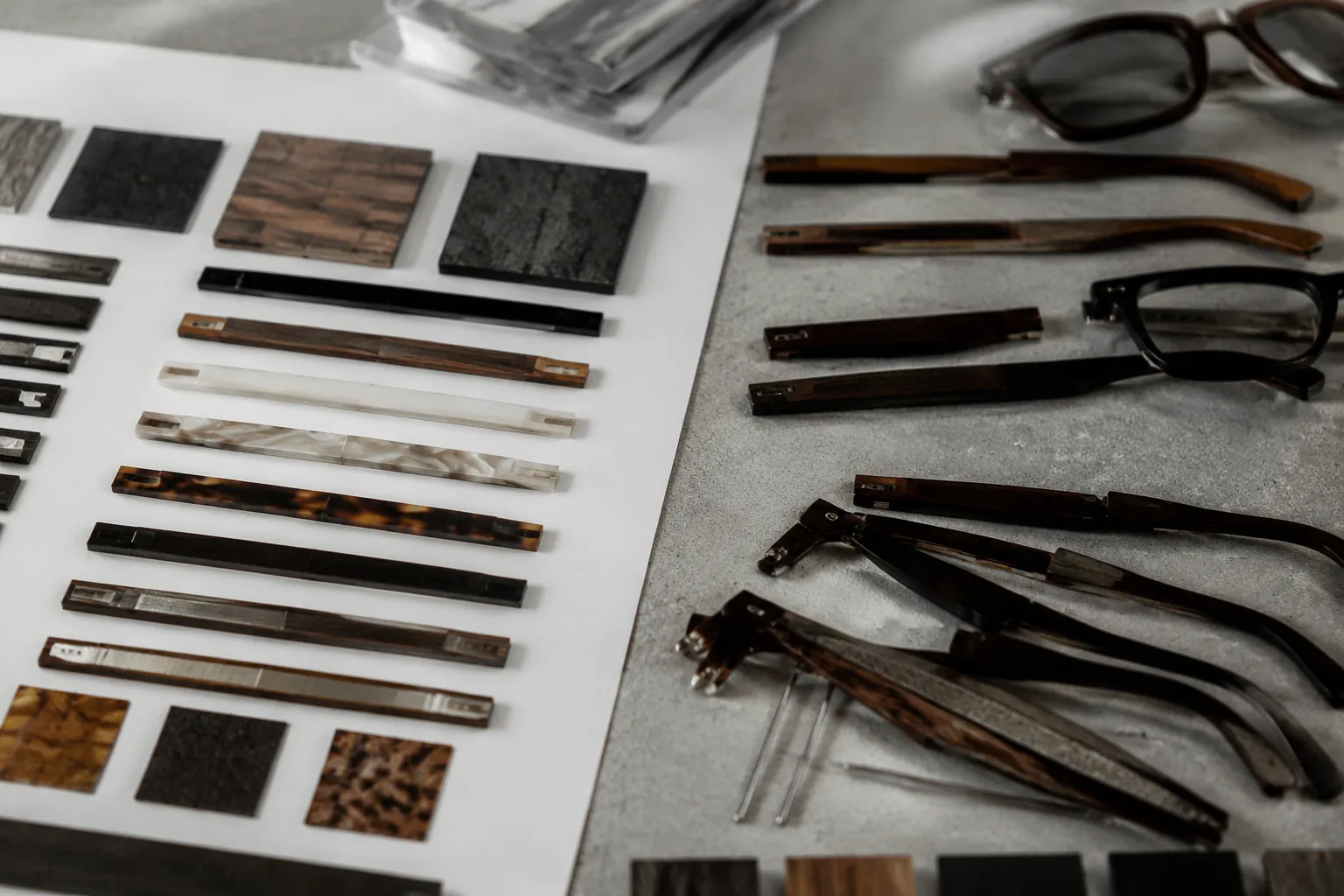
This guide is for brands, importers, distributors, and retailers sourcing custom sunglasses in volume. It compares laser engraving and pad printing the way a buyer should judge them: wear resistance, logo visibility, frame compatibility, setup risk, unit-cost impact, MOQ, and lead-time effect. The goal is practical decision-making. Do not rely on showroom samples alone. Check how each method performs on the actual frame material, finish, and logo size planned for bulk production.
Start with the use case, not the decoration name
Many buyers begin by asking, laser or pad print? That is the wrong first question. Ask what the logo must survive after shipment. A sunglass logo sold in a fashion chain, a resort shop, and an outdoor dealer will face different handling. Pocket abrasion, repeated wiping, skin oil, sunscreen, and case contact all matter.
In general, laser engraving is the safer choice when the logo must stay legible after long handling and rubbing. Pad printing is the better choice when immediate visibility, stronger contrast, or brand color matters more. Pad printing adds ink to the surface. Laser changes the surface itself. That usually means a subtler mark, but one that holds up better.
Short version: laser for wear, pad print for visibility.
Performance also depends on part consistency before branding starts. Molding, polishing, coatings, and fixture setup can all change placement and appearance. Approve against measured references on production-representative parts. Do not approve from a digital mockup alone.
There is no universal winner. The right method depends on channel, price point, target appearance, and tolerance for complaints or returns.
What actually happens on the factory floor
Laser engraving and pad printing are both standard eyewear branding methods, but they work very differently.
Laser engraving uses a focused beam to alter a thin surface layer. Depending on the material, it may create a pale, frosted, darkened, or exposed-underlayer mark. On metal logo plates, it can produce very sharp line definition. The process is dry and repeatable if the surface, fixture, and settings stay stable. Results shift if resin color, coating thickness, or polish level changes.
Pad printing transfers ink from an etched plate to a silicone pad and then onto the frame. It is widely used for outer-temple logos, inner-temple model codes, size marks, and simple graphics because it conforms to curved surfaces. Performance depends on surface cleaning, ink selection, mixing, and full curing. A logo can pass inspection and still fail later if adhesion is weak or curing is incomplete.
- Frame fronts and temples are molded, cut, or CNC-finished.
- The decoration area is cleaned to remove dust, polishing residue, and surface contamination.
- Fixtures are set from a defined reference point so logo placement can be repeated consistently.
- First-article samples are checked for alignment, edge quality, and contrast.
- For pad print, adhesion and cure are verified; for laser, tone and edge quality are reviewed.
- Bulk production begins only after approval of both appearance and production method.
Pad print is usually more flexible for bold branding. Laser is often better when abrasion resistance and a lower-profile look matter more. Neither process works well without control.
Head-to-head comparison: durability, look, cost, and risk
| Factor | Laser engraving | Pad printing |
|---|---|---|
| Wear resistance | Often stronger in use because the mark is surface-altered rather than added as an ink layer | Can perform well, but is generally more exposed to abrasion, sweat, skin oil, sunscreen, and repeated rubbing if adhesion or curing is inadequate |
| Visual contrast | Low to medium contrast; depends heavily on frame color, substrate response, coating, and finish | High contrast possible with white, black, metallic, or custom-matched inks |
| Fine detail | Can be very sharp on suitable, stable surfaces | Good for logos and codes, but edge definition depends on pad condition, ink control, and surface shape |
| Material compatibility | Works well on many injected plastics, coated parts, and metal plates; acetate must be sampled carefully | Works on acetate and many injected frames when the ink system is matched to the substrate and adhesion is verified |
| Color options | No added color unless combined with another process | Wide color range, including opaque marks on dark frames |
| Typical failure mode | Weak contrast, scorching, haze, irregular tone, or poor consistency from setup variation | Scratch-off, poor adhesion, smudging, incomplete transfer, color variation, or cure-related failure |
| Best fit | Durability-focused, understated, premium, or active-use programs | High-visibility, promotional, entry-price, or color-led branding programs |
The trade-off is simple. Laser usually wins on wear resistance. Pad print usually wins on visibility. On a premium style where branding should stay discreet, laser or a laser-marked metal plate may be the better fit. On a fashion or promotional SKU where first-glance recognition matters most, pad print is usually stronger.
Material behavior decides more than most buyers expect
Frame material is often the real decision point. The same artwork can behave very differently across substrates.
- Injected plastics: Common in volume programs. Laser can work well if the resin and color produce usable contrast. Pad print is also common, but some plastics need carefully matched inks and adhesion checks.
- Acetate: Often used for a more premium look and feel. Pad printing is widely used and can produce clean results. Laser may work well on some colors and be low-contrast on others, especially where translucency, polish, or layered color affects the mark.
- Metal logo plates or inserts: Often a strong option when a buyer wants a premium appearance and a precise mark. Laser on plated, brushed, or coated metal can be more consistent than direct decoration on some frame surfaces.
- Rubberized or soft-touch coatings: These finishes can look good but be less predictable for decoration. Pad print adhesion can be difficult, and laser response may vary with coating thickness and composition.
Always sample the exact frame material, finish, and color intended for production. Generic swatches are not enough. Edited renderings are not enough either.
What fails in the field and how to screen it out
Most decoration complaints are predictable. The mistake is approving a clean sample without checking how it behaves under handling.
Pad printing usually fails because of poor surface preparation, incompatible ink, insufficient curing, or unstable process control. In the field, that can show up as logos that scratch too easily, wear off near the temple bend, or lose edge definition after repeated contact and cleaning.
Laser engraving fails differently. The mark may be durable but too faint to deliver the intended branding effect. Or settings may create haze, discoloration, rough edges, or uneven appearance from pair to pair. On translucent or highly polished materials, visibility may change under different lighting.
Ask for a pre-production sample that reflects actual production conditions and includes a basic handling or rub check, not just a fresh visual sample.
Before approval, verify:
- Logo position from a fixed reference point such as the hinge area or temple end
- Contrast on the exact color and finish ordered
- Adhesion and cure condition for pad print
- Consistency between left and right temples
- Appearance after handling, packing, and unpacking
- Legibility of small text if model code or size information is included
If the channel has low tolerance for cosmetic claims, ask for samples that have already gone through normal packing and handling. That gives a more realistic approval basis.
Cost, MOQ, and lead-time logic for branded runs
Branding affects cost, but it is only one part of the quotation. Frame material, lens specification, hinge construction, and packaging often have a larger effect on unit price. Still, decoration choice can affect setup work, scrap risk, and schedule flexibility.
At lower volumes, a simple one-position pad print is often easier to quote because the process is common in eyewear production. Laser becomes more attractive when the logo should be subtle, when abrasion resistance matters, or when a repeat program can benefit from a stable setup.
MOQ and timing vary by factory, style, and production load. Confirm them on the specific project. Do not assume a standard threshold. If the material is acetate, coated, or color-sensitive under laser, compare both methods on the same style before committing to bulk.
| Order stage | Typical timing | Buyer impact |
|---|---|---|
| Sample development | Varies by supplier and complexity | Allows comparison of laser and pad print on the exact frame, finish, and color before bulk approval |
| Pre-production approval | After sample feedback and supplier confirmation | Best point to lock logo size, position, and decoration route before production starts |
| Bulk production | Varies by order size, factory schedule, and materials | Late decoration changes can require re-sampling, new setup, and schedule adjustment |
| MOQ threshold | Supplier-specific | Confirm whether the factory can support pilot quantities for wear testing and market validation |
| Price break logic | Generally improves with volume | Use a smaller comparison run if needed, then move the selected method into repeat or higher-volume pricing |
Simple rule: if the choice is not obvious, spend the time on a proper sample comparison before release. One extra sample round is usually cheaper than bulk rework.
Match the decoration method to the sales channel
Different channels value different things. Decoration should follow the commercial goal.
Fashion retail: Shelf impact matters. High-contrast pad print can be easier to see at first glance than a subtle laser mark.
Premium private label: Discreet branding may fit better. Laser on the inner temple or on a metal logo plate supports a quieter presentation.
Promotional and event programs: Visibility usually matters more than long-term wear. Pad print is commonly selected where the logo must be seen clearly and immediately.
Outdoor, travel, and active channels: Products are handled more aggressively, so resistance to rubbing matters more. If the frame material gives enough contrast, laser may be the safer choice.
Many buyers do not need one method across the whole line. A split strategy often works better: pad print for entry or promotional styles, laser or laser-marked trim for premium lines.
Approval checklist before you release the PO
Use this checklist on every branded sunglass order:
- Confirm frame material and finish before approving decoration. Matte, gloss, translucent, coated, and soft-touch surfaces can behave differently.
- Approve logo size and exact position with a measured drawing or marked production-representative sample, not only a digital mockup.
- Request both a visual approval sample and a handling-tested sample when the order value or channel risk justifies it.
- For pad printing, confirm that the ink system is suitable for the substrate and that curing is part of the documented production process.
- For laser, review contrast under more than one lighting condition, especially on translucent, polished, or dark materials.
- Check left-right consistency on the same pair and across multiple sample pairs.
- Confirm that finished-product compliance requirements are addressed for the destination market. Depending on market and product type, this may include CE EN ISO 12312-1, ANSI Z80.3, or AS/NZS 1067. Material-related controls such as REACH may also apply. If the importer requires supplier records, ask what is available, such as ISO 9001, BSCI, or FDA registration where relevant.
- Verify that the approved sample follows the same production route planned for bulk. A sample made with a different finish, color batch, or decoration setup is a weak approval basis.
- Lock the decoration method before bulk starts. Mid-run logo changes increase scrap risk, delay shipments, and create avoidable disputes.
For overseas buyers, the safest rule is simple: test the real frame, in the real color, with the real logo, using the real production method. Then approve.
Have a custom sunglasses project in mind?
Send us your styles, target market and quantities and we will return a detailed quote with MOQ, lead time and a sample plan.
Get a QuoteWhy source this from Wenzhou with LumiShades
Wenzhou in Zhejiang Province is widely regarded as China’s eyewear manufacturing capital, producing a large share of the world’s sunglasses. That concentration matters to buyers: a deep local supply chain for acetate sheet, hinges, lens blanks, plating and packaging means shorter component lead times, easier color and material matching, and a workforce with decades of eyewear-specific skill. LumiShades has manufactured in this ecosystem since 2009, and our vertical integration — in-house injection molding, acetate cutting, CNC milling, lens tinting, decoration and quality control — means no part of your order is quietly subcontracted to a workshop you cannot audit.
For international buyers, that vertical control translates into accountability. When a single factory owns every step, defects are traced and fixed at source rather than bounced between vendors, and your specifications survive intact from first sample to bulk. We back this with 15+ years of experience, shipments to 60+ countries, more than 5 million pairs produced per year and a 98.5% on-time delivery rate. Our certifications — CE EN ISO 12312-1, FDA registration, ANSI Z80.3, AS/NZS 1067, REACH, ISO 9001 and BSCI audit — mean the compliance documentation your market requires already exists. Explore our manufacturing capabilities and quality control process to see how this works in practice.
Frequently asked questions
Which method lasts longer on sunglasses used every day? In many cases, laser engraving lasts longer because it alters the surface instead of adding an ink layer on top. That said, durability still depends on the substrate and process control. Ask the supplier for samples on the exact frame material and request a basic rub and handling check before approval. If the logo must stay visible after repeated contact, compare laser and pad print on the same style rather than deciding from artwork alone.
Is pad printing always cheaper than laser engraving? No. Pad printing is often economical for simple logos and common placements, but actual cost depends on artwork, position count, setup, scrap risk, and order volume. Laser may be competitive when the logo is simple, the mark is small, or the order is part of a repeat program. Ask the supplier to quote both methods on the same SKU and compare not only unit price but also expected wear performance and rework risk.
Can both methods be used on acetate frames? Yes, but acetate should always be sampled in the exact color and finish you intend to buy. Pad printing is commonly used on acetate and can look very clean. Laser can work well on some acetate colors and be too low-contrast on others, especially where translucency or polish changes how the mark reads. The practical step is to request matched samples on the production color, then review them under daylight and indoor lighting.
Will branding affect compliance for export markets? Branding does not replace product compliance requirements. The finished sunglasses still need to meet the applicable market standard, such as CE EN ISO 12312-1, ANSI Z80.3, or AS/NZS 1067, depending on where the product is sold and how it is classified. Material-related obligations such as REACH may also apply. Ask the supplier which test reports or compliance documents are available for the finished product and whether the branded sample uses the same materials and production route as bulk.
What is the safest way to compare the two methods before bulk? Order matched samples using the same frame, same color, same finish, same logo artwork, and same logo position. Review contrast, edge quality, and consistency first. Then check how each sample looks after normal handling, packing, unpacking, and light rubbing. If the logo will be on a premium or complaint-sensitive program, ask for written confirmation of the decoration method, substrate, and curing or laser settings used for the sample so you know the bulk route matches the approval route.
At low MOQ, which method makes more sense? At low MOQ, choose based on channel risk rather than habit. If the product needs strong shelf visibility or promotional impact, pad print is often the better option. If complaint risk from logo wear matters more, laser may be safer if the material gives enough contrast. The best low-MOQ move is to use the first run to validate both appearance and wear on the real product, then standardize the better method for repeat orders.
Ready to start?
Explore our shield & oversized sunglasses or request a quote — our sales team replies within 12 hours.
Request a Quote