
Best Logo Placement for Custom Sunglasses
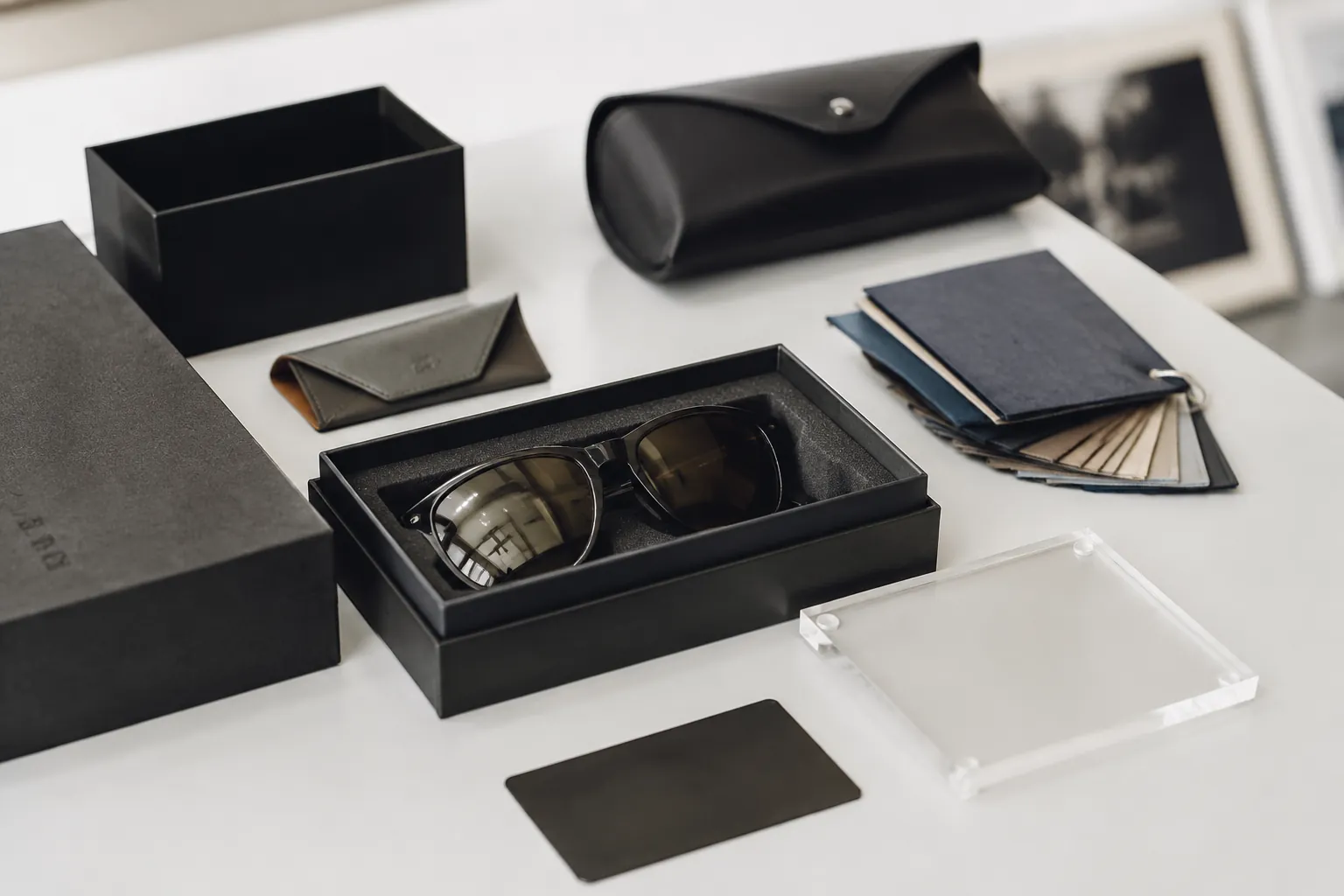
This guide is for brand owners, importers, distributors, and retail buyers developing custom sunglasses at volume. Logo placement is not a design choice only. It affects decoration method, durability, sampling time, reject risk, and retail presentation. Inside-temple logos, lens marks, and outer-arm branding each have limits based on frame material, surface finish, lens type, and the way the product will be sold. Define the job of the logo early. That reduces delays and makes production easier to control.
Start with the job the logo has to do
Many branding problems start before artwork is finalized. A buyer asks for a logo on "the side" or "the lens" without defining what the mark must do. That usually leads to the same problems later: weak shelf visibility, poor durability, or a decoration method that does not fit the frame.
Use four questions before approving placement.
- Is the logo meant to help sell the product or identify it after purchase? If retail visibility matters most, review the outer arm first. If the logo is mainly for brand identification, the inside temple may be enough.
- How much handling will the product see? Store try-ons, repeated folding, skin oils, sunscreen, and lens cleaning all affect wear. Lens and outer-arm marks are more exposed than inside-temple marks.
- What decoration methods are realistic for the material? Injection-molded plastic, acetate, metal, and different lens materials do not all respond the same way to pad printing, engraving, or applied logo parts.
- What level of cost and process complexity is acceptable? A simple one-position print is easier to control than multi-position decoration or a fitted metal logo plate.
Review artwork in production terms, not only on screen. Confirm the exact location, orientation, size, line weight, and method on the actual frame or lens spec whenever possible. Placement is not only a styling choice. It is a manufacturing decision.
Head-to-head: inside temple vs lens vs outer arm
Each branding zone serves a different purpose. None is universally best. The right choice depends on visibility goals, material compatibility, expected wear, and budget.
| Branding zone | Main purpose | Typical methods | Key production considerations | Durability in use | Retail visibility | Cost impact |
|---|---|---|---|---|---|---|
| Inside temple | Brand ID, model code, size, origin or other product information | Pad printing, laser engraving | Available print area depends on temple shape, curvature, finish, and hinge position | Usually better protected than external branding | Low while worn; visible on inspection | Usually the lowest-risk option |
| Lens | Immediate brand signal, fashion effect, visual identity in display or photography | Laser mark, pad print, etch-style mark | Method must suit the actual lens material, coating, tint, and surface treatment | Varies widely by lens specification and cleaning exposure | High | Often higher due to process sensitivity |
| Outer arm | Shelf recognition and on-face visibility | Pad printing, laser engraving, metal logo plate | Surface quality, arm thickness, and geometry determine what methods are feasible | Ranges from moderate to high depending on method | High | Medium to high depending on decoration choice |
In many private-label programs, inside-temple branding is the easiest starting point. It is discreet and generally simpler to execute. Outer-arm branding earns its cost when visible brand presence supports retail sell-through. Lens branding works best when it is part of the brand look and the lens process has been validated on the actual spec.
Inside-temple branding: practical and discreet
Inside-temple branding is often the most practical choice for custom sunglasses. It is less exposed during wear and can carry more than the brand name alone. Many programs use this area for the brand, model reference, size information, material description, and country-of-origin text, subject to local labeling rules.
Pad printing is common here because it is flexible and cost-efficient. Still, it has limits. Curved or textured temple surfaces can reduce legibility, especially for very fine text or intricate marks. Laser engraving can be a better option when the buyer wants a more permanent mark or a cleaner, lower-profile look, but the visual contrast depends heavily on the frame material and finish.
Use inside-temple branding when you need:
- Low visible branding for classic, understated, or premium-looking styles
- Space for product information beyond the logo itself
- Simpler execution than highly visible external branding
- Lower handling exposure than lens or outer-arm decoration
Before bulk approval, review a sample made on the actual frame color and finish. A logo that reads clearly on a white digital proof may behave differently on black, translucent, matte, rubberized, or patterned surfaces. If text is small, confirm legibility on the finished product, not only in artwork.
Lens branding: high visibility, but higher risk
A lens logo creates immediate visual impact. It is easy to notice in packaging, on display, and in product photography. It is also one of the most sensitive branding areas because the decoration sits on the most closely inspected part of the product.
The first question is whether the lens mark is meant for retail presentation, long-term consumer use, or both. The answer affects the method and the durability required.
Lens branding should be reviewed in three areas:
- Placement consistency. Small position differences are more obvious on lenses than on temples, especially when left and right sides are compared.
- Material and coating compatibility. Adhesion and appearance can vary by lens material and by hard coat, mirror, tint, or other surface treatment.
- Cleaning resistance. Lenses are wiped frequently. A mark that looks fine at first may fail if the decoration is not compatible with the lens system.
For regulated markets, branding should not interfere with the finished sunglass spec. Buyers should confirm that the completed product still aligns with the applicable market route, such as CE EN ISO 12312-1, ANSI Z80.3, or AS/NZS 1067, and that supporting material and chemical documentation stays aligned where needed, including REACH for relevant programs. If the importer or market route requires it, verify any FDA registration paperwork separately and according to the product category and destination market.
Always ask for lens branding samples on the actual lens construction to be used in production. A substitute substrate is not enough for approval.
Outer-arm branding: strongest shelf visibility
If the logo needs to be seen quickly in retail, the outer arm is usually the most effective area. It works well for fashion collections, resort programs, licensed goods, and promotional styles where visible branding is part of the value.
But outer-arm branding is not one technique. The result depends on the method selected.
| Method | Best on | Strengths | Weak points | Typical buyer use |
|---|---|---|---|---|
| Pad printing | Smooth plastic or acetate surfaces | Color flexibility, relatively simple setup, suitable for many standard logos | Surface print can wear faster than engraved or inserted options | Seasonal lines, promotional styles, price-sensitive programs |
| Laser engraving | Materials and finishes that produce clear contrast when engraved | No ink, cleaner understated look, generally better wear resistance than surface print | Contrast may be limited on some dark or glossy materials | Minimal branding, outdoor styles, quieter premium looks |
| Metal logo plate | Temples with enough thickness and stable geometry to accept an inserted part | High perceived value, strong visibility, premium appearance | More assembly steps, tighter fit requirements, not suitable for every frame structure | Premium acetate, boxed retail products, logo-led fashion styles |
Metal plates need careful spec control. The temple must accept the part securely, and the assembly method should be confirmed during sampling. Thin or highly flexible arms may not suit them. For prints, engravings, or applied logo parts, define the QC standard before production: appearance, adhesion, position, and acceptable variation should all be agreed in advance.
Outer-arm branding makes the most sense when the logo actively supports the sale and the frame construction can carry the chosen method without avoidable risk.
How placement affects cost, MOQ, and lead time
Logo placement can change total program cost even when the base frame stays the same. The impact comes from process steps, setup requirements, handling, and quality control.
As a general rule, inside-temple printing is often the simplest option. Outer-arm decoration may add cost because it is more visible and usually needs tighter appearance control. Lens decoration can also increase process sensitivity because the branded area is so exposed. Applied logo parts such as metal plates usually add more cost through extra components and assembly steps.
MOQ and lead time vary by supplier, frame construction, and decoration method, so buyers should not rely on generic assumptions. Confirm the following with the factory or trading partner in writing:
- whether the quoted MOQ applies to the frame only or to the decorated version
- whether the decoration method requires separate setup or tooling
- whether multiple logo locations change the unit price or approval flow
- whether each frame color needs separate print matching or additional sample review
- whether decoration is done in-house or through a subcontractor
For supplier evaluation, it is reasonable to ask whether the manufacturing site operates under ISO 9001 quality management and whether social compliance is supported through frameworks such as BSCI. Those points do not guarantee decoration quality by themselves, but they help buyers assess process control and supply-chain readiness.
Simple decoration usually means faster approvals and fewer variables to manage. That matters.
Retail presentation and durability: match the channel
A logo that looks good in a render may not perform well in store. Sunglasses are handled repeatedly before sale: they are picked up, folded, tried on, wiped, and returned to display. Placement should match the actual channel.
Match the zone to the sales environment:
- Optical and department store counters: outer-arm branding is often effective because side views are visible on stands.
- E-commerce-led programs: lens branding may read clearly in images, but the delivered product should match the approved photography and spec.
- Promotional or event merchandise: visible outer-arm logos usually communicate the brand faster than hidden inside-temple marks.
- Classic private-label programs: inside-temple branding keeps the product cleaner and more understated.
Then review wear points. Outer-arm marks are exposed to hands, hair products, skin oils, and storage friction. Lens marks are exposed to repeated cleaning. Inside-temple marks are more protected, but can still be affected if they sit too close to the hinge area or fold contact points.
Ask for the decoration method, the substrate, and the expected wear behavior to be stated clearly on the sample or approval sheet. Durability is not one claim; it depends on the combination of method, material, and placement.
A practical approval checklist before bulk production
Before bulk production starts, lock the branding details in writing. Most preventable disputes come from incomplete approvals.
- Approve the exact location. State left arm, right arm, both arms, lens side, and reference points if needed.
- Approve the size. Use millimeters, not vague terms such as "small" or "standard."
- Approve the method. Pad print, laser engraving, and metal logo plate are different processes and should not be treated as interchangeable.
- Approve the color reference. If the mark is printed, specify the agreed standard clearly.
- Approve orientation. Confirm direction on left and right parts, especially for folded-frame viewing.
- Confirm material compatibility. Ask how the chosen frame or lens material affects adhesion, contrast, or assembly.
- Check compliance documents. Confirm the finished sunglass program aligns with the required route, such as CE EN ISO 12312-1, ANSI Z80.3, AS/NZS 1067, REACH, and any relevant FDA registration documentation for the destination market.
- Review the pre-production sample. Approve the actual material, finish, and decoration method. A mockup is not a production approval.
A useful rule: the best logo placement is the one that can be produced consistently, sold effectively, and supported with clear documentation.
Have a custom sunglasses project in mind?
Send us your styles, target market and quantities and we will return a detailed quote with MOQ, lead time and a sample plan.
Get a QuoteWhy source this from Wenzhou with LumiShades
Wenzhou in Zhejiang Province is widely regarded as China’s eyewear manufacturing capital, producing a large share of the world’s sunglasses. That concentration matters to buyers: a deep local supply chain for acetate sheet, hinges, lens blanks, plating and packaging means shorter component lead times, easier color and material matching, and a workforce with decades of eyewear-specific skill. LumiShades has manufactured in this ecosystem since 2009, and our vertical integration — in-house injection molding, acetate cutting, CNC milling, lens tinting, decoration and quality control — means no part of your order is quietly subcontracted to a workshop you cannot audit.
For international buyers, that vertical control translates into accountability. When a single factory owns every step, defects are traced and fixed at source rather than bounced between vendors, and your specifications survive intact from first sample to bulk. We back this with 15+ years of experience, shipments to 60+ countries, more than 5 million pairs produced per year and a 98.5% on-time delivery rate. Our certifications — CE EN ISO 12312-1, FDA registration, ANSI Z80.3, AS/NZS 1067, REACH, ISO 9001 and BSCI audit — mean the compliance documentation your market requires already exists. Explore our manufacturing capabilities and quality control process to see how this works in practice.
Frequently asked questions
Which logo placement is usually cheapest for custom sunglasses? Inside-temple branding is often the most cost-efficient starting point because it is usually simpler to execute and less exposed to appearance complaints than external branding. To verify the real cost, ask the supplier for a line-by-line comparison of each option: inside temple, outer arm, and lens, using the same frame and the same order quantity. Also confirm whether the quote includes artwork setup, color matching, extra QC, and any tooling for applied parts.
Is lens branding durable enough for everyday consumer use? It can be, but durability depends on the actual lens material, coating system, and decoration method. Do not approve lens branding from a mockup or from a sample made on a substitute lens. Request a production-representative sample on the exact lens specification, ask how the mark is applied, and confirm how the supplier evaluates cleaning resistance and appearance consistency before bulk production.
Can I put different branding on the left and right temples? Yes, but it should be documented carefully. Provide separate left-side and right-side artwork, confirm orientation on the folded frame, and require the pre-production sample to show both sides clearly. Ask the supplier to state how side separation is controlled during printing, assembly, and packing so left-right mix-ups are less likely in bulk.
At what order size does outer-arm branding make more sense? There is no universal threshold because it depends on the frame price, logo method, and how important visible branding is to the sales strategy. Outer-arm branding makes more sense when the logo helps drive retail conversion or supports a premium presentation. Ask the supplier to quote the same style with inside-temple branding only and with outer-arm branding added, then compare unit cost, sample time, and reject risk before deciding.
Will adding a logo affect compliance for sunglasses sold in Europe, the U.S., or Australia? It can if the decoration changes the finished product in a way that affects the lens or material performance, so the final branded version should be reviewed against the relevant market route. For Europe, buyers commonly review alignment with CE EN ISO 12312-1; for the U.S., ANSI Z80.3 may apply depending on the product route; for Australia and New Zealand, AS/NZS 1067 is a common reference point. Chemical and material documentation such as REACH may also need to stay aligned, and any FDA registration paperwork should be checked based on the exact product category and import pathway. The practical step is to ask the supplier for compliance documents tied to the final decorated product, not only to the undecorated frame or lens.
Ready to start?
Explore our square sunglasses or request a quote — our sales team replies within 12 hours.
Request a Quote