
Best Logo Method for Custom Sunglasses Orders
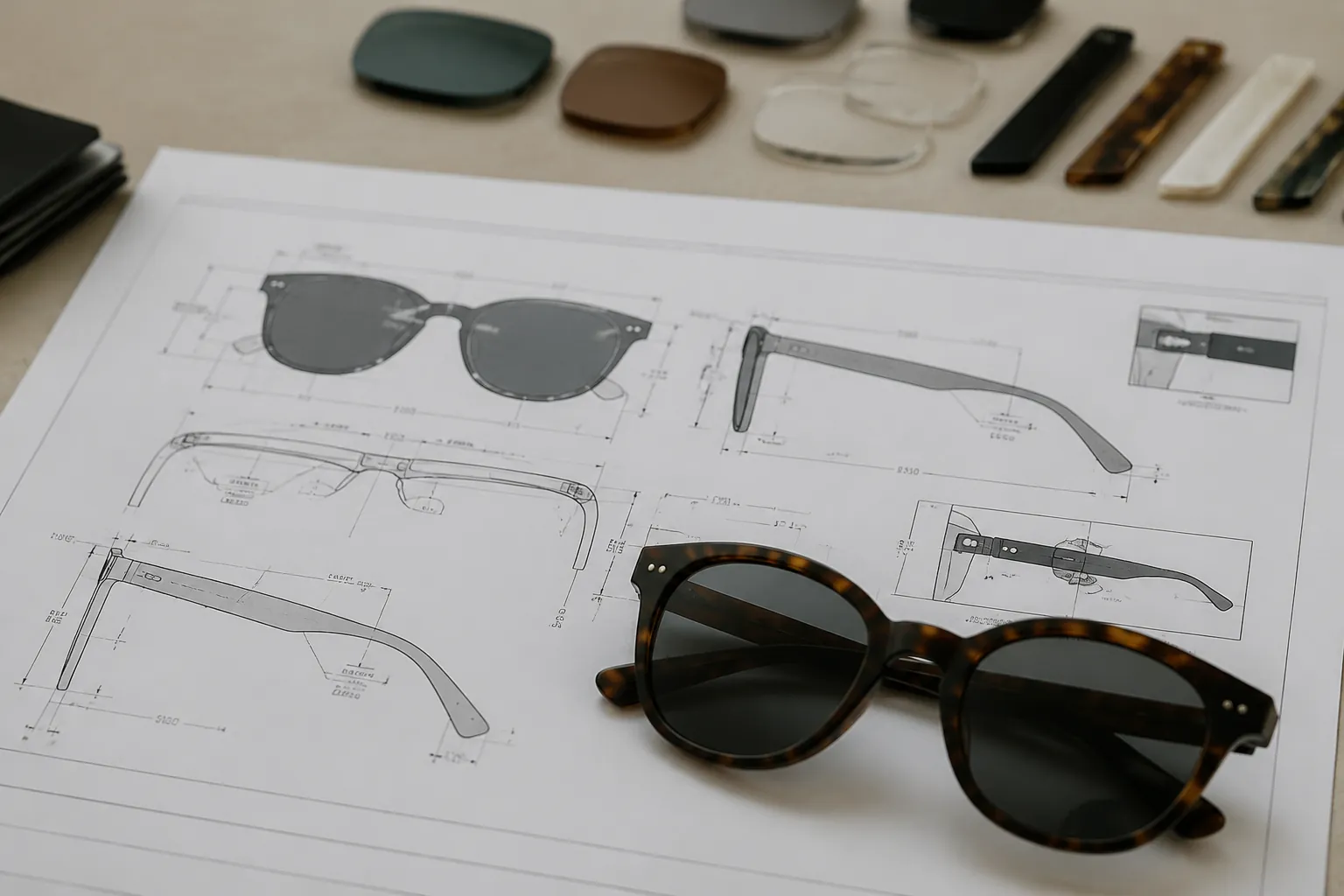
This guide is for brand owners, importers, distributors, and retailers buying custom sunglasses in volume. It compares three common branding methods used on frames and temples: laser engraving, pad printing, and metal logo plates. The focus is practical: durability, MOQ, unit cost, lead time, material fit, and channel fit. No method is always best. The right choice depends on the frame material, target price, expected wear, and sales channel: retail, gifting, or promotion.
Start with the order type, not the logo
Many buyers start by asking which logo method looks most premium. Wrong first question. Start with the sales program: retail collection, corporate gift, influencer campaign, or price-led promotion. A logo method that makes sense for a boutique retail launch may be wasted money on an event giveaway. The reverse is also true. A cheap logo treatment may not hold up on a daily-wear retail line.
Review these three points before approving artwork:
- Target cost position: Decoration adds cost through setup, handling, inspection, and possible rework. Judge the method by the finished product margin, not by decoration in isolation.
- Expected wear conditions: Temple logos face handling, pouch friction, sweat, cosmetics, and heat. A method that is fine for short campaign use may fail on repeat retail wear.
- Material and construction: PC, TR90, acetate, stainless steel, and alloy parts do not react the same way to lasers, inks, adhesives, or mounted hardware. Temple thickness, curvature, and surface texture also limit what is realistic.
Decoration also changes production flow. A plain frame moves faster. Add branding, and the order usually needs artwork review, position confirmation, a first sample, in-process inspection, and final appearance checks. Ask about more than unit price. Ask how the method affects sample approval, bulk timing, and reject risk on the exact frame you plan to buy.
Head-to-head: cost, durability, MOQ, and positioning
| Branding method | Typical look | Relative durability | MOQ impact | Unit cost impact | Typical lead-time pressure | Best fit |
|---|---|---|---|---|---|---|
| Laser engraving | Subtle, permanent-looking mark; usually tone-on-tone | High on compatible materials | Low to medium | Low to medium after setup | Moderate | Retail, private label, understated branding |
| Pad printing | Visible colored logo; strong for simple artwork | Medium; depends heavily on ink, surface prep, and curing | Low | Usually the lowest for simple logos | Low to moderate | Promotions, gifting, test runs, visible branding |
| Metal logo plates | Hardware look; raised or recessed effect | High if the plate is flush and securely attached | High | High | High | Fashion retail, premium collections, strong shelf presentation |
Read MOQ and unit cost together. A factory may accept a low minimum order quantity, but that does not make every logo method efficient at that level. Laser engraving and pad printing are usually easier to justify on low- to mid-volume programs because they do not need a separate decorative part. Metal plates usually add both hardware cost and assembly labor, so volume matters more.
As a rule, pad printing is the easiest entry point for a visible logo. Laser engraving is often the middle ground if you want better durability without added hardware. Metal plates are chosen for impact, not efficiency. Use them only when the margin and brand position support the extra complexity.
Laser engraving: durable, clean, and material-dependent
Laser engraving is often a strong option for private label sunglasses because it does not rely on a surface ink layer. If the material responds well, the mark looks neat and controlled and carries lower rub-off risk in use. It suits brands that want a subtle logo rather than a bold printed mark.
But laser results depend on the actual frame material and finish. Do not assume one approved sample guarantees the same result across all colors or surface treatments. Contrast, edge sharpness, and readability can change with pigment, gloss level, texture, coating thickness, and even temple shape.
- PC and TR90: Often workable for laser marking, but contrast varies by color and finish. Simple logos usually perform better than fine micro-text on narrow or curved temples.
- Acetate: Can give a refined retail look if the engraving is controlled. Check carefully for clean edges, surface whitening, or roughness.
- Coated metal parts: Possible if the coating is stable and the logo area is suitable, but the visual result depends on the coating system and finish consistency.
For approval, ask for the logo on the final production colorway and material, not on a similar sample. Check readability, edge definition, and placement consistency. If the logo sits near a hinge, taper, or strong curve, show that on a placement drawing. Laser engraving is a strong choice when durability matters more than color visibility. It is a weak choice if the brand needs Pantone matching, multicolor decoration, or a bold graphic effect.
Pad printing: flexible, low cost, and process-sensitive
Pad printing remains one of the most common branding methods for sunglasses because it is versatile and relatively easy to apply on curved or narrow surfaces. It is widely used on temples, front corners, cases, and packaging. For promotional programs and short-to-medium runs, it is often the first method to check.
The main limit is process control. A logo that looks fine at packing can still fail later. Adhesion, curing, and handling determine whether the print stays acceptable after delivery and use.
- Printable area matters: Temples often have limited height and broken geometry. If artwork is too fine, letters can fill in, edges can blur, or small elements can break.
- Surface preparation matters: Residue, contamination, or poor substrate prep can reduce ink adhesion. The supplier should confirm how the logo area is prepared before printing.
- Ink system matters: The ink must match the substrate. Good performance on one plastic does not guarantee good performance on another.
- Curing matters: Weak curing can cause smudging, offsetting during packing, or poor rub resistance in use.
Pad printing is usually the lowest-cost option for a visible logo, but it is also the most exposed to surface abrasion because the print sits on top of the substrate. That does not make it a bad option. For campaign products, event giveaways, and many corporate gift programs, it can be fully adequate if the logo stays clean through delivery and normal short-term use. For retail lines with heavier wear expectations, define the appearance standard in advance and ask how the supplier will check it before shipment.
Keep the artwork practical: bold strokes, limited text, and minimal color complexity. Fine text, metallic ink, exact color demands, and high abrasion expectations on a low-cost frame are a bad mix.
Metal logo plates: stronger shelf appeal, higher assembly risk
Metal logo plates send the strongest premium signal of the three methods. They add depth, reflectivity, and a hardware effect that can lift perceived value at retail. For fashion-led collections, that may justify the added cost.
They also add the most production variables. The plate has to be made, finished, and mounted accurately to the frame. Depending on the design, mounting may use adhesive, pins, rivets, or a built-in construction feature. Every added step creates another failure point.
Key control points include:
- Alignment: A plate that is off-center is obvious at a glance, especially on symmetrical temples.
- Edge fit: The plate should sit flush without lifted corners or sharp edges.
- Finish consistency: Polished, brushed, plated, or painted finishes should match the approved sample across the lot.
- Attachment stability: The fixing method should suit the frame material, temple flexibility, and likely heat exposure during transport and use.
Metal plates usually work best on thicker acetate or injected temples with enough stable surface area for clean mounting. They are less suitable on very thin, highly flexible, or strongly curved temple designs. In practice, they also raise MOQ pressure because the order now includes a separate decorative part that must be produced, checked, and assembled. Ask whether the plate supplier is controlled within the same quality system as the sunglass factory or managed separately. That affects both consistency and timing.
How branding affects MOQ, lead time, and rejects
Decoration changes scheduling more than many buyers expect. Every branded order adds approval steps. Each step can slow the job if the frame material, artwork, or placement is not straightforward.
| Factor | Laser engraving | Pad printing | Metal logo plates |
|---|---|---|---|
| Artwork preparation | Vector file; logo visibility review by material and colorway | Vector file; printability and line-thickness review | Logo drawing plus plate size, thickness, and finish approval |
| Sample risk | Weak contrast, uneven mark, surface damage | Adhesion failure, smudging, loss of detail | Poor fit, skewed placement, finish variation |
| Bulk lead-time pressure | Moderate | Low to moderate | High |
| Typical reject drivers | Position inconsistency, low readability, rough edges | Fuzzy print, incomplete transfer, weak curing | Lifting, scratches, alignment issues, attachment defects |
A simple pad print job may be easiest to fit into a short schedule once artwork is approved. Laser engraving may need extra confirmation if different frame colors react differently. Metal plates usually create the most scheduling pressure because hardware must be made or matched, inspected, and then mounted under tighter appearance control.
Reject logic also changes by method. Pad printing may be simple to start but can create rework if adhesion and curing are weak. Laser engraving can perform well in use but still fail visually if the material does not produce clear contrast. Metal plates may look good in concept but delay shipment if fit, plating consistency, or mounting quality is unstable. If the ship date is fixed, ask which method carries the lowest process risk on the exact frame style selected, not just the lowest stated upcharge.
Compliance and approval checks before bulk production
Review branding together with product compliance. Not later. Decoration does not replace core sunglass requirements, and added inks, adhesives, coatings, or metal parts should not create new problems.
Depending on the target market and product type, buyers may need to review standards or systems such as CE EN ISO 12312-1, ANSI Z80.3, AS/NZS 1067, REACH, FDA registration where applicable, and factory systems such as ISO 9001 or social compliance programs such as BSCI. The exact requirement depends on destination market, lens category, packaging claims, and supplier role.
Before approving bulk, check:
- Lens and labeling integrity: Decoration should not interfere with legally required information, product labeling, or consumer-facing markings.
- Chemical compliance: If inks, adhesives, coatings, or plated hardware are added, review those inputs under the relevant chemical compliance framework, including REACH where applicable.
- Wear exposure: Temple logos face friction, sweat, cosmetics, and pouch contact. This is especially important for pad printing and plated finishes.
- Edge safety: Metal plates should be smooth, flush, and free from burrs or sharp corners.
- Final sample control: Base approval on the exact logo on the final frame color and finish, not on a substitute sample.
The most useful approval package is simple: one signed artwork file, one approved physical sample in the final colorway, one placement drawing with dimensions, and one written note defining the expected appearance standard after normal handling. That gives both buyer and supplier a clear reference during inspection and after delivery.
Which method fits which order
Use this logic.
- Choose pad printing when the order is promotional, budget-sensitive, and dependent on visible color branding. It is also practical for test runs and straightforward gifting programs.
- Choose laser engraving when the order is retail or private label, durability matters more than color, and you want a clean brand mark without extra hardware. It is often the most balanced choice if the frame material responds well to laser marking.
- Choose metal logo plates when the order is retail-focused, shelf presentation matters, and the margin can support higher cost and tighter production control.
Quantity still matters. On low-volume orders, simpler decoration usually carries less risk. On larger programs, buyers have more room to choose based on positioning, but decoration cost and process complexity also scale across the total order.
Simple rule: if the product sells on price, avoid decoration that depends on premium hardware economics. If the product sells on brand value, choose a method that matches that position in both appearance and durability.
Before bulk production starts, treat three approvals as mandatory: the actual logo sample on the final colorway, the exact placement measurement, and the expected appearance standard after normal handling. Those three checks prevent most avoidable disputes on branded sunglass orders.
Have a custom sunglasses project in mind?
Send us your styles, target market and quantities and we will return a detailed quote with MOQ, lead time and a sample plan.
Get a QuoteWhy source this from Wenzhou with LumiShades
Wenzhou in Zhejiang Province is widely regarded as China’s eyewear manufacturing capital, producing a large share of the world’s sunglasses. That concentration matters to buyers: a deep local supply chain for acetate sheet, hinges, lens blanks, plating and packaging means shorter component lead times, easier color and material matching, and a workforce with decades of eyewear-specific skill. LumiShades has manufactured in this ecosystem since 2009, and our vertical integration — in-house injection molding, acetate cutting, CNC milling, lens tinting, decoration and quality control — means no part of your order is quietly subcontracted to a workshop you cannot audit.
For international buyers, that vertical control translates into accountability. When a single factory owns every step, defects are traced and fixed at source rather than bounced between vendors, and your specifications survive intact from first sample to bulk. We back this with 15+ years of experience, shipments to 60+ countries, more than 5 million pairs produced per year and a 98.5% on-time delivery rate. Our certifications — CE EN ISO 12312-1, FDA registration, ANSI Z80.3, AS/NZS 1067, REACH, ISO 9001 and BSCI audit — mean the compliance documentation your market requires already exists. Explore our manufacturing capabilities and quality control process to see how this works in practice.
Frequently asked questions
Which branding method is most durable on sunglasses temples? In most cases, laser engraving and a properly mounted metal logo plate are more durable than pad printing. Laser engraving is often the safest all-around choice because the mark is created in or through the surface rather than sitting entirely on top as ink. Metal plates can also perform well, but only if the plate sits flush, the fixing method suits the temple material, and assembly is consistent. Ask for method-specific samples on the final frame material and colorway, then review readability, edge quality, and resistance to normal handling.
Is pad printing good enough for retail sunglasses? Yes, sometimes. It can work for entry-level and some mid-priced retail sunglasses, especially with simple logos and realistic wear expectations. It is a weaker fit for premium positioning or for products expected to keep a near-new logo appearance through heavy long-term use. Ask the supplier what ink system is used for the chosen substrate, how the logo area is prepared, and what in-house adhesion or rub checks are done before shipment.
Do metal logo plates require a higher MOQ? Usually yes in practical sourcing terms. Even if a factory accepts a low headline MOQ for the sunglasses, metal plates add a separate component, a finishing process, incoming quality checks, and an assembly step. That makes them less efficient on very small runs. Ask for MOQ in two parts: sunglass MOQ and decorative hardware MOQ. Also confirm whether spare plates are included to cover assembly rejects or after-sales replacements.
What should I approve on a sample before placing a bulk order? Approve four things in writing and on the physical sample: the exact logo artwork, the exact placement, the final frame material and colorway, and the expected appearance standard after normal handling. Then check method-specific points. For laser engraving, confirm contrast and clean edges. For pad printing, confirm legibility, color appearance, and resistance to normal rubbing and packing contact. For metal plates, confirm centering, flush fit, finish consistency, and absence of sharp edges. If the order is for a regulated market, also make sure the decoration does not interfere with labeling or compliance requirements such as CE EN ISO 12312-1, ANSI Z80.3, AS/NZS 1067, REACH, or FDA registration where applicable.
How much can decoration affect lead time? It depends on the method and on how predictable the frame material is. Simple pad printing usually adds the least scheduling pressure once artwork is approved. Laser engraving may add sample time if logo contrast changes across colors or finishes. Metal logo plates usually add the most time because hardware must be made or matched, finished, checked, mounted, and inspected. Ask for a step-by-step timeline covering sample approval, decoration setup, bulk production, and final inspection, not just one total lead-time number.
Ready to start?
Explore our cat-eye sunglasses or request a quote — our sales team replies within 12 hours.
Request a Quote