
Magnetic Clip-On Sunglasses OEM Buyer Guide
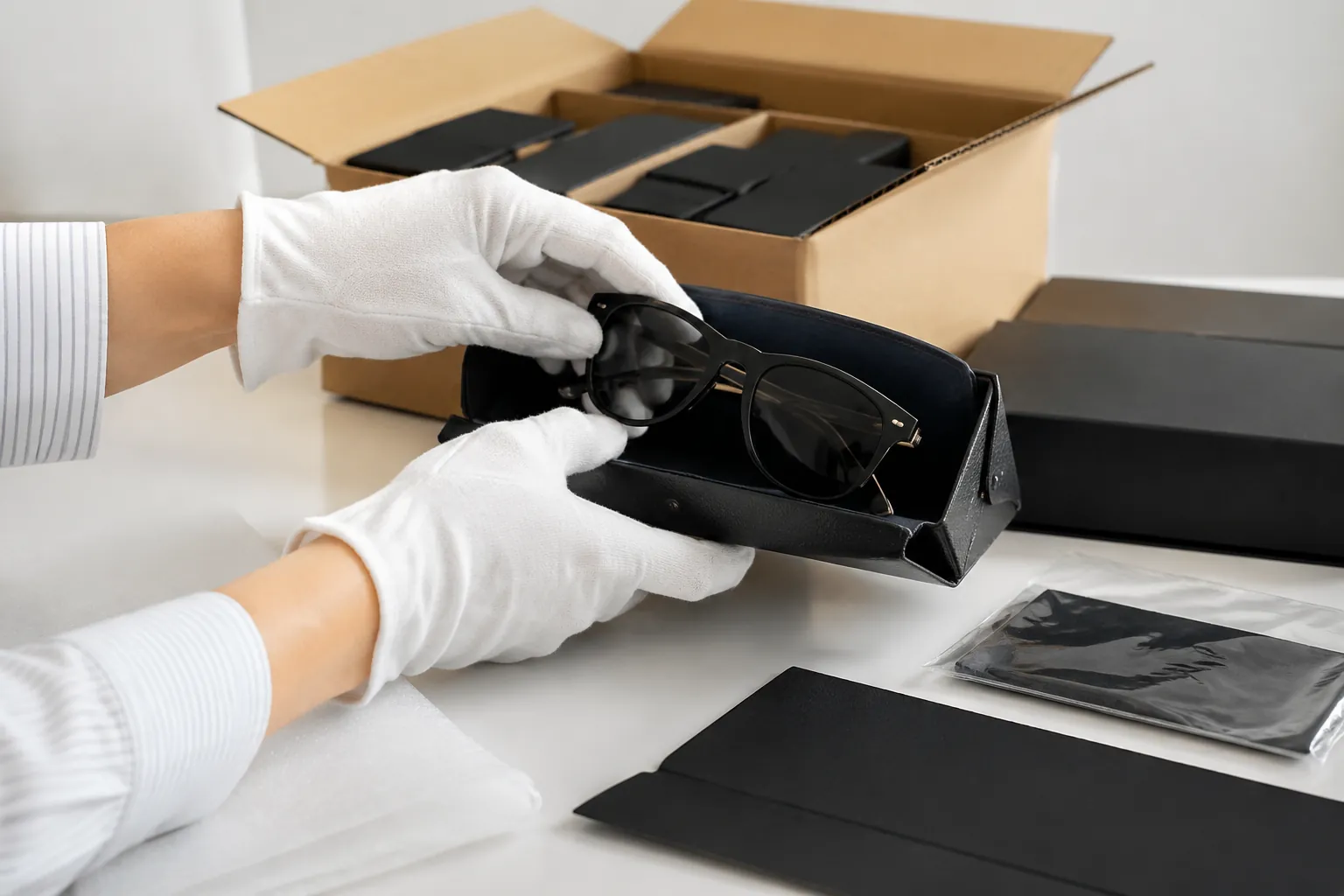
This guide is for eyewear brands, importers, optical chains, and distributors sourcing magnetic clip-on sunglasses for prescription-ready optical frames. The goal is simple: prevent fit complaints, weak-magnet returns, lens color disputes, and late tooling changes. Magnetic clip-ons look easy. They are not. Small errors in bridge geometry, magnet polarity, pocket depth, or lens tint can turn a good-looking sample into a hard-to-sell product. Treat the base frame, clip-on front, magnets, lenses, and packaging as one engineered system. Do not buy them as isolated parts.
Start With the Use Case, Not the Magnet
A magnetic clip-on sunglass is two products sold together: an optical-compatible base frame and a removable sun front. If the base frame is uncomfortable, hard to glaze, or too thin around the magnet pocket, the clip-on cannot fix it. Start with how the product will be sold and used.
For optical retail, the base frame must accept prescription lenses without excessive stress during edging and glazing. For fashion retail, the clip-on appearance may carry more of the sale, but customers will still reject a front that rattles, sits crooked, or leaves a bright gap. For online DTC, tolerance control matters even more. The customer cannot try the frame before shipment.
- Prescription use: confirm whether the base frame is for plano lenses only, low-to-mid prescriptions, or broader RX use. High-wrap shapes and shallow grooves can limit prescription suitability.
- Coverage: the sun front should cover the clear lens area cleanly, with no obvious gap at the bridge, brow, or outer edge.
- Handling: the clip-on should be easy to remove by hand without pulling the optical frame off the wearer's face.
- Packaging: decide early whether the clip-on ships attached, in a pouch, or in a hard case. Loose clip-ons scratch easily during transport and handling.
A capable OEM factory should review the drawing or physical sample for frame thickness, bridge shape, magnet location, lens groove, hinge clearance, and planned lens material before quoting. This avoids a common sourcing mistake: approving a style that looks good in a rendering but cannot hold magnets securely or glaze reliably in production.
Fit Geometry and Magnet Layout Drive Returns
The highest-risk area is alignment between the base frame and the magnetic front. A small bridge error shows on the face. A small mismatch at one endpiece can make the clip-on look tilted, even if the magnets still attach.
Define geometry in the tech pack with measurable tolerances. Do not rely on photos or verbal approval. Ask the supplier to confirm bridge-center alignment, left-right symmetry, magnet pocket location, pocket depth, and the finished gap between the base frame and clip-on front. The approved golden sample should become the physical reference for fit, gap, and removal feel.
Material choice affects the magnet system. Injection-molded TR or PC frames can be repeatable at volume if tooling is stable and magnet pockets are designed correctly. Acetate gives richer color and a premium optical look, but CNC machining, tumbling, and polishing can change final dimensions. Metal frames can look thin and clean, but magnet housings, soldering, plating, and assembly alignment need tighter control.
| Design option | Best use | Main risk | Buyer note |
|---|---|---|---|
| Injected TR/PC base frame with molded magnet pockets | Volume retail and repeat orders | Tooling cost and limited late design changes | Best after the shape, magnet layout, and lens coverage are approved |
| Acetate frame with CNC magnet pockets | Premium optical look and layered colors | Pocket depth and edge profile can shift after polishing | Require a golden sample and in-process pocket-depth inspection |
| Metal optical frame with magnetic sun front | Thin, lightweight styling | Magnet housing alignment, solder quality, and plating finish | Use suppliers with proven metal-frame process control |
| Magnet plus locator bridge or endpiece stop | Driving, outdoor use, online retail | Slightly thicker or more complex front profile | Usually more stable than relying on magnetic force alone |
Never approve a magnetic clip-on from photos alone. Test a physical sample. Open and close the temples. Put it on a face form or wearer. Remove the clip-on from both sides. Check whether the front rocks, slides, or twists. Many defects appear only during handling.
Specify Magnet Strength, Polarity, and Assembly
Magnets are cheap compared with returns, rework, and dead inventory. But stronger is not always better. If holding force is too weak, the clip-on can detach during normal use. If it is too strong, the wearer may pull the optical frame off while removing the sun front. Excess force can also stress thin plastic around the magnet pocket.
Define magnet type, size, coating, polarity map, seating method, pocket depth, and inspection method. Neodymium magnets are common because they deliver strong holding force in a small size. Coating choice should account for sweat, humidity, cleaning chemicals, and destination-market conditions. Nickel-based coatings are common. Epoxy-coated magnets may be useful where higher corrosion resistance is needed.
- Set the polarity map: mark left, right, front, back, and mating direction in the drawing. Wrong polarity can make the clip-on repel or attach unevenly.
- Control pocket depth: magnets should sit flush or slightly recessed, based on the approved sample. A raised magnet can scratch the mating surface and create a visible gap.
- Add locator geometry: bridge tabs, endpiece stops, hidden shoulders, or shallow locating features reduce sliding and rotation. The magnets should not do all the alignment work.
- Test both pull and peel: check straight pull and side-peel removal. Customers usually peel the clip-on from one side, not straight forward like a lab test.
- Run cycle checks: attach and remove the clip-on repeatedly during sampling and pre-shipment inspection to catch loose magnets, adhesive failure, and worn locator points.
Do not treat magnet grade as proof of performance. Real holding force depends on magnet size, air gap, polarity, housing material, coating, adhesive, locator design, and frame stiffness. Ask the supplier to record the approved removal feel and inspection method in the technical file. Then compare bulk goods against the golden sample.
Control Lens Color, Optics, and Decoration
A clip-on program can fail even when the frame fits. Poor sun lenses are easy to see. Left-right color mismatch looks careless. Uneven gradient density looks cheap. Polarized lenses can add value, but only if axis direction, mounting stress, and visual clarity are controlled.
Specify lens material, tint color, visible light transmission category, UV requirement, coating, and whether the lens is plano or prescription. In most magnetic clip-on programs, the sun front uses plano tinted lenses while the base frame is glazed later with prescription lenses by the retailer or optical lab. The plano sun lens still needs consistent optical quality, UV protection, and clean finishing.
- UV protection: require UV400 performance and test documents suited to the destination market.
- Lens category: define the sunglass filter category in the specification. Check local rules before using very dark lenses or promoting lenses for driving.
- Polarized lenses: define axis direction, axis tolerance, and inspection for stress marks after mounting.
- Color control: approve a physical lens master sample. Pantone references are not enough because lens tint, base material, thickness, and coating all affect appearance.
- Edge finish: define edge polish, chamfer, or de-burring requirements to reduce chipping and improve assembly consistency.
Match decoration to the frame material and finish. Pad printing is economical for logos. Hot stamping gives a metallic look but needs adhesion and rub testing. Laser engraving is durable on suitable acetate or metal surfaces. Metal logo plates can increase perceived value, but they require placement control, corrosion checks, and adhesive or mechanical retention testing. Approve decoration on production-equivalent material, not on a flat test plaque.
Compare Cost, MOQ, and Tooling on the Same Basis
Magnetic clip-on sunglasses usually cost more than standard sunglasses. The product includes a base frame, a separate sun front, magnets, extra assembly, and fit inspection. Material is only part of the cost. Alignment, lens coverage, magnet retention, and finish consistency also cost money.
MOQ depends on the project type: existing platform, modified existing frame, or new tooling. A small pilot order can help test the market if the supplier supports it. Expect a higher unit cost and fewer options for color, lens, or packaging. Larger repeat orders give the factory more room to optimize material purchasing, assembly flow, packaging, and inspection.
Before comparing quotations, make sure each quote uses the same frame material, lens type, magnet count, packaging, inspection level, and compliance documents. Otherwise, the cheapest quote may simply be missing work.
Tooling can change both budget and schedule. A magnet-pocket adjustment on an existing platform is very different from a new injection mold, new metal component, or new acetate front profile. Ask whether the quotation includes sample corrections, tooling changes after first trial, logo tooling, packaging tooling, spare magnets, and replacement parts. These items often cause later disputes.
| Cost driver | Lower-cost choice | Higher-cost choice | Buyer impact |
|---|---|---|---|
| Frame material | Injected PC or TR | Acetate or metal | Acetate and metal can improve perceived value but usually need more process control |
| Magnet system | Simple two-point attachment | Multiple magnets plus locator features | More stable fit can reduce complaints but adds assembly and inspection work |
| Lens | Solid smoke or brown tint | Polarized, gradient, mirror, or specialty coating | Higher retail value requires tighter color, coating, and optical checks |
| Branding | Pad print logo | Laser engraving, hot stamping, or metal logo plate | Premium branding adds placement, adhesion, and finish-control requirements |
| Packaging | Polybag and soft pouch | Rigid case with insert or custom retail pack | Better protection and presentation can increase freight volume and packaging cost |
Do not cut magnet, locator, or QC requirements just to hit a target unit price. A small factory saving can become expensive if it causes replacements, chargebacks, customer-service time, or returned inventory.
Use Sampling and QC to Catch Real Problems
Lead time depends on material availability, tooling status, lens type, packaging, and sample corrections. Existing platforms with color, logo, or lens changes are usually faster than new tooling projects. New injection tooling, metal components, acetate profile work, special plating, polarized lenses, and custom packaging can all extend the schedule.
Ask the supplier for a written timeline. Break it into sample making, sample correction, material preparation, bulk production, inspection, and packing. Vague dates are risky. So are promises that ignore approval time.
A disciplined program needs more than one reference sample. The development sample proves the concept and geometry. The golden sample locks the approved fit, appearance, clip-on feel, and coverage. A color or finish master controls lens tint, frame color, gloss, logo placement, and packaging appearance. Without these references, production decisions become subjective. Disputes get harder to settle.
QC should not be generic sunglass QC. Ask for a magnetic-specific checklist that covers polarity verification, magnet seating, attachment and removal checks, locator fit, left-right symmetry, lens coverage, frame rocking, temple function, screw tightness, lens scratches, and packaging protection. Inspection should compare bulk goods against the approved golden sample, not only against a written description.
For compliance, match documents to the sales market. Common references include CE with EN ISO 12312-1 for Europe, ANSI Z80.3 and FDA registration where applicable for the U.S., AS/NZS 1067 for Australia and New Zealand, and REACH for restricted substances in markets that require it. Factory management documents such as ISO 9001 or BSCI can support supplier evaluation, but they do not replace product-specific lens and sunglass compliance testing.
Pre-PO Checklist: Lock the Spec Before You Order
Before issuing a purchase order, freeze the details that cause disputes later. Use a short written specification with drawings, photos, approved samples, and test requirements. Do not rely on a long message history.
| Item to confirm | What to write in the PO or tech pack | Why it matters |
|---|---|---|
| Base frame | Material, size, color code, hinge type, lens groove, RX suitability | Controls glazing, comfort, and optical retail expectations |
| Clip-on front | Material, coverage, magnet count, locator design, finished gap reference | Prevents crooked, loose, or visibly mismatched attachment |
| Magnets | Type, size, coating, polarity map, seating depth, retention method | Reduces assembly errors, corrosion risk, and loose-magnet claims |
| Lenses | Approved color sample, filter category, UV400, polarized or non-polarized, coating | Controls compliance, visual consistency, and retail positioning |
| Branding | Pad print, hot stamping, laser engraving, or metal logo plate with position tolerance | Avoids off-center logos, poor adhesion, and rework |
| Packaging | Pouch, case, insert, barcode, carton marks, clip-on protection method | Protects the sun front and supports receiving at destination |
| Inspection | AQL plan if used, functional tests, golden sample, compliance documents | Defines acceptance criteria before shipment |
If you are testing the category, keep the first program simple: one proven base frame, one stable magnet layout, and one or two lens colors. If you are building a chain-store or distributor program, approve the golden sample first. Then scale with locked tooling, packaging, and QC instructions.
Practical rule: approve magnetic clip-ons by hand feel as well as appearance. Fit, sound, removal force, lens coverage, and repeat attachment decide whether the product feels reliable to the customer.
Have a custom sunglasses project in mind?
Send us your styles, target market and quantities and we will return a detailed quote with MOQ, lead time and a sample plan.
Get a QuoteWhy source this from Wenzhou with LumiShades
Wenzhou in Zhejiang Province is widely regarded as China’s eyewear manufacturing capital, producing a large share of the world’s sunglasses. That concentration matters to buyers: a deep local supply chain for acetate sheet, hinges, lens blanks, plating and packaging means shorter component lead times, easier color and material matching, and a workforce with decades of eyewear-specific skill. LumiShades has manufactured in this ecosystem since 2009, and our vertical integration — in-house injection molding, acetate cutting, CNC milling, lens tinting, decoration and quality control — means no part of your order is quietly subcontracted to a workshop you cannot audit.
For international buyers, that vertical control translates into accountability. When a single factory owns every step, defects are traced and fixed at source rather than bounced between vendors, and your specifications survive intact from first sample to bulk. We back this with 15+ years of experience, shipments to 60+ countries, more than 5 million pairs produced per year and a 98.5% on-time delivery rate. Our certifications — CE EN ISO 12312-1, FDA registration, ANSI Z80.3, AS/NZS 1067, REACH, ISO 9001 and BSCI audit — mean the compliance documentation your market requires already exists. Explore our manufacturing capabilities and quality control process to see how this works in practice.
Frequently asked questions
Can magnetic clip-on frames be used for prescription lenses? Yes, if the base optical frame is designed for glazing. Before ordering, confirm lens groove depth, frame curve, lens shape, bridge fit, rim strength, and material suitability with the factory or optical lab. The clip-on sun front is usually plano. The base frame receives the prescription lenses later.
What MOQ should we choose for a first magnetic clip-on order? Choose the lowest MOQ that still uses production-equivalent materials, magnets, lenses, and packaging. A pilot order is useful for checking sell-through and return reasons, but it should not use shortcuts that differ from bulk production. For scaling, approve a golden sample first and confirm the supplier can repeat the same magnet layout, lens tint, and packaging.
How do we reduce the risk of weak magnets or crooked clip-ons? Put the magnet system in the tech pack. Specify magnet type, size, coating, polarity map, seating depth, retention method, and locator design. Approve a physical golden sample. Then require final inspection for polarity, alignment, rocking, peel removal, straight pull feel, repeated attachment, and visible gap against the approved sample.
Which compliance documents should we request? Request documents that match your destination market and sales channel. Common references include CE with EN ISO 12312-1 for Europe, ANSI Z80.3 and FDA registration where applicable for the U.S., AS/NZS 1067 for Australia and New Zealand, and REACH for restricted substances. ISO 9001 and BSCI can support supplier assessment, but they do not replace product-specific compliance testing.
Are polarized magnetic clip-ons worth the extra cost? They can be worthwhile for driving, outdoor, fishing, and premium retail positioning. Before approval, check polarization axis direction, axis consistency, lens clarity, stress marks after mounting, and color match between left and right lenses. Ask for a production-equivalent lens sample, not a catalog photo.
How long does OEM production usually take? Timing depends on whether the project uses an existing platform or new tooling. Ask the supplier to break the schedule into sample development, sample correction, material preparation, bulk production, inspection, and packing. Do not start bulk production until the golden sample, lens color, logo placement, packaging, and compliance requirements are approved in writing.
Ready to start?
Explore our shield & oversized sunglasses or request a quote — our sales team replies within 12 hours.
Request a Quote