
How to Write a Sunglasses RFQ for Factory Quotes
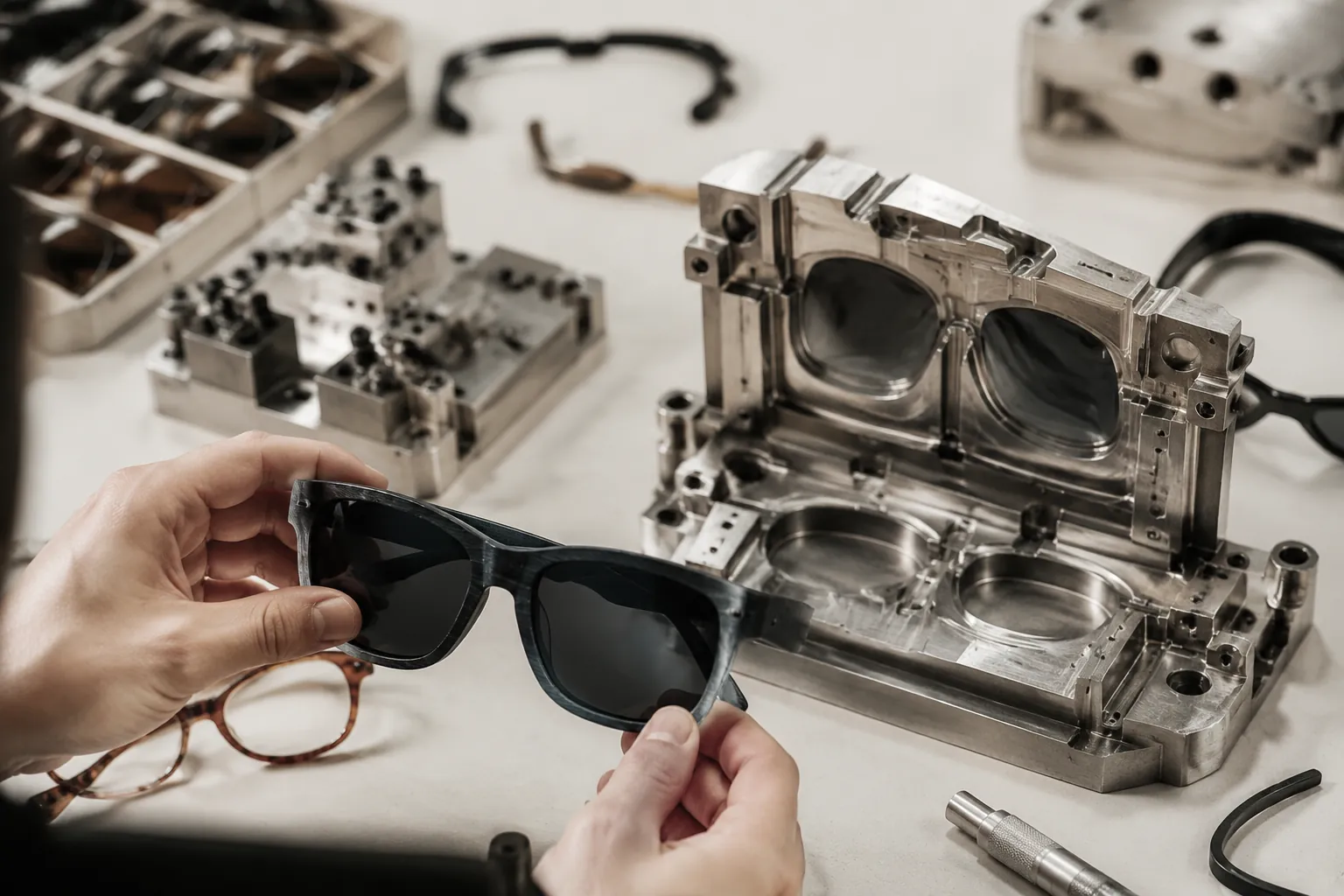
If you buy sunglasses for a brand, importer, distributor, or retail program, a weak RFQ wastes time and hides cost. Factories may quote different frame materials, lens grades, logo methods, packaging assumptions, test reports, and lead times. Then you spend days comparing numbers that do not mean the same thing. A strong RFQ forces apples-to-apples quoting. It defines the product, quantity logic, inspection standard, and compliance market before anyone talks about price. It also exposes hidden costs such as mold fees, logo tooling, decoration setup, packaging labor, and third-party testing before you approve a sample order.
Define the product before asking for a price
Do not start with target price. Start with the product itself. If the request only says polarized sunglasses with logo, every factory will fill in the blanks differently.
State the frame construction, material, lens type, size range, target user, and destination market. Be specific. A factory cannot quote accurately without that base.
Material choice changes tooling, labor, yield, and lead time. A TR90 injection frame usually needs mold tooling, color masterbatch control, shrinkage allowance, and gate-mark management. Acetate is different. The factory cuts sheet material, CNCs the shape, tumbles, hand-polishes, installs hardware, and adjusts temple alignment. Metal frames add forming, soldering or brazing, plating, nose pad assembly, and corrosion control.
RFQ rule: define the build first. Then ask for price.
At minimum, identify frame material, lens material, lens function, frame size, hinge type, logo position, packaging level, target market, and expected order volume. If the product is for the EU, US, Australia, or several markets, say so. Testing and labeling change the real landed cost.
Use measurable specs, not vague notes
Factories quote faster when the RFQ reads like a spec sheet. Use one core page for the product. Attach drawings, reference photos, Pantone targets, packaging artwork, and benchmark sample notes. Keep it concrete.
Replace subjective wording with measurable instructions. Matte black should include a finish reference or gloss range if appearance matters. Smoke lens should include a visible light transmission target if that is the retail claim.
A practical sunglasses RFQ spec sheet should include:
- Frame material: TR90, PC, acetate, stainless steel, aluminum, or mixed material
- Frame finish: glossy, matte, rubberized soft-touch, transparent, tortoise, plating, or painting
- Lens material: TAC polarized, PC, nylon, CR39, or acrylic, with thickness target
- Lens function: UV400, polarized, mirrored, gradient, photochromic, anti-reflective, hydrophobic, or scratch-resistant
- Lens category or VLT target: for example category 2, category 3, or a specific transmission target
- Dimensions: frame width, bridge, temple length, lens width, lens height, and base curve
- Hardware: screw hinge, spring hinge, flex hinge, pin hinge, or custom hinge
- Logo method and size: pad print, laser engraving, hot stamping, metal badge, injected logo, or temple inlay
- Packaging: polybag, microfiber pouch, EVA case, paper box, insert card, barcode label, and outer carton quantity
- Compliance target: CE EN ISO 12312-1, ANSI Z80.3, FDA registration support, AS/NZS 1067, REACH, ISO 9001, BSCI, or other requested documents
If you do not have a full CAD drawing, send a reference sample and mark what must match. For example: temple length 145 mm fixed, lens shape flexible within a narrow tolerance, logo position fixed, packaging open to supplier recommendation. That prevents unnecessary rework.
Separate required items from optional upgrades
Buyers often mix must-haves with nice-to-haves. The result is messy quotes. Split the RFQ into mandatory requirements and optional add-ons. The factory should quote the base product first, then price each upgrade separately.
For example, UV400 protection may be mandatory, while polarized lenses, mirror coating, a spring hinge, and an EVA case may be optional. A metal logo plate is not a small change. It can require tooling, plating, adhesive or rivet assembly, extra QC, and more scrap if the badge is misaligned. Mirror coating also changes the process. Pinholes, color variation, and coating scratches show more easily than on a standard smoke or brown lens.
Use a simple structure:
- Base model: frame material, shape, size, lens color, hinge type, and one logo method
- Functional requirements: UV protection, polarization, impact target, scratch resistance, and lens category
- Compliance requirements: exact standards for the destination market
- Packaging requirements: retail box, pouch, hangtag, barcode label, carton marks, and drop-test expectation if needed
- Optional upgrades: mirror lens, gradient tint, anti-reflective coating, spring hinge, metal logo plate, custom pouch color, or premium case
This keeps suppliers quoting the same base model. It also shows the real cost of each option. No guesswork.
Use a comparison table to control assumptions
One good comparison table can save several email rounds. It forces every supplier to price the same build level and makes hidden cost jumps obvious. Use columns for base, upgraded, and retail-ready versions. Ask the factory to state whether tooling, packaging, and testing are included.
| RFQ item | Base version | Upgraded version | Retail-ready version | Cost or lead-time impact |
|---|---|---|---|---|
| Frame material | TR90 injection, black color | TR90 with soft-touch coating | Acetate sheet, polished finish | Acetate typically requires more manual finishing than injection-molded TR90 |
| Lens function | UV400 smoke PC lens | TAC polarized lens, category 3 | Polarized + mirror coating | Mirror coating can increase QC scrutiny for scratches, pinholes, and coating consistency |
| Logo method | One-color pad print on temple | Laser engraving on temple | Metal logo plate or temple inlay | Badge tooling and assembly can add setup cost and sampling time |
| Packaging | Polybag + bulk carton | Microfiber pouch + inner box | Retail box + barcode + instruction card + master carton label | Retail packing adds material cost, packing labor, and carton volume |
| Inspection level | Factory final inspection | AQL inspection before shipment | AQL + third-party test report review | More inspection reduces shipment risk but adds time and service cost |
Ask every factory to quote against the table and confirm the price basis. Is the price EXW, FOB, or CIF? Does it include logo setup, sample freight, third-party testing, retail cartons, barcode labels, and spare parts? Are duties, courier charges, and bank fees excluded? Ask now. Not later.
Write down MOQ, tiers, sampling, and tooling
Do not let MOQ turn into a vague conversation. In sunglasses sourcing, MOQ can mean MOQ per model, per color, per lens color, per logo version, or per packaging version. A supplier may accept 50 pairs per design for a small OEM run, but the pricing will not behave like a 1,000-pair order.
Ask for a clear pricing ladder. Request sample price, MOQ, and unit prices at 300, 1,000, and 5,000 pairs. Also ask whether the price changes when the same frame uses multiple lens colors or multiple temple logo colors. The point is simple: show how the price changes as volume rises.
Sampling details matter too. Ask whether pre-production samples take 7 to 10 days for existing molds and standard decoration, or longer when new tooling, custom acetate, metal badges, or special lens coatings are involved. Bulk production is often quoted at 25 to 35 days after sample approval and deposit, but that depends on material availability, artwork approval, and production readiness. A hand-polished or hand-painted showroom sample is not enough if bulk goods will be injection molded, spray coated, or machine decorated.
Tooling should be itemized. New injection molds, custom hinge parts, metal logo plates, special retail inserts, and packaging cutting dies may all carry separate charges. Ask whether tooling is refundable after a volume threshold, whether the buyer owns the mold, and how long the factory keeps tooling inactive before storage fees or disposal.
Set tolerances, inspection points, and defect rules
Specific tolerances reduce disputes later. You do not need to over-engineer every consumer sunglass, but you should define what matters for fit, appearance, and safety. Frame width may need a practical tolerance band. Logo placement may need a narrow visual tolerance. Lens fit should not show visible gaps from normal viewing distance.
Ask the factory which QC gates are used before packing. A mature eyewear process normally includes incoming material inspection, in-process frame checks, lens inspection, logo inspection, assembly inspection, cleaning, and final packing inspection. For lenses, relevant checks include scratches, bubbles, specks, coating marks, color consistency, polarization direction, UV performance documentation, and lens edge fit. For frames, checks include warpage, hinge torque, screw tightness, temple alignment, plating defects, coating adhesion, and sharp edges.
Include an AQL expectation if the order is large enough for shipment inspection. Many buyers use general inspection level II with critical defects at 0, major defects around 2.5, and minor defects around 4.0, though your category and retailer rules may differ. Define critical defects such as broken hinge, cracked lens, wrong UV claim, severe sharp edge, or failed compliance label. Define major defects such as visible logo misalignment, lens scratch in the viewing area, uneven temple angle, or wrong packaging. That gives the supplier a measurable standard instead of a vague instruction to check carefully.
State compliance by market and exact SKU
Compliance is where cheap quotes become expensive. State the destination market and ask for the relevant standard set. Do not request random certificates. Ask for documents tied to the exact product configuration you are buying: frame, lens material, lens coating, tint, category, and labeling.
| Market | Typical RFQ request | What to verify |
|---|---|---|
| EU | CE marking, EN ISO 12312-1, REACH support | Lens category, UV claim, warning text, chemical restriction scope, model match |
| United States | FDA registration support and ANSI Z80.3 documentation | Impact, optical properties, labeling, and whether the document applies to sunglasses |
| Australia / New Zealand | AS/NZS 1067 documentation | Lens category, labeling, UV protection, and retail packaging requirements |
| Multi-market program | Combined document pack by SKU | Whether every lens color, mirror coating, and package label is covered |
A claim is not enough. Ask for the test report number, test lab, test date, product description, model or SKU match, lens color, and coating description. If the supplier shows a report for a standard smoke lens but your order uses a blue mirrored polarized lens, confirm whether additional testing is required. Also ask whether the factory can provide ISO 9001 or BSCI if those matter to your sourcing process. Those are company-level documents, not product compliance certificates.
End with a quote format that is easy to compare
The last page of the RFQ should tell the factory exactly how to reply. If every supplier returns a different format, comparison becomes manual work and important exclusions are easy to miss. Require a fixed quote format. Ask the supplier not to substitute materials unless the substitution is clearly labeled.
The returned quote should show unit price by quantity tier, sample price, sample lead time, bulk lead time, tooling charges, decoration setup charges, packaging included, compliance documents available, payment terms, quote validity, and trade term. Also ask for production assumptions: existing mold or new mold, in-house or outsourced lens tinting, in-house or outsourced decoration, and estimated capacity per day after production starts.
Give the supplier one clear instruction: quote one base model first, then list options separately. For example, option A with pad print, option B with laser engraving, option C with metal logo plate, and option D with polarized mirror lens. That keeps the comparison clean and stops a supplier from blending several upgrades into one unclear number.
A strong sunglasses RFQ does more than collect prices. It shows whether the factory can make the same product at scale, within the promised lead time, with the right documents, stable appearance, controlled defects, and packaging your sales channel requires. That is the real decision.
Have a custom sunglasses project in mind?
Send us your styles, target market and quantities and we will return a detailed quote with MOQ, lead time and a sample plan.
Get a QuoteWhy source this from Wenzhou with LumiShades
Wenzhou in Zhejiang Province is widely regarded as China’s eyewear manufacturing capital, producing a large share of the world’s sunglasses. That concentration matters to buyers: a deep local supply chain for acetate sheet, hinges, lens blanks, plating and packaging means shorter component lead times, easier color and material matching, and a workforce with decades of eyewear-specific skill. LumiShades has manufactured in this ecosystem since 2009, and our vertical integration — in-house injection molding, acetate cutting, CNC milling, lens tinting, decoration and quality control — means no part of your order is quietly subcontracted to a workshop you cannot audit.
For international buyers, that vertical control translates into accountability. When a single factory owns every step, defects are traced and fixed at source rather than bounced between vendors, and your specifications survive intact from first sample to bulk. We back this with 15+ years of experience, shipments to 60+ countries, more than 5 million pairs produced per year and a 98.5% on-time delivery rate. Our certifications — CE EN ISO 12312-1, FDA registration, ANSI Z80.3, AS/NZS 1067, REACH, ISO 9001 and BSCI audit — mean the compliance documentation your market requires already exists. Explore our manufacturing capabilities and quality control process to see how this works in practice.
Frequently asked questions
How many details should I include in a sunglasses RFQ? Include enough detail to remove ambiguity: frame material, lens material, lens category or VLT target, size, hinge type, logo method, packaging, destination market, compliance target, MOQ, quantity breaks, tolerances, and inspection expectations. If these inputs are open, the quotes will not match. If you can, attach a reference sample, drawing, or annotated photo so the factory knows exactly what must be matched.
Should I ask for one price or multiple volume tiers? Ask for tiers. A useful RFQ includes sample price, MOQ, and prices at 300, 1,000, and 5,000 pairs. This shows how the supplier's cost changes with volume and makes it easier to compare small-batch versus scalable production quotes. Ask the supplier to state whether each tier includes tooling, packaging, and testing.
What lead times should I request for sunglasses sampling and bulk production? Ask for sample lead time and bulk lead time separately. Existing-mold samples with standard decoration may take about 7 to 10 days, while new tooling, custom decoration, or special lens finishes usually take longer. Bulk production is often quoted at 25 to 35 days after sample approval and deposit, but that depends on materials, artwork approval, and factory capacity. Require the supplier to state any assumptions that affect the timeline.
How do I avoid hidden cost surprises? Ask whether tooling, logo setup, packaging, barcode labels, third-party testing, sample freight, and inspection costs are included. Also confirm whether the quote applies to the exact lens finish, coating, frame color, and decoration method you plan to order. The safest RFQ asks the supplier to list exclusions line by line so nothing is hidden inside the unit price.
Which certifications should I request for sunglasses? Request only the standards relevant to your destination market and product configuration. Common requests include CE EN ISO 12312-1 and REACH support for the EU, FDA registration support and ANSI Z80.3 documentation for the US, and AS/NZS 1067 for Australia and New Zealand. If ISO 9001 or BSCI matter to your sourcing policy, ask for those separately as company-level documents. Confirm that any test report matches the exact lens color, coating, and SKU you are buying.
What tolerances should be included in a sunglasses RFQ? Use practical tolerances for fit and appearance. Define the dimensions that affect wearability and consistency, such as frame width, temple length, bridge fit, lens alignment, and logo placement. For example, request narrow tolerances for visible dimensions and a separate visual standard for gaps, warpage, surface defects, and hinge alignment. The key is to define the accepted range clearly enough that the factory can inspect against it before shipment.
Ready to start?
Explore our cat-eye sunglasses or request a quote — our sales team replies within 12 hours.
Request a Quote