
Split One Sunglasses PO Across 2 Styles Without Losing Price
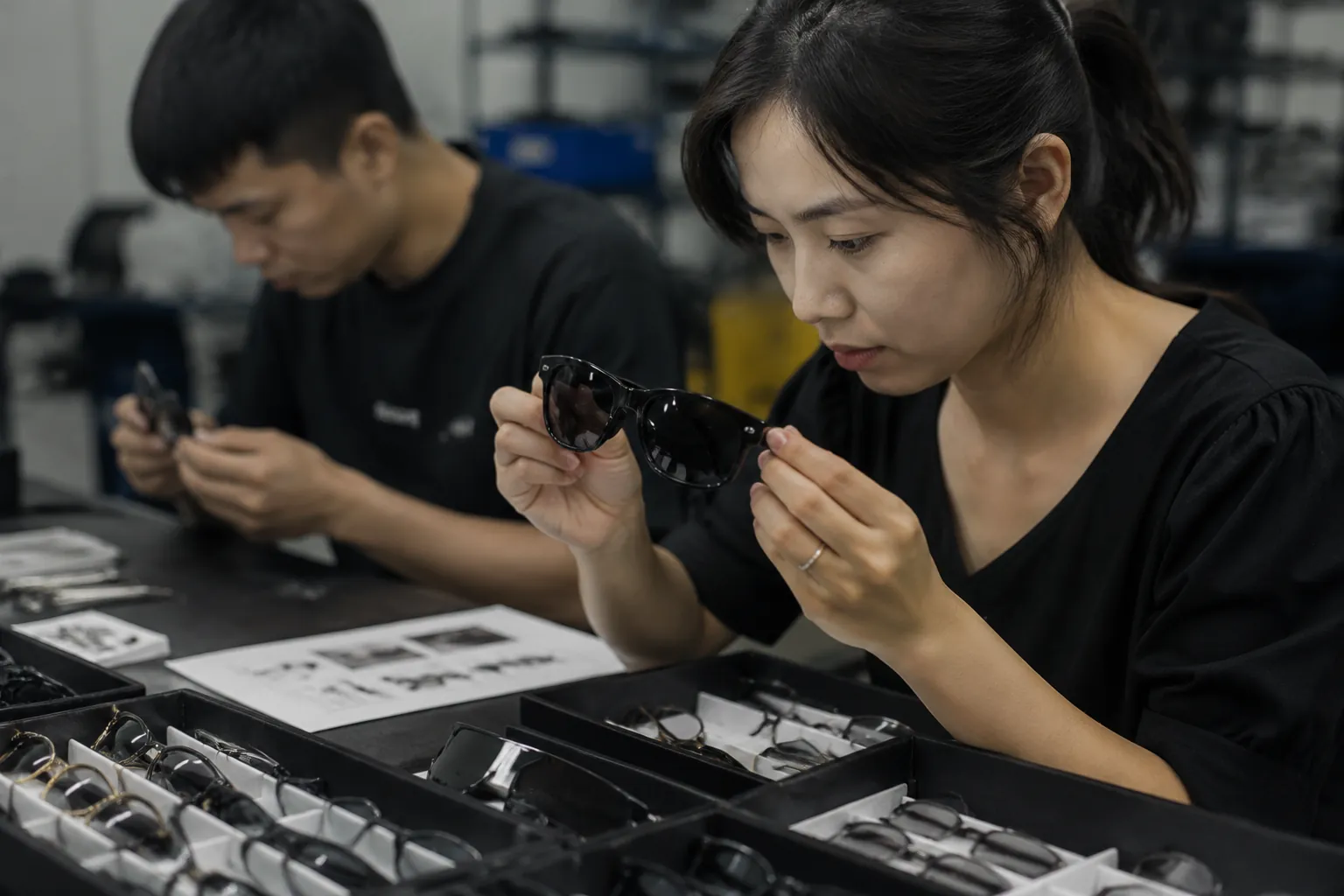
This guide is for buyers who want two sunglasses styles in one order without turning the second style into a margin leak. The right approach is simple: build the split around shared materials, shared process steps, and a clear cost breakdown. Do not treat both styles as separate developments and hope the factory averages the price. If the platform is shared, a supplier may be able to combine resin buying, lens processing, hardware sourcing, decoration setup, and packing logic. If it is not, you are asking for one big-order price on two small jobs. That gap shows up fast in unit cost, approval speed, scrap, and schedule risk.
Start With Cost Drivers, Not Styling
Many buyers split a PO by appearance alone: one square style, one round style, same quantity each, then ask the factory to average the price. Wrong starting point. In sunglasses production, price is driven less by front-view shape than by shared parts, repeated setups, and stable yield.
A two-style order can sometimes be costed like one program. But only if enough cost buckets are shared. If not, it behaves like two lower-volume runs with duplicated overhead. Before talking price, ask the supplier which inputs and which process steps are actually common across both styles.
- Frame material: injected PC, TR90, metal, and acetate each have different purchasing, processing, and yield patterns. Two styles in the same material family are usually easier to combine than two styles in different materials.
- Lens program: the same lens material, base curve, tint, coating, and performance category reduce setup changes. Two styles using the same TAC polarized smoke lens are easier to combine than one polarized style and one fashion gradient style.
- Hardware: shared hinge construction, screw size, and nose pad assembly reduce part variation and simplify assembly control.
- Decoration: pad print, laser engraving, heat transfer, and applied metal logos each need different fixtures, settings, checks, and acceptance standards. Mixed methods add setup burden.
- Packaging: one pouch size, one box format, one barcode logic, and one carton layout help keep packing stable and reduce handling errors.
Ask the factory to split the quote into frames, lenses, hardware, decoration, assembly, and packaging. If the supplier cannot show where the shared savings come from, the blended price is probably not tied to a real production plan.
Use One Platform With Two Looks
The safest mixed-style PO is built on one manufacturing platform. In practice, that usually means the same material family, the same lens specification, the same hinge construction, and the same branding method. Then you change the front shape, bridge feel, or temple profile enough to create a different retail look.
For example, Style A might be a rectangular injected frame and Style B a softer navigator shape. If both use injected fronts and temples, the same TAC polarized category 3 smoke lenses, the same hinge type, and the same temple logo method, the supplier has a real basis for shared pricing. Resin, hardware, lens processing, and decoration all stay aligned.
A much harder split is one injected style plus one acetate style. They may look close at retail. The factory still sees different raw materials, different machine routes, different finishing labor, and different yield assumptions. Acetate parts lose material through CNC milling, beveling, tumbling, hand polishing, and fitting. Injected parts depend more on tooling stability, shrinkage control, and cooling consistency. Those cost structures are not interchangeable.
| Order Structure | Shared Elements | Typical Cost Effect | Lead-Time Effect |
|---|---|---|---|
| Two injected styles, same lens and logo | Resin family, lens run, hinge, decoration | Best chance to retain shared-cost logic | Usually the most stable |
| Two acetate styles, same hardware and lens | Lens, hinge, core parts, logo plate | Can work if acetate yield and color matching are manageable | Moderate risk if finishing standards are strict |
| One injected style, one acetate style | Sometimes lens and packaging only | Weak price protection because process routes differ | Higher scheduling risk |
| Two styles with different lens colors and branding methods | Maybe packaging only | Limited shared-cost benefit | More setup changes and approvals |
If your goal is to protect unit price, change the appearance around the platform. Not the other way around.
How MOQ Really Combines
MOQ is not one clean number. It sits on top of material minimums, hardware lot sizes, lens setup, packaging purchase requirements, and expected yield. That is why two styles may be combined on paper but still priced like separate small runs.
Buyers usually have three workable structures:
- Hard design split: for example, an even quantity split between Style A and Style B. This works best when the styles are close in material and process route.
- Master material buy: one total purchase volume for shared resin, shared lens specification, and common packaging, with finished goods split by style later. This often protects cost better than a simple quantity split.
- Hero-and-support model: one main style carries most of the volume while the second style tests a variant on the same platform. This usually makes cost allocation easier because the larger style absorbs more setup burden.
The logic is simple. If the factory needs one lens program, one hardware purchase plan, one decoration route, and one packaging order for both styles, the second style may add limited overhead. If it needs separate lens specs, separate decoration methods, and separate packing flows, the combined MOQ is mostly administrative. Not economic.
Watch sub-run fragmentation. A PO can look healthy at total quantity, then turn inefficient after it is split by style, color, barcode version, channel pack, or compliance label. Every extra split adds handling, raises picking risk, and weakens the value of the headline volume.
Do not force different compliance targets, separate logo tooling, or materials with very different scrap rates into one price model. A black injected style and a laminated acetate style do not consume labor in the same way, even under one PO.
Shared Parts That Actually Move Price
Some shared parts matter a lot. Others barely move the number. Focus first on the items that change purchasing scale, setup frequency, and defect risk.
- Lenses: one lens material and one tint across both styles can reduce process changes in tinting, coating, edging, and inspection.
- Hinges and screws: using the same hinge construction and screw specification simplifies assembly and spare-part control.
- Temple cores or inserts: in acetate styles, shared metal cores can reduce small-lot hardware issues and help keep balancing consistent.
- Applied logo components: if both styles use the same metal logo plate size and fixing method, the factory may be able to reuse fixtures and combine part purchases.
- Packaging set: one pouch, one box, one insert, and one carton layout will not transform cost on its own, but it helps protect margin at lower volumes.
Decoration needs discipline. Pad printing is often easier to set up on suitable flat areas, but curved or textured surfaces can hurt edge definition and increase rejects. Laser engraving is usually more repeatable when surface finish and color contrast are suitable, but visibility still depends on substrate and settings. Applied metal logos create a stronger retail look, but they also add component sourcing, placement labor, fixing checks, and more cosmetic inspection.
If the goal is to keep the second style affordable, do not add a new decoration route just to make it feel different. Change shape, color, or temple profile first. Change expensive parts last.
Lead Time Follows Process Gates
Buyers see one ship date. The factory sees gated operations. Whether lead time holds depends on how far the two styles can move together through engineering, purchasing, production, inspection, and packing.
For injected styles, the route usually includes tooling confirmation where needed, raw-material allocation, molding, trimming, lens fitting, branding, assembly, QC, and packing. For acetate, the route usually includes sheet selection, CNC cutting, shaping, tumbling, hand polishing, frame fitting, lens fitting, decoration, assembly, QC, and packing. On paper, lead times may look similar. In practice, acetate usually carries more finish variation and more labor-sensitive steps.
Tolerances matter. If two styles are supposed to share a lens platform, confirm lens size, base curve, edge profile, groove design, and fitting tolerance in drawings and sample review. A shared lens concept only works if the fit is controlled tightly enough for both models. Variation in acetate after polishing, or in injected parts after cooling, can change insertion force and create fitting stress, especially on polarized lenses.
| Stage | What Helps Sharing | Risk When Split Logic Is Weak |
|---|---|---|
| Sample making | Same lens and same logo method reduce approval loops | Extra revisions, re-sampling, and separate sign-offs |
| Material preparation | Shared resin or lens buying can simplify availability planning | Small-lot shortages and color mismatch risk |
| Decoration | One process and one fixture logic keep flow more stable | Separate fixtures, checks, and yield loss |
| Assembly and fit | Common hardware and controlled lens geometry help line consistency | More rework from hinge or fit variation |
| Bulk production | More predictable line loading and QC sequence | Scheduling breaks and delayed packing completion |
On-time delivery is mostly won in pre-production. Freeze the lens. Freeze the logo method. Freeze the packaging. Make sure shared parts are truly shared. That does more for delivery reliability than pushing for a tighter ship date after the PO is issued.
Compliance Can Force A Real Cost Split
Not every mixed-style order should be combined, even when the frames look similar. Compliance can break the sharing logic. If one style is for general EU retail and the second is for a market or channel with different lens or labeling requirements, the lens program may need to split.
Align compliance requirements during RFQ, sampling, and PO issue. Do not assume one lens specification covers every destination. State the applicable requirement clearly by SKU.
- CE EN ISO 12312-1: commonly referenced for sunglasses sold into EU-related markets, including transmittance categories and general performance requirements.
- ANSI Z80.3: commonly used as a US reference standard for nonprescription sunglass performance.
- AS/NZS 1067: relevant for Australia and New Zealand, where classification and labeling requirements may differ.
- REACH: relevant for restricted-substance control in materials, coatings, and decorations entering the EU.
- FDA registration: not a substitute for sunglass performance testing or the applicable market standard.
- ISO 9001 and BSCI: these relate to management systems and social compliance, not product performance. Useful in supplier assessment. Not a replacement for lens or frame compliance requirements.
If Style A uses a category 3 smoke lens and Style B needs a lighter fashion tint, a different labeling route, or different test support, ask for the split cost directly. Better to see the real separation early than accept an artificial average price and argue after sample approval.
A PO Structure Buyers Can Use
If you want two styles and still expect the factory to protect pricing, write the PO so the shared logic is explicit. Do not leave sourcing, engineering, and production teams to guess from images and one quantity line.
A practical PO structure looks like this:
- State total program volume: write the total pair count for the full order.
- State style split: show the quantity by style and, if relevant, by color.
- List mandatory shared parts: identify the lens specification, hinge type, screw specification, pouch, box, and any other components that must remain common.
- List controlled differences: specify which elements may vary, such as front shape, temple silhouette, frame color, or logo position.
- Lock the decoration method: define one branding process for both styles unless a separate option is quoted and approved.
- Define compliance by SKU: state which standard, labeling route, and test support apply to each style before bulk release.
- Approve a golden sample: keep one approved sample per style plus one approved reference for shared lens and branding details.
Also ask for a plain-language cost split and which items are being combined for purchasing. That gives the supplier a clean costing framework and gives the buyer something concrete to check if later charges appear.
Simple rule: if the second style changes material, lens, hardware, decoration, and compliance target at the same time, it is not really sharing the order. Price it as a separate job.
Where Buyers Usually Lose Money
Most pricing mistakes happen before production starts, not in the last round of negotiation. The usual problem is simple: the buyer wants more variety but does not control the variables that make variety expensive.
- Too many colorways: every added color creates smaller sub-runs, more material separation, and more packing complexity.
- Late branding changes: switching from one logo method to another after sampling changes sourcing, fixtures, labor, and approval timing.
- Different packaging by channel: separate barcode layouts, warning labels, or printed box versions slow the packing line and increase error risk.
- Weak lens-fit validation: a shared lens concept only saves money if groove dimensions, base curve, and insertion fit are controlled for both styles.
- Keeping a weak second style: if the support style does not improve margin, channel access, or assortment strategy, it may not justify the added complexity.
Be direct about tolerances and process behavior. Acetate and injected frames do not behave the same way. Acetate can move during polishing, heating, and fitting. Injected parts can stay highly consistent when tooling and process control are stable. If two styles are supposed to share a lens platform, confirm that with drawings, fitted samples, and approval records. Do not rely on a verbal promise.
The best mixed PO is usually simple inside and different outside. That is how buyers widen assortment without quietly paying for two separate production programs.
Have a custom sunglasses project in mind?
Send us your styles, target market and quantities and we will return a detailed quote with MOQ, lead time and a sample plan.
Get a QuoteWhy source this from Wenzhou with LumiShades
Wenzhou in Zhejiang Province is widely regarded as China’s eyewear manufacturing capital, producing a large share of the world’s sunglasses. That concentration matters to buyers: a deep local supply chain for acetate sheet, hinges, lens blanks, plating and packaging means shorter component lead times, easier color and material matching, and a workforce with decades of eyewear-specific skill. LumiShades has manufactured in this ecosystem since 2009, and our vertical integration — in-house injection molding, acetate cutting, CNC milling, lens tinting, decoration and quality control — means no part of your order is quietly subcontracted to a workshop you cannot audit.
For international buyers, that vertical control translates into accountability. When a single factory owns every step, defects are traced and fixed at source rather than bounced between vendors, and your specifications survive intact from first sample to bulk. We back this with 15+ years of experience, shipments to 60+ countries, more than 5 million pairs produced per year and a 98.5% on-time delivery rate. Our certifications — CE EN ISO 12312-1, FDA registration, ANSI Z80.3, AS/NZS 1067, REACH, ISO 9001 and BSCI audit — mean the compliance documentation your market requires already exists. Explore our manufacturing capabilities and quality control process to see how this works in practice.
Frequently asked questions
Can I combine two frame colors of the same style to reach a better price break? Often yes, if the frame material, lens specification, hardware, decoration method, and packaging stay the same. But each added color still creates smaller sub-runs and more material separation. Ask the factory for a cost table showing whether price changes by total quantity only or by quantity per color. Also confirm whether any color needs separate matching, extra scrap allowance, or separate packing labels.
Will a factory count two different styles as one MOQ? Sometimes, but only when the main cost drivers are genuinely shared. Ask the supplier to confirm in writing which items are combined: frame material, lens specification, hinge type, logo method, and packaging. Then ask what costs are still charged by style. If the supplier can combine quantity only on paper but not purchasing or production steps, the MOQ may be merged administratively without protecting unit price.
What order split is safest if I want one main style and one test style? A hero-and-support split is usually the safest option. Put most of the volume on the proven style and keep the test style on the same platform: same lens, same hardware, same decoration method, and same packaging. In the RFQ, ask the factory to quote the support style both as part of the combined program and as a standalone run. That comparison shows whether the test style is really benefiting from shared cost logic.
Does sharing lenses between two styles create fit problems? It can. Shared lenses only work when both frames are engineered around compatible lens size, base curve, edge profile, groove geometry, and fitting tolerance. Ask for the lens drawing, the frame groove drawing, and fitted samples for both styles before bulk approval. If one style is acetate and the other is injected, review fit even more carefully because the materials behave differently during finishing.
Should I mix compliance targets in one PO? You can, but only if the SKU requirements are written clearly from the start. List the applicable requirement by style, such as CE EN ISO 12312-1, ANSI Z80.3, or AS/NZS 1067, and confirm whether one lens construction and one labeling format cover both channels. If not, ask the supplier to split cost, testing support, and lead time by SKU before sample approval. Also keep product compliance separate from supplier credentials such as ISO 9001 or BSCI so the buying team does not confuse factory qualification with product conformity.
Ready to start?
Explore our shield & oversized sunglasses or request a quote — our sales team replies within 12 hours.
Request a Quote