
How to Specify UV400 for Accurate Sunglasses Quotes
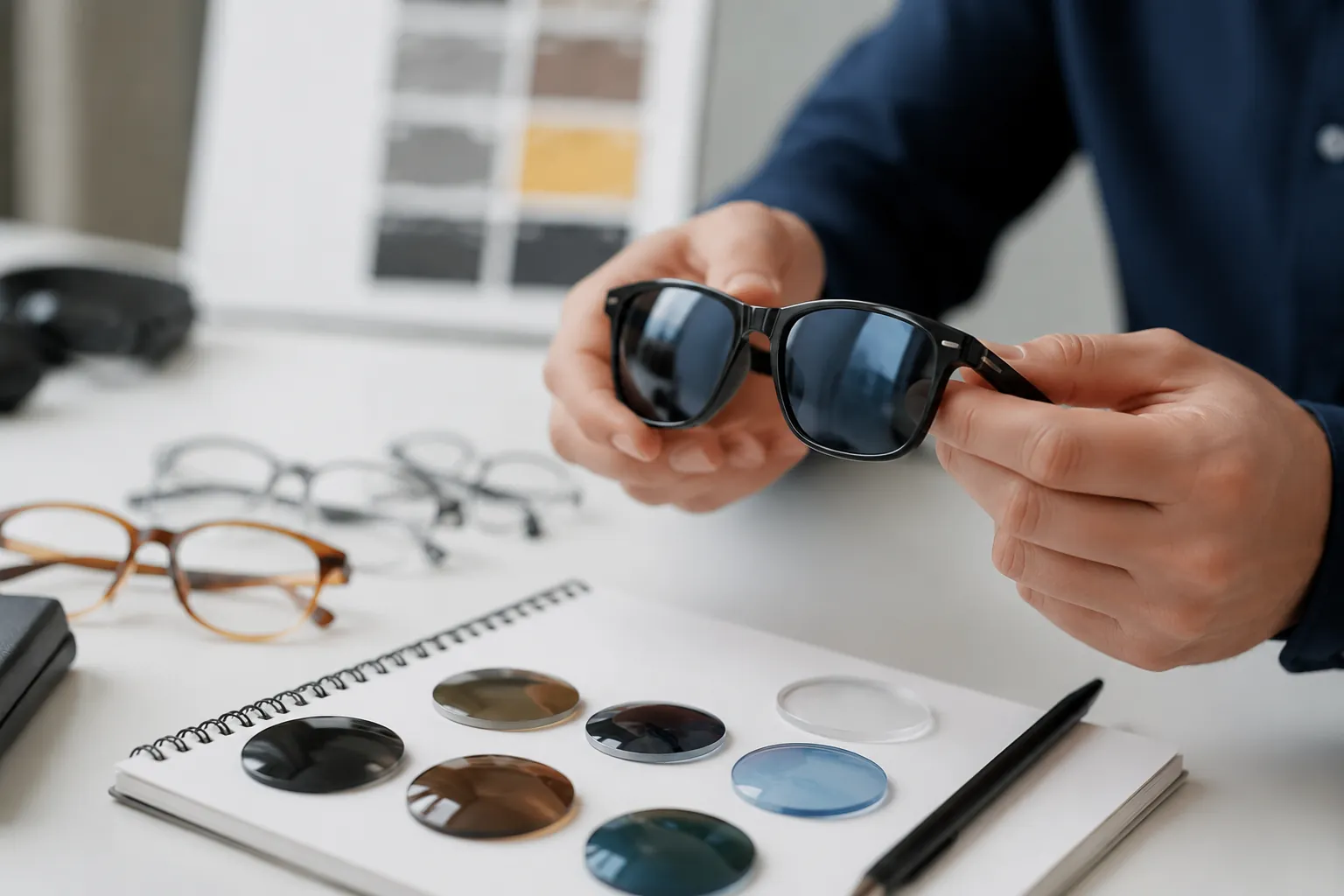
This guide is for brand owners, importers, and retail buyers who need custom sunglasses quoted correctly from the start. "UV400" sounds precise. It is not enough. On its own, it does not define lens material, whether UV protection is inherent or treated, which market standard applies, what visible light category is required, or what test evidence the supplier must provide. That gap causes bad quotes, mismatched samples, late retesting, and compliance risk. The fix is simple: specify UV protection together with lens construction, tint or category, target market standard, and testing expectations before sampling starts. Do that early, and the quote, sample, and bulk order have a much better chance of staying aligned.
Why a one-line "UV400" request creates quote errors
Many RFQs say only Need UV400 sunglasses. That is too vague for sourcing and compliance. UV400 is commonly used to describe ultraviolet protection up to 400 nm, but it does not tell the factory what lens to build, what standard to test against, or what cosmetic result must be repeated in production.
So factories guess. Different guesses create different quotes.
- One factory may assume non-polarized polycarbonate lenses with UV protection built into the material.
- Another may assume TAC polarized lenses because some buyers use "UV400" when they actually want glare reduction too.
- A third may quote only internal transmission testing, while another includes outside testing to EN ISO 12312-1, ANSI Z80.3, or AS/NZS 1067.
The problem is not only price. A loose specification also leaves room for substitution later. A dark smoke sample may look fine. But if the approved sample is not tied to material, polarization status, coating, visible light category, and test basis, bulk production may not match the same technical build.
Appearance approval is not lens approval. A useful lens specification must survive sampling, production, and final inspection.
Write UV400 as a lens specification, not a slogan
For cleaner quotes, write the UV requirement as a five-part specification: lens construction, UV requirement, target standard, appearance category, and proof method. That gives the factory a pricing basis. It also gives your QC or compliance team something to verify.
- Lens construction: state material and nominal thickness where relevant, such as polycarbonate, TAC polarized, AC, nylon, or CR-39.
- UV requirement: specify UV400 or the exact ultraviolet transmittance requirement used by your compliance team.
- Applicable standard: identify the sales market, such as CE EN ISO 12312-1, ANSI Z80.3, AS/NZS 1067, or a defined multi-market requirement.
- Lens appearance: define solid, gradient, mirrored, polarized or non-polarized, plus visible light category or target transmission if needed.
- Proof: require factory test data and state whether third-party testing is required on development samples, production samples, or retained shipment samples.
A usable RFQ line looks like this: Polycarbonate sunglass lens, smoke tint, non-polarized, UV400, intended for adult general-use sunglasses, compliant with CE EN ISO 12312-1; quote ANSI Z80.3 as an option; provide factory production test report before shipment.
That sentence removes guesswork. It also reduces the risk that the sample looks right but the bulk lens is made differently.
If appearance consistency matters, say how the production lens will be matched. Require the supplier to match the approved sample under agreed lighting conditions. Keep a signed approval sample or sample board for lens tint, frame color, logo position, and packaging reference.
Lens choices that change cost, durability, and timing
UV protection is not the same as lens darkness. A clear or lightly tinted lens can still block UV if the material or treatment is correct. Cost and production time usually change because of the lens construction.
| Lens option | How UV400 is usually achieved | Typical thickness / construction | Typical buyer use | Cost effect vs basic tinted PC | Main quote risk if unspecified |
|---|---|---|---|---|---|
| Polycarbonate non-polarized | UV-blocking performance is typically built into the lens material | Varies by design and factory process | Fashion, promotional, retail private label | Baseline in many programs | Low to medium; tint, curve, coating, and thickness still affect price |
| TAC polarized | Polarizing laminate with UV-protective lens construction | Multi-layer laminated construction | Driving, outdoor, premium fashion | Usually higher | High; buyers often omit polarization and receive the wrong quote basis |
| AC lens | Depends on material and lens treatment | Varies by factory and design | Entry-level programs, simple frames | Can be lower or similar in entry-level builds | Medium; impact and durability expectations must be agreed clearly |
| Nylon lens | UV control through material formulation | Varies by performance design | Sport-influenced or lightweight premium styles | Usually higher | High; may be unnecessary for basic fashion programs |
For many custom sunglasses programs, polycarbonate is a common default because it balances cost, impact performance, and production practicality. TAC polarized usually adds material cost and process control requirements because the laminated lens construction must be sourced, cut, and handled correctly.
If the buyer writes only "UV400" but needs glare reduction, the factory may quote the wrong lens family. That mistake can affect cost, sampling, lead time, and claims on packaging.
Frame geometry matters too. Wrapped sport frames, oversized shapes, and unusual base curves may limit lens options or increase processing risk. UV performance may be the same, but cutting yield, reject rate, and assembly handling may not be.
Supplier capability is useful context. In-house lens tinting or assembly QC may improve control. ISO 9001 or a social compliance audit such as BSCI may support supplier qualification. None of these replace a written lens specification or product-performance testing.
Name the standard and build the test plan early
Do not ask for "UV400" without saying where the sunglasses will be sold. If you do, the factory may quote its default document set instead of your compliance route.
- CE EN ISO 12312-1: commonly referenced for general-use sunglasses sold in Europe.
- ANSI Z80.3: commonly referenced in the United States for non-prescription sunglasses.
- AS/NZS 1067: relevant for Australia and New Zealand programs.
- REACH: not a lens-performance standard, but often relevant to chemical compliance for frames, coatings, paints, and packaging materials in Europe.
- FDA registration: sometimes discussed in US workflows, but it is not a substitute for sunglass performance testing.
Testing affects cost and lead time. A factory's internal UV transmission check is not the same as a third-party lab test against a named standard. If the launch is EU-only, say so. If US compliance should be priced as an option, list it separately. Do not let unnecessary testing hide inside the base quote.
For multi-market programs, ask one direct question: Can the proposed lens construction be tested and documented against all requested standards without changing the material, construction, or visible light category?
That is better than asking whether the style is "export standard." It forces the supplier to answer based on the actual lens build.
Also decide what evidence you need and when. A practical plan may include a factory report during development, a third-party report for launch approval, and retained production samples in case of a later claim.
Tint, category, mirror, and decoration can confuse claims
Darker does not mean safer. Visible light transmission and UV blocking are different properties. A dark lens can fail a UV requirement if the construction is wrong. A light tint can meet UV400 if the material or treatment is correct and the test result supports it.
Cosmetic lens choices add process variation. Gradient lenses, mirrors, and special colors need tighter control than a generic "smoke UV400" request.
- Gradient lenses: top and bottom transmission differ, so the visible light category and applicable standard still need careful review.
- Light fashion tints: useful for trend programs, but they require close attention to visible light transmission targets.
- Mirror coatings: mirror changes appearance; it does not create UV protection by itself. The base lens construction still matters.
- Lens printing: small logos outside the main viewing zone may be feasible, but larger graphics or coverage should be reviewed against both aesthetics and applicable standard requirements.
- Frame decoration: pad printing, laser engraving, hot stamping, and metal logo plates usually do not change lens UV performance, but they can affect production and QC planning.
If the program uses unusual lens colors or finishes, ask for a pre-production lens confirmation in addition to the assembled sample. This is especially useful when the supplier tints lenses in-house or buys special colors from a subcontractor.
Separate the lens approval from the full-assembly approval. It prevents confusion later if only the shade is being revised.
Use an RFQ block with quantities and process detail
A short technical spec block usually gets a better quote than a loose paragraph. The goal is not to write a lab protocol. The goal is to remove the assumptions that change cost.
Lens spec for quote:
Style: Adult fashion sunglasses
Lens material: Polycarbonate
Protection: UV400
Standard: CE EN ISO 12312-1 required; ANSI Z80.3 quote as optional add-on
Lens type: Non-polarized
Tint: Solid smoke; confirm visible light category for intended market
Coating: No mirror, no AR
Frame decoration: 1-color pad print on temple, both sides
Testing: Factory report before shipment; third-party test available on request
Packaging market: EU retail private label
Order quantity: 300 / 1000 / 5000 pcs quote tiers
Quantity tiers matter. Setup, lens sourcing, printing preparation, packaging work, and QC time are allocated differently at 300 pieces than at 5,000 pieces. A small run may look expensive. A larger run may be viable. The supplier can only price that properly if the quantity assumption is clear.
Ask which steps are controlled by the factory and which are outsourced. In-house molding, lens processing, printing, or assembly may reduce coordination risk. Outsourced tinting or third-party testing may add time. Neither model is automatically better. But your quote should reflect the real production route.
Lead time, sampling, and QC checkpoints
UV400 issues often show up first as schedule problems. The buyer approves a sample based on appearance. Later, someone adds compliance wording. Then come retesting, revised samples, or lens substitution review.
A cleaner process is simple:
- Send the RFQ with full lens spec, target market, and quantity tiers.
- Review the quote and confirm whether testing is internal, third-party, or both.
- Approve a sample made with the same lens construction intended for bulk production.
- Freeze lens type, tint, decoration, and applicable standard before purchase order release.
- Require pre-shipment QC confirmation against both the approved sample and the written lens specification.
Lead time varies by factory, lens type, decoration load, packaging complexity, and testing route. Ask the supplier to break timing into stages: sample making, sample approval, test scheduling, bulk production, and final inspection. This makes delays easier to locate and manage.
Supplier systems still matter. Ask whether the factory operates under ISO 9001, has undergone a BSCI audit, and can provide a documented QC flow. Treat those as supplier qualification points, not substitutes for the product test plan.
Buyer checklist: lock these details before PO
Before issuing a purchase order, confirm the following points in writing. This is the minimum set needed to keep quote, sample, and bulk production aligned.
- Lens material and nominal construction details where relevant
- UV requirement stated as UV400 or your internal technical wording
- Applicable standard by destination market: CE EN ISO 12312-1, ANSI Z80.3, AS/NZS 1067, or a defined combination
- Polarized or non-polarized
- Tint style: solid, gradient, mirror, and color reference if available
- Visible light category or transmission target if required for the market or product concept
- Approved sample equals production lens construction
- Decoration method: pad print, laser, hot stamp, metal logo, or lens print if any
- Test report expectation, provider, and timing for delivery
- Quantity tiers used to build the quote
- Chemical compliance needs such as REACH where relevant
Do not buy sunglasses on a one-line UV400 claim. Buy them on a written lens specification tied to market standard, lens appearance, quantity, and test evidence. That is the direct way to reduce quote confusion, prevent sample drift, and keep shipped product aligned with what customers were promised.
Have a custom sunglasses project in mind?
Send us your styles, target market and quantities and we will return a detailed quote with MOQ, lead time and a sample plan.
Get a QuoteWhy source this from Wenzhou with LumiShades
Wenzhou in Zhejiang Province is widely regarded as China’s eyewear manufacturing capital, producing a large share of the world’s sunglasses. That concentration matters to buyers: a deep local supply chain for acetate sheet, hinges, lens blanks, plating and packaging means shorter component lead times, easier color and material matching, and a workforce with decades of eyewear-specific skill. LumiShades has manufactured in this ecosystem since 2009, and our vertical integration — in-house injection molding, acetate cutting, CNC milling, lens tinting, decoration and quality control — means no part of your order is quietly subcontracted to a workshop you cannot audit.
For international buyers, that vertical control translates into accountability. When a single factory owns every step, defects are traced and fixed at source rather than bounced between vendors, and your specifications survive intact from first sample to bulk. We back this with 15+ years of experience, shipments to 60+ countries, more than 5 million pairs produced per year and a 98.5% on-time delivery rate. Our certifications — CE EN ISO 12312-1, FDA registration, ANSI Z80.3, AS/NZS 1067, REACH, ISO 9001 and BSCI audit — mean the compliance documentation your market requires already exists. Explore our manufacturing capabilities and quality control process to see how this works in practice.
Frequently asked questions
Is UV400 the same as polarized? No. UV400 refers to ultraviolet protection. Polarized refers to glare reduction from reflected light. A lens can be UV400 and non-polarized, or polarized and UV400. In your RFQ, list them separately: UV requirement, polarized or non-polarized, and market standard.
Can a clear or lightly tinted lens still be UV400? Yes. UV protection does not depend on dark color alone. It depends on the lens material, construction, or treatment. For clear or fashion-light lenses, ask the supplier to confirm the visible light category and provide test evidence for the required market standard.
Which standard should I put on my RFQ for Europe? For general-use sunglasses sold in Europe, buyers commonly specify <strong>CE EN ISO 12312-1</strong>. If the same style may later be sold in the US or Australia/New Zealand, add those requirements separately. Ask whether the exact same lens construction can be documented against each requested standard.
Do I need third-party testing for every order? Not always. It depends on risk level, customer requirements, supplier history, and whether the style or lens construction is new. A practical approach is to use factory testing for development control and third-party testing for new launches, new materials, new suppliers, or customer-required validation. Put the plan in the RFQ and PO so cost and timing are clear.
What is the most common UV400 quoting mistake? The most common mistake is asking for UV400 without stating lens material, polarization status, tint type, visible light category if relevant, and target market standard. Include those details, add testing route and quantity tiers, and require the approval sample to match the intended production lens construction.
Ready to start?
Explore our cat-eye sunglasses or request a quote — our sales team replies within 12 hours.
Request a Quote