
Source Sunglasses Drops Without Dead Stock
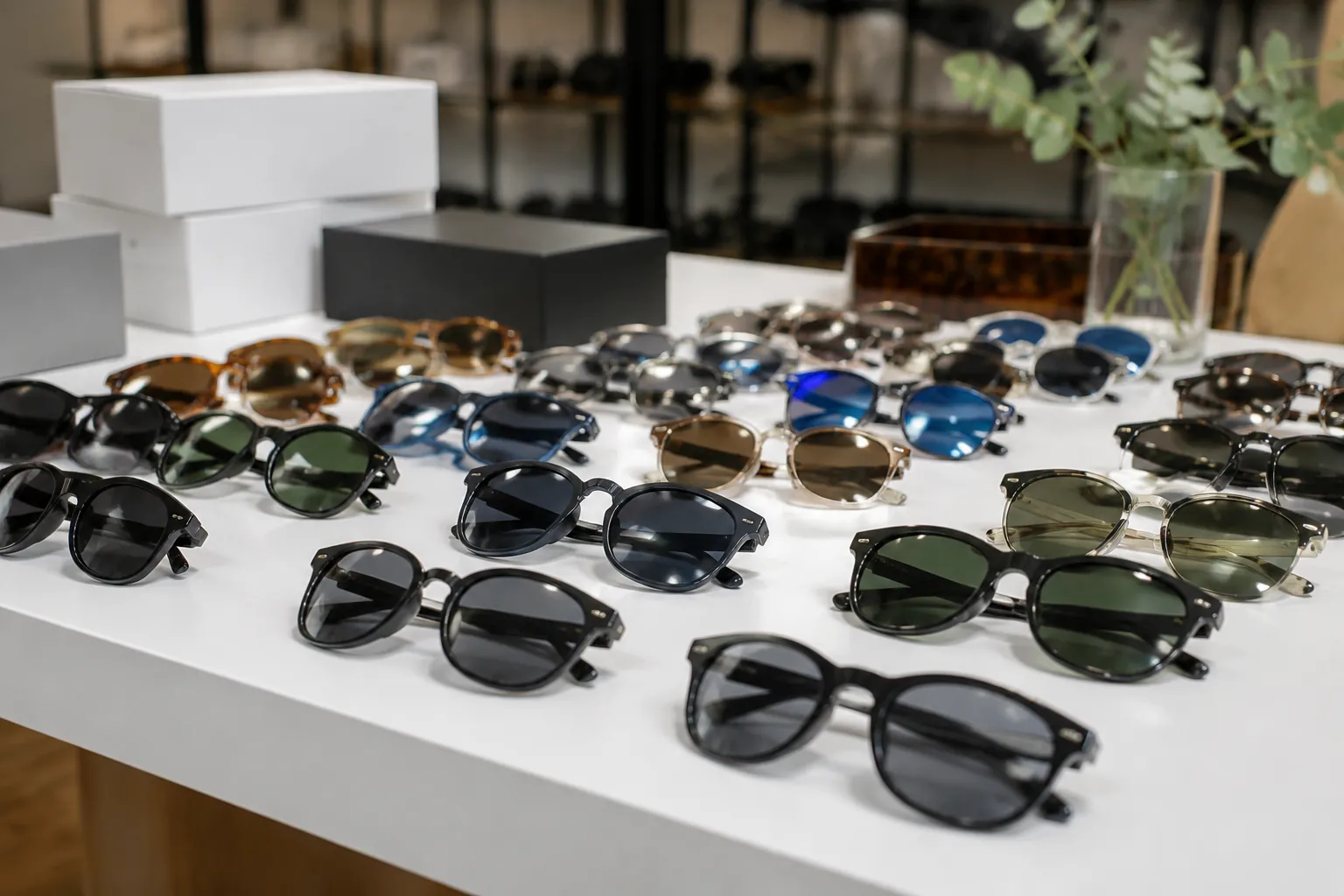
This guide is for brands, importers, distributors, and retail buyers planning short-cycle sunglasses drops. The goal is simple: buy enough stock to read demand, but not so much that last month's color trend turns into dead inventory. Use this framework to plan MOQs, color depth, materials, sampling, decoration, compliance, QC, and reorders around confirmed specifications and real factory timing.
Start with the drop calendar, not the catalog
Fast-fashion sunglasses sourcing often goes wrong before the purchase order is issued. A buyer sees a good unit price, adds too many shapes, approves too many colors, and expects the delivery date to stay the same. It usually does not. By the time the goods arrive, the campaign window may be gone. Then the stock becomes a markdown problem.
Work backward from the last commercially useful delivery date. If the drop is tied to spring break, festival season, beach retail, a music event, a wholesale window, or a paid social campaign, define the date when late goods stop being full-price goods. Then subtract international transit, customs clearance, bulk production, sample approval, artwork preparation, packaging approval, and internal decision time.
For an established Wenzhou eyewear manufacturer such as LumiShades, a practical planning baseline is 7-10 days for samples and 25-35 days for bulk production after sample approval. That assumes an existing mold, confirmed lens color, finished logo artwork, approved packaging, and no specification changes during production. New molds, custom acetate sheets, special hinges, metal logo parts, non-standard lens treatments, or revised packaging can add time.
A clean calendar has three hard gates: sample approval, pre-production confirmation, and reorder decision. Treat these as inventory-control points, not paperwork. If the team cannot approve frame color, lens category, logo position, packaging, and markings by the gate date, cut the SKU count. Do not steal time from production and inspection.
Use MOQ as a risk control, not a price chase
MOQ should control buying risk. It should not push the buyer into over-ordering an unproven color just because the unit price improves at a higher quantity. A cheap slow seller is still dead stock.
LumiShades can support validation runs from 50 pairs per design. Commercial order levels commonly move through 300, 1,000, and 5,000+ pairs. Pricing depends on frame material, lens treatment, decoration, packaging, inspection requirements, and shipment terms. Treat every quote as style-specific.
The common mistake is simple: buying every color at the same depth. Do not do that. For a first drop, assign quantity by confidence level:
- Core colors: black, tortoise, clear grey, brown, champagne, gunmetal, or gold. Buy deeper because these colors are less tied to one short trend window.
- Trend colors: pink, butter yellow, chrome silver, red lens, translucent green, blue mirror, or seasonal prints. Buy shallow until sell-through proves demand.
- Content colors: colors that look strong in campaign assets but may not sell broadly. Keep these small for editorial, influencer, showroom, or launch-content use.
- Reorder candidates: styles using stable molds, repeatable pigments, available lenses, and simple decoration. These need complete technical files from day one.
Do not put equal money behind unequal confidence. If your channel can reorder, use lower quantities to test color, fit, return rate, and customer response. Move into larger production only after the SKU has evidence.
Plan colors and materials so the data is readable
Fast drops need clean data. If you launch one frame in eight colors at tiny quantities, the results may be hard to read. One color may sell out because it had better placement, better photography, or stronger store allocation. That does not always mean it is the true winner.
Fewer variants usually produce better buying signals. Start narrow. Learn fast.
Material choice affects color risk, cost, feel, and timing. Injection-molded PC and TR frames are common for fashion sunglasses because they support efficient production and consistent color when the process is controlled. PC is rigid and economical. TR is generally lighter and more flexible. Translucent injection colors need tighter control because flow lines, weld marks, and pigment variation are more visible than on opaque colors.
Acetate works better for richer color depth, laminated effects, tortoise patterns, and a more premium hand-feel. It also requires cutting, tumbling, polishing, and hand assembly. That adds labor and time. Confirm acetate sheet availability before committing to a launch date.
Small dimensional differences matter in sunglasses. Inspection points should include frame width, lens width, bridge width, temple length, hinge opening, lens fit, frame balance, and temple alignment. Practical dimensional tolerances vary by material, construction, and drawing requirements, but many fashion eyewear projects specify key dimensions in the range of ±0.3 mm to ±0.5 mm. Logo placement should also have a stated tolerance, often around ±0.5 mm to ±1.0 mm. A vague mockup is not enough.
| Buy level | Typical quantity | Best use | Main risk |
|---|---|---|---|
| Validation MOQ | 50 pairs/design | Testing a new shape, risky color, influencer kit, showroom sample, or buyer presentation | Higher unit cost and limited stock if demand spikes |
| Small commercial drop | 300 pairs/design | Online capsule, boutique retail pilot, or seasonal color test | Too many colors can still fragment demand |
| Confident reorder | 1,000 pairs/design | Proven frame and color with clear sell-through and low complaint rate | Bad forecast creates meaningful holding cost |
| Volume program | 5,000+ pairs/design | Distributor order, chain retail program, promotional campaign, or planned seasonal range | Trend, price point, and channel demand must last long enough to sell through |
A practical first-drop structure is one hero shape, two commercial colors, one trend color, and one content color. Reorder the winner. Stop the loser before it absorbs more cash, packaging, freight, and warehouse space.
Match the manufacturing route to the trend cycle
Not every sunglasses design belongs in a fast drop. New molds, custom hinges, unusual lens shapes, thick acetate, embedded metal parts, new logo hardware, and special lens treatments can work for a planned seasonal range. They are risky for a trend that may fade in weeks.
LumiShades' production routes include injection-molded frames, acetate cutting, CNC processing where applicable, lens tinting, laser engraving, pad printing, metal logo application, assembly, and QC. The sourcing decision should match the design ambition to the delivery window. More new parts mean more approval points. More approval points mean more risk.
| Manufacturing route | Good for | Lead-time logic | Watch point |
|---|---|---|---|
| Existing mold, new frame color | Fast drops and quick reorders | Fastest route because fit and structure are already proven | Confirm pigment, surface finish, shrinkage effect, and lens tint before bulk |
| Existing mold, new decoration | Private label sunglasses and boutique capsules | Usually efficient if artwork is vector-ready and logo size is fixed | Logo placement, color, adhesion, abrasion resistance, and repeatability |
| Acetate cut frame | Premium color stories, tortoise, laminated patterns, and higher perceived value | Longer because cutting, tumbling, polishing, and assembly are labor-heavy | Sheet availability, pattern variation, polishing quality, and color matching between batches |
| New mold | Original frame shape, exclusive program, or long-term SKU | Best for planned seasonal ranges rather than urgent trend orders | Tooling approval, fit correction, shrinkage, lens seating, bridge comfort, and test samples |
If the market is moving fast, stay close to existing molds and proven lens shapes. Put the creative work into color, lens tint, temple branding, packaging, merchandising, and campaign story. That is usually the safer move for a short-cycle drop.
Specify decoration and packaging before sampling
Decoration is where a simple sunglasses order often slows down. A logo is not just artwork. It is a process choice.
Laser engraving, pad printing, hot stamping, metal logo plates, temple badges, and printed lens marks each have different costs, durability levels, sample requirements, and failure modes. Laser engraving is clean, durable, and useful for subtle branding on compatible surfaces. It is not the right method when the buyer needs a bright printed logo color. Pad printing is flexible and economical for colored logos, but the buyer must approve ink color, opacity, placement, and rub resistance. Metal logo plates can create a more premium look, but plate production, plating color, attachment method, and plate inventory can affect both first orders and reorders.
For private label sunglasses, request a decoration sheet before sampling. It should include the logo file, Pantone color or metallic finish, exact logo size in millimeters, position measured from a fixed reference point such as the hinge or temple end, decoration method, acceptable tolerance, and durability expectation. A clear instruction looks like this: 16 mm pad-printed temple logo, positioned 28 mm from the hinge, with ±0.8 mm placement tolerance. That can be checked. Small logo on the side cannot.
Packaging needs the same discipline. Confirm polybag, microfiber pouch, paper box, hangtag, barcode label, warning text, country-of-origin marking, market labels, carton marks, and master carton quantity before production. A low-MOQ drop can still lose days if barcode files, warning text, or carton marks arrive late.
Use sample approval to stop bad bulk orders
A sample is not a souvenir. It is the control piece for production and inspection. For sunglasses, sample approval should cover fit, hinge feel, temple pressure, frame balance, lens color, lens category, logo execution, packaging, markings, and compliance direction. If a buyer approves only from photos, color, feel, and fit risks remain.
For a fast drop, LumiShades samples typically take 7-10 days under normal conditions. Use that time well. Request physical samples for the top styles and clear photos or videos for backup color options. If lenses are tinted, check color under daylight and indoor lighting. Smoke, brown, grey, gradient, fashion pink, and mirror lenses can look different under studio light and natural light.
- Confirm material, frame size, lens width, bridge width, temple length, frame weight, and style code. Record dimensions, not only the model name.
- Check temple opening, hinge resistance, screw tightness, nose fit, temple pressure, and whether the frame sits level on a flat surface.
- Approve lens category, UV protection claim, visible light transmission range if required, and tint color. Do not change lens color after bulk production starts.
- Approve decoration method: laser engraving, pad printing, metal plate, hot stamping, or printed lens mark.
- Approve packaging, barcode position, warning text, market labels, polybag markings, carton marks, and carton quantity.
- Keep one signed or sealed approval sample at the factory and one with the buyer, QC team, or third-party inspector.
Late changes create real production risk. A logo move may require a pad-printing fixture adjustment. A lens tint change may require new matching. A packaging change may require new printing. Decide early, record the approval, and protect the approved sample as the reference for bulk goods.
Build compliance and QC into the spec
Fast-fashion sunglasses still touch the face and are sold as eye-protection products. Compliance is not a document to ask for after shipment. Put it in the product specification from day one.
The applicable requirement depends on the destination market, sales channel, lens category, product claims, and importer obligations. Common eyewear-related requirements and business-audit references include CE EN ISO 12312-1, ANSI Z80.3, AS/NZS 1067, REACH, FDA registration, ISO 9001, and BSCI. Use only the requirements that match the market and the buyer's compliance program. Do not ask a supplier to claim certifications that do not apply.
For Europe, buyers commonly review CE requirements for sunglasses under EN ISO 12312-1 and chemical restrictions such as REACH. For the United States, FDA registration and ANSI Z80.3 may be relevant depending on the product and sales channel. For Australia and New Zealand, AS/NZS 1067 is the key sunglasses standard. Product markings, warning text, lens category information, and packaging should match the target market before mass production.
QC should be defined numerically and visually. Typical checks include lens scratches, frame deformation, hinge function, screw security, logo position, color consistency, lens fitting, sharp edges, burrs, packaging accuracy, barcode readability, carton markings, and carton condition. For larger orders, buyers often use AQL inspection, such as general inspection level II, with critical, major, and minor defect limits agreed before production. For smaller drops, define unacceptable defects clearly: loose lens, sharp burr, crooked logo, wrong barcode, visible glue, mismatched temple color, incorrect lens category, missing warning text, or damaged packaging.
Prepare reorders before the first unit sells
A reorder is only fast if the factory already knows exactly what to repeat. Before launch, lock a reorder file with frame code, material, color reference, lens tint, lens category, logo artwork, decoration method, packaging details, approved sample photos, carton marks, compliance records, and inspection criteria. Do this early. Do not rebuild the file after the style sells out.
Bulk production at LumiShades is usually 25-35 days after approval under normal conditions. Reorders are more predictable when they use the same mold, same material, same color, same lens, same logo, and same packaging. Availability still matters. Trend pigments may not be in stock later. Special acetate sheets may require purchase planning. Metal logo plates may need replenishment if plate inventory has been used.
Set reorder triggers by sales velocity and quality feedback, not by excitement. If a test quantity sells through quickly across more than one channel, has low return complaints, and meets margin expectations after freight and duties, it may justify a reorder. If sell-through is uneven by store, marketplace, or region, move stock first. Inventory transfer is often cheaper than emergency production and air freight.
For a 1,200-pair drop, a disciplined plan could be 400 pairs of black smoke, 300 pairs of tortoise brown, 150 pairs of translucent pink, 250 pairs of a second existing mold with silver mirror lens, and 100 pairs of a campaign color. This keeps the buy focused, gives the hero SKU enough depth, and leaves room to reorder the winner. The best sourcing plan is not the biggest first order. It is the plan that creates reliable sell-through data while the product is still fashionable.
Have a custom sunglasses project in mind?
Send us your styles, target market and quantities and we will return a detailed quote with MOQ, lead time and a sample plan.
Get a QuoteWhy source this from Wenzhou with LumiShades
Wenzhou in Zhejiang Province is widely regarded as China’s eyewear manufacturing capital, producing a large share of the world’s sunglasses. That concentration matters to buyers: a deep local supply chain for acetate sheet, hinges, lens blanks, plating and packaging means shorter component lead times, easier color and material matching, and a workforce with decades of eyewear-specific skill. LumiShades has manufactured in this ecosystem since 2009, and our vertical integration — in-house injection molding, acetate cutting, CNC milling, lens tinting, decoration and quality control — means no part of your order is quietly subcontracted to a workshop you cannot audit.
For international buyers, that vertical control translates into accountability. When a single factory owns every step, defects are traced and fixed at source rather than bounced between vendors, and your specifications survive intact from first sample to bulk. We back this with 15+ years of experience, shipments to 60+ countries, more than 5 million pairs produced per year and a 98.5% on-time delivery rate. Our certifications — CE EN ISO 12312-1, FDA registration, ANSI Z80.3, AS/NZS 1067, REACH, ISO 9001 and BSCI audit — mean the compliance documentation your market requires already exists. Explore our manufacturing capabilities and quality control process to see how this works in practice.
Frequently asked questions
What MOQ should I use for a first fast-fashion sunglasses drop? Use the lowest practical quantity for unproven styles and colors. A validation run can start from 50 pairs per design, while a small commercial test often works around 300 pairs for the strongest SKU. Buy deeper in core colors such as black, tortoise, brown, grey, or gold. Keep trend and content colors shallow until sell-through, return rate, and customer feedback support a reorder.
How fast can samples and bulk production be ready? Plan around 7-10 days for samples and 25-35 days for bulk production after approval when using an existing mold and confirmed specifications. Add time for new molds, custom acetate, special lens treatments, metal logo parts, packaging revisions, or late artwork changes. Do not start the launch calendar from the PO date. Start it from the date the approved sample and complete specification are locked.
Which frame material is best for short trend cycles? Existing injection-molded PC or TR frames are usually the safest route for short trend cycles because they reduce tooling risk and support efficient production. PC is rigid and economical. TR is generally lighter and more flexible. Acetate is better for premium color depth, laminated effects, and tortoise patterns, but it requires more processing and depends on sheet availability.
What details should I approve on a sunglasses sample? Approve the frame material, dimensions, fit, hinge feel, temple pressure, lens tint, lens category, UV protection claim, logo method, logo position, packaging, barcode, warning text, country-of-origin marking, carton marks, and carton quantity. Keep one signed or sealed sample at the factory and one with the buyer, QC team, or third-party inspector so bulk goods can be checked against a physical reference.
Which compliance documents should overseas buyers request? Request documents that match the destination market and product claim. For Europe, review CE EN ISO 12312-1 and REACH requirements. For the United States, FDA registration and ANSI Z80.3 may be relevant. For Australia and New Zealand, check AS/NZS 1067. ISO 9001 and BSCI relate to management system or social compliance expectations, not sunglass lens performance. Keep records by style, lens color, lens category, and production batch where possible.
How do I avoid dead stock across too many colors? Limit the first drop to a readable structure: one hero shape, two commercial colors, one trend color, and one small content color. Do not order equal quantities across all colors unless they have equal evidence behind them. Track sell-through by channel, returns, customer comments, and markdown pressure before placing the reorder.
Can I reorder only the winning color? Yes. Reorders are most predictable when the reorder file is complete before launch. Lock the frame code, material, color reference, lens tint, lens category, logo artwork, decoration method, packaging specification, carton marks, approved sample photos, and inspection criteria. Also confirm whether pigments, acetate sheets, lenses, and logo parts will remain available for the reorder window.
Ready to start?
Explore our cat-eye sunglasses or request a quote — our sales team replies within 12 hours.
Request a Quote