
OEM vs ODM Sunglasses: Choose by MOQ and Control
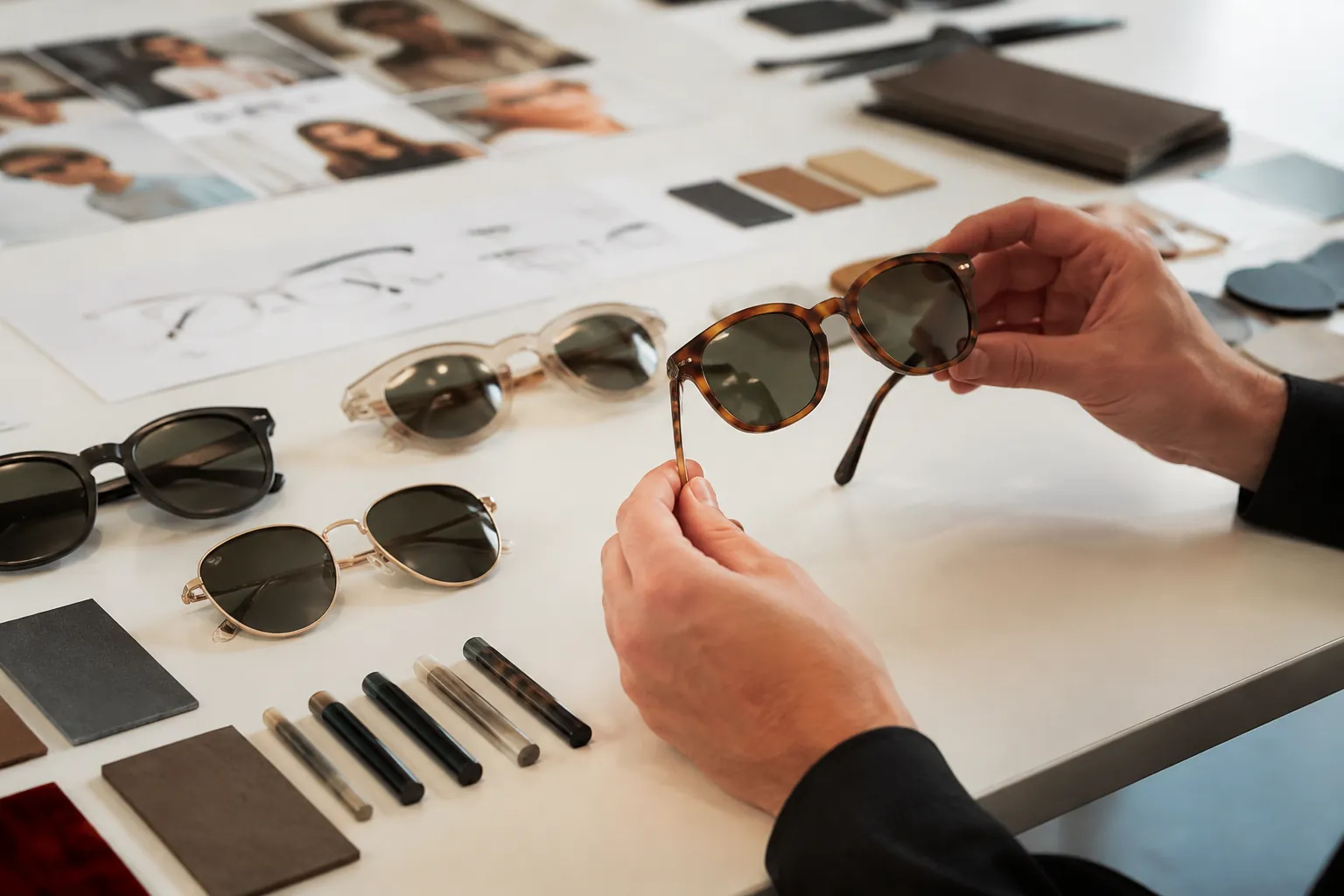
This guide is for brand owners, importers, distributors, and retailers choosing how much to customize a sunglasses order. The real choice is not simply "OEM or ODM." It is whether your order volume, launch date, compliance market, tooling budget, and need for design control can support the customization you want. Get that wrong and the cost shows up fast: wasted sampling fees, late approvals, unstable fit, weak decoration, or product claims without the right test records.
Start With Volume. Then Decide Control.
Most sourcing mistakes begin too early. Buyers choose a production model before they define the business case. One buyer wants an exclusive frame but only needs a small test order across several colors. Another needs urgent delivery but asks for a new hinge, new temple, special lens curve, exclusive mold, and custom packaging. These are not the same project. They should not share the same production plan.
Use a simple rule. If you need fast delivery, lower development risk, and a small launch quantity, start with ODM or semi-custom. If you need your own geometry, controlled fit measurements, repeatable dimensions, and a product line that will run for several seasons, consider OEM. Budget for engineering, sampling, tooling, and approval time.
LumiShades supports orders from 50 pairs per design, but customization depth must match quantity. A 50-pair order works best with an existing frame, available lens options, simple logo placement, and standard packaging. Higher quantities can support custom color development, special lens choices, decorated packaging, and SKU-specific packing. Fully tooled OEM projects usually make more sense when repeat orders or higher volumes are expected, because tooling and development costs sit outside the unit price.
Unit price usually improves as volume increases. Setup, decoration, inspection, color changes, packing, and administration are spread across more pairs. But price breaks are not automatic. They depend on material, frame structure, lens type, decoration method, packaging, and inspection requirements. A low-volume order with several colors, mirror lenses, metal logo plates, and retail cases will not price like a standard high-volume program.
Before asking for a quote, answer four questions: how many pairs per design and color, when goods must ship, which destination market applies, and which parts of the sunglasses must be controlled by your brand. If the answer is mainly logo, color, and packaging, do not start with a new mold. If the answer includes silhouette, bridge fit, hinge position, temple profile, lens base curve, and a packaging system, ODM may be cheaper at first but restrictive later.
ODM, Semi-Custom, and OEM Compared
Buyers often use OEM and ODM loosely. Factories do not. The production model affects mold cost, sample timing, component risk, inspection method, and whether a similar frame can be sold to another buyer. The table below shows the practical sourcing difference.
| Production model | Best fit | Typical customization | MOQ and cost logic | Lead-time impact |
|---|---|---|---|---|
| Ready-made ODM | Market tests, event orders, distributor stock, urgent replenishment | Existing frame, available colors, selected lens options, logo, pouch, barcode, carton marks | Can work from 50 pairs per design when materials are available; small runs carry more setup cost per pair | Usually the fastest route because frame tooling already exists; timing depends on stock, decoration, packaging, and approval speed |
| Semi-custom | Brands needing visible difference without full frame tooling | Custom frame color, lens tint or coating, polarized option, logo method, metal plate, case, insert card, retail packing | More efficient when setup costs can be spread across a larger order; color, lens, and packaging choices can affect MOQ | Similar to ODM if components are standard; special colors, coatings, or packaging require extra proofing |
| Fully tooled OEM | Long-term collections, proprietary fit, exclusive design language, sports styles, kids programs | New mold or acetate construction, bridge width, temple length, hinge seat, lens shape, nose area, surface finish | Requires separate development and tooling budget; most sensible when repeat demand or higher volume is expected | Development sampling, tooling adjustment, fit review, and compliance checks add time before bulk production |
| Hybrid OEM upgrade | Repeat buyers improving a proven ODM or semi-custom bestseller | Modify temple, create a new front, add exclusive decoration, adjust fit measurements | Useful when sell-through data supports partial tooling or structural improvement | Faster than full OEM in many cases, but slower than decoration-only customization because fit and component compatibility must be checked |
For many brands, the best first order is not the most custom order. It is the order that proves sell-through, fit feedback, return rate, preferred colors, packaging acceptance, and target retail price. Then the next order can move deeper into customization with evidence, not guesswork.
Use ODM When Speed and Cash Control Matter Most
ODM means the frame design already exists. The factory has the mold or production route, a known assembly method, and a clearer view of how the style behaves in production. That does not make the product weak or generic by default. It means engineering risk is lower and the quote can be built from known inputs.
A practical ODM sunglasses order might use an existing plastic frame, an available frame color, UV-protective lenses with a defined filter category, a one-color pad print logo on the temple, microfiber pouch, barcode sticker, inner box, and export carton marks. If the frame, lenses, and packaging are available, the project can move quickly after artwork, order details, and physical sample approval are confirmed. Exact timing still depends on current material availability and production capacity.
ODM is useful when tolerance risk must stay low. Existing molds or production settings already have known behavior for shrinkage, parting lines, hinge fit, lens groove dimensions, and assembly. During QC, inspectors can compare production against the approved sample and check lens retention, temple movement, symmetry, lens surface quality, logo position, and basic frame measurements. For standard frames, dimensional checks may include lens width, bridge width, temple length, frame front width, hinge alignment, and temple tip height.
The trade-off is exclusivity. Other buyers may be able to order the same or a similar base shape unless exclusivity is agreed in writing. Your difference comes from controlled color selection, lens choice, logo method, packaging, merchandising, inspection discipline, and reliable delivery. For importers, promotional distributors, and retailers testing a new channel, that is often the right balance.
Use Semi-Custom When the Frame Can Stay
Semi-custom is the middle ground. Many buyers should look here first. It gives more brand control than basic ODM without requiring a completely new frame mold. The frame shape stays the same. The visible identity changes.
- Frame color: Custom color development, translucent effects, matte or rubberized surfaces, two-tone temples, or tortoise-style effects depending on material and process.
- Lens options: Grey, brown, green, gradient, mirror, polarized, or category-specific tints. Lens category and UV claims must match the destination market's requirements.
- Logo decoration: Pad printing for economical color logos, laser engraving for subtle durable marks on suitable surfaces, hot stamping for certain packaging materials, and metal logo plates when the structure supports them.
- Packaging: Microfiber pouch, EVA case, paper box, insert card, hangtag, barcode, SKU sticker, polybag, carton marks, and retailer-specific packing ratios.
- Retail preparation: Color assortment planning, country-of-origin label, warning text, instruction leaflet, and carton packing by SKU rather than loose mixed cartons.
This model becomes more efficient when order size can absorb color matching, decoration setup, lens coating setup, packaging proofing, and separate inspection. The exact break point depends on frame material, number of colors, lens specification, logo method, and packaging requirements.
Be careful with requests described as "small changes." A new temple hole, altered hinge seat, different lens groove, adjusted bridge, changed lens curve, or revised front curve is not simple decoration. It may require mold modification, a new insert, new lens matching, or added fit testing. That pushes the project toward OEM, with different costs, tolerance risks, and approval timing.
Use Fully Tooled OEM Only With a Clear Case
OEM is the right choice when the sunglasses must be yours in structure, not just appearance. This includes a new silhouette, proprietary temple shape, special hinge construction, unusual lens geometry, dedicated kids fit, sports wrap, or a design system intended to run for multiple seasons. It is usually a poor fit for a one-time promotion unless the budget, timeline, and expected return justify the development work.
A responsible OEM route includes design file review, target measurement confirmation, material selection, structure review, tooling or CNC planning, first prototype, fit review, hinge and opening-force review, lens matching, decoration proof, compliance pre-check, pilot or pre-production review when needed, and bulk production. Skip steps and you may save a week. You may also lose a month to rework.
For injection frames, tooling decisions affect gate marks, shrinkage, parting lines, surface texture, hinge stability, and lens retention. PC is commonly used for cost-sensitive promotional or fashion programs, but it has different flexibility and impact behavior from TR90. TR90 is often selected for lighter, more resilient frames, including active styles, but material and processing cost can be higher. Acetate is different again. It supports rich colors and patterns, but CNC cutting, tumbling, polishing, hinge assembly, and adjustment add process steps and lead time.
OEM tolerance planning should happen before the first sample. Critical points include bridge width, lens width, temple length, frame front width, pantoscopic angle, hinge screw tightness, temple opening angle, lens groove depth, lens retention, and nose fit. If the design uses a strong wrap, thick lens, unusual base curve, or special hinge position, lens fitting and wearing comfort must be tested early. A clean rendering is not proof that the sunglasses can be made at scale.
Cost, Tooling, and Lead-Time Logic
The invoice unit price is only part of the decision. Sampling, tooling, rework, compliance testing, packaging, inspection, and freight timing also affect landed cost. LumiShades can support ODM, semi-custom, and OEM projects, but the production clock depends on the model, material availability, approval speed, and how complete the specification is.
| Order scenario | Likely model | Cost behavior | Main delay risk |
|---|---|---|---|
| 50-150 pairs per design for market testing | ODM | Highest unit cost because artwork checking, setup, decoration, and packing are spread across few pairs | Logo approval, available stock, incomplete packing instructions, late artwork changes |
| 300-999 pairs with brand colors and logo | Semi-custom | Better cost efficiency if the number of colors and SKUs is controlled | Color approval, lens coating approval, packaging proof, barcode or label errors |
| 1000-4999 pairs for a seasonal retail program | Semi-custom or OEM, depending on design control required | Customization becomes easier to justify, especially if repeat orders are expected | Prototype revisions, compliance files, retailer packing rules, late SKU changes |
| 5000+ pairs for ongoing distribution | OEM or high-volume ODM | Best opportunity to spread tooling, setup, testing, and packaging development across a larger program | Tooling signoff, capacity booking, multi-market labeling, testing schedule, inspection planning |
A clean purchase order or RFQ should include frame model or drawing, material, size, color reference, lens type and filter category, UV and polarized claims, logo artwork, logo placement, packaging, destination market, inspection level, carton marks, and shipment terms. Missing details do not disappear. They become production emails, sample revisions, or disputes. Every late change raises the risk of delay.
Compliance Depends on the Market and Claim
Sunglasses are not only fashion accessories in regulated retail channels. They need optical and safety documentation that matches the destination market and the claims made on the product, label, and packaging. Do not ask a supplier for "all certificates." That is too vague. Ask for the specific standard your buyer, customs broker, or retailer requires.
For Europe, CE marking supported by EN ISO 12312-1 is commonly required for sunglasses for general use. The standard addresses items such as UV protection, luminous transmittance, filter category, and traffic signal recognition where applicable. For the United States, ANSI Z80.3 is commonly referenced for non-prescription sunglasses, and FDA registration or related import files may be relevant for supplier and importer documentation. For Australia and New Zealand, AS/NZS 1067 is the key sunglasses standard. REACH is relevant to restricted substances in materials, coatings, colorants, and certain decorations. ISO 9001 and BSCI are management-system and social-compliance references. They do not prove lens performance.
Lens category must match the claim. A dark fashion lens is not automatically suitable for every use. Polarized claims should be verified, not assumed from a sticker. If packaging says UV400, category 3, polarized, or suitable for driving, the lens, label language, and test report should align with the applicable market requirement.
ODM is often simpler because existing material and lens combinations may already have a known testing path. OEM needs more checking because new colors, coatings, curves, and assemblies can affect performance. Treat compliance as part of product development, not paperwork requested after production is finished.
Buyer Checklist Before You Request a Quote
A good RFQ reduces cost, prevents wrong samples, and gives the factory enough information to price the real job. A vague RFQ creates a vague quote. Then come revisions, delays, and disputes. Prepare the details below before sending your next sunglasses inquiry.
- Define the model: ODM, semi-custom, or OEM. If unsure, state your target quantity, launch date, and required level of exclusivity.
- Set quantity by design and color: 1000 pairs total is not the same as 10 colors at 100 pairs each.
- Name the destination market: EU, U.S., Australia/New Zealand, or other markets may require different standards, files, and label wording.
- Specify lens requirements: Tint, filter category, UV claim, polarized or non-polarized, mirror coating, and any driving-related claim.
- Choose decoration method: Pad print for economical color logos, laser engraving for durable subtle marks where suitable, metal logo plates for a structured retail look when the frame can support them.
- Confirm packaging early: Pouch, case, insert, hangtag, barcode, polybag, and carton marks affect both cost and packing time.
- Approve a physical sample: Check fit, hinge tension, temple alignment, logo position, lens color, lens retention, packaging, label text, and barcode before bulk production.
If quantity is small and the calendar is tight, choose an existing frame and control the brand details. If the order is repeatable and built around a proprietary fit or shape, invest time in OEM development. That is the clean split.
Have a custom sunglasses project in mind?
Send us your styles, target market and quantities and we will return a detailed quote with MOQ, lead time and a sample plan.
Get a QuoteWhy source this from Wenzhou with LumiShades
Wenzhou in Zhejiang Province is widely regarded as China’s eyewear manufacturing capital, producing a large share of the world’s sunglasses. That concentration matters to buyers: a deep local supply chain for acetate sheet, hinges, lens blanks, plating and packaging means shorter component lead times, easier color and material matching, and a workforce with decades of eyewear-specific skill. LumiShades has manufactured in this ecosystem since 2009, and our vertical integration — in-house injection molding, acetate cutting, CNC milling, lens tinting, decoration and quality control — means no part of your order is quietly subcontracted to a workshop you cannot audit.
For international buyers, that vertical control translates into accountability. When a single factory owns every step, defects are traced and fixed at source rather than bounced between vendors, and your specifications survive intact from first sample to bulk. We back this with 15+ years of experience, shipments to 60+ countries, more than 5 million pairs produced per year and a 98.5% on-time delivery rate. Our certifications — CE EN ISO 12312-1, FDA registration, ANSI Z80.3, AS/NZS 1067, REACH, ISO 9001 and BSCI audit — mean the compliance documentation your market requires already exists. Explore our manufacturing capabilities and quality control process to see how this works in practice.
Frequently asked questions
Can I start with ODM now and move to OEM later? Yes. This is often the lower-risk route. Use ODM or semi-custom to test sell-through, fit feedback, preferred colors, lens acceptance, return reasons, and target price. If the style proves demand, use that data to decide which parts deserve OEM development, such as the front shape, bridge width, temple profile, hinge position, or lens curve.
What is the realistic MOQ for custom sunglasses? LumiShades supports orders from 50 pairs per design, but the customization level should match the quantity. At low MOQ, use an existing ODM frame with simple logo and packaging. For semi-custom colors, special lenses, or retail packaging, expect better cost efficiency at higher quantities. For fully tooled OEM, plan for separate tooling and development costs and make sure the project has repeat-order potential.
How long do samples and bulk production take? Timing depends on frame availability, material stock, decoration method, packaging, and approval speed. ODM and simple semi-custom projects are usually faster because the base frame already exists. OEM projects take longer because design review, tooling, prototype adjustment, fit review, lens matching, and compliance checks happen before bulk production. Confirm the schedule in writing after the final specification is approved.
Which compliance documents should I ask for? Ask by destination market and product claim. For Europe, request CE documentation supported by EN ISO 12312-1. For the U.S., ask about ANSI Z80.3 and any FDA registration or import files needed for your buyer record. For Australia and New Zealand, ask for AS/NZS 1067. For chemical restrictions, ask about REACH where relevant. Remember that ISO 9001 and BSCI relate to management and social compliance, not optical lens performance.
Does a custom logo make the order OEM? No. A logo, lens tint, color change, hangtag, pouch, or retail box is usually ODM or semi-custom. OEM means the frame structure or tooling is developed for your design, such as a new front shape, bridge, hinge seat, temple profile, lens groove, or fit measurement set.
What should I approve before bulk production? Approve a physical sample, not only a photo. Check frame color, lens color, UV and category claims, logo size and position, hinge movement, temple alignment, lens retention, fit, packaging, barcode, warning text, carton marks, and any retailer-specific packing rule. Keep one approved sample as the production reference for inspection.
Why does the price usually drop at higher volume? Higher volume spreads setup, artwork checking, color approval, decoration, QC, packaging preparation, and production administration across more pairs. It can also improve material purchasing and production scheduling. The size of the price change depends on the number of SKUs, frame material, lens type, logo method, packaging, inspection requirements, and whether tooling is involved.
Ready to start?
Explore our aviator sunglasses or request a quote — our sales team replies within 12 hours.
Request a Quote