
OEM Sunglasses Timeline: Tech Pack to Shipment
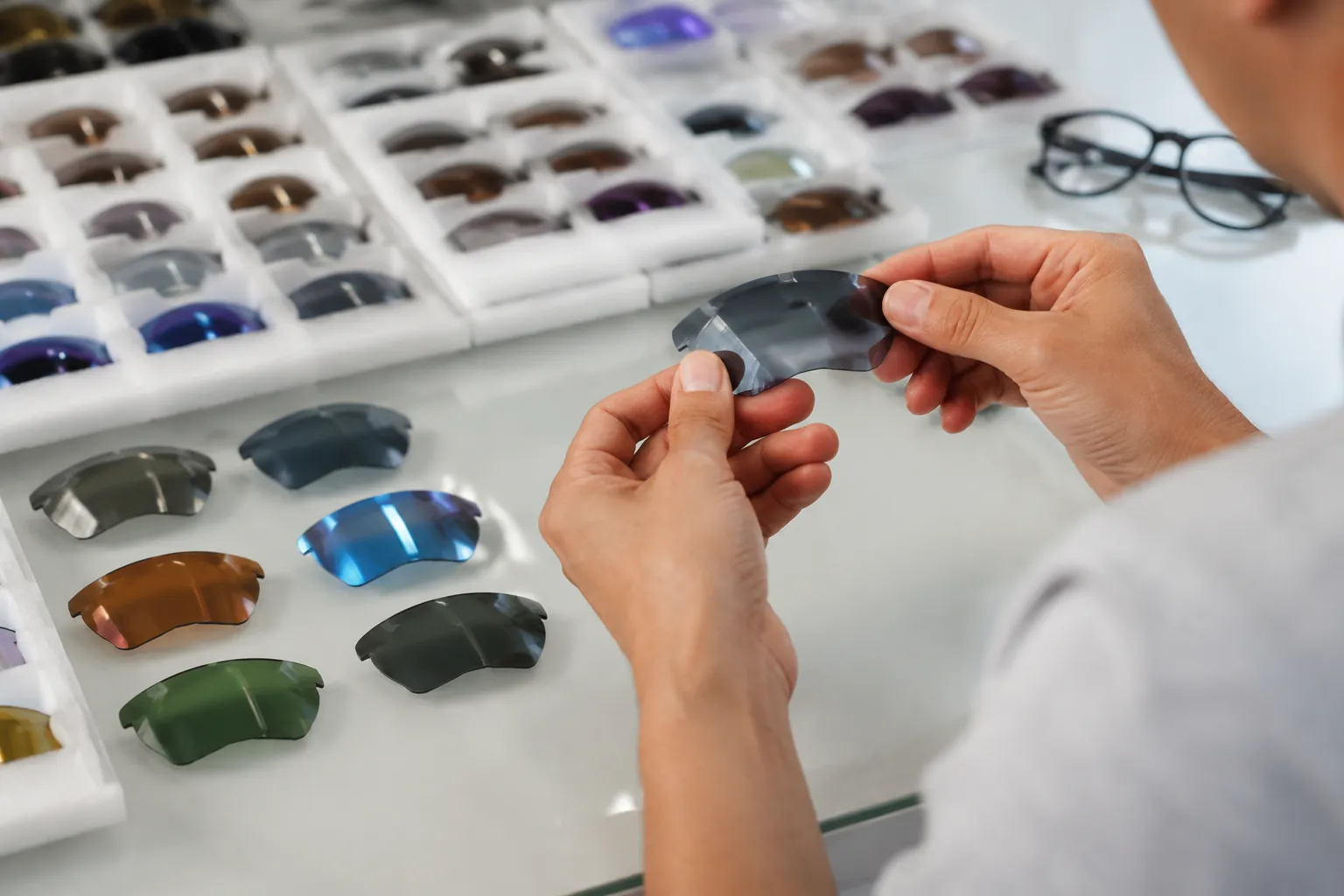
This guide is for overseas buyers planning private-label or OEM sunglasses with a China eyewear factory. It breaks the calendar into approval gates, real lead times, tolerances, QC checkpoints, MOQ logic, and shipment planning. Use it to protect launch dates, cut sample loops, and reorder before inventory pressure turns into panic.
The Buyer Timeline in One Page
An OEM sunglasses order is not one long production step. It is a chain of approvals: tech pack review, material confirmation, sample build, sample approval, pre-production setup, bulk production, inspection, packing, and shipment handover.
Every pause costs time. If one approval sits in an inbox for five working days, the shipment date usually moves by about five working days. Machine slots, coating schedules, decoration work, and packing labor are planned in sequence.
For a straightforward style using an existing mold, plan on 7-10 working days for samples and 25-35 working days for bulk production after sample approval and deposit. That does not include buyer-side artwork delays, lab testing, freight booking, customs clearance, or retail distribution. New molds, custom metal parts, mirror coatings, complex packaging, and large multi-SKU assortments add time.
| Stage | Typical Time | Main Buyer Approval | Common Delay |
|---|---|---|---|
| Tech pack review | 1-3 working days | Specs, drawings, logo files, destination market | Missing lens category, barcode, or packaging details |
| Material and color confirmation | 2-7 working days | Frame color, lens tint, hardware finish, packaging material | Approving from screen renders instead of physical chips |
| Sample production | 7-10 working days for an existing mold | Frame, lens, logo, fit, packaging | Color or logo changes after the first sample |
| Bulk setup | 2-5 working days | Final PO, deposit, approved sample, SKU list | Late payment or last-minute assortment changes |
| Bulk manufacturing | 25-35 working days | In-process updates and pre-shipment inspection | Lens color drift, decoration rejects, packaging file errors |
| Shipment handover | 1-4 working days after QC pass | Carton marks, documents, forwarder booking | Wrong consignee, late balance payment, incomplete shipping instructions |
Build the calendar backward from the required warehouse arrival date. Sample approval is not a soft milestone. It starts the factory production clock.
Gate 1: Tech Pack Review Before Material Is Cut
A useful sunglasses tech pack answers production questions before the sample room has to ask them. It should define the frame material, lens material, lens color, UV requirement, visible light transmission category, logo method, hinge type, temple length, bridge width, packaging, barcode rules, country labeling, and test standard.
Mood images help with style direction. They do not define production tolerances.
For sizing, include lens width, bridge, temple length, front width, lens height, and target weight if comfort matters. Agree dimensional tolerance before sampling. Many buyers and factories use targets in the ±0.5 mm to ±1.0 mm range for key fit dimensions, but the right tolerance depends on material and process. Logo placement should also be fixed in writing. A small shift can look obvious at retail.
Approve color with a physical sample or chip. Pantone references and digital renders are not enough on their own.
- Frame: PC, TR90, acetate, stainless steel, alloy, or mixed construction. Each affects tooling, polishing, hinge assembly, and cost.
- Lens: PC, TAC polarized, nylon, or CR39. PC is impact-resistant and common for fashion sunglasses. TAC is widely used for polarized programs. Nylon and CR39 are used when higher optical performance is required.
- Compliance: Specify the destination-market requirement before sampling, such as CE EN ISO 12312-1, ANSI Z80.3, AS/NZS 1067, or REACH. If your channel requires FDA registration or related documentation, confirm it early with your compliance team or broker.
- Decoration: Laser engraving, pad printing, hot stamping, metal logo plate, temple print, lens logo, epoxy badge, or hangtag branding.
- Packaging: Microfiber pouch, EVA case, hard case, cleaning cloth, retail box, insert card, polybag warning, carton mark, barcode position, and master carton quantity.
A complete tech pack reduces sampling rounds. A reference sample still needs measurement, material interpretation, and IP review. A concept needs design decisions. Each decision adds time. The less the factory has to guess, the faster the order moves.
Gate 2: Material, Mold, and Color Decisions
The fastest OEM route is simple: use an existing frame mold and customize color, lens, logo, and packaging. This can support small runs, including 50 pairs per design. It is practical for market tests, influencer drops, resort programs, trade events, and retailer trials. The tradeoff is clear. The base frame shape may not be exclusive.
A new mold changes the timeline and budget. Injection tooling needs engineering review, mold cutting, trial shots, fit correction, and surface adjustment. Acetate frames may avoid injection tooling, but they still need CNC programming, lamination choices, polishing trials, and hardware validation. Metal frames need part drawings, welding or soldering control, plating tests, and nose pad or temple balance checks.
| Route | Best For | Timeline Impact | Cost and Risk |
|---|---|---|---|
| Existing mold with logo | Fast private-label orders | Sample in 7-10 days; bulk 25-35 days after approval | Lowest development cost; shape may be similar to market styles |
| Existing mold with custom color and lens | Seasonal color stories and brand drops | Add 2-7 days for physical color and lens confirmation | Frame color and lens tint may differ from screen renderings |
| Modified component | Different temple, hinge, trim, or logo plate | Add 7-20 days depending on part sampling | Fit balance, opening angle, and durability can change |
| New injection mold | Exclusive long-term style | Often adds 20-45 days or more before production approval | Tool corrections may be needed after first trial shots |
| Custom acetate program | Premium colors, layered patterns, boutique lines | Sampling may take 10-20 days depending on sheet availability | Pattern variation is normal; polishing and thickness control matter |
Material behavior matters early. PC is efficient for high-volume injection frames, but it can show gate marks or shrinkage if the design is not balanced. TR90 is flexible and lightweight, but temperature control is important. Acetate gives richer color and pattern depth, but sheet variation means no two patterned frames are identical. Mirror lenses can vary by batch. Gradient lenses need careful top-to-bottom tint control.
Approve physical samples under daylight, indoor light, and retail display lighting. Screen color is not production color.
Gate 3: Sample Build, Fit Check, and Written Approval
The sample stage is where many launch calendars slip. The sample room is not always the problem. The problem is often a messy approval process that mixes design review, sales review, packaging review, and compliance review into one vague step.
A sample should answer specific production questions. Does the frame fit? Is the lens category correct? Is the logo durable? Does the packaging scan, protect, and present correctly?
Separate the checkpoints. First, approve frame shape and dimensions. Second, approve lens color, UV performance, polarization if applicable, and visible light category. Third, approve logo placement, size, color, and adhesion. Fourth, approve packaging, barcode, insert cards, warning labels, and carton marks. If all four areas change after the first sample, expect another sample cycle.
During review, check dimensions against the size chart: lens width, bridge, temple length, front width, lens height, and temple opening. Wear-test samples on several faces, not one model. Check whether the temples press too hard, whether the bridge slides, and whether the frame sits level.
Open and close the temples repeatedly. Hinge movement should feel smooth and consistent. Screws should not loosen quickly. For decoration, rub the printed or stamped area by hand and inspect the edges under strong light. Pad print can look fine on day one and still fail later if surface treatment or ink selection is wrong.
Keep one signed approved sample at the factory and one with the buyer. That sample becomes the production reference for color, logo position, fit, finish, and packaging. A factory with in-house injection molding, acetate cutting, CNC milling, lens tinting, decoration, and QC can reduce outside handoffs. Still, the buyer owns final approval. No factory can approve brand intent or retail preference for you.
Gate 4: Purchase Order, MOQ, and Price Break Logic
MOQ and price are tied to setup time, material loss, color changes, decoration setup, lens purchasing, packaging printing, and QC handling. A 50-pair design may be possible, but it will not carry the same unit cost as a 5,000-pair run. Small orders pay for flexibility. Large orders spread setup cost across more units.
Write MOQ by design, color, or SKU if the order contains multiple variants. A supplier may accept 50 pairs overall, but if that order is split into five colors, each color may still need a practical minimum to cover setup and packing.
Pricing often improves at volume levels such as 300, 1,000, and 5,000+ pairs. Exact pricing depends on frame material, lens type, hinge, logo method, packaging, compliance work, and SKU complexity.
| Order Size | Typical Use | Buyer Advantage | Factory Constraint |
|---|---|---|---|
| 50 pairs/design | Market test, event, influencer kit | Low inventory risk and fast validation | Higher unit cost; limited setup efficiency |
| 300 pairs/design | Small retail batch or resort order | Better decoration and packing efficiency | Still sensitive to too many colors or barcodes |
| 1,000 pairs/design | Core seasonal style | More stable material buying and QC planning | Requires firmer forecast and artwork control |
| 5,000+ pairs/design | Distributor, chain retail, promotion program | Lowest practical unit cost on suitable specs | Production scheduling, carton flow, and shipping windows become critical |
Lock the SKU list before bulk starts. Changing lens colors, logo methods, or packaging after purchasing creates scrap, rework, or delay. The factory may accept the change. The calendar and cost will not stay the same.
A clean PO should include model number, frame color, lens color and category, logo method, packaging set, barcode, quantity by SKU, inspection standard, delivery term, payment term, and destination market.
Gate 5: Bulk Production and Line Control
Bulk production for sunglasses is a flow of dependent operations. Frames are molded, cut, or formed. Parts are trimmed, polished, drilled, assembled, fitted with lenses, decorated, cleaned, inspected, and packed.
One missing input can stop the line. If lenses are not ready, assembled frames wait. If logo plates fail plating or adhesion checks, temples wait. If retail boxes arrive with the wrong barcode position, packing stops even when the sunglasses are finished.
In a Wenzhou eyewear factory environment, the production schedule is built around line balancing. Injection frames require material drying, molding machine time, cooling control, trimming, hinge insertion, and assembly. Acetate frames require sheet inspection, cutting, CNC milling, tumbling or hand polishing, heat adjustment, hardware assembly, and final alignment. Lens tinting, polarization assembly, and mirror coating must match the approved sample within the agreed visual range.
Decoration methods also affect timing. Pad printing is efficient for simple logos but needs ink adhesion checks. Laser engraving is durable on suitable metal or coated surfaces but may be subtle on some plastics. Hot stamping gives a premium metallic look but requires pressure and temperature control. Metal logo plates add tooling, plating, glue or rivet control, and extra inspection. Lens logos must be handled carefully because poor placement or heavy marking can hurt retail appearance.
Blunt rule: the more SKUs you split across one order, the more production behaves like several small orders. Ten colors at 300 pairs each are not as efficient as one color at 3,000 pairs.
Keep changes out of bulk production. If a change is unavoidable, ask for written impact on cost, scrap, sample approval, and delivery date before you approve it.
Gate 6: QC and Compliance Before Shipment
QC should cover incoming materials, first production pieces, in-process assembly, finished goods, and packed cartons. Do not wait until final inspection to find basic problems. By then, the expensive work is already done.
Common buyer problems are visible and preventable: scratches, loose hinges, lens color drift, crooked logos, weak screws, poor temple alignment, dirty pouches, crushed boxes, barcode errors, and wrong carton marks.
For commercial control, define defect severity as critical, major, and minor. Agree the AQL method and sampling plan before production begins. Also confirm what happens if inspection fails: rework, reinspection, sorting, discount, replacement, or shipment hold.
Compliance is market-specific. CE EN ISO 12312-1 applies to sunglasses sold in many European channels. ANSI Z80.3 is relevant for the U.S. market. AS/NZS 1067 applies for Australia and New Zealand. REACH matters for restricted substances in materials and coatings.
If your business requires supplier certification, ask for the current certificate and scope for ISO 9001 and BSCI. Check the site name, expiry date, and covered processes. Do not assume every factory site or subcontracted process is covered.
Gate 7: Shipment Handover and Reorder Timing
Once QC passes, shipment is not automatic. The factory still needs carton measurement, packing list, commercial invoice, shipping marks, forwarder booking, pickup arrangement, and often balance payment.
Air freight is faster but cost-sensitive. Sea freight is better for larger replenishment orders but requires earlier booking. Sunglasses are light, but cases and retail boxes create carton volume. Calculate freight by chargeable weight or cubic volume, not only product weight.
Before handover, confirm the consignee name, destination address, carton count, gross weight, net weight, carton dimensions, HS code used by your broker, and any marks needed for retail distribution. If a forwarder books space before the factory finalizes dimensions, the shipment may be rebooked or charged again. If artwork, carton marks, or consignee data change after packing starts, time is lost at the worst point.
Plan reorders before the first batch sells out. If production takes 25-35 working days and freight adds more time, a brand selling 500 pairs per week should trigger a reorder well before inventory becomes critical. Use weekly sales multiplied by total replenishment time, then add buffer for customs, retail allocation, and peak-season capacity.
Reorders run faster when approved samples, artwork files, lens records, packaging, and carton specs stay unchanged. Changing the pouch, barcode, or lens tint turns a reorder into a new project.
The safest habit is simple: approve early, freeze the SKU list, request written confirmation for every change, and keep one production reference sample in the factory and one in your office or agent file.
Have a custom sunglasses project in mind?
Send us your styles, target market and quantities and we will return a detailed quote with MOQ, lead time and a sample plan.
Get a QuoteWhy source this from Wenzhou with LumiShades
Wenzhou in Zhejiang Province is widely regarded as China’s eyewear manufacturing capital, producing a large share of the world’s sunglasses. That concentration matters to buyers: a deep local supply chain for acetate sheet, hinges, lens blanks, plating and packaging means shorter component lead times, easier color and material matching, and a workforce with decades of eyewear-specific skill. LumiShades has manufactured in this ecosystem since 2009, and our vertical integration — in-house injection molding, acetate cutting, CNC milling, lens tinting, decoration and quality control — means no part of your order is quietly subcontracted to a workshop you cannot audit.
For international buyers, that vertical control translates into accountability. When a single factory owns every step, defects are traced and fixed at source rather than bounced between vendors, and your specifications survive intact from first sample to bulk. We back this with 15+ years of experience, shipments to 60+ countries, more than 5 million pairs produced per year and a 98.5% on-time delivery rate. Our certifications — CE EN ISO 12312-1, FDA registration, ANSI Z80.3, AS/NZS 1067, REACH, ISO 9001 and BSCI audit — mean the compliance documentation your market requires already exists. Explore our manufacturing capabilities and quality control process to see how this works in practice.
Frequently asked questions
Can I start bulk production before approving the sample? You can, but it is a commercial risk. The approved sample should define frame color, lens color and category, logo position, packaging, and finish. If you skip approval, you may save a few days but create a dispute over the finished goods. For a launch order, do not release bulk until the sample is signed off in writing.
What is the safest calendar for a new OEM sunglasses launch? Work backward from the in-stock date. A practical sequence is 1-3 working days for tech pack review, 2-7 working days for material and color confirmation, 7-10 working days for sampling on an existing mold, buyer approval time, 25-35 working days for bulk production, then freight and customs time. Add buffer for a new mold, special coating, printed packaging, or third-party testing.
Does a 50-pair MOQ mean I will get the lowest price? No. A 50-pair MOQ is useful for validation, not for the lowest unit cost. Price improves at higher quantities because setup, material purchasing, decoration, and QC costs are spread across more pairs. Ask for quote break points at 50, 300, 1,000, and 5,000 pairs so you can compare the real cost of scaling up.
Which compliance standard should I put on the PO? Use the standard tied to your selling market and channel. Common references are CE EN ISO 12312-1 for many European channels, ANSI Z80.3 for the U.S., AS/NZS 1067 for Australia and New Zealand, and REACH for restricted substances. If your importer or broker requires FDA registration-related paperwork, confirm that before production starts. Put the exact standard, label text, and required tests on the PO or tech pack.
What tolerances should I expect for custom sunglasses? Do not rely on a general factory promise. Put tolerances in the tech pack. As a starting point, many buyers use targets around ±0.5 mm to ±1.0 mm for key fit dimensions, with tighter control for visible logo placement. Final tolerance depends on material, mold condition, and process. Always approve a physical sample because color and finish can differ from screen images.
What causes the most common shipment delays? Late sample approval, SKU changes after material purchase, unclear packaging files, failed decoration checks, missing shipping instructions, late balance payment, wrong consignee details, and delayed forwarder booking are the most common avoidable causes. Freeze the artwork, carton marks, and SKU list before bulk production starts.
How should I plan a reorder for a fast-selling style? Take weekly sales, multiply by the full replenishment time, and add a safety buffer. If a style sells 500 pairs a week and the total replenishment cycle is seven weeks, protect at least 3,500 pairs before reorder risk becomes high. Add more buffer if the style is seasonal, spread across multiple channels, or affected by peak shipping periods.
Ready to start?
Explore our wayfarer sunglasses or request a quote — our sales team replies within 12 hours.
Request a Quote