
OEM Sunglasses for Resort and Cruise Retail Buyers
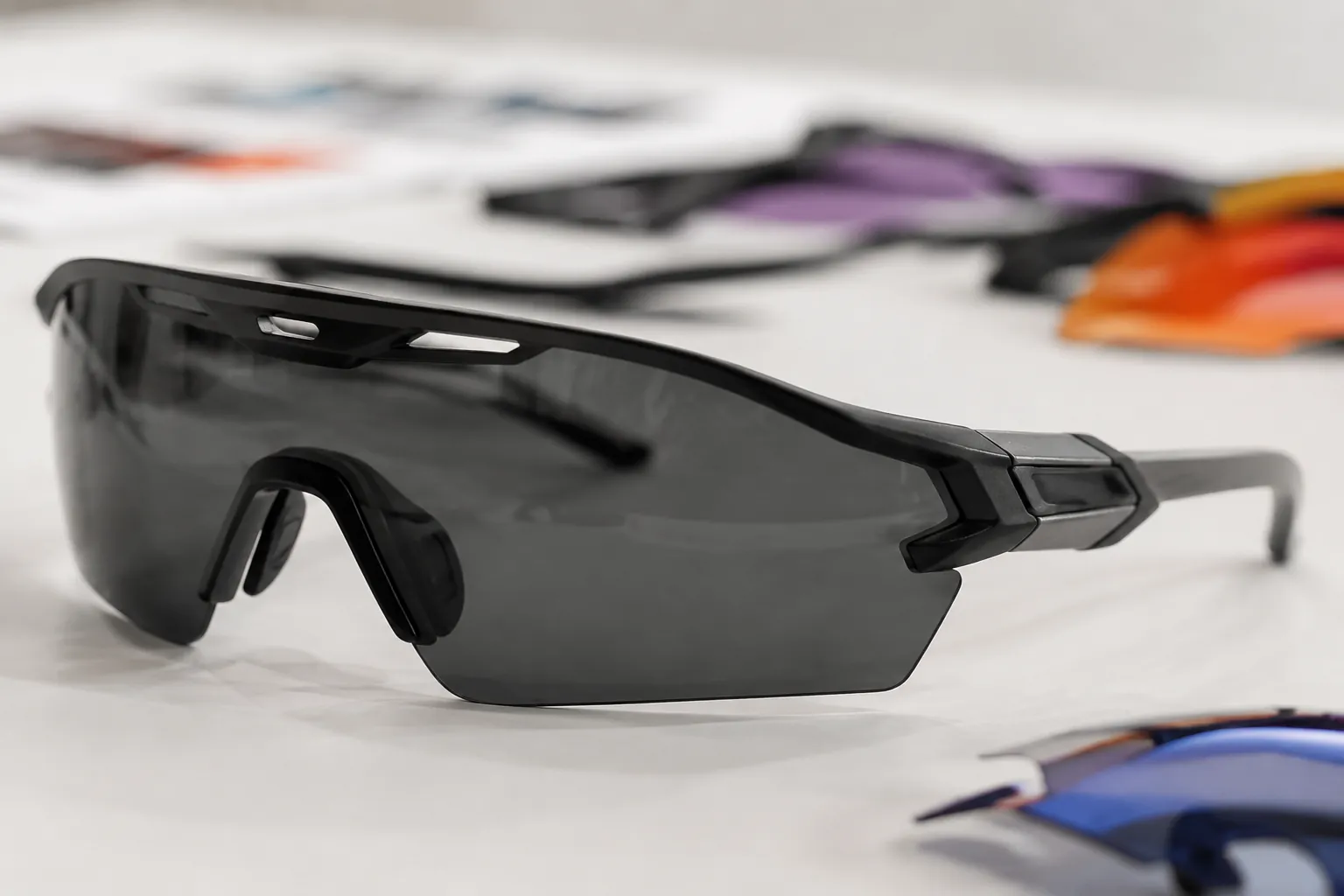
This guide is for resort buyers, cruise retail teams, importers, and distributors building private-label sunglasses for high-sun, high-handling travel retail. It shows how to specify frames, lenses, decoration, packaging, compliance labels, production samples, inspections, and reorders so suppliers can quote and produce with fewer gaps. The goal is simple: a cleaner RFQ, fewer quality disputes, and a replenishment plan that reflects real sampling, production, freight, and approval timelines.
Start With the Selling Environment
Resort and cruise sunglasses are not bought like boutique eyewear. Guests may be replacing a forgotten pair, buying before an excursion, or adding an impulse item near the register. That changes the brief. Buyers need durable hinges, broad face-fit coverage, clear lens category labeling, and packaging that staff can identify and restock fast.
For beach resorts, the main stress points are sunscreen, sweat, sand, pool chemicals, UV exposure, and heat in carts, storerooms, or outdoor displays. For cruise retail, add frequent try-ons, compact storage, vibration during transport, and limited repair tools. A loose temple screw that might be fixed in a city optical shop can become an onboard return. No tool, no sale recovery.
Build the assortment by use case first: poolside basics, polarized excursion styles, kids or junior sizes, souvenir-logo models, and premium boutique pieces. Then decide how much branding each style can carry. A large temple logo may work on a resort gift-shop frame. A small laser mark or metal plate is often better for a premium cruise boutique style.
- Poolside basics: PC injection frames, category 3 smoke or brown lenses, microfiber pouch or hang tag.
- Excursion models: polarized PC or TAC lenses, stable temple fit, secure hinges, anti-slip nose geometry.
- Souvenir styles: pad-printed resort logo, destination color, or small laser engraving.
- Premium rack styles: acetate, metal trim, upgraded hinges, printed box, or rigid case.
Choose Materials by Risk, Not Photos
Material choice affects cost, lead time, and return rate. Do not choose from a catalog image alone. Ask how the frame behaves after heat exposure, repeated opening and closing, sunscreen contact, carton compression, and retail handling. A glossy sprayed finish may look good in a sample photo and still show rub marks after a week of try-ons.
LumiShades manufactures in Wenzhou with in-house processes for injection molding, acetate cutting, CNC milling, lens tinting, decoration, and QC. For travel retail programs, that matters because one assortment may include different frame materials, lens options, and decoration methods. Confirm MOQ, price breaks, and setup costs for each design before the range is locked. Small trial orders test sell-through. Larger repeat orders usually improve unit economics by spreading setup, decoration, inspection, and packing labor across more pairs.
| Frame Option | Best Use | Typical Spec Detail | Buyer Watchout |
|---|---|---|---|
| PC injection | Low-cost poolside and souvenir racks | Confirm lens edge thickness, hinge type, and molded-in or sprayed color | Can feel rigid; check hinge pull, surface marks, and screw security |
| TR90-style injection | Excursion, sport, and family retail | Flexible temples and better resistance to bending in bags | Confirm the exact resin grade and do not rely on "TR90-style" wording alone |
| Acetate | Premium resort boutiques | Sheet thickness, CNC edge finishing, polishing, and temple alignment defined | Longer finishing time and possible color variation between sheet batches |
| Metal or metal trim | Cruise boutique and dress styles | Plating specification, screw material, and salt-exposure expectation defined | Weak plating or unprotected hardware can corrode in marine environments |
For injection frames, specify gate position, hinge type, screw material, and whether the color is molded-in or sprayed. Molded-in color is usually more resistant to visible surface wear in beach retail. Sprayed finishes offer more color options, but they need adhesion, abrasion, and color-consistency checks. For acetate, confirm sheet thickness, lamination direction, temple alignment, and polishing standard. If the frame rocks on a flat surface or feels twisted on the face, treat it as a fit and QC issue. Not a minor cosmetic note.
Put Real Lens Specs in the RFQ
"UV400" is not a full lens specification. State the lens material, tint, filter category, polarization requirement, optical standard, impact expectation, and marking requirements. If one program sells into Europe, the United States, Australia, or New Zealand, confirm compliance requirements before artwork and packaging are approved.
For resort and cruise sunglasses, PC lenses are common because they are light, impact resistant, and cost-efficient. Category 3 lenses are widely used for strong sunlight and beach retail. Avoid category 4 unless the product is clearly labeled as unsuitable for driving and appropriate for the destination market. For water-based excursions, polarized lenses can support a higher retail price when glare reduction matters: marina shops, fishing tours, yacht clubs, and island excursion bundles.
- Lens material: PC for many travel retail styles; TAC or nylon where performance and price point support it.
- Lens category: category 3 for strong sun; hang tags and inserts must match the tested product.
- Polarization: test with a polarizing card and confirm orientation consistency across production.
- Tint tolerance: approve a physical tint sample and define an acceptable production range before mass production.
- Optical checks: inspect for distortion, prism imbalance, scratches, bubbles, coating defects, and inconsistent tint.
LumiShades can support compliance documents commonly requested for sunglasses programs, including CE EN ISO 12312-1, ANSI Z80.3, AS/NZS 1067, REACH, FDA registration, ISO 9001, and BSCI. Use only the standards relevant to the destination market. Do not print claims unless the actual product or facility file supports them. Grey lenses preserve natural color perception. Brown lenses increase contrast. Green lenses need tighter tint control. Mirror coatings photograph well, but they show scratches more easily. If a style will sit loose in a basket display, use a pouch or avoid delicate mirror finishes.
Make Branding Survive Handling
Branding should identify the resort, cruise line, tour operator, or retail collection without making the sunglasses look disposable. The common mistake is a logo that is too large for the temple width or too close to the hinge. Specify logo size in millimeters, logo location from the hinge, print color, artwork file version, and acceptable position tolerance.
LumiShades offers pad printing, laser engraving, and metal logo plates. Pad printing is efficient for simple resort marks and lower-volume tests, but ink adhesion depends on the exact surface, coating, and curing process. Laser engraving is cleaner on suitable materials and avoids ink rub-off. Metal logo plates can add perceived value, but they need tighter assembly control, alignment checks, and pull checks.
| Decoration Method | Best For | Process Detail | QC Check |
|---|---|---|---|
| Pad printing | Resort logos, event names, simple marks | 1–2 color artwork, size confirmed against temple width | Tape test, rub test, position check, and comparison to approved sample |
| Laser engraving | Subtle premium branding | Best on acetate, metal, or suitable coated surfaces | Legibility under retail lighting and at the normal worn angle |
| Metal logo plate | Premium cruise and boutique styles | Inserted or bonded plate with tighter placement control | Alignment check and pull check before packing |
Send vector artwork early. Approve decoration on a real frame, not only a flat proof. Request pre-production photos from the front, side, folded view, close-up, and worn angle. Curved temples distort marks. A logo that looks balanced on a PDF can look too low, too long, or too close to the hinge on the finished pair.
Match Packaging to the Channel
Packaging affects freight volume, breakage risk, shelf speed, barcode control, compliance communication, and perceived price. Cruise buyers often need compact packaging because backroom space is tight. Resort stores may prefer hang tags and pouches because staff turnover can be high and restocking must be simple.
A polybag protects the frame in transit, but it does not sell the product at retail. A microfiber pouch reduces lens scuffing after purchase and can carry a small logo. A printed hang tag supports barcode, lens category, compliance marks, price coding, and brand story in a small footprint. A rigid case looks more premium but adds cost, carton volume, and handling time. Use it only where the retail price supports it.
- Hang tag: best for spinner racks, barcode scanning, compliance notes, and fast visual sorting by SKU.
- Microfiber pouch: practical for resort and cruise channels because it protects lenses without heavy freight volume.
- Printed box: better for premium shelves, gift sets, and controlled planograms.
- Rigid case: useful for higher retail price points but increases carton cube, handling time, and freight cost.
- Master carton label: should show SKU, color, lens type, quantity, PO number, and destination store or vessel when required.
For replenishment, request inner cartons by SKU unless your distribution center specifically wants pre-packed assortments. Mixed cartons look convenient until one bestseller sells through and slow colors remain. If you need vessel or property assortments, define the ratio in writing, such as 12 black polarized, 8 tortoise brown lens, 6 kids, and 4 souvenir-logo units. Do not leave assortment logic to packing staff.
Plan MOQ, Cost, and Lead Time Together
Travel retail punishes late development. Work back from the in-store date, not from the purchase order date. Confirm sample timing after the frame, lens, logo, and packaging direction are clear. Confirm bulk production timing after sample approval, deposit, final artwork, packaging files, and compliance labeling are approved. Then add freight, customs clearance, labeling review, warehouse receiving, and internal allocation time.
LumiShades offers a 50-pair MOQ per design, which is useful for testing destination logos, new colors, or small itinerary programs. It is not usually the best unit cost. Pricing typically improves at higher quantities because setup, decoration, lens tinting, QC, and packing labor are spread across more units. If the goal is lowest cost, consolidate frame colors, lens options, and packaging. If the goal is assortment depth, accept higher unit cost on test SKUs and reserve larger orders for proven sellers.
| Order Level | Best Use | Cost Logic | Planning Note |
|---|---|---|---|
| 50 pairs/design | Pilot, logo test, small property | Higher setup cost per pair | Use before committing to seasonal depth |
| 300 pairs/design | Core resort SKU or single-vessel run | Better decoration and packing efficiency | Good for early replenishment planning |
| 1,000 pairs/design | Regional program or multi-store rollout | Lower handling and inspection cost per unit | Lock packaging, barcode data, and labeling early |
| 5,000+ pairs/design | Distributor stock or high-volume basic | Best suited to stable, repeatable specifications | Use forecast splits, staged shipments, and approved QC limits |
Rush orders are realistic only when the material, lens color, decoration method, and packaging are already stable. New acetate colors, custom metal plates, special mirrors, and custom boxes add approval and production risk. The practical rule is simple: rush repeat injection styles with approved components, not complicated first-time premium frames.
Check Quality Before Goods Leave Wenzhou
QC should focus on field failures, not just appearance. A perfect-looking pair that loses a screw after repeated opening and closing is still a bad product. Build the inspection sheet around how guests use the item: open, close, try on, drop into a beach bag, wipe with a towel, wear in strong sun, and store in warm conditions.
LumiShades has in-house QC, but buyers should define the inspection standard, sampling method, critical defects, and packaging checks in writing. Critical defects include lens cracks, sharp edges, missing required markings, wrong barcode, wrong logo, and mixed SKU packing. Major defects include hinge stiffness, visible scratches, warped frames, color mismatch, loose lens seating, and poor printing. Minor defects include small surface marks that do not affect saleability or use.
- Approve physical pre-production samples for frame color, lens tint, logo, packaging, barcode, and required labeling.
- Confirm lens category, applicable compliance documents, and destination-market labeling before mass packing.
- Check hinge action, temple alignment, screw security, lens seating, frame balance, and nose fit on production samples.
- Inspect decoration by rub test, tape test, position measurement, and comparison to the approved sample.
- Verify carton marks, barcode scans, assortment ratios, inner carton quantities, and destination labels before shipment.
Ask for inspection photos at normal retail distance and close-up. Close-ups find defects. Retail-distance photos show whether the product looks right on the shelf. For multi-country programs, version control matters. One incorrect compliance mark, barcode, or language version can delay a shipment even when the sunglasses meet the buyer's quality expectations.
Set Reorders Before Stock Runs Out
Reorders fail for two common reasons: the buyer waits too long, or the factory has to rebuild too many custom details from incomplete records. Keep a technical file for every SKU: frame code, material, color reference, lens tint, lens category, logo file, logo size, packaging dieline, barcode, carton quantity, compliance labeling, and approved sample photos. It is admin work. It saves time.
Split the range into core, seasonal, and test SKUs. Core SKUs are black, tortoise, brown, smoke, or polarized styles that can repeat every season. Seasonal SKUs carry destination colors, limited artwork, or trend shapes. Test SKUs should use the 50-pair MOQ or modest trial quantities until sell-through proves demand.
Set reorder triggers from lead time and weekly sell-through. A reorder placed at zero stock is already late because production, packing, freight, customs clearance, and internal distribution still need time. If a store or vessel sells 40 pairs per week and replenishment takes six weeks door to door, 100 pairs of remaining stock covers only 2.5 weeks of demand. For fast sellers, set reorder points from weekly sales plus safety stock, not from last month's remaining inventory alone.
Practical rule: keep core styles stable for at least two production cycles. Change packaging, lens color, or logo position only after you have enough stock cover for the transition.
Factories move faster on repeatable specifications with clean approvals. They slow down when artwork changes, barcodes arrive late, packaging files are revised after sample approval, or the buyer changes the pouch, lens, and logo position in the same week. A locked SKU file and clear reorder calendar are often more valuable than adding more styles.
Have a custom sunglasses project in mind?
Send us your styles, target market and quantities and we will return a detailed quote with MOQ, lead time and a sample plan.
Get a QuoteWhy source this from Wenzhou with LumiShades
Wenzhou in Zhejiang Province is widely regarded as China’s eyewear manufacturing capital, producing a large share of the world’s sunglasses. That concentration matters to buyers: a deep local supply chain for acetate sheet, hinges, lens blanks, plating and packaging means shorter component lead times, easier color and material matching, and a workforce with decades of eyewear-specific skill. LumiShades has manufactured in this ecosystem since 2009, and our vertical integration — in-house injection molding, acetate cutting, CNC milling, lens tinting, decoration and quality control — means no part of your order is quietly subcontracted to a workshop you cannot audit.
For international buyers, that vertical control translates into accountability. When a single factory owns every step, defects are traced and fixed at source rather than bounced between vendors, and your specifications survive intact from first sample to bulk. We back this with 15+ years of experience, shipments to 60+ countries, more than 5 million pairs produced per year and a 98.5% on-time delivery rate. Our certifications — CE EN ISO 12312-1, FDA registration, ANSI Z80.3, AS/NZS 1067, REACH, ISO 9001 and BSCI audit — mean the compliance documentation your market requires already exists. Explore our manufacturing capabilities and quality control process to see how this works in practice.
Frequently asked questions
What is the safest first order size for a resort sunglasses program? Use the smallest MOQ for unproven designs when you need to test logo placement, frame color, lens tint, or destination-specific artwork. For LumiShades, 50 pairs per design can be used for a pilot. Move proven core styles to larger quantities only after sell-through confirms demand and the approved sample, packaging, barcode, and labeling are locked.
Should cruise retail sunglasses be polarized? Use polarized lenses where glare reduction is a clear selling benefit, such as fishing, marina, yacht, beach excursion, and watersports retail. Keep some non-polarized category 3 styles for lower-price fashion assortments. In the RFQ, specify the lens material, polarization requirement, category, tint, and test method so production can be checked against the approved sample.
Which compliance standards should I request for overseas markets? Match the destination market and print only claims supported by current documentation. Common requests include CE EN ISO 12312-1 for Europe, ANSI Z80.3 for the United States, AS/NZS 1067 for Australia and New Zealand, REACH for restricted substances, FDA registration where applicable, and facility-level documents such as ISO 9001 or BSCI when required by the buyer.
How long should I allow from sample request to bulk shipment? Build the calendar from the required in-store date. Allow time for sample development, buyer review, artwork corrections, packaging approval, deposit processing, bulk production, inspection, freight, customs clearance, warehouse receiving, and allocation to stores or vessels. Ask the supplier to confirm separate dates for sample completion, mass production completion, inspection readiness, and shipment handover.
What packaging works best for resort and cruise replenishment? Hang tags and microfiber pouches are usually the most practical combination because they support barcode scanning, lens category communication, lens protection, and compact freight. Use printed boxes or rigid cases for higher-price styles only when the retail margin and storage space justify them. Confirm inner carton quantity, SKU separation, barcode placement, and master carton labels before packing.
How do I prevent reorder delays? Keep a locked SKU file with frame code, material, color reference, lens tint, lens category, logo file, logo size, packaging dieline, barcode, carton quantity, compliance labeling, and approved sample photos. Set reorder points from weekly sell-through plus production and transport lead time. Do not change artwork, packaging, or lens specs during peak replenishment unless you have enough stock to cover the transition.
Ready to start?
Explore our square sunglasses or request a quote — our sales team replies within 12 hours.
Request a Quote