
How to Plan a Sunglasses SKU Mix for Launches
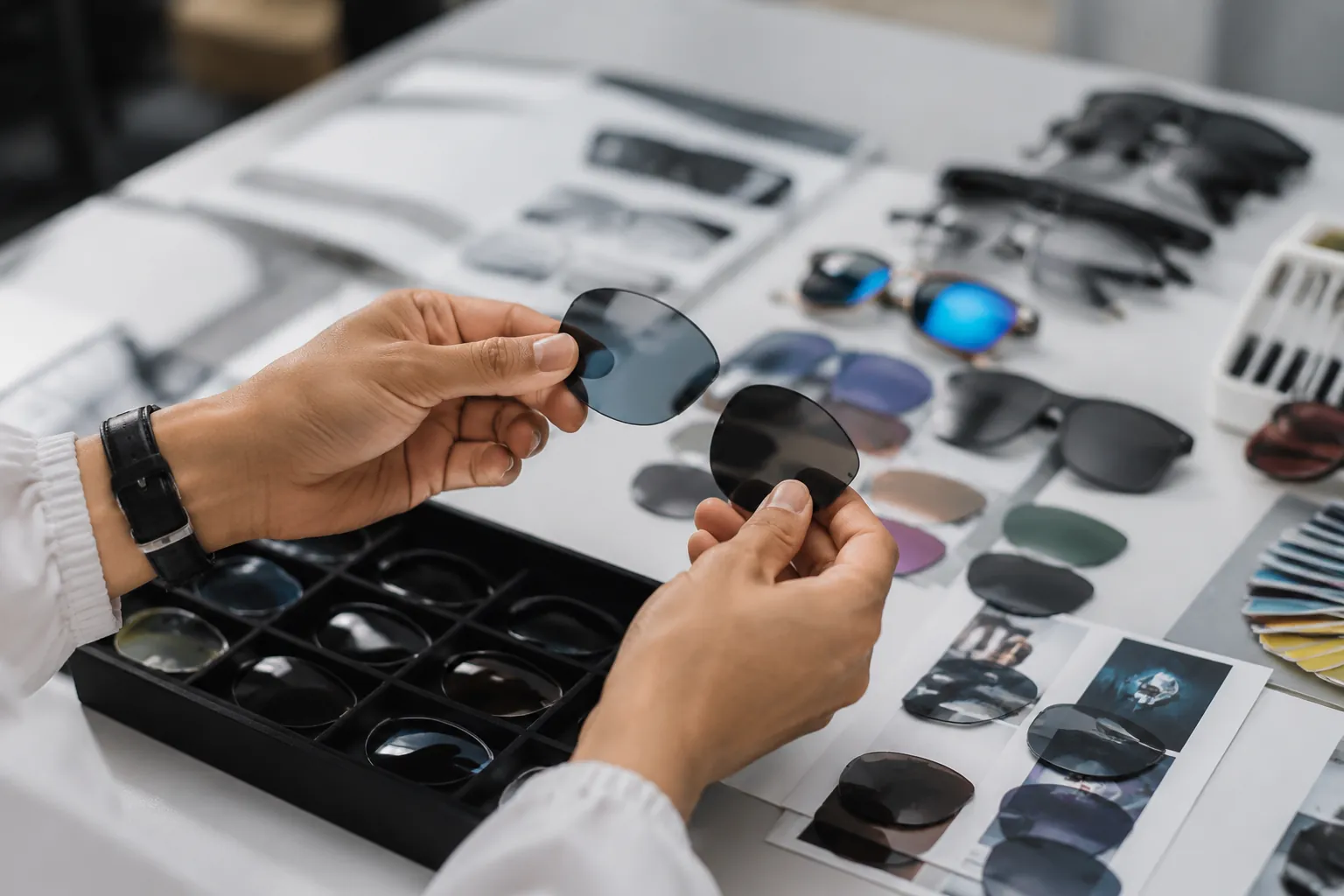
If you buy sunglasses for Amazon, retail, or distribution, the SKU plan matters as much as the first sample. Too many styles tie up cash in inventory. Too few leave you short on the color, fit, and price points your channel needs. This guide gives a practical framework for choosing style counts, colorways, materials, decoration, and price bands with real MOQ, lead-time, compliance, and production logic. It is written for brands, importers, distributors, and retailers that need a launch plan they can actually execute.
Start with the channel
A sunglass line usually fails for one simple reason: the team picks styles first and channel rules second. Wrong order. Amazon usually needs a tight price band, repeatable replenishment, and an assortment that can be reordered without changing the whole setup. Retail needs a clearer assortment story, visible separation between entry and premium items, and a plan for shelf shape after the first sell-through. Distributor programs usually care most about margin consistency, pack integrity, and easy reorders in the same configuration.
Before you draw a frame, set the commercial limits of the launch. Answer three questions with numbers, not adjectives:
- What is the target retail price and landed-cost ceiling by channel?
- How many weeks of cover do you need before the first reorder? Many launches plan for about 6 to 10 weeks, depending on the channel and expected sell-through.
- Is this a demand test, a core program, or a shelf-building rollout?
Once those answers are fixed, the SKU plan gets easier to control. Three styles with three colorways and two lens options already create 18 possible variants before packaging or decoration changes. Every extra variant adds sampling, packaging, QC, and inventory work. More options do not always mean a better line. Often they just mean more cost.
For Amazon, the goal is usually conversion and repeatability. Keep the first assortment tight. Avoid speculative fashion colors. For retail, a little more visual range can work if merchandising supports it. For distributors, the goal is often a clean catalog line that can be reordered without reworking the assortment every time. The right mix is the one that can be bought, shipped, and replenished without friction.
Build the assortment in layers
A practical first buy usually starts with one hero frame, one backup frame, and one lower-risk fashion frame. That gives you enough variety to test demand without splitting tooling, decoration, and inventory too thin. A clean starter mix for many buyers is 3 styles, 3 to 4 colorways each, and 1 to 2 lens options per style. Enough to learn. Not enough to drown in options.
Think in layers, not in random style counts:
- Core seller: the frame that can be reordered with little explanation and should represent the safest fit, shape, and color.
- Trend add-on: a shape, finish, or tint that creates attention online or in store, but does not need to carry the line.
- Margin line: a version with better finish, upgraded hardware, or a premium lens that supports a higher selling price and stronger gross margin.
Each layer should have its own manufacturing logic. Injection-molded frames are usually better for volume, stable repeatability, and lower unit cost. Acetate frames give a denser feel, deeper color, and a more premium hand-feel, but they need more finishing and polishing. CNC-milled frames fit designs that need sharper edges, thicker visual mass, or a more engineered look. If every SKU uses the same construction, you usually lose margin on the entry line or overpay for a premium process on a style that does not need it.
Material behavior matters too. Injection parts can hold tight dimensions across large runs if the tooling is stable, but gate marks, sink, or warpage can appear if wall thickness is not balanced. Acetate gives more depth and gloss, but it also reacts differently to heat and polishing, so small geometry changes can affect how the front and temples align. Use the material that fits the SKU role. Not the one that just looks best on a line sheet.
A factory that supports multiple constructions can assign the core SKU to injection molding, the premium SKU to acetate, and the sharper fashion SKU to CNC milling without blending production requirements into one batch. That means a cleaner BOM, clearer QC targets, and a better shot at the intended price band.
Use price bands to limit sprawl
Price bands should drive SKU count. If a style can only land profitably at a higher unit cost, it should not sit beside your entry line and compete for the same inventory dollars. The best launch assortments assign each style to one price band and one channel role. That keeps buying simple and stops a low-margin SKU from carrying too many variants.
The logic is plain. Entry styles should be easy to reorder. Mid-tier styles should be the main assortment. Upper-tier styles should justify their cost with a stronger design or finish story. A buyer should know ahead of time whether a style needs to move at scale, support margin, or signal premium positioning.
| Launch band | Typical SKU role | Best construction | Typical tolerance focus | Buyer note |
|---|---|---|---|---|
| Entry | Volume driver | Injection molded | Temple symmetry, lens seating, hinge alignment | Keep colors simple and reorderable |
| Mid | Main assortment | Injection or mixed materials | Finish consistency, logo placement, lens tint match | Use the best-selling shape only |
| Upper | Margin or retail story | Acetate or CNC milled | Surface polish, edge smoothness, hardware fit | Limit colorways and decorate cleanly |
| Test | Concept validation | Lowest-risk construction available | Basic fit and functional safety checks | Do not overbuy before sell-through is proven |
MOQ and unit cost should also shape the banding decision. If MOQ starts at 50 pairs per design, you can test a concept, but you are not yet buying an efficient program. As volume rises, the economics usually improve at clear breakpoints because setup, labor, and material waste are spread over more units. A design at 50 pairs may support a test order. The same design at 300 pairs starts to behave more like a replenishment SKU. Four 50-pair colors do not act like one 200-pair color on cost or inventory.
Think in landed cost per saleable SKU, not just unit price. A cheaper-looking frame can become expensive if it needs extra decoration steps, more packaging inserts, separate lens tints, or a unique color that never reorders. Price bands force discipline. Each style has to earn its place in the line with a clear role and a realistic margin path.
Pick colorways like a replenishment buyer
Color is where most launch plans go off track. A colorway can look harmless on a line sheet and still create inventory drag if it is too trend-specific or too hard to explain at retail. Black, tortoise, smoke, clear, and brown are usually safer because they work across channels and age better in stock. Bright seasonal colors can work, but only if the buyer is testing a trend rather than carrying deep inventory for a long sell-through.
A practical rule: keep most of the first buy in proven colors, a smaller share in secondary colors, and only a limited slice in trend colors. For Amazon, lean harder toward repeatable colors and simple finishes because the channel rewards lower confusion and easier comparison shopping. For retail, you can take more color risk, but only if the store program supports it with the right merchandising and enough traffic to clear slower colors.
The same logic applies to lens tint. Standard smoke and gray lenses are usually the easiest to explain, photograph, and reorder. Mirror finishes, gradient tints, and fashion colors can create stronger shelf impact, but they should not replace the core tint in the first buy unless the channel clearly rewards that look. If the line must work across multiple channels, make the default tint the one that needs the fewest edits to copy, packaging, or compliance files.
From a production standpoint, color should be chosen for repeatability. Ask whether the factory can match the same frame color on the next batch without a long requalification process, especially for custom references or translucent finishes. For higher consistency, ask for pre-production swatches, approved color chips, and reference samples tied to the specific SKU. If color drift is a concern, set the acceptable window early and keep special colors to a minimum. A clean color plan usually beats an ambitious one.
Lens tint also needs control because tint, frame color, and finish level all affect how the same style reads on shelf and in photos. The more tightly those variables are aligned, the easier it is to repeat a winning SKU later.
Match construction to the SKU role
Not every style should use the same material system. Buyers often skip this because it is easier to think in designs than in manufacturing behavior. But construction affects cost, durability, finish, and perceived value. A thick acetate frame with a premium logo plate may be right for retail, but too expensive for a low-ASP marketplace launch. A simple injection frame may fit Amazon well, yet look thin in a premium retail plan unless the finish and details are upgraded on purpose.
Use this as the starting point, then tighten it with your channel and price assumptions:
- Injection molding: best for controlled unit cost, repeatability, and high-volume core SKUs with stable geometry.
- Acetate cutting: useful for a richer appearance, deeper color, and a more premium tactile feel.
- CNC milling: good for sharper edges, custom geometry, and design language that needs a more engineered finish.
Decoration should match the role too. Laser engraving is usually the cleanest option for durable branding because it avoids thick ink buildup and tends to hold detail well. Pad printing works when the logo is simple and color-blocked, but it needs tighter process control if the application is small or curved. Metal logo plates can raise perceived value, yet they add cost, assembly complexity, and another tolerance point if placement or adhesive is inconsistent. Keep decoration tied to channel economics. If the SKU is supposed to sell on price, do not overload it with premium hardware. If it is supposed to create a premium shelf presence, do not under-spec the finish.
Tolerances matter here too. Even a small front-frame or temple mismatch can create visible quality issues, hinge stress, or lens fit problems. Ask for critical dimensions up front: temple alignment, bridge fit, lens seating, and left-right symmetry. If the supplier can show a working QC standard, the plan is easier to trust. Good specs reduce sampling cycles, prevent surprise rework, and make it more likely that the approved sample is the sample that ships.
Set MOQ and variant math before sampling
Many teams request samples first and only then try to work out the SKU count. That is backwards. You need the SKU math before sampling because sample decisions affect tooling, print plates, decoration setup, packaging direction, and the time spent approving variants that may never reach bulk. If the variant plan is unclear, sampling becomes a way to create more options instead of reducing risk.
Samples are usually faster than bulk, but the exact timeline depends on the style, construction, decoration, and how quickly feedback comes back. Bulk production takes longer once the spec is approved and the variant list is locked. If you are testing 6 styles, 4 colors each, and 2 lens options, you are not simplifying the launch. You are multiplying the decision load. A cleaner path is to sample the top 1 to 2 colorways for each style, confirm fit and finish, and expand only after demand is real.
Use a practical MOQ ladder when planning:
- 50 pairs per design: enough to test a concept, but not enough to prove a channel-wide program.
- 300 pairs per design: often the point where replenishment logic starts to become meaningful.
- 1000+ pairs per design: only after the style has proved it can turn consistently in your channel.
Variant math should include packaging and decoration. A frame available in 4 colors, 2 lens options, and 2 logo placements is not 16 casual choices. It is 16 separate planning problems, each with its own approval risk and inventory exposure. Define which variables are fixed and which can change. For example, the frame shape may stay fixed while color and lens tint vary, but logo placement and packaging should remain constant in the first buy. That reduces sampling time and keeps the order closer to a real market test.
The wrong move is to protect yourself by ordering too many near-identical variants. That spreads risk on paper and creates dead stock in real life. Strong launch planning is about choosing fewer, better-defined SKUs and backing the ones that deserve to live.
Build compliance into the SKU plan
Each channel may ask for a different compliance set, but the plan should start with the same base product controls. Real eyewear programs commonly rely on market-specific documents and standards such as CE EN ISO 12312-1, ANSI Z80.3, AS/NZS 1067, REACH, FDA registration, ISO 9001, and BSCI. Those are not just factory talking points. They can affect customs review, retailer onboarding, product labeling, and claims support.
For overseas buyers, the practical point is simple: do not launch a SKU family that cannot be documented properly. A mirrored lens, polarized option, or unusual coating may need extra confirmation before it goes into a channel that checks claims closely. REACH matters when restricted substances are reviewed. ANSI Z80.3 and AS/NZS 1067 matter when the market asks for those eyewear performance references. CE EN ISO 12312-1 and FDA registration are part of the compliance record that supports lawful sale and import where applicable.
Ask for compliance files at the SKU level, not just the factory level. The supplier should be able to connect a specific style, lens type, coating, and finish to the right documentation path. If one frame is polarized and another is not, they may not belong under the same assumption set. A precise spec file lowers the chance of customs delays, retailer rejection, or a later claim dispute.
Build the SKU plan around what you can prove, not what looks good on a spec sheet.
If you are launching across multiple regions, treat compliance as part of assortment architecture. A style that works in one market may need a different lens, marking, or document package in another. Plan for that before the first order. Not after the line is already moving.
Use a launch template buyers can actually run
If you need a simple starting structure, use this as a first-buy template and adjust it by channel and margin pressure.
| Channel | Styles | Colors per style | Total SKUs | Starting lot logic |
|---|---|---|---|---|
| Amazon | 2 to 3 | 2 to 3 | 4 to 9 | Keep to proven colors; reorder fast; avoid too many lens or logo variants |
| Retail | 3 to 5 | 3 to 4 | 9 to 20 | Build a clean shelf story with one hero frame and a controlled premium tier |
| Distributor | 2 to 4 | 2 to 4 | 4 to 16 | Keep packaging, decoration, and carton configuration consistent for reorders |
| Test program | 1 to 2 | 1 to 2 | 1 to 4 | Validate fit, finish, and sell-through before expanding the variant tree |
A good launch does not try to be everything. It proves one demand pattern, one margin structure, and one reorder path. If you need lower risk, reduce styles before you reduce quality. If you need more sales coverage, add channels later, not random colors on day one. The best assortment is usually the one that can be repeated, not the one that looks most impressive in a presentation.
With a factory that can handle injection molding, acetate cutting, CNC milling, lens tinting, decoration, and QC in-house, the buying job gets simpler. The SKU plan should tell production what to repeat, what to vary, and what to leave out. When the plan is built that way, the launch is easier to sample, easier to quote, and easier to replenish.
Have a custom sunglasses project in mind?
Send us your styles, target market and quantities and we will return a detailed quote with MOQ, lead time and a sample plan.
Get a QuoteWhy source this from Wenzhou with LumiShades
Wenzhou in Zhejiang Province is widely regarded as China’s eyewear manufacturing capital, producing a large share of the world’s sunglasses. That concentration matters to buyers: a deep local supply chain for acetate sheet, hinges, lens blanks, plating and packaging means shorter component lead times, easier color and material matching, and a workforce with decades of eyewear-specific skill. LumiShades has manufactured in this ecosystem since 2009, and our vertical integration — in-house injection molding, acetate cutting, CNC milling, lens tinting, decoration and quality control — means no part of your order is quietly subcontracted to a workshop you cannot audit.
For international buyers, that vertical control translates into accountability. When a single factory owns every step, defects are traced and fixed at source rather than bounced between vendors, and your specifications survive intact from first sample to bulk. We back this with 15+ years of experience, shipments to 60+ countries, more than 5 million pairs produced per year and a 98.5% on-time delivery rate. Our certifications — CE EN ISO 12312-1, FDA registration, ANSI Z80.3, AS/NZS 1067, REACH, ISO 9001 and BSCI audit — mean the compliance documentation your market requires already exists. Explore our manufacturing capabilities and quality control process to see how this works in practice.
Frequently asked questions
How many sunglasses SKUs should a first launch have? A practical first launch usually starts with 4 to 9 SKUs, depending on channel, margin target, and how confident you are in the design. A good default is 2 to 3 styles with 2 to 3 colorways each, then fewer variants if the channel is highly price-sensitive or if inventory risk is tight.
Should I sample every colorway before ordering bulk? No. Sample the core colorways first, usually black, tortoise, smoke, or clear, because they are easier to approve and more likely to become repeatable sellers. If the style proves fit, finish, and market fit, add secondary colors in the next round rather than sampling every option upfront.
What MOQ should I plan around? Use MOQ as a planning tool, not just a supplier constraint. Fifty pairs per design is usually a concept test, 300 pairs is closer to a meaningful replenishment trial, and 1000+ pairs should only be used when the style has already shown real demand in your channel. The right threshold depends on your target margin, packaging, and reorder strategy.
How long does production usually take? Lead time depends on the style, construction, decoration, and how quickly approvals are returned. In general, samples are faster than bulk, while bulk production takes longer once the specification is approved and the variant list is locked. Buyers should confirm timing at the style level before placing the order, especially if multiple colors or finishes are involved.
Which certifications and documents matter for overseas eyewear buyers? Use the standards required by the destination market and the specific product claims. Common references include CE EN ISO 12312-1, ANSI Z80.3, AS/NZS 1067, REACH, FDA registration, ISO 9001, and BSCI. Ask the supplier to match the documentation to the exact SKU, lens type, coating, and selling region before release.
Ready to start?
Explore our sport wrap sunglasses or request a quote — our sales team replies within 12 hours.
Request a Quote