
Plan Custom Sunglasses for Two Seasons, Lower Risk
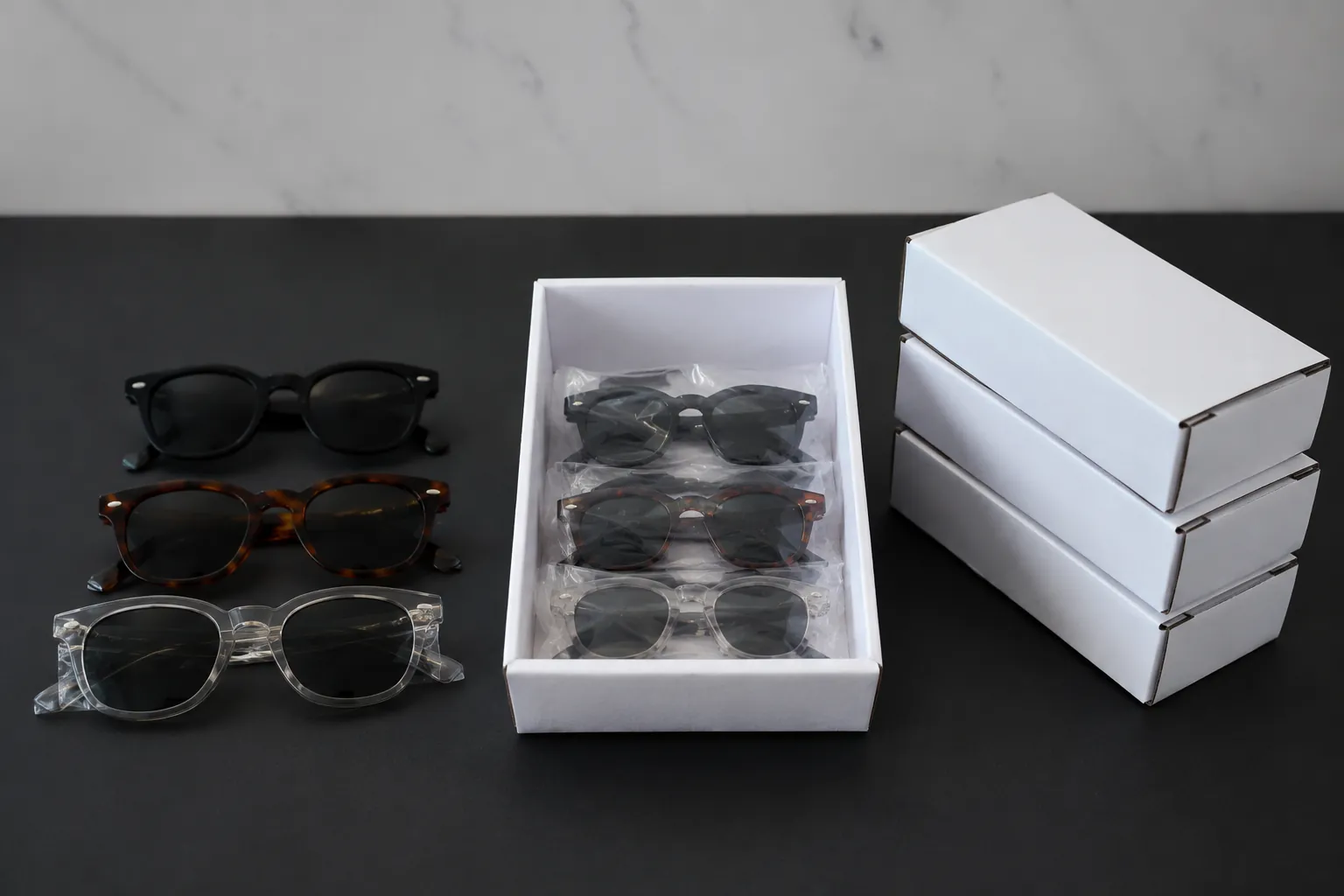
This guide is for brand owners, importers, distributors, and retailers who want one custom sunglasses order to cover two selling windows without trapping cash in the wrong SKUs. The key decision is not just FOB price. It is choosing which styles can carry over, assigning MOQ by demand confidence, locking lens colors and decoration at the right time, and checking QC and compliance against the final product and destination market. Do that early. Write it down clearly. Then one program can support a spring-summer push and a later shoulder-season window with less overstock risk and a cleaner reorder path.
Start with a two-season buy plan, not a one-season mood board
Excess stock usually starts in assortment planning, not production. Buyers approve too many trend-led options, spread units too thin across SKUs, or add volume just to chase a lower unit price. That is how risk creeps in.
Use a simple structure instead: core, seasonal, and test. Put volume where demand is most predictable. Keep exposure low where demand is still a guess.
- Core: proven shapes and commercial colors that can sell across both seasons.
- Seasonal: updated styles or colors that keep the range current in the main selling window.
- Test: limited runs used to assess a new shape, lens finish, logo treatment, or material direction.
In a 3,000-pair program, that often means placing most units into a small number of carryover styles and keeping trend bets shallow. This protects margin better than launching many styles at low depth, where slow sellers become dead stock and fast sellers cannot be repeated in time.
Apply the same logic to MOQ planning. If a supplier starts at 50 pairs per design and offers lower pricing at 300, 1,000, and 5,000+ pairs, use those breaks selectively. Save higher commitments for styles with real carryover potential. Keep trend-led bets at the lowest practical quantity. Cheap on paper can still be expensive in inventory.
Build the range around carryover shapes and reversible color architecture
If one buy needs to work twice, frame architecture matters more than trend noise. Some silhouettes carry better across seasons because they are broad-market and less tied to resort timing or short social cycles.
| Style type | Peak-season appeal | Shoulder-season carryover | Inventory risk |
|---|---|---|---|
| Classic square acetate | Stable | High | Lower |
| Mid-size metal aviator | Strong | High | Lower to medium |
| Cat-eye acetate | Strong | Medium to high | Medium |
| Oversize shield | Very strong | Low | High |
| Narrow fashion frame | Trend-led | Low to medium | High |
Color matters just as much. Neutral frame colors usually carry longer: black, dark tortoise, crystal brown, gunmetal, matte dark olive, and smoke crystal are generally easier to resell than neon transparents or high-saturation solids. For lenses, grey, smoke, brown, and G-15-style green are typically safer carryover choices than bright mirrors or very light cosmetic tints.
Keep the risk balanced. If the shape is bold, make the color commercial. If the color is fashion-led, keep the shape familiar. An oversize shield in black with a smoke lens is still easier to manage than the same shield in translucent orange with a bright mirror lens.
At factory level, platform thinking helps. The same front and temple set can often support two commercial versions: one with a lighter or gradient lens for peak season, and one with a darker lens and lower-contrast branding for the shoulder window. That is usually more efficient than opening separate tooling or material programs for each variation.
Use MOQ ladders to put volume where certainty is highest
MOQ is not just a factory rule. It is a risk-control tool. The goal is not the lowest possible piece price on every SKU. The goal is acceptable cost with acceptable inventory exposure.
A custom sunglasses supplier may offer development samples in about 7-10 days, MOQ from 50 pairs per design, lower pricing at 300 pairs, stronger cost improvement at 1,000 pairs, and the best unit economics at 5,000+ pairs, depending on material, hinge construction, lens treatment, and packaging. Exact breaks vary by factory. Confirm them style by style. Do not assume one standard ladder applies to everything.
| Volume tier | Best use | Commercial logic | Main risk |
|---|---|---|---|
| 50-150 pairs | Trend tests | Low cash exposure, fast market feedback | Highest unit cost |
| 300 pairs | Support styles | Useful visibility without a heavy commitment | Can still overstock if the color is too narrow |
| 1,000+ pairs | Core styles | Better margin and easier repeat planning | Forecast error becomes expensive |
| 5,000+ pairs | Established winners | Best cost efficiency | Very limited flexibility |
A practical six-style split is simple:
- Two core styles at higher volume in proven neutral colors.
- Two support styles at mid-volume with one safer color and one seasonal variation.
- Two test styles at the lowest practical quantity.
This usually reduces average risk without giving up all cost efficiency. It also makes repeat ordering easier because approved dimensions, lens specs, artwork files, and decoration positions are already documented.
Specify materials, lens colors, and decoration with production reality in mind
Two-season planning often fails because buyers change too many variables at once or specify details without understanding how the material behaves in production.
Injection-molded frames are common in volume programs because they can offer good dimensional consistency and repeatable color. They are often a practical choice for core styles. But very light transparent shades can make molding marks or flow lines more visible if tool design and process control are weak.
Acetate frames offer richer depth, layered color, and a more premium look, but sheet pattern repeat is never identical from pair to pair. Variation across the acetate sheet is normal. If a buyer wants tighter visual matching, the factory may need extra sorting. That adds waste and cost.
Decoration choices also affect lead time and durability:
- Pad print: economical for logos, but durability depends on correct ink selection, surface preparation, and curing.
- Hot foil: gives a cleaner metallic effect, but placement tolerance must be controlled.
- Metal logo plate: looks more premium, but adhesive performance and material compliance should be checked.
- Laser engraving: durable and precise, but contrast varies by substrate and finish.
For a two-season frame platform, a Version A / Version B approach often works well. Version A might use a warm crystal frame, brown gradient lens, and a more visible temple logo for peak season. Version B can use the same tooling with black or dark olive, a solid smoke lens, and lower-contrast branding. Fit stays the same. Components stay familiar. The visual read changes.
Freeze those details before bulk production starts. Late changes to lens tint, logo hardware finish, or print position often delay approvals, incoming components, and packaging alignment.
Map the calendar backward and protect the reorder window
Timing problems often hurt more than costing problems. If you need launch stock for spring and still want a realistic chance to top up for late summer or early fall, count backward from shelf date. Do not count forward from sample approval.
| Stage | Typical time | What can delay it | Buyer action |
|---|---|---|---|
| Sample development | 7-10 days | Unclear artwork, missing measurements, vague color callouts | Send a complete tech pack with dimensions and clear color direction |
| Sample review and revision | 5-10 days | Changing fit, color, and branding at the same time | Separate structural changes from cosmetic changes |
| Bulk production | 25-35 days | Late logo plates, lens color changes, packaging revisions | Freeze decoration and packaging before PO release |
| Final QC and shipment prep | 3-7 days | Inspection failures, barcode errors, label mismatch | Pre-approve shipping marks, labels, and carton details |
Add ocean freight, customs clearance, and domestic delivery, and a reactive reorder may arrive too late for the second window. In practice, reorder decisions usually need to happen while the first shipment is on the water or soon after early sell-through data appears.
Many buyer-side delays are avoidable. Moving logos after sample approval. Changing gift boxes after production starts. Leaving compliance paperwork to the end. A reliable factory cannot recover time lost to late approvals.
Check compliance and QC at style level, with measurable tolerances
For sunglasses, compliance is style-specific. It depends on final lens category, transmittance, frame and lens materials, markings, and destination market. A generic supplier statement is not enough.
Ask for product-relevant documentation tied to the final configuration and market requirement, such as CE EN ISO 12312-1, ANSI Z80.3, or AS/NZS 1067 where applicable. For material restrictions, confirm REACH support when required by the destination market. If the product is entering the United States, also confirm whether the supplier has appropriate FDA registration where applicable to its operations and product category. Factory-level systems such as ISO 9001 or social audit programs such as BSCI can help screen suppliers, but they do not replace product compliance for finished sunglasses.
If the lens tint changes, review the support documents again. A sample that passes with a darker smoke lens does not automatically validate a lighter fashion tint in the same frame.
QC should target defects that make stock harder to sell. At minimum, define measurable acceptance points in the specification sheet:
- Lens width, bridge, temple length: hold to the agreed drawing tolerance and record the tolerance in the tech pack.
- Logo position: set an allowed placement tolerance on the drawing so branding does not drift visibly.
- Left/right lens tint match: require no visible mismatch under the agreed inspection light condition.
- Temple alignment: define the flat-surface or jig-based inspection standard in advance.
- Color consistency: compare production to the approved master sample, especially across split lots and reorders.
Also inspect the higher-risk failure points: hinge torque, screw security, pad print rub resistance, adhesive performance on trims, scratches, sink marks, polishing quality, and acetate edge finishing. These are not minor issues if the goods need to stay sellable into a second season.
Buyer rule: approve bulk only after final lens tint, decoration method, packaging, and labeling are all fixed. Any one of those changes can affect timing, appearance, or compliance review.
Use a practical six-style order model across two windows
Below is a workable structure for a 3,000-pair program built to support a main summer push and a later shoulder-season window without putting too much volume into trend-led product.
| Style role | Qty | Color plan | Purpose |
|---|---|---|---|
| Core style 1 | 1200 pairs | 70% black, 30% tortoise | Main carryover seller |
| Core style 2 | 1000 pairs | 60% smoke crystal, 40% dark olive | Second broad-market seller |
| Support style 1 | 300 pairs | 50% brown gradient, 50% smoke | Add variety without high risk |
| Support style 2 | 300 pairs | One neutral, one fashion tint | Bridge peak and shoulder season |
| Test style 1 | 100 pairs | Single trend color | Read demand |
| Test style 2 | 100 pairs | Single trend shape in safe color | Read shape acceptance |
This model keeps most units in carryover-friendly product and limits true experiments to a small part of the order. For many B2B programs, that is the right balance.
The main lesson is simple. Do not rely on perfect trend forecasting. Build the order so that if part of the fashion forecast misses, the overall program still works. If shape selection, color planning, MOQ tiers, QC standards, compliance checks, and timing gates are handled carefully, one sunglasses buy can cover two seasons with lower inventory risk and a clearer repeat path.
Have a custom sunglasses project in mind?
Send us your styles, target market and quantities and we will return a detailed quote with MOQ, lead time and a sample plan.
Get a QuoteWhy source this from Wenzhou with LumiShades
Wenzhou in Zhejiang Province is widely regarded as China’s eyewear manufacturing capital, producing a large share of the world’s sunglasses. That concentration matters to buyers: a deep local supply chain for acetate sheet, hinges, lens blanks, plating and packaging means shorter component lead times, easier color and material matching, and a workforce with decades of eyewear-specific skill. LumiShades has manufactured in this ecosystem since 2009, and our vertical integration — in-house injection molding, acetate cutting, CNC milling, lens tinting, decoration and quality control — means no part of your order is quietly subcontracted to a workshop you cannot audit.
For international buyers, that vertical control translates into accountability. When a single factory owns every step, defects are traced and fixed at source rather than bounced between vendors, and your specifications survive intact from first sample to bulk. We back this with 15+ years of experience, shipments to 60+ countries, more than 5 million pairs produced per year and a 98.5% on-time delivery rate. Our certifications — CE EN ISO 12312-1, FDA registration, ANSI Z80.3, AS/NZS 1067, REACH, ISO 9001 and BSCI audit — mean the compliance documentation your market requires already exists. Explore our manufacturing capabilities and quality control process to see how this works in practice.
Frequently asked questions
What is the safest MOQ strategy if I am launching a new sunglasses line? Start by classifying styles into core, support, and test. Ask the supplier for the exact MOQ and price breaks for each style, then place the lowest practical quantity on unproven designs and reserve larger commitments for proven shapes in neutral colors. As a working rule, keep true tests at the smallest available MOQ, use mid-volume for support styles, and move to 1,000+ pairs only when you have evidence of carryover demand through past sales, channel feedback, or confirmed customer programs. Put that logic into the PO so the factory does not average quantities across risky and safe SKUs without your approval.
How many colors should I run per style to avoid slow stock? For a first order, limit most styles to two colors: one reliable neutral and one seasonal option. Ask your supplier to confirm whether each extra color creates separate material purchases, print setup, or packaging complexity, because each added color can slow approvals and dilute sell-through. If you do not yet know your winners by channel or region, avoid launching three or more colors per style unless the MOQ is very low and the style is clearly a test item.
Can I change lens colors late if the frame is already approved? You can request a change, but treat it as a new approval event. Ask the supplier what will be affected: lens recipe, transmittance category, sample confirmation, bulk lead time, and market-specific compliance review. Do not assume a new tint is covered by earlier test documents. Before approving the change, confirm revised lead time, updated sample or swatch approval, and whether CE EN ISO 12312-1, ANSI Z80.3, or AS/NZS 1067 support needs to be refreshed for the final configuration.
Are acetate and injection-molded frames equally suitable for two-season programs? Both can work, but they suit different risk profiles. Injection-molded frames are usually easier to scale for core volume because they can offer better unit economics and more repeatable dimensions and color in production. Acetate is often chosen when the material story, depth of color, or premium positioning matters enough to justify higher cost and natural pattern variation. For a two-season program, many buyers put core volume into injection-molded styles and use acetate selectively where the added value is clear and the expected margin can support it.
What compliance documents should I ask for on a custom sunglasses order? Request product-specific documentation that matches the final style, lens, and destination market. Depending on where you sell, that may include CE EN ISO 12312-1, ANSI Z80.3, or AS/NZS 1067, plus REACH-related material declarations where applicable. If selling into the U.S., also ask the supplier to clarify any applicable FDA registration status for its operations or product category. Separately, if you are screening factories, ask whether they hold ISO 9001 or BSCI, but treat those as supplier-management references rather than proof that the finished sunglasses comply. Before bulk starts, confirm that labels, markings, warnings, and packaging information all match the approved compliance route.
Ready to start?
Explore our shield & oversized sunglasses or request a quote — our sales team replies within 12 hours.
Request a Quote