
Sunglasses Tech Pack: What to Include for Pricing
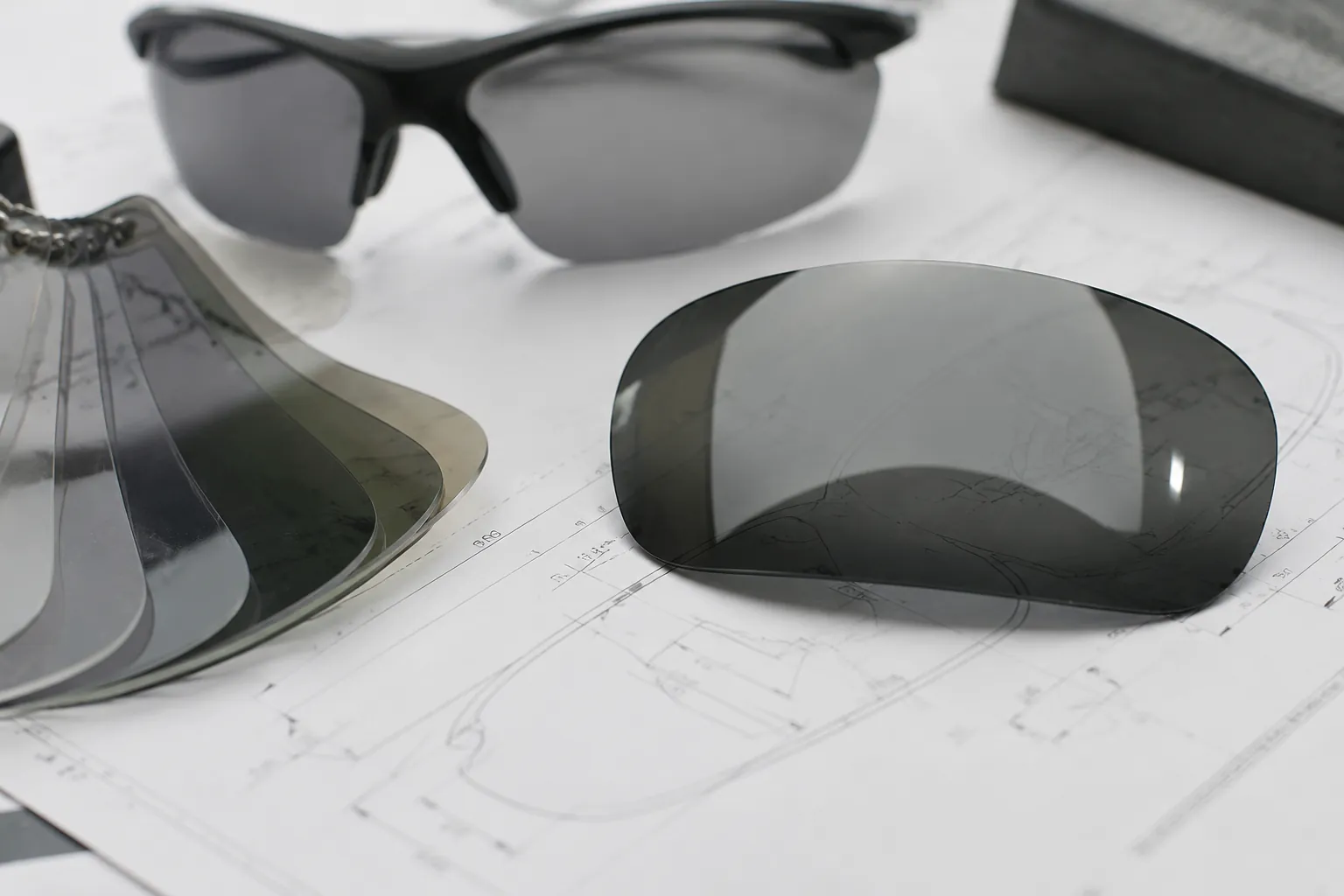
This guide is for brand owners, importers, distributors, and retail buyers who need factory quotes they can compare on a like-for-like basis. In sunglasses sourcing, vague tech packs create fake price gaps because each supplier fills in missing details differently. One factory may quote a stock injection frame with basic tinted lenses and simple bagging. Another may assume upgraded lens material, extra finishing steps, and retail-ready packaging. The lowest quote on paper can turn into the highest program cost once revisions, packaging changes, or compliance fixes are added. A strong sunglasses tech pack reduces that risk before pricing starts. It defines the build, finish, packaging, testing scope, and quotation assumptions so each supplier prices the same product.
Start with the fields that affect price
Unreliable quotes usually start the same way: a buyer sends a sketch, a photo, or a mood board and asks for a unit price. That may work for a rough budget. It does not work for a comparable factory quote. Price depends on tooling, process route, labor, material choice, and testing scope.
Put these pricing-critical fields on page one of the tech pack or RFQ:
- Product type: fashion sunglasses, sport wrap, kids sunglasses, blue-light frame fitted with sunglass lenses, or another defined use case.
- Construction route: injection plastic, sheet acetate cut and CNC milled, full metal, or mixed material such as acetate front with metal temples.
- Quantity ladder: sample quantity, first bulk order, and expected reorder levels. A practical grid is 50, 300, 1000, and 5000 pairs if those levels match your plan.
- Target market: EU, US, Australia/New Zealand, or multi-market. This affects labeling, documents, and test planning.
- Compliance scope: list only the standards or declarations actually required for your market or importer file, such as CE EN ISO 12312-1, ANSI Z80.3, AS/NZS 1067, REACH, FDA registration, ISO 9001, or BSCI where relevant.
- Packaging level: polybag only, pouch, folding case, rigid box, barcode label, inner box, export carton rules.
Add one more field many buyers leave out: quotation assumptions. State whether the supplier should quote a new mold, a modification of an existing mold, or branding of a stock frame. Those are not the same job.
If these fields are not fixed, suppliers will guess differently. One may quote a basic uncoated lens. Another may include polarized TAC lenses and printed retail packaging. Those are not comparable prices.
Define frame construction like a spec sheet
Frame construction is a major source of hidden price variation. The tech pack should not stop at styling. It should identify the manufacturing route and the build details that drive cost.
For injection styles, specify the resin family the supplier should quote. Common options include PC and TR90-type materials. If you need a specific commercial resin grade, name it. If not, state the functional target instead: flexibility, gloss level, or weight. If color match matters, reference an approved sample, Pantone target, or buyer color standard and say whether a tight match is required.
For acetate designs, state clearly whether the frame is real sheet acetate or acetate-look injection. Real acetate uses a different process route: sheet cutting, CNC machining, polishing, hinge fitting, and more manual finishing. It should not be priced like injection.
Include core dimensions with tolerance. At minimum, specify lens width, bridge, temple length, front width, and lens base where relevant. If fit or comfort matters, add frame weight as a reference target. Tolerances should be realistic and agreed with the supplier. Not implied. Agreed.
Also define the hardware and assembly details:
- Hinge type: standard hinge, spring hinge, screwless hinge, or another named construction.
- Temple core: none, straight wire core, or custom shaped core.
- Nose construction: molded saddle, inset pads, or adjustable metal pad arms.
- Joining method: screw assembly, rivet detail, insert molding, or adhesive-fixed trim.
- Logo method: pad print, laser, foil stamp, or metal insert plate.
These are not cosmetic details. A spring hinge, custom temple core, or metal logo trim changes component cost, assembly time, sampling effort, and sometimes MOQ.
Lens specs drive cost and compliance
Many buyers describe the frame in detail and leave the lens open. That is a mistake. For sunglasses, lens material, geometry, coatings, and transmission target affect both price and compliance.
Define these lens fields in the tech pack:
- Material: PC, TAC polarized, nylon, CR-39, or another named material.
- Thickness: state the nominal thickness if known, or reference an approved sample standard.
- Tint or color: smoke, brown, green, gradient, mirror silver, mirror blue, or buyer-approved custom reference.
- Visible light transmission target: specify a target range suitable for the intended use. Do not use vague terms like dark lens.
- Coating system: hard coat, mirror coat, backside anti-reflective, or other required treatment.
- Polarization: yes or no; if yes, define the lens structure to be quoted.
- Lens geometry: flat, base 4, base 6, wrapped sport curve, flush fit, or deep set.
Small lens changes can shift price and test outcome. A standard tinted PC lens and a polarized TAC lens are not the same quote. Mirror coating, backside anti-reflective coating, or high-base sport geometry can also add process steps and tighter cosmetic control.
| Lens option | Typical thickness | Typical use | Cost effect | Lead-time effect | What to define |
|---|---|---|---|---|---|
| PC tinted | Varies by design | Fashion sunglasses | Generally lower | Usually simpler | Tint color, VLT target, hard coat requirement |
| PC mirrored | Varies by design | Fashion or sport look | Higher than basic tinted PC | May add coating steps | Mirror color, backside AR if needed, coating uniformity standard |
| TAC polarized | Varies by structure and design | Mid-tier retail and above | Higher | May require additional sourcing or process control | Polarization requirement, tint, edge finish, delamination acceptance |
| Nylon performance lens | Varies by base and design | Sport wrap styles | Often higher | Depends on sourcing route | Base curve, optical requirement, coating system |
State the standard required for the selling market. CE EN ISO 12312-1 is the relevant sunglass product standard for the EU. ANSI Z80.3 may be requested for the US market. AS/NZS 1067 applies in Australia and New Zealand. REACH may be required for chemical compliance of applicable materials and finishes. FDA registration is separate from sunglass optical performance requirements and should only be requested if it is relevant to your importer or product category.
Specify finish and decoration without guesswork
Words like premium matte or luxury gloss do not help suppliers quote. Use process language. State the visible result and how it should be made.
For frame finish, define whether the part is:
- Direct material color with polished mold surface
- Spray painted high gloss
- Fine matte or satin texture
- Rubberized coating
- Crystal transparent
- Tortoise or laminated acetate effect
If paint is used, specify whether the finish is single coat or multi-coat, and whether adhesion must meet a named buyer test method or factory standard. Painted parts can look different from direct injection color. They also add process steps and inspection work.
Decoration needs the same precision. For pad printing, include Pantone color, print size in mm, print location from a fixed reference point, and whether the print is on one side or both sides. For laser engraving, specify engraving area, orientation, and whether the result is tone-on-tone or paint-filled. For metal logo plates, define the finish tone such as shiny gold, brushed silver, or gunmetal, plus whether the plate is glued, pinned, or insert-mounted.
Also write cosmetic acceptance criteria. Examples:
- No obvious logo shift greater than the agreed tolerance
- No visible paint dust points under the agreed inspection condition
- Mirror lenses must show even color within the approved sample standard
- No bubbling, lifting, or exposed adhesive around trim parts
Without this, suppliers may quote different finish routes and inspect to different internal standards. Then the quotes look lower or higher for the wrong reason.
Include packaging in the first quote
Packaging affects unit cost, assembly labor, carton planning, and freight volume. It belongs in the first quotation round. Not after sample approval.
List every packaging component in the tech pack:
- Individual protection: PE polybag, lens sleeve, tissue wrap, no bag, warning sticker, removable lens film.
- Consumer pack: microfiber pouch, EVA zipper case, PU folding case, paper box, rigid magnetic box.
- Printed inserts: barcode label, hangtag, care card, warranty card, warning label, origin label.
- Outer packing: units per inner box, units per export carton, carton dimension limits, gross weight limit, carton mark format.
Be practical about minimums. The frame may work at a lower quantity, while a custom printed rigid box may only be economical at a higher packaging run. Eyewear MOQ and packaging MOQ do not always match.
If launch quantity is limited, ask suppliers to quote two paths:
- Launch pack: lower-complexity packaging such as microfiber pouch plus barcode label
- Scale pack: full branded box and insert set for higher reorder volume
This keeps product cost visible and avoids later confusion about whether the unit price includes retail-ready packaging or only transit protection.
Define testing, documents, and quality checkpoints
A complete quote is more than a unit price. It should also state what documents, testing support, and quality-control scope are included. This is where many programs lose time after sampling.
List the required compliance file clearly. Depending on market, that may include testing or test readiness to CE EN ISO 12312-1, ANSI Z80.3, or AS/NZS 1067, plus REACH declarations where applicable. If your importer also requests factory management or social compliance information, ask separately for documents such as ISO 9001 certification or BSCI audit status if those are part of vendor approval. If FDA registration is requested, treat it as a separate document item, not proof of sunglass optical compliance.
Define the approval path in the tech pack:
- Counter sample: visual direction only unless otherwise agreed.
- Pre-production sample: built to intended bulk materials, colors, finish, and packaging.
- Bulk approval sample: signed sample used as the quality reference for production.
Then define checkpoints:
- In-line: hinge alignment, lens fitting, logo placement, paint consistency, left/right temple symmetry.
- Final inspection: quantity count, cosmetic defects, opening and closing function, packaging correctness, carton marks.
- Defect standard: state whether you will use an AQL plan or custom pass/fail rules.
Useful rules include how appearance will be checked, which functional points must be verified, and which approved sample controls color and finish acceptance. If visible defect rules are not defined, each supplier will default to its own standard.
Ask for MOQ and lead times in one format
If you want comparable quotations, ask every supplier to quote the same way. Do not ask for one unit price only. Request a structured grid with quantity breaks, tooling assumptions, sample timing, and exclusions.
| RFQ field | What to request | Why it matters |
|---|---|---|
| MOQ by design | 50 / 300 / 1000 / 5000 pairs | Shows how unit price changes by volume and whether your launch quantity is realistic |
| Sample lead time | Counter sample and pre-production sample separately | Avoids confusion between concept review and bulk-approval timing |
| Bulk lead time | From deposit plus sample approval to ex-factory date | Makes production windows comparable |
| Tooling assumption | New mold, mold modification, or stock frame branding | Prevents hidden one-time charges |
| Packaging included | List each component or state excluded | Stops quote creep later |
Lead times should follow the construction route and supplier capability. A stock-model branding job may sample faster than a new acetate development or a new mold program. Bulk timing also changes if the product uses custom lenses, custom hardware, or printed packaging from separate vendors.
Request separate line items for:
- Unit price by quantity break
- Sample charge and refund policy
- Tooling or logo mold charge
- Packaging cost by component
- Testing cost if outside standard scope
This is the clearest way to see whether a lower quote is actually cheaper or just less complete.
Use a final checklist before sending RFQs
Use this checklist before requesting factory pricing. If several answers are still missing, the quotation round is too early.
- Is the product type defined clearly: fashion, sport, kids, or another intended use?
- Is the construction route stated exactly: injection, real acetate, metal, or mixed material?
- Are key dimensions listed with agreed tolerances?
- Is the lens specified by material, tint, VLT target, polarization status, and geometry?
- Are finish and decoration methods defined by process and placement?
- Is packaging complete down to labels, inserts, and carton rules?
- Are target market and required standards named correctly?
- Have you requested the same quantity breaks and quotation format from every supplier?
- Have you separated visual sample review from the final bulk approval sample?
Good suppliers can quote fast once the brief is complete. In many sunglass programs, the problem is not factory response time. It is unclear buyer input. The more specific the tech pack is before pricing, the more useful and comparable the quotes will be.
Have a custom sunglasses project in mind?
Send us your styles, target market and quantities and we will return a detailed quote with MOQ, lead time and a sample plan.
Get a QuoteWhy source this from Wenzhou with LumiShades
Wenzhou in Zhejiang Province is widely regarded as China’s eyewear manufacturing capital, producing a large share of the world’s sunglasses. That concentration matters to buyers: a deep local supply chain for acetate sheet, hinges, lens blanks, plating and packaging means shorter component lead times, easier color and material matching, and a workforce with decades of eyewear-specific skill. LumiShades has manufactured in this ecosystem since 2009, and our vertical integration — in-house injection molding, acetate cutting, CNC milling, lens tinting, decoration and quality control — means no part of your order is quietly subcontracted to a workshop you cannot audit.
For international buyers, that vertical control translates into accountability. When a single factory owns every step, defects are traced and fixed at source rather than bounced between vendors, and your specifications survive intact from first sample to bulk. We back this with 15+ years of experience, shipments to 60+ countries, more than 5 million pairs produced per year and a 98.5% on-time delivery rate. Our certifications — CE EN ISO 12312-1, FDA registration, ANSI Z80.3, AS/NZS 1067, REACH, ISO 9001 and BSCI audit — mean the compliance documentation your market requires already exists. Explore our manufacturing capabilities and quality control process to see how this works in practice.
Frequently asked questions
Can I ask for pricing with only a photo reference? Yes, but treat the result as a rough budget estimate only. A photo does not define material, lens structure, hardware, finish route, packaging, or compliance scope. If you need quotes you can compare across suppliers, send at minimum: construction type, frame material, key dimensions, lens material, tint, VLT target, polarization status, logo method, packaging level, target market, and quantity breaks. Also say whether the supplier should quote a stock model, a modification, or a new development.
What is the minimum information needed for an accurate first quote? For a usable first quote, provide: 1) product type; 2) frame construction route; 3) material specification such as PC, TR90-type material, acetate, or metal; 4) key dimensions; 5) lens material and color; 6) VLT target; 7) polarization yes/no; 8) finish and logo method; 9) packaging components; 10) target market and required standards such as CE EN ISO 12312-1, ANSI Z80.3, AS/NZS 1067, or REACH where applicable; and 11) quantity breaks. If any of those are undecided, say so plainly and ask the supplier to quote named options instead of guessing.
Should testing be quoted before or after sample approval? Define the required standards before quotation so the supplier prices the correct materials and process route from the start. Formal compliance testing is usually done on a production-representative sample or bulk lot, but the quote should already state the intended standard and whether test cost, test support, or documentation is included. If you need CE EN ISO 12312-1, ANSI Z80.3, AS/NZS 1067, REACH declarations, or FDA registration documents, list each item separately in the RFQ.
How do I keep quotes comparable between suppliers? Use one RFQ template for every factory and require the same response structure. Ask each supplier to confirm: product construction, frame material, lens material, coating system, packaging included, target market, standards to be met, MOQ by design, price by quantity break, sample charge, tooling charge, packaging cost, testing cost, and lead-time assumptions. Also require each supplier to state exclusions. If one quote includes polarized TAC lenses and a rigid box while another includes only basic tinted lenses and a polybag, the prices are not comparable until those differences are removed.
Does low MOQ mean all options are available at the same cost structure? No. A supplier may accept a low MOQ for the frame itself, but some components or processes can still carry separate minimums or higher unit costs. Common examples include polarized TAC lenses, spring hinges, custom metal trims, painted finishes, and rigid printed boxes. Ask the supplier to identify any component-specific MOQ, tooling cost, or packaging minimum in writing. If your launch volume is low, request two quotations: one for a lower-complexity launch version and one for the fully specified scale version.
Ready to start?
Explore our round sunglasses or request a quote — our sales team replies within 12 hours.
Request a Quote