
How to Vet a China Sunglasses Factory Remotely
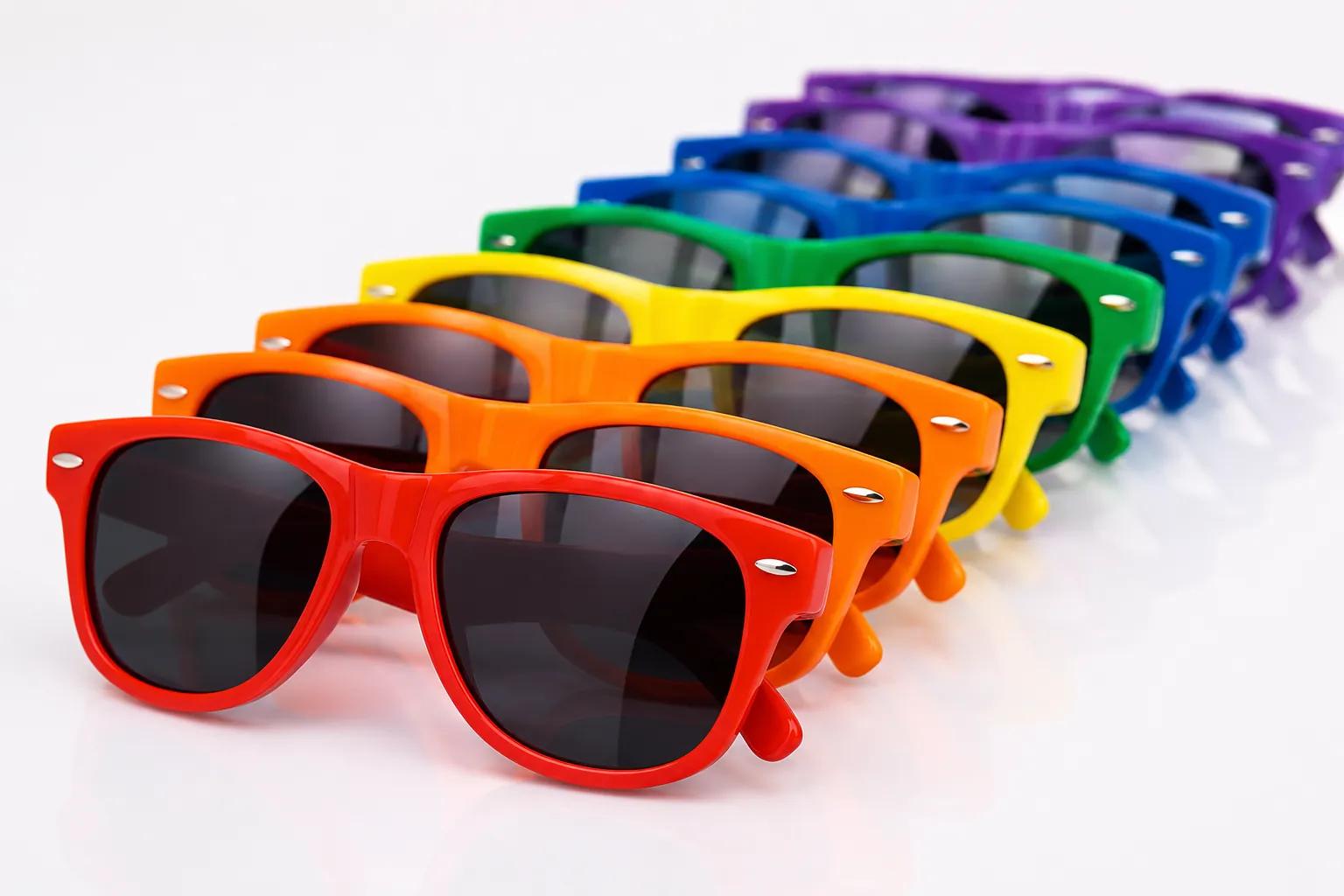
This guide is for brand owners, importers, distributors, and retailers sourcing custom sunglasses from China without visiting the factory first. The aim is simple: screen out weak suppliers before you spend money on development, lab testing, and a first production run. A capable factory should show control early. Look for clear MOQ logic, realistic lead times, documented tolerances, relevant compliance knowledge, and proof of how it handles materials, decoration, assembly, and final inspection. You can verify much of that remotely if you ask for specific evidence and compare each supplier against the same technical requirements.
Build a Remote Shortlist Before You Buy Samples
Many buyers request samples first and ask hard questions later. That often wastes time. A sample can look good and still come from a supplier with weak production control, heavy use of subcontractors, or poor revision management. Start by screening each supplier on four points: production depth, communication discipline, compliance fit, and order economics.
First, ask what is done in-house and what is outsourced. For sunglasses, that matters. A factory that controls key steps such as injection molding, acetate machining, polishing, logo decoration, assembly, and final QC usually has better control over timing and corrective action than a trading company or light assembler coordinating outside workshops. Outsourcing is not an automatic disqualifier. But you need a process map.
Do not accept broad claims like "full service manufacturer." Ask for specifics. Which frame materials are run in-house: TR90, PC, acetate, or metal? Are acetate fronts cut on CNC equipment or by another method? Are lenses bought finished, or are tinting or coating steps handled internally? Is pad printing done on the supplier's own line or by a subcontractor? Which process usually limits throughput during peak periods: polishing, logo application, lens fitting, or packing?
- Ask for MOQ by design and by color. A factory may quote one MOQ for the style but apply a separate minimum to each color or lens variant.
- Ask for price breaks at 50, 300, 1000, and 5000 pairs so you can see how setup cost and material efficiency affect pricing.
- Ask for sample lead time by stage: artwork confirmation, tooling if required, material preparation, and assembly.
- Ask for bulk lead time tied to a defined start point such as deposit received, approved pre-production sample, confirmed artwork, or all approvals complete.
- Ask whether the supplier can provide a written process flow, not just a verbal description.
Pay attention to how the answers arrive. Incomplete replies, shifting numbers, and repeated corrections are not small issues. They are early signs of how the supplier may handle your order later. Remote vetting is not just about what a supplier says. It is also about whether the team can control information before production starts.
Read the Quote Sheet Like an Audit
A serious quotation shows how the supplier thinks. A weak quote is just a unit price and a promise. A useful quote spells out assumptions, cost drivers, exclusions, and technical questions. Send every factory on your shortlist the same RFQ package: frame material, lens material, hinge type, logo method, packaging format, target test standard, quantity by color, and destination port. Then compare the quality of the reply, not just the number at the bottom.
| What To Check | Reliable Factory Signal | Warning Sign |
|---|---|---|
| MOQ logic | Explains MOQ by design and color, with reasons tied to setup, material use, or packaging format | One flat MOQ with no explanation |
| Price structure | Separates sample fee, mold fee if applicable, unit price, logo cost, packaging cost, and test cost if quoted | One lump-sum quote with missing line items |
| Lead time | States sample and bulk timing and names the approval steps that affect scheduling | Promises unusually fast delivery with no production breakdown |
| Technical questions | Asks about lens category, frame construction, hinge type, logo position, labeling, and packaging details | Asks nothing and says all details are fine |
Look closely at how the supplier explains price movement. At low quantities, setup cost, logo preparation, machine changeover, and manual assembly are spread across fewer units. At higher quantities, those fixed costs are distributed more efficiently and packaging can be standardized. A supplier that explains this clearly is usually easier to manage than one that just drops a number.
Also watch for hidden cost shifts. Low quotes often depend on a different hinge specification, a cheaper lens material, simpler packaging, or lower decoration quality. Ask whether the quoted hinge is stainless steel, nickel silver, or another material; whether the logo is pad print, laser engraving, or a metal plate; and whether the lens is PC, TAC, nylon, or another substrate. These details change both price and performance. Sometimes materially.
Verify Production Depth on Live Video
Do not rely on brochures or edited factory videos. Ask for a live walk-through. Send the route in advance so the supplier knows what you need to see. Start with incoming materials, then move through production, assembly, inspection, and packing.
- Raw material area: acetate sheets, pellets, temples, hinges, screws, lenses, logo hardware, and packaging stock.
- Machining or molding area: injection machines, acetate cutting stations, CNC equipment, drilling, and beveling.
- Surface finishing: tumbling, polishing, cleaning, and buffing where applicable.
- Lens area: storage, cutting, edging, tint handling if done in-house, and batch identification.
- Decoration: pad printing, hot stamping, laser engraving, or metal logo plate fitting.
- Assembly: hinge insertion, screw locking, lens fitting, adjustment, and cleaning.
- Final QC and packing: inspection tables, carton marking, and segregated defect area.
Ask the person holding the camera to show work-in-progress bins, lot tags, production paperwork, and defect quarantine trays. You are not looking for polished footage. You are looking for flow control. A real factory floor should show fixtures, tools, in-process labels, and clear separation between accepted, rework, and rejected goods.
Use the call to test technical understanding. For acetate, ask how the supplier manages dimensional stability after machining and polishing and before lens fitting. For injection frames, ask how it monitors sink marks, gate marks, or color variation. For metal trims or logo plates, ask how burrs are removed and alignment is checked. For lenses, ask whether tinting is done in-house or sourced finished, and how incoming lots are identified and controlled.
If the supplier cannot explain basic controls such as screw fit, left-right alignment checks, or segregation of rework, that is a real problem. Not a wording problem. An operational one.
Check Compliance Fit Before Design Approval
Many sourcing problems start here. Compliance is often treated as paperwork collected before shipment instead of a product requirement defined at the start. Ask the right question: can this exact frame, lens, and target market combination be tested or documented against the requirement you need?
For sunglasses, the main standards usually discussed are CE EN ISO 12312-1, ANSI Z80.3, AS/NZS 1067, and REACH. Depending on the customer and sales channel, you may also ask about FDA registration, ISO 9001, and BSCI. These are not interchangeable. FDA registration and ISO 9001 do not replace product performance testing. BSCI is a social compliance framework, not a sunglasses performance standard.
- CE EN ISO 12312-1: ask how lens category is determined, how visible light transmission is verified, and how product labeling is linked to the lens used.
- ANSI Z80.3: ask whether the supplier has experience preparing samples and technical files for the US market and whether model-specific test support is available.
- AS/NZS 1067: confirm this early if Australia or New Zealand is part of your sales plan.
- REACH: ask which materials are controlled or screened, including frame substrate, coatings, inks, nose pads, and packaging contact components.
- FDA registration, ISO 9001, BSCI: treat these as background information only, and verify whether they belong to the actual factory, a trading company, or a different site.
Request recent test reports with model photos, report dates, lens descriptions, and issuing lab details visible. Then check whether the report is actually relevant to your product. A passing report for one lens substrate, tint level, or frame shape does not automatically apply to another. Frame construction, lens material, tint category, and decoration can all affect the compliance position.
Ask one more thing: how does the supplier link reports to internal product records? A disciplined factory should be able to tie a test file to a model code, lens specification, bill of materials, and artwork version. If it cannot, the report may be a sales document rather than controlled product evidence.
Use Samples to Test Control, Not Just Looks
Once a factory passes document and video screening, order samples. One showroom sample is rarely enough. If budget allows, request two sets: a presentation sample and a production-style sample made with the intended materials, decoration method, and packaging. The second sample tells you more about repeatability.
Tell the supplier to use the actual planned lens material, hinge type, logo method, and packaging specification. Then inspect the sample like a QC team would, not just like a marketing team would.
- Check left-right temple alignment on a flat surface. Uneven contact can indicate adjustment issues or front distortion.
- Measure logo position and compare both sides. Ask the supplier to state its own tolerance and confirm whether the sample falls within it.
- Inspect lens fit around the rim. Look for stress marks, poor seating, edge gaps, or visible pressure points.
- Open and close hinges repeatedly to compare feel on both sides and check for looseness, rough movement, or metal debris.
- Rub printed logos with a suitable cloth and ask the supplier what internal adhesion check it uses before shipment.
- Check tint consistency under natural light and neutral indoor light, and compare left and right lenses carefully.
- Inspect metal logo plates for burrs, excess adhesive, tilt, or inconsistent recess depth.
Ask what internal tolerances the supplier uses for symmetry, lens fitting, and decoration placement. If it cannot state any numerical limits or inspection criteria, QC may be based on appearance alone. You do not need a perfect sample. You need proof that the supplier can define acceptable variation, measure it, and react when a part falls outside it.
Score Communication Before You Score Quality
Factories do not fail only on manufacturing. They also fail on follow-up, revision control, and escalation. A technically capable supplier can still create expensive mistakes if the team cannot manage changes clearly. So treat communication discipline as part of your supplier scorecard from day one.
Track three things during quotation and sampling: response time, completeness, and consistency. If you ask ten technical questions and get six answers, note it. If one salesperson quotes one MOQ and another gives a different number, note that too. If lead time changes in every email, internal control is weak.
| Area | What Good Looks Like | Why It Matters |
|---|---|---|
| Replies | Clear technical answers within an agreed business timeframe | Slow or vague replies during quotation usually become worse during production |
| Revision control | Updated spec sheet with version date, change marks, and clear approval record | Prevents wrong lens color, logo, or packaging in bulk |
| Problem handling | States issue, probable cause, corrective action, and revised completion date | Shows whether the team can manage defects under pressure |
| Ownership | One accountable contact linked to sales, production, and QC | Reduces internal handoff mistakes |
Also define when the bulk lead-time clock starts. This causes frequent disputes. Ask whether the production schedule begins after deposit, after sample approval, after artwork approval, after packaging confirmation, or only when all approvals are complete. Put that trigger in writing on the PI, PO, or email approval trail. If you do not, both sides may be working from different assumptions.
Place a Trial Order That Exposes Weaknesses
Your first order should be large enough to test real production behavior and small enough to limit damage if the supplier underperforms. In practice, that usually means one or two SKUs, limited colors, and a quantity above the absolute minimum so the factory has to manage real batch control.
Before payment, lock six items in writing: approved sample reference, complete specification sheet, packaging standard, inspection method, shipment date, and remedy for defects or non-conformities. Ask for in-line production photos, outer carton dimensions, gross and net weights, and a final QC summary before balance payment. If you plan to use a third-party inspection, say so early and define the inspection timing and reference documents.
A small order is not a safe order if the specification is vague. Many first-order failures come from basic gaps: lens category not defined, logo artwork changed informally, temple color approved verbally instead of by code, or packaging inserts left to factory interpretation. When the goods arrive, compare them against the signed sample and written specification. Not memory. Not chat history.
If the supplier performs well on the first trial order, you have a stronger basis for deciding whether it can support broader development, higher volume, or a factory visit.
Use a Simple Shortlist Scorecard
Keep the final decision simple and evidence-based. Score each supplier from 1 to 5 on production depth, compliance fit, communication discipline, sample accuracy, and commercial clarity. Do not let one low headline price outweigh weak evidence elsewhere.
A supplier worth moving forward with should be able to show control over core processes, quote with clear assumptions, explain how quantity affects price, provide samples against a defined specification, and connect compliance documents to actual model details rather than generic claims. It should also be able to state what is done in-house, what is outsourced, and how outsourced steps are controlled.
Remote vetting will not replace every on-site audit. But it can remove a lot of noise before you spend money on travel, testing, or a broader rollout. Done properly, it helps you reserve factory visits and deeper due diligence for suppliers that have already shown process discipline, documentation control, and enough operational maturity to handle your product responsibly.
Have a custom sunglasses project in mind?
Send us your styles, target market and quantities and we will return a detailed quote with MOQ, lead time and a sample plan.
Get a QuoteWhy source this from Wenzhou with LumiShades
Wenzhou in Zhejiang Province is widely regarded as China’s eyewear manufacturing capital, producing a large share of the world’s sunglasses. That concentration matters to buyers: a deep local supply chain for acetate sheet, hinges, lens blanks, plating and packaging means shorter component lead times, easier color and material matching, and a workforce with decades of eyewear-specific skill. LumiShades has manufactured in this ecosystem since 2009, and our vertical integration — in-house injection molding, acetate cutting, CNC milling, lens tinting, decoration and quality control — means no part of your order is quietly subcontracted to a workshop you cannot audit.
For international buyers, that vertical control translates into accountability. When a single factory owns every step, defects are traced and fixed at source rather than bounced between vendors, and your specifications survive intact from first sample to bulk. We back this with 15+ years of experience, shipments to 60+ countries, more than 5 million pairs produced per year and a 98.5% on-time delivery rate. Our certifications — CE EN ISO 12312-1, FDA registration, ANSI Z80.3, AS/NZS 1067, REACH, ISO 9001 and BSCI audit — mean the compliance documentation your market requires already exists. Explore our manufacturing capabilities and quality control process to see how this works in practice.
Frequently asked questions
How many factories should I shortlist before ordering samples? Three to five is usually practical. Fewer than three makes comparison weak, especially on MOQ logic, communication quality, and compliance understanding. More than five often creates unnecessary noise. Ask every shortlisted supplier the same technical questions and score the replies against the same criteria before you pay for samples.
Is a 50-pair MOQ too low to judge a factory? It is enough to judge quoting discipline and willingness to handle a small custom project, but not enough to judge full production control on its own. Use a low MOQ to test responsiveness, documentation, and sample execution. If the sample is acceptable, move to a controlled trial order large enough to require material picking, decoration control, assembly consistency, and final packing discipline.
What is the biggest red flag in remote vetting? Inconsistent answers from the same supplier. If MOQ, lead time, material specification, or compliance position changes depending on who replies, internal control is weak. Ask the supplier to confirm final details in one version-controlled specification sheet. If it cannot do that before the order, risk usually increases during production.
Can I rely on a test report from a previous model? Only as background evidence of experience. You still need to check whether the frame construction, lens substrate, tint category, decoration, and target market match your product closely enough to make the report relevant. Ask for the report, model photos, lens description, lab name, and date. If key product details differ, treat the report as reference only and plan model-specific testing.
What should I ask for before paying the balance on a first order? Ask for final packing photos, carton marks, carton count, quantity summary, gross and net weight, and a QC report tied to your PO, approved sample, and specification version. If you are using third-party inspection, ask for the inspection result and any corrective action on failures. Also confirm the shipment date and whether any deviations from the approved specification were found or accepted in writing before you release the balance.
Ready to start?
Explore our shield & oversized sunglasses or request a quote — our sales team replies within 12 hours.
Request a Quote