
Ready Molds vs. New Tooling for Custom Sunglasses
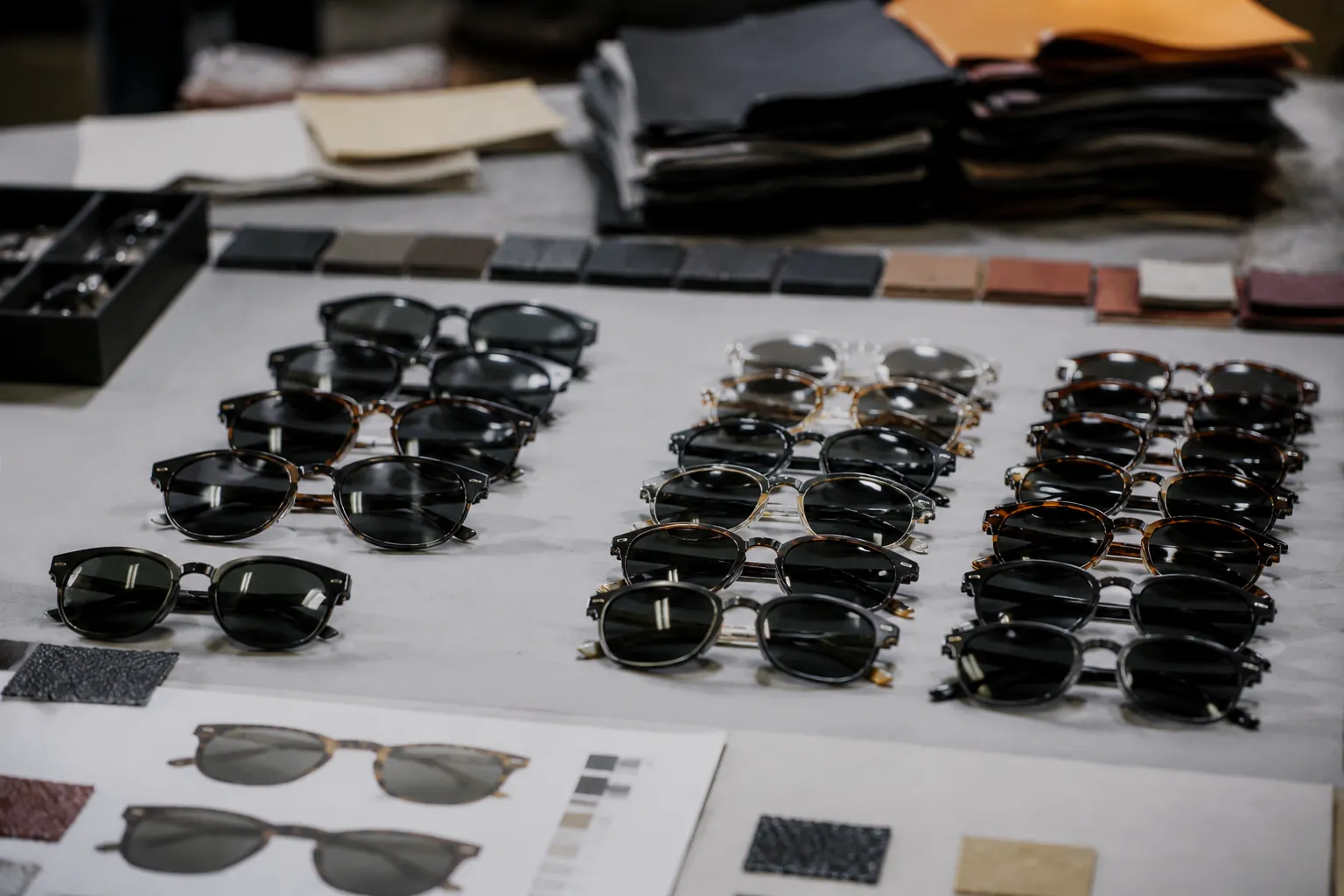
This guide is for brand owners, importers, distributors, and retailers deciding how far to customize a sunglasses program. The main question is not design freedom versus speed. It is whether an existing factory mold gives enough commercial and technical control for the launch, or whether a new tool is justified by fit, geometry, exclusivity, and expected repeat volume. The answer depends on forecast demand, target cost, margin, timeline, compliance scope, and the buyer's ability to manage development. Use the framework below to make the call before sampling starts.
Start with the business case, not the sketch
Many buyers start with appearance. That is normal. It is also a mistake.
Before discussing bridge shape, temple taper, or lens color, define what the program must achieve in year one: expected volume, target FOB or landed cost, target margin, sales channel, timing, and whether the frame shape itself needs to be exclusive.
Ready molds usually make sense when speed, lower upfront commitment, and lower development risk matter more than fully custom geometry. They are common for market tests, short seasonal programs, influencer launches, event merchandise, and retailer capsules where demand is still uncertain.
New tooling is usually the better choice when frame geometry is part of the value. If the business case depends on a specific front curve, bridge fit, wrap profile, temple architecture, or a silhouette that should not be shared with other brands, an existing mold becomes a hard limit. Decoration can change the look. It cannot fix poor fit or create real shape ownership.
Ask these questions before requesting samples:
- Lifecycle: Is this a short test, a one-season launch, or a carryover style meant for repeat production?
- Volume: Is repeat demand supported by sales data, retailer commitment, or only by projection?
- Margin: Can the program absorb development cost, sample rounds, testing, and possible first-run corrections?
- Channel: Does the retailer or market need visible differentiation beyond color, logo, and packaging?
- Fit risk: Would changes to eye size, bridge width, temple length, or wrap likely reduce complaints or returns?
If the answers point to speed, lower commitment, and uncertain demand, start with a ready mold. If they point to repeat volume, fit control, and shape exclusivity, review new tooling seriously.
The real trade-off: speed and lower risk vs. control
| Decision factor | Ready mold | New tooling |
|---|---|---|
| Upfront cost | Usually lower. Common costs include samples, decoration setup, packaging setup, and production deposit. | Usually higher. Common costs include tooling, prototype review, revised samples, and first-run validation. |
| Sample timing | Often faster because the base geometry already exists. Timing still depends on color, lens, logo, and packaging changes. | Usually slower because the tool must be designed, produced, trialed, corrected if needed, and sampled again. |
| Bulk timing | Often shorter on first order because molding behavior and assembly are already established. | Often longer on first order because development, correction rounds, and production validation must be completed first. |
| MOQ risk | Usually lower because the factory is not recovering a dedicated tool from one style. | Usually higher because the commercial case must support tooling payback. |
| Design freedom | Limited by the existing eye shape, base curve, hinge placement, and other fixed dimensions. | Higher because the frame can be built around your target geometry and feature set. |
| Exclusivity | Limited unless reservation or exclusivity terms are written into the agreement. | Potentially high if ownership, storage, maintenance, and usage rights are clearly documented. |
| Technical risk | Usually lower because shrinkage, polishing, fit, and assembly behavior are already known. | Usually higher on the first run because warpage, alignment, lens retention, and cosmetic consistency still need to be proven. |
The ROI test is simple: what does the new tool let the program do that a ready mold cannot?
If the answer is only a small visual difference, payback may be weak. If the answer includes better fit, stronger differentiation, lower return risk, or a carryover style with repeat demand, the investment may be justified.
For many buyers, the smartest route is staged. Launch on a proven mold. Gather sell-through and fit feedback. Move to dedicated tooling only after the style has earned it.
What ready molds can and cannot change
Existing mold does not mean no customization. It means the structural geometry already exists.
On many stock platforms, buyers can still make useful changes in material, color, lenses, branding, and packaging. The key is to separate cosmetic changes from structural ones.
On a typical ready-mold program, buyers can usually change:
- Frame material: Depending on the platform, common options may include TR or PC for injection styles, or acetate where the factory already has a developed pattern.
- Color and finish: Standard solids, transparent effects, matte or gloss finishes, and selected patterned looks depending on material and process.
- Lens specification: Common tint colors, gradient, mirror, polarized options, and filter category, subject to material choice and testing.
- Branding method: Pad print, laser marking, hot foil, metal logo application, or simple deboss details if the part geometry allows them.
- Packaging: Pouch, case, cloth, labels, swing tags, barcode labels, and shipping marks.
What usually cannot change without new tooling:
- Overall eye shape and lens groove geometry
- Bridge width and nose-contact profile
- Temple cross-section and major profile
- Base curve and wrap angle
- Hinge location, insert architecture, and screw-boss structure
These limits matter. Most fit problems start in fixed geometry, not decoration. A frame may look right in photos and still wear badly if the bridge shape, temple length, or front curve is wrong for the target consumer. If the needed change is structural, a ready mold may be the wrong platform.
Where new tooling earns its cost
New tooling is not automatically the premium answer. It only makes sense when the commercial and technical gains are clear.
Carryover styles: If the frame is expected to stay in line across multiple seasons, tooling cost can be spread across repeat orders instead of one launch.
Shape-led brands: If the brand depends on a recognizable silhouette rather than mostly color and logo treatment, shared factory molds offer limited differentiation.
Fit-driven programs: New tooling gives control over eye size, bridge width, temple length, wrap, endpiece geometry, and retention details. That matters in low-bridge fit, youth sizing, and sport or performance profiles where small geometry changes affect comfort and stability.
Engineered features: Recessed logo hardware, custom temple construction, specialized acetate detailing, non-standard bevel relationships, or other built-in features usually require dedicated development.
Do not approve tooling from a rendering alone. Ask for:
- A dimensioned technical drawing covering all major and critical measurements
- A declared material list for frame, lenses, hinges, screws, logos, coatings, and soft components
- Written tolerances for critical dimensions and cosmetic standards
- A prototype or first-article review before final approval where possible
- A pre-production sample made under normal production conditions, not only a hand-finished development sample
Common first-run issues are predictable: injection parts can warp if wall-thickness transitions are poor, hinge zones can crack if structure is weak, acetate polishing can shift final dimensions, and lens grooves can end up too tight or too loose. None of this means new tooling should be avoided. It means the buyer needs a stricter review process.
Material and decoration choices affect risk
Material choice affects tooling complexity, consistency, appearance, and defect risk. Review the process, not just the sample.
| Element | Ready mold implications | New tooling implications |
|---|---|---|
| TR injection | Often a reliable choice when the mold is already proven and the factory understands its molding behavior. | Tool design must control shrinkage, gate position, and wall transitions to reduce warpage and sink. |
| PC injection | Common in fashion and promotional programs where an existing tool supports faster launch. | More sensitive to cosmetic defects and stress marks if polishing, cooling, or ejection are not well controlled. |
| Acetate cut-and-milled | If the base pattern exists, sheet color changes may be relatively straightforward. | Custom fronts and temples require pattern development, machining setup, polishing allowance, and assembly validation. |
| Pad print logo | Flexible and commonly used for lower-volume programs. | Custom geometry may require dedicated fixtures to hold logo position consistently. |
| Metal logo plate | Limited by available flat area or existing recess on the stock temple. | Can be designed into the part with defined recess depth and placement. |
Decoration has limits too. Pad print is versatile, but registration can shift if the fixture is unstable. Laser marking is durable, but contrast depends on surface and material. Foil and metal logos can improve perceived value, but they need stable surfaces and controlled application. Strong curvature or taper can reduce yield.
Lens specification deserves the same level of review. Tint consistency, mirror adhesion, polarization alignment, bevel quality, and visual appearance all affect approval. If the lens material, tint category, coating stack, or geometry changes, do not assume earlier development or test history still applies.
Compliance should shape the mold decision early
Sunglasses are regulated consumer products. Compliance is not a final-step task.
A proven ready mold may reduce technical uncertainty because the frame construction is already known. But compliance still depends on the final approved build. For sunglasses, buyers commonly need to align the product with market requirements such as CE EN ISO 12312-1, ANSI Z80.3, AS/NZS 1067, REACH, and FDA registration where applicable. At the factory-management level, ISO 9001 and BSCI may also matter when evaluating supplier systems and social compliance, but they do not replace product-level testing.
New tooling adds variables. A new front curve can affect lens seating and optical performance. A new decorative component can trigger REACH screening questions. A revised groove profile can affect lens retention. A new coating, paint, or adhesive can require additional material review.
Ask for compliance planning early:
- Which destination markets will this style be sold in?
- What lens category, tint range, and lens material are planned?
- Will geometry changes require fresh optical, retention, or impact-related review for the target market?
- Are paints, coatings, adhesives, soft parts, and metal components within the required chemical compliance scope?
- Will the tested sample match the final approved bill of materials and construction?
Testing should reflect final production intent. If construction changes after testing, the documents may no longer match the goods shipped.
A practical decision framework before you place the PO
| Buyer situation | Best route | Why |
|---|---|---|
| Low-volume event, seasonal, or trial program with a fixed launch date | Ready mold | Usually the lowest development risk and the fastest route to approved samples and bulk production. |
| Moderate volume while testing a new brand direction or new channel | Usually ready mold first | Allows the buyer to validate branding, pricing, and sell-through before funding dedicated tooling. |
| Repeat program with evidence of reorder potential and retailer demand for differentiation | Case-by-case; new tooling may be justified | The commercial value of fit control or shape exclusivity may support the added development cost. |
| Core carryover style with strict fit, geometry, or brand-signature requirements | New tooling | Control, repeatability, and exclusivity matter more than the lower upfront cost of a shared mold. |
Lead time should be judged the same way. Ready molds are often faster because the structural work is already done, but exact timing still depends on color matching, branding method, lens choice, packaging, and order size. New tooling usually adds development time before normal production timing even starts, and any correction to lens fit, hinge alignment, or cosmetic quality can extend the schedule.
A practical sourcing path is often two-stage:
- Launch on a proven existing mold to validate the market, branding direction, and fit feedback.
- Move to dedicated tooling only after demand, reorder velocity, and technical requirements justify the investment.
Before deposit and production approval, settle these points in writing:
- Tool ownership: If tooling is created, who owns it, where is it stored, who pays maintenance, and whether the factory may use it for any other customer.
- Exclusivity: If using a ready mold, whether exclusivity, territory restriction, or time-limited reservation is included in writing.
- Sample rounds: How many revisions are included before additional charges or timing changes apply.
- Critical dimensions: Which measurements are pass/fail and what tolerances apply to each.
- Material callout: Exact frame, lens, hinge, screw, logo, coating, and packaging specifications.
- Compliance scope: Which destination markets and which standards the product is intended to meet.
- MOQ ladder and pricing: Written quantity breaks, unit prices, and what is included or excluded.
- Lead-time trigger: What event starts the production clock: sample sign-off, deposit receipt, packaging approval, compliance approval, or all of them.
- QC checkpoints: Hinge function, lens retention, symmetry, cosmetic standard, logo position, tint consistency, labeling, and packaging accuracy.
If the buyer cannot explain how new tooling pays back through repeat demand, better fit, reduced claims, stronger differentiation, or contractual exclusivity, it is usually too early to approve it.
Good sourcing decisions are about risk control. Nothing more. Ready molds are often the better commercial starting point. New tooling becomes the right call when geometry, fit, and exclusivity have proven business value.
Have a custom sunglasses project in mind?
Send us your styles, target market and quantities and we will return a detailed quote with MOQ, lead time and a sample plan.
Get a QuoteWhy source this from Wenzhou with LumiShades
Wenzhou in Zhejiang Province is widely regarded as China’s eyewear manufacturing capital, producing a large share of the world’s sunglasses. That concentration matters to buyers: a deep local supply chain for acetate sheet, hinges, lens blanks, plating and packaging means shorter component lead times, easier color and material matching, and a workforce with decades of eyewear-specific skill. LumiShades has manufactured in this ecosystem since 2009, and our vertical integration — in-house injection molding, acetate cutting, CNC milling, lens tinting, decoration and quality control — means no part of your order is quietly subcontracted to a workshop you cannot audit.
For international buyers, that vertical control translates into accountability. When a single factory owns every step, defects are traced and fixed at source rather than bounced between vendors, and your specifications survive intact from first sample to bulk. We back this with 15+ years of experience, shipments to 60+ countries, more than 5 million pairs produced per year and a 98.5% on-time delivery rate. Our certifications — CE EN ISO 12312-1, FDA registration, ANSI Z80.3, AS/NZS 1067, REACH, ISO 9001 and BSCI audit — mean the compliance documentation your market requires already exists. Explore our manufacturing capabilities and quality control process to see how this works in practice.
Frequently asked questions
At what volume does new tooling usually start to make sense? There is no fixed threshold. It depends on repeat orders, design complexity, and whether shape exclusivity has real commercial value. In practice, new tooling is easier to justify when the style is expected to continue beyond one launch and when the buyer has evidence such as retailer commitments, prior sales data, or a repeatable core assortment plan. A better test is tooling payback across expected lifetime volume, not only the first PO.
Can I get exclusivity on a ready mold? Sometimes, but only if the supplier agrees in writing. Ask whether the mold itself is exclusive, whether exclusivity is limited by market or time period, and whether the same shape can still be sold to other customers with different branding. If exclusivity matters, include the exact mold or style reference, the territory, the duration, and any compensation or reservation fee in the purchase agreement.
Does using a ready mold reduce compliance work? It can reduce development risk because the factory already knows the construction, but it does not remove the need to verify the final product for your market. Compliance still depends on the approved build: frame material, lens material, lens category, coatings, decorative parts, and any geometry changes. Buyers should confirm which tests or document reviews are needed for the final production version sold into the destination market.
How fast can I sample and launch with a ready-mold program versus new tooling? Ready-mold programs are usually faster because the base tool already exists, but actual timing still depends on color development, lens selection, decoration, packaging, approvals, and order quantity. New tooling usually takes longer because design, tooling, trial production, corrections, and pre-production approval all happen before bulk production. The best way to compare options is to ask the supplier for a written timeline showing each milestone from artwork confirmation to ex-factory date, including likely delay points.
What should I review on a pre-production sample before approving bulk production? Review the sample against a written specification, not only photos. At minimum, check key dimensions, bridge fit, temple length, hinge alignment and function, lens retention, left-right symmetry, surface finish, color consistency, logo position, labeling, and packaging. For sunglasses, also confirm that the sample matches the intended bill of materials used for compliance review or testing. If a feature matters, define the acceptance standard before approval so the factory and buyer are judging the same thing.
Ready to start?
Explore our aviator sunglasses or request a quote — our sales team replies within 12 hours.
Request a Quote