
Split Sunglasses Orders Without Breaking MOQ
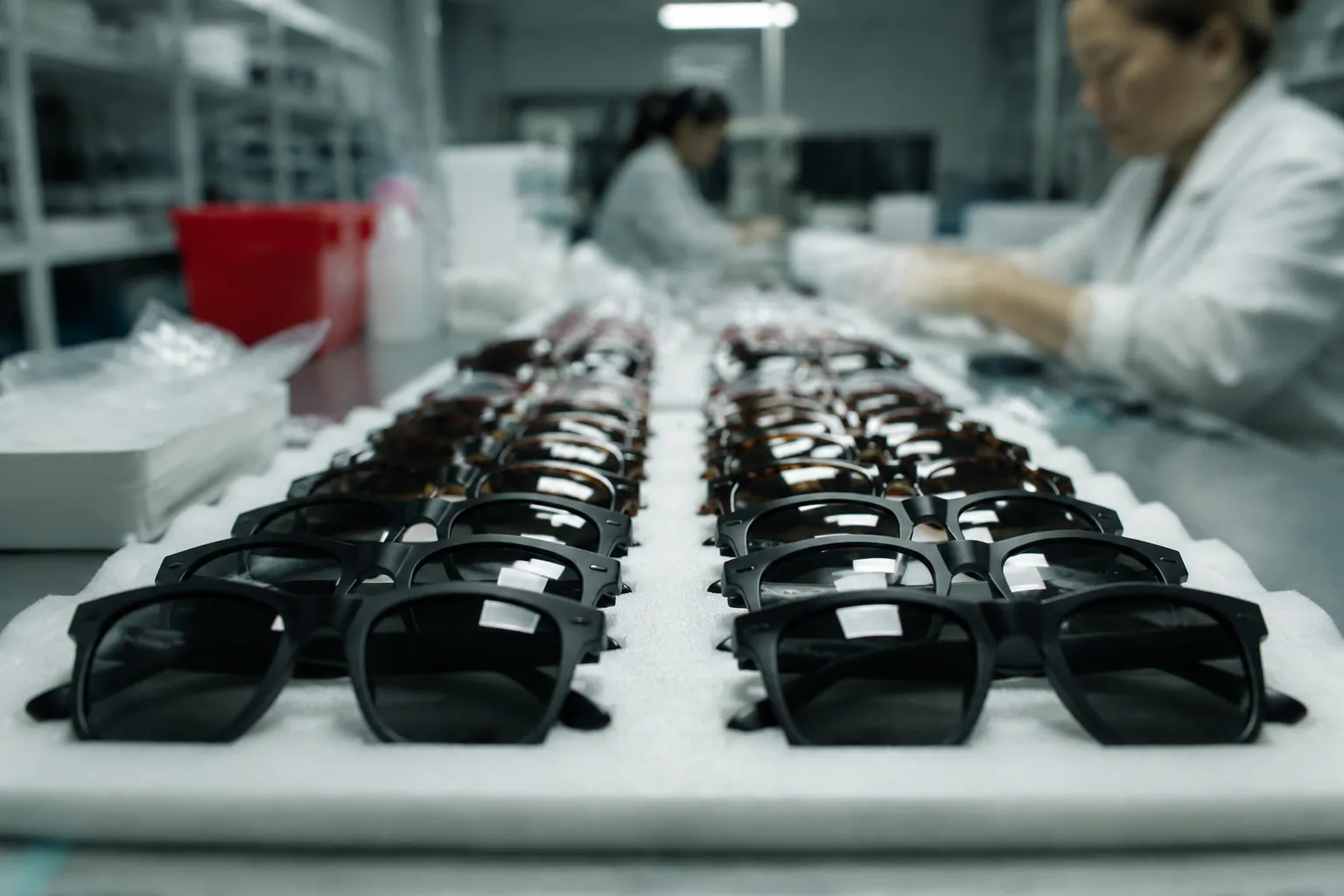
This guide is for brand owners, importers, distributors, and retailers who need more than one sunglasses style in one PO without turning a workable MOQ into a costly micro-run. The rule is simple: split by production logic, not by looks. Small runs work best when styles share the same frame platform, lens route, logo method, and packaging format, and when approvals are locked in the right order. Get that right and one order can still offer range. Get it wrong and one PO becomes several inefficient low-volume jobs hiding inside one shipment.
Start with the factory cost structure, not the mood board
Most MOQ problems start the same way. Buyers group styles by appearance instead of process. Factories do not plan around labels like "sporty," "fashion," or "classic." They plan around material batches, molding or cutting setups, lens processing, decoration changes, inspection points, and packing steps.
If you want to split one order across several styles, separate what is truly different from what only looks different to the shopper. A matte black frame and a tortoise frame may be two commercial SKUs. But if they use the same front shape, hinge spec, lens base curve, temple construction, logo method, and carton format, the factory may still treat them as one production family.
On the factory side, the usual checkpoints are:
- Frame platform: same mold, or the same CNC/acetate cutting file and hardware set
- Material family: injection PC/TR90, acetate, or metal construction kept separate
- Lens family: same material, base curve, thickness, tint route, and coating sequence
- Decoration method: same pad print, laser mark, or logo plate process
- Packaging format: same pouch, same box dimensions, same label position, same master carton pack-out
A stated MOQ like 50 pairs per design can work only if that design sits inside a shared production structure. If each 50-pair style needs a different polarized lens color, a different metal logo part, and a different rigid box insert, the real MOQ is not 50 pairs. The setup burden shows up somewhere else: higher unit cost, added tooling, slower approvals, or longer bulk lead time.
Ask the supplier one practical question early: what changeovers does this split create across frame production, lens processing, decoration, and packaging? If several steps must be reset for each SKU, treat the order as a micro-run. Because that is what it is.
Use a three-layer split: platform, variant, finish
The safest mixed assortment follows three layers:
- Platform: the shared frame architecture. This is where tooling, hardware, fit, and assembly risk sit.
- Variant: colorway, lens color, temple color, or other minor trim difference.
- Finish: logo artwork, barcode, hangtag, insert card, pouch print, or carton label.
The more you keep differences in layers two and three, the better the MOQ economics usually hold. If the split happens at layer one, you are often running separate orders even if the PO is combined.
Example: one order across four SKUs.
Bad split: four different constructions in low quantities: one acetate square frame, one metal aviator, one injection wrap frame, and one combination browline. That means different material planning, separate assembly logic, and different QC standards.
Better split: one injection platform in four colorways, all using the same TAC polarized smoke lens spec, the same hinge, the same single-color temple print, and the same folding box. The customer still sees range. The factory sees one family with four variants.
Ask this early: Which parts of these SKUs can stay identical through molding or cutting, lens prep, assembly, and packing? If the answer is "almost none," expect the pricing to behave like several small jobs, not one grouped order.
On smaller launches, keep platform count low. Build variety through colorways and packaging labels instead of unrelated constructions.
What can be shared, and what usually breaks the economics
Some elements consolidate well. Others trigger resets on the line. Buyers often focus on frame shape first, but lens and packaging changes can hit cost just as hard.
| Order element | Can usually be shared? | Impact on MOQ/cost | Typical factory reality |
|---|---|---|---|
| Outer carton, polybag, pouch size | Yes | Strong positive | Shared dimensions keep carton sourcing simpler and reduce packing errors. |
| Temple logo pad print, 1 color | Often yes | Positive | Same print area and artwork size may allow the same setup with limited adjustment. |
| Lens material + base curve | Often yes | Strong positive | Shared lens families are easier to batch for purchasing, processing, and QC. |
| Frame material family | Sometimes | Major factor | Injection, acetate, and metal should not normally be priced as one production family. |
| Metal logo plate | Limited | Negative on small runs | New stamping or etching, polishing, and hand application can make low volumes inefficient. |
| Different rigid gift box structures | No | Strong negative | Packaging suppliers often apply separate MOQs and setup costs by structure. |
| Different lens performance specs | No | Strong negative | Mixing standard tint, mirrored, and polarized lenses in small quantities creates separate planning and testing needs. |
The usual margin killers are:
- Acetate sheet color changes that require separate cutting and color-matching control
- Mirrored or gradient lenses mixed with polarized lenses in very small lots
- Custom molded or stamped metal logo parts
- Rigid retail packaging with SKU-specific inserts and print
None of these features are impossible. They just do not belong in the same very small mixed order unless you accept higher landed cost and more risk.
Compliance can also force separation. If one SKU uses category 3 dark sun lenses and another uses a lighter fashion tint, the labeling and test scope may differ under CE EN ISO 12312-1, ANSI Z80.3, or AS/NZS 1067. Define that before sampling. Not after packaging artwork is approved.
Plan the split by volume tier
Volume changes the right order structure. What works at 3,000 pairs may fail at 300.
At lower launch volumes: stay tight. Use one platform, or as few as possible. Keep lens material consistent. Do not mix standard, mirrored, and polarized routes in tiny quantities unless there is a clear sales reason. A per-design MOQ may be technically possible, but the more useful number is often the total volume of the shared family.
At mid-volume orders: more platform variety can make sense, provided each platform has enough volume to support stable assembly and inspection. This is also where channel splits can work, such as one packaging format for retail and another for distributor packs, if the split is fixed before packaging sourcing starts.
At higher volumes: real assortment depth becomes more practical. Multiple lens colors, mixed decoration methods, and broader packaging options are easier to support because setup cost and QC overhead are spread across more units.
Simple rule: if total volume is limited, build range through colorways and finish details, not unrelated constructions.
Another useful shorthand:
- Low-volume launch: one lens family, one logo method, one box structure
- Mid-volume program: limited expansion into more than one lens family if each has meaningful volume
- Higher-volume program: broader lens matrix and more channel-specific packaging become more workable
If the order is a launch, start with one strong platform in several colorways. Add new constructions on the next PO once sell-through supports it.
Build the split around materials and lens routes
Material behavior matters. It affects setup time, scrap risk, and inspection standards.
Injection-molded PC or TR90 styles are often the easiest base for mixed small runs, especially if tooling already exists. Color changes still need machine adjustment, but the platform itself is usually efficient. This route is common in promotional programs, chain retail, and price-sensitive private label collections.
Acetate styles can deliver higher perceived value, but they are usually more labor-heavy. Different sheet colors may need separate cutting plans, polishing control, front-temple matching, and more hand finishing. Small mixed acetate runs are possible, but they need tighter SKU discipline and stable lens specs.
Metal styles add complexity through plating, solder points, nose pad hardware, and logo attachment. In low quantities, metal is often less forgiving because visual defects show easily and rework takes time.
Lens planning is often the hidden cost driver. If all styles use the same TAC polarized smoke lens spec with the same base curve, the factory may batch purchasing, incoming inspection, edging, and final fitting. If one style changes to mirrored lenses, another to gradient nylon, and another to non-polarized PC, you now have separate material planning, separate inspection criteria, and often separate labeling requirements.
Typical technical differences that matter:
- Base curve: different curves usually require separate lens planning and fit checks
- Thickness: lens thickness can affect fit, retention, and assembly pressure
- Performance: polarized vs. non-polarized changes QC and labeling needs
- Coating route: mirrored, hard-coat, or hydrophobic finishes add separate process steps
For compliance, make sure the final lens spec and labeling match the destination market. CE EN ISO 12312-1 and ANSI Z80.3 cover sunglasses performance and labeling in their markets. AS/NZS 1067 applies to Australia and New Zealand. REACH matters for restricted substances in materials and coatings. FDA registration may matter for a supplier or facility in the U.S. supply chain, but it is not a substitute for sunglasses performance testing. The document set must match the ordered frame and lens spec, not just the sample look.
Keep logos and packaging modular
Branding and packing can destroy the savings from a mixed order. Fast.
The lowest-risk structure is usually one logo method, one placement, one care card, one pouch, one box size, and one master carton count. If you need differentiation, put it into stickers, barcode labels, color-specific insert cards, or outer-box print changes instead of changing the whole packaging structure.
In practice, these choices usually help control cost and lead time:
- Use pad printing for simple temple logos across multiple styles
- Use laser engraving when the substrate and surface finish can give consistent contrast
- Use inside-temple print only after adhesion and legibility are checked on the exact material
- Use metal logo plates only when volume justifies separate tooling and hand placement
- Keep barcode labels as the main SKU differentiator on outer packaging
- Standardize pouch and box dimensions across the assortment
Decorations that look minor in artwork can be expensive in production. A print change may need a new plate and new color match. A metal logo part may need separate tooling, extra attachment steps, curing time, and more visual inspection. A custom rigid box may come with its own supplier MOQ and setup cost, which can be more restrictive than the sunglasses order itself.
If retail packaging is required, ask for two quotes: (1) one common box structure with variable print or labels, and (2) fully unique boxes per SKU. That makes the cost of packaging complexity visible before you commit.
Lead-time logic, compliance checks, and buyer checklist
Mixed orders do not fail on price alone. They fail on timing too, usually because approvals arrive in the wrong order.
Lead time depends on the product, the season, existing tooling, raw material supply, and how fast approvals are completed. A supplier can only give a reliable schedule after the platform, lens route, branding, and packaging assumptions are clear. If colorways change after lens approval, or barcode files arrive after goods are packed, the order can stall even when production is otherwise done.
The safest approval flow is:
- Freeze frame platforms first. Confirm dimensions, hinge spec, fit, and material family.
- Approve lens material, color, and performance second. Lock base curve, thickness, polarization, and filter category where applicable.
- Approve logo method and artwork third. Confirm print position, color, durability, and substrate compatibility.
- Approve packaging dieline and labels last, but before bulk starts. This helps avoid relabeling and mismatched inserts.
QC should follow the same logic. For mixed assortments, inspection should be organized by family, not only by SKU. Typical checkpoints include frame appearance, hinge function, lens fit, logo durability, labeling accuracy, and packing accuracy by barcode.
Use this checklist before releasing a PO:
- Count platforms, not just SKUs.
- Group by material family. Do not assume acetate and injection belong in one MOQ bucket.
- Standardize lens routes. Keep base curve, material, and coating process aligned wherever possible.
- Choose one branding method.
- Reduce packaging variables. Shared pouch and box; SKU-specific labels only where possible.
- Confirm compliance by market. Match labeling and test documents to the exact lens/frame spec.
- Verify supplier systems. Ask which compliance documents are available and whether the factory works under systems such as ISO 9001 or social audit programs such as BSCI, if those matter to your sourcing policy.
- Ask for a family quote. Pricing should show what is shared and what triggers extra setup, tooling, or time.
- Lock approvals in order. Frame, lens, logo, then packaging.
If a supplier can explain exactly which parts of the assortment are being batched together, you are looking at a real production plan. If the quote just lists several tiny styles with no mention of shared materials, lens logic, decoration setup, or packing assumptions, expect cost creep and lead-time slippage later.
Have a custom sunglasses project in mind?
Send us your styles, target market and quantities and we will return a detailed quote with MOQ, lead time and a sample plan.
Get a QuoteWhy source this from Wenzhou with LumiShades
Wenzhou in Zhejiang Province is widely regarded as China’s eyewear manufacturing capital, producing a large share of the world’s sunglasses. That concentration matters to buyers: a deep local supply chain for acetate sheet, hinges, lens blanks, plating and packaging means shorter component lead times, easier color and material matching, and a workforce with decades of eyewear-specific skill. LumiShades has manufactured in this ecosystem since 2009, and our vertical integration — in-house injection molding, acetate cutting, CNC milling, lens tinting, decoration and quality control — means no part of your order is quietly subcontracted to a workshop you cannot audit.
For international buyers, that vertical control translates into accountability. When a single factory owns every step, defects are traced and fixed at source rather than bounced between vendors, and your specifications survive intact from first sample to bulk. We back this with 15+ years of experience, shipments to 60+ countries, more than 5 million pairs produced per year and a 98.5% on-time delivery rate. Our certifications — CE EN ISO 12312-1, FDA registration, ANSI Z80.3, AS/NZS 1067, REACH, ISO 9001 and BSCI audit — mean the compliance documentation your market requires already exists. Explore our manufacturing capabilities and quality control process to see how this works in practice.
Frequently asked questions
Can I combine different colors of the same frame to meet MOQ? Usually yes. It is one of the safest ways to split an order. It works best when the mold or cutting file, hinge, lens spec, logo method, and packaging all stay the same. Ask the supplier to confirm in writing that the colorways will be produced as one shared platform and to note any added cost for color changes in frame material, lenses, or printing.
Does a low per-design MOQ always mean the price will still be competitive? No. A low MOQ only tells you the order may be possible. It does not tell you the unit cost will be efficient. Ask the factory to break the quote into shared costs and SKU-specific costs. Specifically confirm whether new lens colors, metal logo parts, packaging changes, or separate compliance labeling will raise unit price or extend lead time.
What is the biggest mistake in a mixed sunglasses order? Treating visually similar SKUs as if they are operationally similar. The most common problem is too many differences in lens type and packaging. To avoid it, send one quote sheet that lists frame platform, material family, lens material, base curve, polarization status, logo method, and packaging structure for every SKU. That forces the supplier to review the order by production family, not just by appearance.
How should I ask for a quote on a mixed assortment? Send one summary sheet with total quantity, SKU split, frame platform, material family, lens spec, logo method, packaging format, destination market, and any required compliance standard such as CE EN ISO 12312-1, ANSI Z80.3, or AS/NZS 1067. Ask the supplier to mark which elements are shared, which need separate tooling or setup, and which documents they can provide, such as test reports, REACH-related material declarations, ISO 9001 status, or BSCI audit information if relevant.
Will compliance documents cover every colorway automatically? Not always. If colorways use the same actual frame material and the same lens spec, they may fall under the same test scope. But if lens category, polarization, coating, base curve, material, or labeling changes, the test file or labeling may also need to change. Before bulk production, ask the supplier to map each SKU to the applicable standard and confirm whether existing reports still match the final approved spec.
Ready to start?
Explore our sport wrap sunglasses or request a quote — our sales team replies within 12 hours.
Request a Quote