
How to Design Limited-Edition Collab Sunglasses
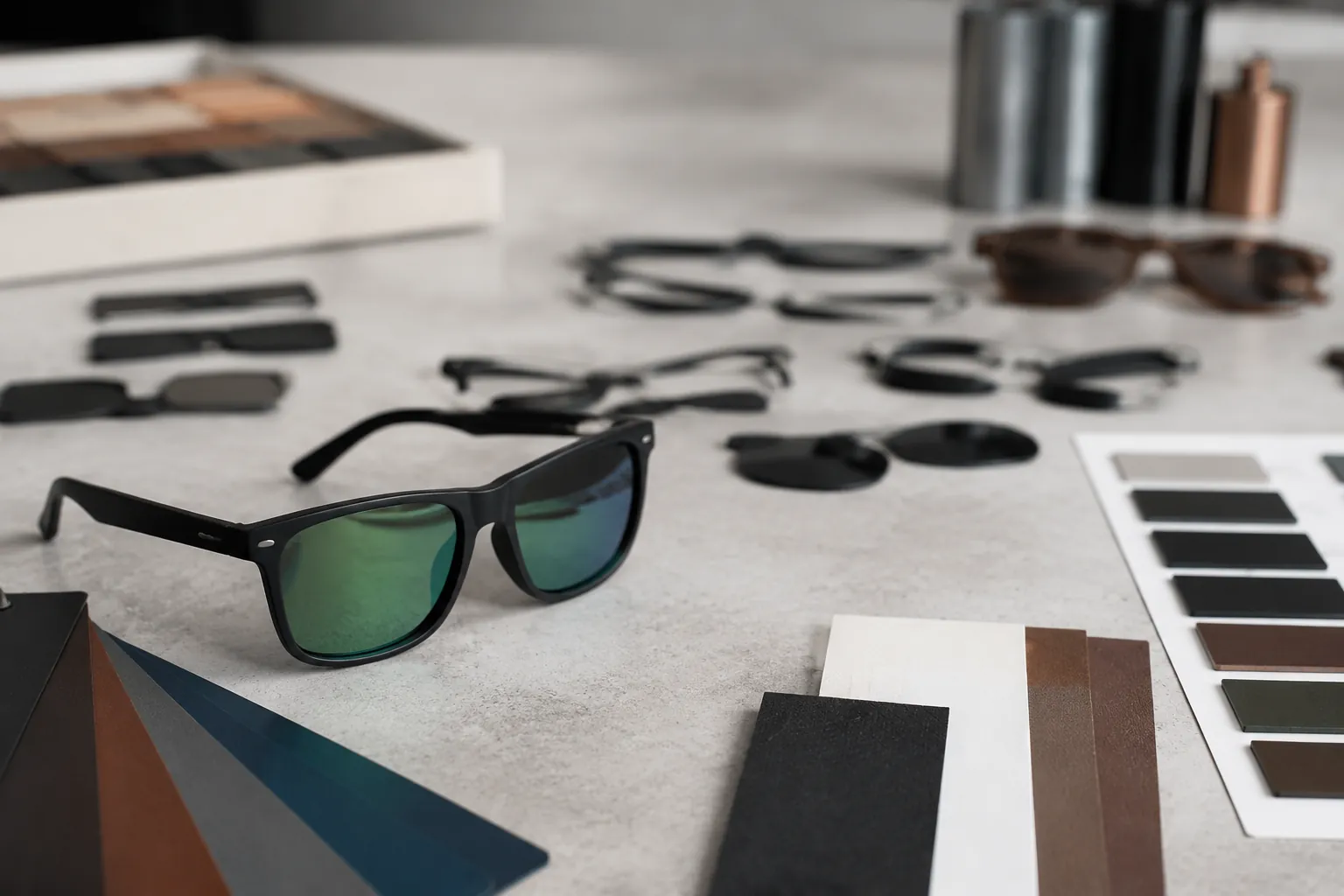
Limited-edition sunglasses work best when the collaboration is distinct and the production plan is simple. This guide is for brands, importers, distributors, and retailers planning event drops, creator capsules, and retail exclusives. The aim is to make a few visible changes a factory can repeat, keep costs under control, and stay on the right compliance path. If you are buying in volume, clarity matters more than a polished concept deck.
Start With the Drop Goal, Not the Sketch
A collab pair should answer one question first: what is this product supposed to do in the market? A trade-show giveaway, a music-festival drop, a creator capsule, and a retail exclusive do not need the same frame, finish, or pack. Start with the sketch and you often add too many changes too early. That means more sample rounds, more coordination, and more rework.
Use a proven base model. Then change the details people see or touch. Temple artwork, lens tint, hardware finish, and packaging give you the most visible impact. They are easier to control than a new front mold or a different hinge system. Keep most of the construction unchanged. Put the collaboration identity in a few places that are easy to repeat.
That approach helps the factory focus on stable steps like molding, cutting, tinting, engraving, printing, and packing. No guesswork. No rebuild. A small spec change should not force a complicated setup if the base platform already fits the target market.
Before you brief design, define the channel and the success metric. If the goal is press coverage, stronger visual contrast may make sense. If the goal is retail sell-through, fit, repeatability, and margin matter more than a dramatic silhouette. If the drop is tied to a launch date, schedule risk is part of the product plan. Treat it that way.
Choose the Right Base Platform
The cheapest mistake is building a limited edition on an unstable base. If the frame fit is off, no logo detail will save it. Start from a platform that already matches your target market and has a known production path. That gives you a baseline for lens retention, hinge performance, and temple alignment.
For collabs, the useful checks are practical ones. The frame should sit flat. The temples should open and close evenly. The lenses should seat cleanly in the groove. Symmetry and fit are easier to verify than aesthetic intent, so confirm them early with a physical sample.
| Base choice | Best use | Typical change risk | Production note |
|---|---|---|---|
| Injection frame | Fast drops, promotional collabs | Low to medium | Good for repeatability and color changes; a proven mold usually shortens the path from sample to bulk. |
| Acetate frame | Premium retail collabs | Medium | Offers richer surface depth and polish, but cutting, tumbling, and hand-finishing take more time. |
| Metal/combination frame | Fashion-led capsules | Medium to high | More parts mean more assembly points, so alignment, solder quality, and pad position need closer inspection. |
| Existing stock platform | Urgent seasonal or event drops | Low | Fastest path to market if the shape already exists and fits the intended market. |
If you are working at a small quantity, keep the spec simple. At larger volumes, unit price usually improves because setup and labor are spread across more units. Every extra option increases handling time and inventory risk, especially if each variation needs its own carton, insert, or label code.
LumiShades' MOQ starts at 50 pairs per design. That is enough for a small test drop. But efficiency improves as volume rises because setup and packing can be spread across more units. If reorders are likely, protect one stable base model and vary artwork or lens color rather than rebuilding the frame each time.
Use Three High-Impact Changes, Not Ten
Most good collabs use three visible changes and leave the rest standard. That is usually enough to make the product feel limited without turning production into a puzzle. The best collabs are obvious at a glance, but still straightforward to assemble, inspect, and repack.
Think in layers. The first layer is the frame finish or color. The second is the branding method. The third is the lens and packaging story. If those three are aligned, the collaboration feels deliberate even when the core frame stays the same.
- Temple branding: laser engraving for a clean mark, pad print for color, or a metal logo plate for a more tactile premium look.
- Lens color: a custom tint, mirrored finish, gradient, or solid fashion tint matched to the drop theme.
- Temple detail: a debossed pattern, color fill, contrast tip, or a short co-brand message on the inside temple.
Be careful with logo count. Too many marks make the frame look busy and complicate placement control. One outside temple logo and one inside reference is usually enough. If you add a front logo, check that it does not interfere with lens curvature, mold release, or the wearer's line of sight. Front logos also need tighter placement control because small shifts are easier to notice on a centered surface.
Decoration method matters as much as placement. Laser engraving is crisp and durable, but it depends on surface contrast and may be harder to read on dark gloss finishes. Pad printing supports color and fine text, but adhesion depends on the surface and print process, so it should be checked on the approved production sample. Metal logo plates can look premium, but plate thickness should be checked early because a plate that looks fine on screen can sit too proud and affect packing or wear comfort.
A practical spec stack for a first run is one frame color, one lens color, one main logo placement, and one packaging format. That gives the drop a clear identity without multiplying reject points. If the market responds, add a second colorway later.
Pick Materials That Fit the Story
Material choice should support the campaign message, not fight it. If the story is lightweight summer retail, injection frames are practical and easy to repeat. If the story is a fashion collaboration with richer surface depth, acetate is usually the better fit. If the design needs slim temples or a sharper silhouette, metal or mixed-material construction may be more appropriate.
Each material behaves differently in production. Injection frames are useful for repeatability and output speed, but resin batch control matters because color shifts can appear between lots. Acetate cuts and polishes well, yet edge finishing takes time and sheet lot changes can affect color consistency. CNC milling helps when precise detailing is needed, but it adds setup and operator time, especially for thin temple arms or shaped recesses. Metal frames can deliver a refined profile, but plating quality, solder consistency, and nose pad alignment require closer inspection.
Surface finish changes perception quickly. Gloss injection reads sporty or promotional. Matte black often feels more fashion-led but can show handling marks if the finish is not controlled carefully. Clear or translucent materials can look premium, but they also reveal gates, internal marks, and tint variation more easily. If the collaboration leans on color, specify the color reference, finish level, and acceptable sample match instead of asking the factory to match a render alone.
Practical rule: do not change material, lens effect, and logo method all at once unless you already have a tested sample reference. One variable at a time is easier to approve and easier to troubleshoot. If you need a premium feel on a deadline, keep the structure fixed and spend time on finish, lens selection, and packaging instead of introducing a new construction.
If the collaboration is meant to sell at retail, ask for samples with the same lens tint and logo method you want in bulk. A sample that uses a different decoration process is not a true approval sample. It may look close in photos, but it will not show how the production line behaves during actual manufacturing.
Build the Lens and Compliance Plan Early
Lenses do more than change the look. They affect perceived value, market classification, light transmission, and test routing. For drops that go into multiple markets, start from the compliance target, then choose the lens spec. If the lens category is wrong, packaging and labeling may need to change even if the frame is correct.
LumiShades can support CE EN ISO 12312-1, FDA registration, ANSI Z80.3, AS/NZS 1067, REACH, ISO 9001, and BSCI. Those are not interchangeable. A frame and lens specification that works for one market may need a different documentation set for another, so the approval file should follow the actual sales plan rather than a generic global claim.
For sunglasses, lens transmission and category should be confirmed before final print approval. A small tint shift can affect the appearance of the product, the compliance file, and the customer-facing labeling. If you plan mirrored, gradient, or flash coatings, make sure the approved sample matches the bulk optical effect, not just the color chip.
| Market need | Compliance focus | Buyer check | Design impact |
|---|---|---|---|
| EU retail | CE EN ISO 12312-1, REACH | Lens category, labeling, and chemical restrictions | Choose the lens tint and materials with documentation in mind; confirm packaging text before print. |
| US retail | FDA registration, ANSI Z80.3 | Impact and labeling requirements | Keep the frame and lens spec stable through approval; avoid changing color after sign-off. |
| Australia/New Zealand | AS/NZS 1067 | Protection and labeling | Confirm lens performance before packaging is printed and before cartons are committed. |
| Multi-market drop | Market-specific document set | One spec file per market | Freeze the approved configuration so the product and paperwork match across regions. |
For a limited edition, avoid lens swaps after approval. Changing tint after sample sign-off can affect light transmission, compliance paperwork, pack copy, and the delivery schedule. If the drop depends on a launch date, compliance and artwork are part of the critical path.
Packaging Is Part of the Product
If the collaboration is sold as a gift, event item, or retailer exclusive, packaging carries a large share of the perceived value. Good packaging does not need to be expensive. It needs to be specific, structurally stable, and suited to the channel. A package that looks premium but crushes in transit is not premium in practice.
Common options are a printed folding box, rigid paper box, EVA case, soft pouch, microfiber cloth, and a hangtag or insert card. Keep the pack structure aligned with the channel. A festival drop may only need a pouch and card. A retail collaboration usually needs a harder case and tighter print control. If you ship internationally, also consider carton strength, drop resistance, and how many units fit per master carton without crushing the case shape.
- Low-cost event pack: pouch + cloth + insert card.
- Mid-tier retail pack: folding box + cloth + branded sleeve.
- Premium collab pack: rigid case + cloth + insert + outer carton.
Print approval matters here. Color references should be confirmed on the actual carton stock, not only on screen. Soft-touch coatings, foil, and embossing can look strong in mockups but behave differently in production. Ask for a pre-production packaging sample if the launch depends on unboxing, especially when the box includes metallic ink, spot UV, or textured paper.
Packaging can affect lead time as much as the frame. A simple case and cloth may add only a little coordination time, while custom printed boxes, sleeves, and inserts can require another proofing cycle. If the launch date is fixed, lock the pack specification with the eyewear specification so artwork does not create a second approval round.
MOQ, Price, and Lead Time
Brands often ask for a small collab run, then specify several decorations, multiple frame colors, several lens colors, and custom packaging. That is how the price changes. Every additional option creates more setup, more material handling, and more chances for mismatch between sample and bulk.
The logic is simple. The more unique parts you create, the more setup time and material waste you absorb. One frame color with two lens options is easier to manage than two frame colors and three lens options. Every added option also increases inventory risk, especially if each color needs its own carton, insert, or label code.
Lead time changes with complexity. A 50-pair order can still move quickly, but if the factory needs new artwork approval, custom cartons, and a second lens color, the calendar stretches. Sample timing is usually driven by decoration and packaging proofing, while bulk timing is driven by how many unique pieces must be produced and packed.
| Order level | Pricing behavior | Sample/bulk timing | Best use |
|---|---|---|---|
| 50 pairs/design | Highest unit cost | Samples typically 7-10 days; bulk typically 25-35 days | Test a collab, seed influencers, or validate sell-through. |
| 300 pairs/design | Better setup spread | Bulk planning becomes more efficient | Small retail drop or regional launch. |
| 1,000 pairs/design | Clearer price break | More stable line scheduling | National release or multi-store rollout. |
| 5,000+ pairs/design | Lowest practical unit cost | Factory can optimize procurement and packing | Large campaign or seasonal program. |
If the collaboration depends on a date that cannot move, lock the base frame, lens color, and pack spec first. Then freeze artwork. Late design changes are where schedules slip because they trigger rework in printing, carton production, QC, and labeling. The fastest way to save money is to reduce uncertainty before the first sample is approved.
When buyers compare quotes, they should ask what is actually included. A low headline price can exclude case packing, lens cleaning cloths, labeling, or pre-shipment inspection. A slightly higher quote that includes those steps can produce a better landed cost because it reduces extra freight, rework, and labor at destination.
From Brief to Ship Date
A limited-edition program works best when the steps stay simple. Skip steps and you usually pay for it later. The process is not glamorous, but it keeps the drop aligned from first brief to delivered carton.
- Brief the target: define channel, audience, launch date, target margin, and required market.
- Select the base model: choose an existing shape that already fits the market direction and likely compliance path.
- Lock the visible changes: logo method, temple art, lens tint, hardware finish, and packaging.
- Approve a sample: check color, fit, print sharpness, hinge tension, screw torque, and surface finish.
- Confirm compliance path: align the chosen spec with CE EN ISO 12312-1, FDA registration, ANSI Z80.3, AS/NZS 1067, or REACH as needed.
- Start bulk with a frozen spec: no late changes unless you are willing to reset timing and rework packaging.
- Inspect pre-shipment: verify print position, lens color consistency, scratch marks, carton count, and case fit.
Compare the approved sample against the first bulk lot under the same light source. Look for shifts in lens color, frame gloss, logo alignment, and temple symmetry. Small changes are visible when the logo sits on a narrow temple. Hinge feel should also be checked by hand before bulk is released.
In-house QC helps because the same factory can check decoration, assembly, and packing before shipment. That reduces the chance of handoff errors between separate vendors. Still, the buyer should approve a physical pre-production sample, not just a render. For collabs, the safest first run is simple: one frame, one lens, one pack, one main logo placement. If the market responds, a second colorway can follow later.
What Buyers Should Ask Before Approval
The best questions are boring. They save money and force the spec to become real before production starts.
- Is this using an existing frame platform or a new mold?
- Which decoration method is being used for each logo location?
- What exact lens tint is approved, and does it match the compliance file?
- Which markets are covered by the proposed spec?
- What is the MOQ per design, and how does pricing change at 300, 1,000, and 5,000 pairs?
- How many days are needed for samples and bulk, with packaging included?
- What is the acceptable tolerance for logo placement, hinge feel, and color variation?
If the supplier cannot answer those questions clearly, the spec is not frozen yet. A good limited-edition program is not complicated. It is disciplined. The point is to make a product that looks distinct on shelf and is still repeatable on a factory line. The more concrete the answers, the less likely the collaboration is to drift in pricing, quality, or timing.
For buyers who want to move quickly, the safest path is usually a proven frame, one clear logo strategy, one approved lens color, and one packaging plan. That combination gives the collaboration a unique identity without making the production line guess.
Have a custom sunglasses project in mind?
Send us your styles, target market and quantities and we will return a detailed quote with MOQ, lead time and a sample plan.
Get a QuoteWhy source this from Wenzhou with LumiShades
Wenzhou in Zhejiang Province is widely regarded as China’s eyewear manufacturing capital, producing a large share of the world’s sunglasses. That concentration matters to buyers: a deep local supply chain for acetate sheet, hinges, lens blanks, plating and packaging means shorter component lead times, easier color and material matching, and a workforce with decades of eyewear-specific skill. LumiShades has manufactured in this ecosystem since 2009, and our vertical integration — in-house injection molding, acetate cutting, CNC milling, lens tinting, decoration and quality control — means no part of your order is quietly subcontracted to a workshop you cannot audit.
For international buyers, that vertical control translates into accountability. When a single factory owns every step, defects are traced and fixed at source rather than bounced between vendors, and your specifications survive intact from first sample to bulk. We back this with 15+ years of experience, shipments to 60+ countries, more than 5 million pairs produced per year and a 98.5% on-time delivery rate. Our certifications — CE EN ISO 12312-1, FDA registration, ANSI Z80.3, AS/NZS 1067, REACH, ISO 9001 and BSCI audit — mean the compliance documentation your market requires already exists. Explore our manufacturing capabilities and quality control process to see how this works in practice.
Frequently asked questions
How many design changes should I use for a collab drop? Use the fewest changes needed to make the product feel intentional. In practice, one frame finish or color change, one logo treatment, one lens decision, and one packaging plan are usually enough. More changes can raise cost, lengthen sample approval, and make production harder to control.
Can I start with only 50 pairs? Yes. LumiShades' MOQ starts at 50 pairs per design. That works for testing a concept or seeding a small drop. If you want better unit pricing, ask for quotes at 300, 1,000, and 5,000 pairs so you can compare the cost breakpoints before you commit.
How long do samples and bulk usually take? A typical reference point is 7-10 days for samples and 25-35 days for bulk, but only if the spec is clear and packaging is not being redesigned late. Ask what is included in that timing, because custom cartons, extra artwork proofing, or a second lens color can extend the schedule.
Which logo method is best for a limited edition? Choose based on material, finish, and the look you want. Laser engraving is crisp and durable, pad printing works well for color, and a metal logo plate can feel more premium. Ask for a production-relevant sample using the same frame finish and decoration method you plan to order in bulk.
What compliance should I ask for if I sell in multiple countries? Ask for the market-specific requirements, not a generic global claim. For Europe, that usually means CE EN ISO 12312-1 and REACH; for the US, FDA registration and ANSI Z80.3; for Australia and New Zealand, AS/NZS 1067. Request the document set that matches each sales market before you approve production.
Ready to start?
Explore our aviator sunglasses or request a quote — our sales team replies within 12 hours.
Request a Quote