
Sunglass Lens Tint Density by Retail Channel
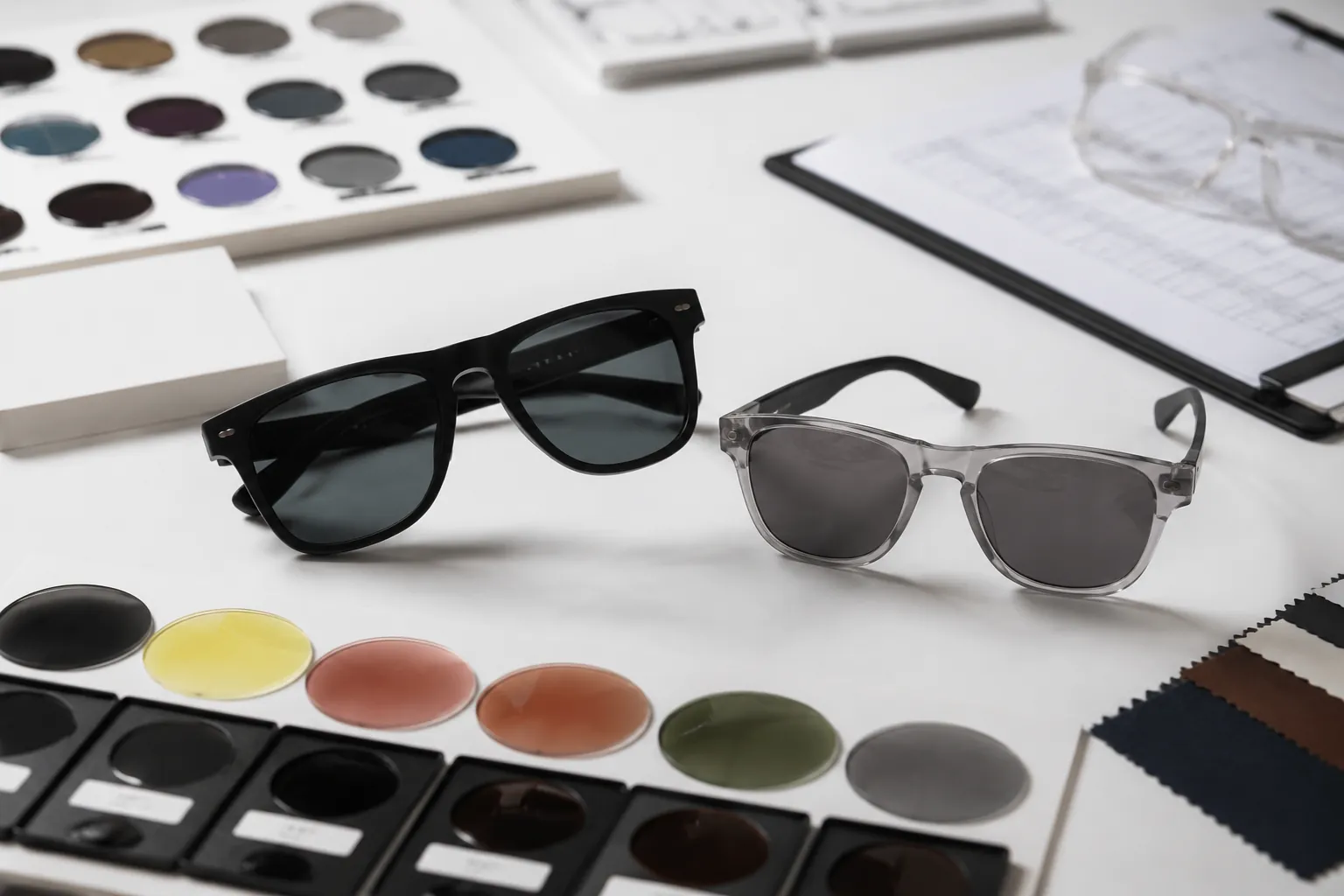
For brands, importers, distributors, and retail buyers, sunglass tint density is a product specification. Not just a style choice. It affects wearer comfort, category labeling, compliance files, packaging claims, sample approval, production consistency, and incoming inspection. The key measurable value is visible light transmission, or VLT: the percentage of visible light that passes through the lens. A clear purchase order should define lens category, VLT range, lens color, material, treatment, polarization status, destination market, applicable standard, and inspection method. That detail prevents arguments later. Photos can make a sample look acceptable while the finished lens performs differently in use. Bulk production can drift away from the approved sample. Packaging claims can also overreach if they are not supported by the final product.
Start With VLT, Category, and Tolerance
Visible light transmission is the percentage of visible light that passes through a lens. A 15% VLT lens transmits 15% of visible light and blocks, absorbs, or reflects the rest, depending on lens construction and coatings. In B2B sourcing, the common mistake is approving "dark grey," "tea brown," or "smoke gradient" from a photo without defining the VLT range. Photos are unreliable. Backlighting, camera exposure, screen settings, background color, and whether the lens is loose or mounted can all change the look.
For production, write a measurable range. "Category 3, VLT 10% to 18%, solid grey, non-polarized, UV claim supported under the destination-market standard" is much stronger than "dark smoke lens." For tighter color programs, add a target and acceptance band, such as target VLT 14% with production acceptance of 12% to 16%, provided the finished lens remains within the required category. For lower-cost promotional programs, a wider internal tolerance may be more realistic. Still, the finished lens must match the category and claim used on packaging.
Lens color and VLT are separate decisions. Grey at 15% is often used when neutral color perception matters. Brown at 15% gives a warmer view and can improve perceived contrast. Green at 15% is common in outdoor lifestyle styles because it can feel softer while keeping color reasonably natural. Rose, blue, yellow, and pale fashion tints can sell well. But if the VLT is too high, they may function more as styling lenses than as sunwear for bright conditions.
Final VLT can be affected by lens material, base lens color, dye process, lens thickness, mirror coating, polarization film, curvature, and gradient depth. Approve the finished mounted sample in the actual frame style. A loose lens chip or digital rendering is not enough.
Use Lens Category as the Buying Language
Lens category gives the buyer, factory, testing lab, packaging team, and inspector the same reference point. Pair it with the destination-market requirement. Common references include CE marking supported by EN ISO 12312-1 for sunglasses sold in Europe, ANSI Z80.3 for nonprescription sunglasses in the United States, AS/NZS 1067 for Australia and New Zealand, REACH for applicable chemical restrictions in the European market, and FDA registration and listing obligations where they apply to U.S. imports of nonprescription sunglasses.
| Lens category | Typical VLT range | Best commercial use | Buying caution |
|---|---|---|---|
| Category 1 | 43% to 80% | Light fashion tint, indoor-outdoor styling, cloudy conditions | Often too light for customers expecting strong sun glare reduction |
| Category 2 | 18% to 43% | Fashion retail, city use, lifestyle assortments, light resort styling | May feel weak in beach, mountain, snow, water, or other high-glare settings |
| Category 3 | 8% to 18% | Mainstream sunglasses, outdoor retail, resort, travel, normal daylight driving where permitted | Small VLT shifts can be visible; control shade consistency and left-right matching |
| Category 4 | 3% to 8% | Specialist high-glare environments such as high altitude or intense reflective light | Not suitable for driving in many markets and requires clear warnings and labeling |
Category 3 is the practical center for many adult sunglass programs. It gives meaningful glare reduction in bright daylight while remaining broadly usable. Category 2 works when the product is fashion-led or intended for mixed indoor-outdoor wear. Category 4 should not be used because it looks premium. It has a narrow use case, needs stronger warnings, and can create avoidable compliance and customer-service risk if sold as ordinary sunglasses.
Match Tint Density to Lens Material
Material choice changes how tint behaves in sampling and bulk production. Polycarbonate is common for lightweight, impact-oriented, and cost-sensitive sunglasses, but deep tinting, stress marks, scratch resistance, and optical quality must be controlled. TAC polarized lenses are widely used for value and mid-market polarized sunglasses because they are usually supplied as laminated polarized lens stock with defined color and shade options. Nylon or polyamide lenses suit higher-wrap, sport, and performance styles because they handle curved designs well. They cost more. CR-39 can provide good optical clarity for fashion lenses, but it is less suitable where high impact resistance, very thin edges, or rough handling are primary requirements.
| Lens material | Typical reason to use it | Tint behavior | QC focus |
|---|---|---|---|
| Polycarbonate | Lightweight, impact-oriented, cost-efficient volume | Works well for many solid tints; darker shades need repeatable process control | VLT, UV claim support, stress marks, scratches, optical distortion |
| TAC polarized | Affordable polarized programs | Usually supplied as laminated polarized lens stock with defined shade options | Polarization axis, delamination, VLT, film defects, surface quality |
| Nylon/polyamide | Sport, wrap, and premium outdoor styles | Suitable for curved lenses and performance colors; higher material cost | Optical clarity, curvature-related distortion, tint consistency, impact-related checks where required |
| CR-39 | Fashion lenses and clear visual quality | Accepts color well but is less ideal for rough handling or high-impact positioning | Thickness, chipping, tint consistency, scratch resistance, UV claim support |
Frame geometry matters too. Thick acetate and heavy injection frames can reduce side light, so the same lens may appear darker once mounted. Rimless, thin metal, and pale translucent frames can make the lens look lighter. Strong wrap can make a Category 3 lens feel darker toward the edges and may reveal optical distortion if lens curvature and material are not well matched. Approve tint density on the actual frame style and lens shape.
Fashion Retail: Sell Color, Keep It Wearable
Fashion retail needs lenses that look good on a display wall, in e-commerce photos, and on social content. The finished product still has to be comfortable and accurately described. Gradient smoke, champagne brown, rose, blue, green, and translucent tints can work well when the buyer defines a VLT target and category. A lens that looks attractive in photos but feels too bright outdoors will often be treated as a quality problem, even if it matched the approved image.
For fashion channels, Category 2 and lighter Category 3 are often practical. A VLT of about 18% to 35% gives room for visible color identity while remaining usable in mixed light. For stronger sunwear positioning, Category 3 at about 8% to 18% is more appropriate. If the lens is Category 1 or light Category 2, avoid copy that implies performance in strong sun unless testing and the applicable standard support the claim.
- Best fit: Category 2 for fashion-led city use; Category 3 for true bright-light sunglasses.
- Common colors: smoke gradient, brown gradient, champagne, green solid, rose, pale blue, yellow fashion tint.
- Sampling risk: phone photos can hide VLT issues and exaggerate lens saturation.
- Approval method: review the finished mounted sample outdoors, under indoor retail lighting, and against a white background.
- QC point: check left-right lens matching, gradient height, edge darkness, scratches, coating marks, and packaging category consistency.
Gradient lenses need clear instructions. The upper area may fall within Category 3 while the lower viewing area is lighter. Confirm where VLT is measured, how the lens will be categorized under the applicable standard, and whether the gradient line stays consistent across sizes. A small change in gradient height can be obvious on small fashion lenses. It can also change the perceived quality of the pair.
Outdoor, Sport, and Resort Channels
Outdoor and resort buyers should define the use case first. The lens must reduce glare, remain comfortable in bright conditions, and support the category and claims printed on the product or packaging. For beach, cruise, fishing, marina, hiking lifestyle, travel retail, and many outdoor assortments, Category 3 is usually the practical starting point. Category 2 can work for cloudy climates or fashion-led outdoor styling. It may disappoint customers in strong sun or high-glare settings.
Grey Category 3 is a direct choice when neutral color perception matters. Brown Category 3 is useful when the buyer wants a warmer view and stronger perceived contrast around water, trails, roads, or variable terrain. Green Category 3 works well for lifestyle outdoor models because it balances comfort and natural color. Mirror coating can reduce perceived brightness and improve shelf impact, but it is not a substitute for VLT measurement. A light base lens with a mirror coating can still transmit too much light for the intended claim.
Polarization can add value in driving, marina, fishing, beach, and travel programs because it reduces reflected glare from surfaces such as water, wet roads, glass, and snow. It also adds cost, sourcing decisions, and inspection steps. Buyers should check polarization axis consistency, delamination, visible film defects, VLT, and possible interference with digital screens. For outdoor programs, specify "polarized Category 3, VLT 8% to 18%" or a tighter approved range. "Polarized dark lens" is too vague.
Resort retail has a hard requirement: customers often buy because they need immediate sun protection. Solid smoke, brown, or green Category 3 lenses are usually safer than pale fashion tints when the product is sold for bright destinations. If the assortment includes children's sunglasses, do not copy adult styling automatically. Children's products need conservative material choices, compliant labeling, and extra attention to impact performance, small parts, coating durability, and age-appropriate warnings where required.
Promotional Programs: Control Cost, Keep Specs Clear
Promotional sunglasses often face price pressure and tight event deadlines. That does not make the lens spec optional. A vague lens spec can create late sample revisions, product complaints, and brand damage when a logo is printed on sunglasses that feel too bright, too dark, distorted, or inconsistent from pair to pair.
For event, festival, campus, beverage, tourism, and campaign sunglasses, Category 2 or Category 3 can both be correct. Indoor-outdoor events, short-wear giveaways, and photo-led activations may use Category 2 if the claims are modest and accurate. Beach events, summer sports, travel campaigns, and outdoor roadshows should usually be specified as Category 3. If the product is only a costume prop or novelty item, state that clearly. Do not make sun-protection claims the product is not designed or tested to support.
Cost is affected by frame material, lens material, tint process, polarization, mirror coating, decoration method, packaging, testing, inspection level, and order quantity. Basic non-polarized solid-color lenses are usually simpler to control than polarized, mirrored, gradient, or multi-color assortments. Tight VLT tolerances, special color matching, and extra inspection can increase cost because they reduce the acceptable production window and may raise rejection rates.
Decoration affects both cost and perceived value. Pad printing is efficient for simple logos on many injection frames and event sunglasses. Screen printing can work for larger simple marks. Laser engraving may suit metal components or compatible acetate parts where a subtle mark is preferred. Metal logo plates, rivets, or custom temple badges can make the product feel more retail-ready but add assembly and inspection points. None of these methods fixes an unsuitable tint. Confirm the VLT range before artwork, labels, and packaging claims are finalized.
Sampling, Documentation, and Bulk QC
Settle the tint decision during sampling, before packaging artwork and compliance submissions are locked. The buyer should approve a finished mounted sample after confirming the destination market, lens category, VLT range, color, material, treatment, polarization status, UV claim, and applicable standard. Late tint changes can mean new samples, revised labels, updated test documents, and changed inspection criteria.
A practical approval process is simple. Approve the frame color and lens density together as a finished pair. Inspect the sample outdoors and under indoor retail lighting. Confirm category, warning text, and claim language. Then keep one approved reference sample with the supplier and one with the buyer or inspection team. For gradient, mirror, polarized, or multi-color programs, approve each lens color and treatment separately.
Bulk QC should combine visual comparison and measurement. Visual checks catch left-right mismatch, scratches, mirror pinholes, gradient height problems, stress marks, frame color interaction, loose lenses, and poor mounting. Measurement confirms VLT and category. Buyers should define an inspection plan that includes lens-specific checks: VLT within the approved range, no major visual distortion in the primary viewing area, no visible coating defects at the agreed inspection distance, no lens movement after fitting, and packaging claims that match the test basis.
For complex lenses, add process checkpoints before final packing. Mirror lenses need surface and adhesion review. Polarized lenses need axis and delamination checks. Gradient lenses need height and density consistency checks. Wrap frames need optical distortion review because curvature can make a technically compliant lens uncomfortable if the material, base curve, and mounting are poorly matched.
Write a PO Spec That Prevents Disputes
A good lens tint specification is short, measurable, and tied to the retail channel. Put it on the purchase order, sample approval record, packaging brief, and inspection checklist. Buyers managing multiple SKUs should use the same format for every style so designers, merchandisers, compliance teams, suppliers, and inspectors work from one definition.
Use this structure: retail channel, user group, lens category, VLT range, lens color, lens material, lens treatment, polarization status, UV claim, destination market, applicable standard, frame material, decoration method, packaging, approved sample reference, and inspection requirement.
Example: "Resort retail adult sunglasses, Category 3, VLT 10% to 18%, solid grey polycarbonate lenses, non-polarized, UV protection claim supported under the applicable destination-market standard, CE marking supported by EN ISO 12312-1 for Europe and REACH requirements where applicable, injection frame, one-color pad print logo, microfiber pouch packaging, supplier and buyer to retain approved mounted samples for QC reference."
If a supplier states that it operates under ISO 9001 or has a BSCI audit, ask for current documentation and confirm the scope. ISO 9001 relates to quality management systems. BSCI relates to social compliance auditing. Neither replaces product testing to EN ISO 12312-1, ANSI Z80.3, AS/NZS 1067, REACH, or FDA registration and listing obligations where applicable.
The practical rule is to choose the lowest category that honestly satisfies the channel and claim. Too light can cause complaints in real sun. Too dark narrows use, increases warning requirements, and can make the product less comfortable or unsuitable for driving. The right density is not the darkest lens. It is the lens that matches the intended use, category label, compliance file, and customer expectation.
Have a custom sunglasses project in mind?
Send us your styles, target market and quantities and we will return a detailed quote with MOQ, lead time and a sample plan.
Get a QuoteWhy source this from Wenzhou with LumiShades
Wenzhou in Zhejiang Province is widely regarded as China’s eyewear manufacturing capital, producing a large share of the world’s sunglasses. That concentration matters to buyers: a deep local supply chain for acetate sheet, hinges, lens blanks, plating and packaging means shorter component lead times, easier color and material matching, and a workforce with decades of eyewear-specific skill. LumiShades has manufactured in this ecosystem since 2009, and our vertical integration — in-house injection molding, acetate cutting, CNC milling, lens tinting, decoration and quality control — means no part of your order is quietly subcontracted to a workshop you cannot audit.
For international buyers, that vertical control translates into accountability. When a single factory owns every step, defects are traced and fixed at source rather than bounced between vendors, and your specifications survive intact from first sample to bulk. We back this with 15+ years of experience, shipments to 60+ countries, more than 5 million pairs produced per year and a 98.5% on-time delivery rate. Our certifications — CE EN ISO 12312-1, FDA registration, ANSI Z80.3, AS/NZS 1067, REACH, ISO 9001 and BSCI audit — mean the compliance documentation your market requires already exists. Explore our manufacturing capabilities and quality control process to see how this works in practice.
Frequently asked questions
What VLT range should I choose for mainstream retail sunglasses? For most adult retail sunglasses intended for bright daylight, start with Category 3, typically 8% to 18% VLT. If appearance consistency matters across production runs, specify a tighter approved range inside Category 3, such as 10% to 18% or 12% to 16%, and keep mounted approval samples for comparison.
Can I use Category 2 lenses for beach or resort sunglasses? You can use Category 2 when the product is fashion-led, intended for mixed light, or sold with modest claims. For beach, pool, cruise, marina, and outdoor travel retail, Category 3 is usually safer because it gives stronger glare reduction in bright conditions. Packaging and product copy should match the tested category.
Do mirror lenses automatically mean lower VLT? No. Mirror coating changes reflection and appearance, but the finished lens still needs measured VLT. Specify the category and VLT range first. Then approve mirror color, surface quality, adhesion, and mounted appearance. Do not treat the mirror look as proof of sun protection.
Which standards should overseas buyers mention on the PO? State the destination market and the applicable requirement. Common references are CE marking supported by EN ISO 12312-1 for Europe, ANSI Z80.3 for nonprescription sunglasses in the United States, AS/NZS 1067 for Australia and New Zealand, REACH for applicable chemical restrictions in Europe, and FDA registration and listing obligations where they apply to U.S. imports.
How many samples should we approve before bulk production? Approve at least one finished mounted sample for the supplier QC file and keep one buyer-side reference sample for incoming inspection. For gradient, mirror, polarized, or multi-color programs, approve each lens color and treatment separately. The approval record should include category, VLT range, material, treatment, polarization status, and packaging claim language.
Will darker lenses increase the price? Not always. A basic solid darker tint may not change cost much if it fits the supplier's normal process. Cost is more likely to increase because of polarization, mirror coating, gradient control, special materials, tighter VLT tolerance, added testing, extra inspection, or higher rejection risk.
Ready to start?
Explore our aviator sunglasses or request a quote — our sales team replies within 12 hours.
Request a Quote