
How to Buy Mixed-Container Sunglasses Without Missing MOQ
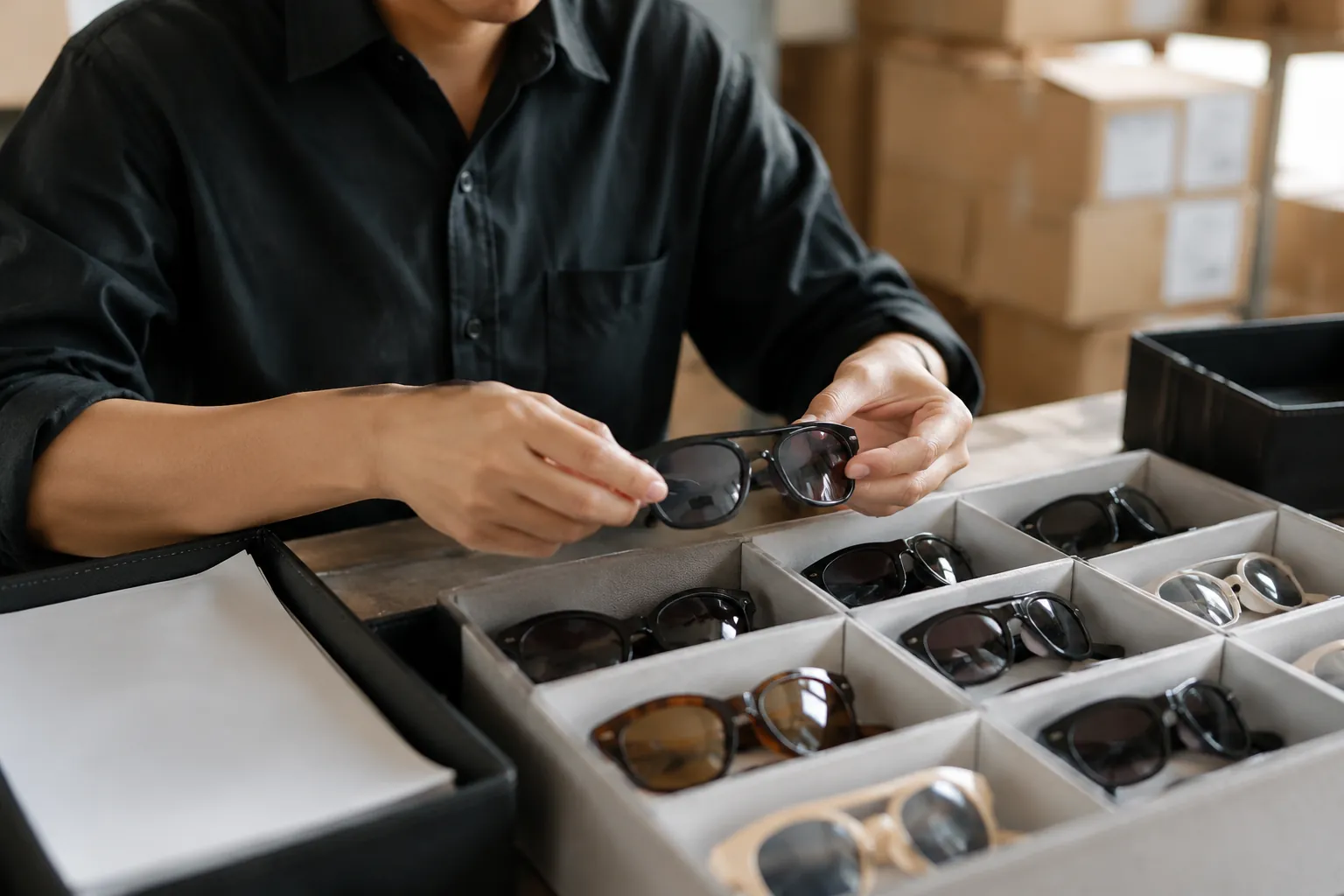
If you buy sunglasses for a brand, import program, chain, or distribution business, a mixed container can improve margin or destroy it. The question is not whether you can combine styles, colors, and lens options in one shipment. The question is whether the mix still works on the factory floor. If it does not, unit cost rises, QC gets harder, and reorders turn messy. This guide shows how to structure a mixed purchase order so you keep SKU variety, stay inside practical production limits, and avoid the usual MOQ trap.
What mixed-container buying really means
In sunglasses sourcing, a mixed container is not a shortcut around factory economics. It usually means one purchase order or one shipment containing several styles, and often several colors, lens tints, coatings, or decoration options. The factory still has to source material, cut or mold frames, tint or fit lenses, apply logos, assemble hinges, inspect each SKU, and pack by variant.
The common mistake is to treat every change as equal. It is not. A new frame shape is a manufacturing change. A different color on the same frame is usually a material change. A different lens tint sits in the middle because it affects both production control and final QC. Stack enough variables together and the job gets expensive fast.
At a factory that handles injection molding, acetate cutting, CNC milling, lens tinting, decoration, and QC in house, the real question is simple: how much can you mix before each SKU stops being economical? Ten SKUs is not one job. It is ten jobs.
The best mixed orders keep the production family stable and vary only the commercial details. One platform. A few colors. A small number of lens options. Controlled artwork differences. If the factory can reuse fixtures, cutting programs, and QC settings, you stay much closer to real volume pricing.
Rule of thumb: Mix at the container level, not at the production-line level. The more repeatable the batch inside each SKU family, the less MOQ behaves like a penalty.
For overseas buyers, that distinction matters. It separates a workable assortment from a spreadsheet that looks good and performs badly. Mixed-container buying should reduce inventory risk. It should not create hidden production costs.
In practice, factories usually split work by production family, not by your sales category. A style built on the same mold, same lens base, same hinge, and same packout can often share resources. A style that changes any of those items may need separate scheduling, separate material reservation, and separate inspection checkpoints.
The main variables that affect MOQ
MOQ is not one number. It is the result of several production decisions layered together. If you want to protect it in a mixed container, you need to know which changes are cheap and which ones trigger real setup cost.
The easiest way to think about it is by production impact:
| Change type | Typical factory impact | MOQ risk | Buyer note |
|---|---|---|---|
| Frame color change | Material substitution, same platform | Low | Best option for assortment variety |
| Lens tint or mirror change | Separate lens prep, shade control, QC | Medium | Watch for color drift between batches |
| Logo placement or decoration change | Artwork setup, printing or laser adjustment | Medium | Confirm file version and placement tolerance |
| Temple shape or hinge change | Part change, assembly adjustment | High | Can split the order into separate production runs |
| New tooling or material family | Engineering, mold, validation, material sourcing | Very high | Usually behaves like a new program, not a variant |
Color-only changes are usually the simplest because the base construction stays the same. Lens changes are more sensitive because they affect fit, appearance, and final inspection. Decoration can also add cost, especially when artwork needs separate setup, special inks, laser marking, or multiple print passes.
Packaging is often underestimated. If each style needs a different pouch, box, insert card, or carton setup, the factory has to manage more material sourcing and more packing control. That can matter as much as the frame itself on a small or highly split order.
The best buyers ask the factory to separate the order into shareable and non-shareable components. Shareable components are things like a common frame platform, common case, or common lens spec. Non-shareable components are items that must vary by SKU, such as artwork, color, or size. That is where the volume lives. Or does not.
Use this lens when you compare suppliers: if one vendor quotes a mixed order without breaking out setup, packing, or decoration charges, the quote is incomplete. A low price can hide a high-cost assortment structure.
How to structure a mixed order
A mixed order works best when it is built like a production plan, not a shopping list. The goal is to give the factory enough volume per production family to run efficiently while still keeping enough variety for the market.
A practical structure looks like this:
- Choose one or two core frame platforms
- Limit each platform to a small number of colors
- Keep lens options consistent across most SKUs
- Use one logo application method where possible
- Standardize packaging across the range
If you spread too thin, the order gets expensive fast. Ten styles at 50 pairs each may look balanced, but it often costs more than five styles at 100 pairs each. Every style needs setup, material allocation, QC, and packing attention. That is the bill.
For private label buyers, it helps to separate launch assortment from test assortment. The launch assortment should include the items you can reasonably reorder. The test assortment can include experimental colors, lens tints, or details, but it should be clearly marked as non-core so it does not complicate replenishment.
If the factory offers a mixed-container approach, ask where the breakpoints are. Do not settle for a vague promise that the order can be mixed. Ask how pricing changes when you reduce styles, colors, or variants. Ask what happens to lead time. Get the numbers.
Ask for a split by style family before you approve the PO. The factory should show which SKUs share tooling, which share lenses, which share packaging, and which require distinct handling. That one view usually makes the best assortment obvious.
How to protect reorder consistency
The first mixed container is about launch. The second order is about survival. If you want easy reorders, the first PO has to be built so it can be repeated without turning into a new development project.
Start by identifying which SKUs deserve continuity. Keep the best seller on the same frame platform and preserve the same core lens specification. Do not change too many variables at once. A frame that sold well in black with a gray lens should not come back with a different hinge, a different temple print, a different case, and a different carton layout unless you want warehouse confusion.
Ask the factory to record the production details that matter:
- Frame material and batch reference
- Lens tint code and coating specification
- Decoration method and artwork file version
- Packing configuration by SKU
- QC notes on common defects, shade drift, or finish issues
That record keeps your reorder from becoming a new development job. It also helps if you move from a small trial order to a larger replenishment order later. The factory can reproduce the same spec without revalidating every detail. The first PO does the hard work. The second one should be easy.
Good buyers also think in terms of continuity range. If a style works, keep the same core platform for at least one or two reorder cycles before making major changes. Small commercial tweaks are fine. Wholesale redesigns are not.
A simple rule helps here: if a change would force new samples, new packaging approval, and new QC signoff, it is probably too large for a normal reorder. Save those changes for the next development cycle.
Lead time and sampling reality
Lead time in sunglasses sourcing depends on how fixed the spec is. A simple, repeatable style can move quickly. A mixed container with many variants needs more coordination because each SKU may require its own material allocation, production slot, QC review, and packing sequence.
Before you approve a PO, confirm three things in writing: the final approved spec, the sampling sequence, and the production schedule. If any of those are still open, lead time gets less predictable. Delays usually come from late artwork changes, lens or color revisions, missing packaging approvals, or unresolved compliance questions.
To reduce delays, send one complete spec pack and avoid piecemeal revisions. A useful spec pack should include:
- Technical drawings or clear reference images
- Frame color, lens color, and coating details
- Logo artwork in the correct file format
- Packaging and carton requirements
- Target market and compliance requirements
If you need to validate a new style, do it before you split the order across many SKUs. Sampling one core platform is much easier than sampling a full assortment with multiple decorations and packaging variations. Once the base style is approved, adding colors or variants is usually simpler.
For chain programs or seasonal launches, the safest move is to lock the core assortment first. Add optional variants only if the factory can support them without disturbing the main schedule.
Sampling should also reflect the real production route. If your bulk order will use production lenses, production decoration, and production cartons, do not approve samples made with placeholder components unless the supplier clearly labels the difference. Sample mismatch is a common reason reorders drift.
Pricing levers that actually move the number
Mixed-container pricing is mostly about reducing complexity per pair. The more you standardize, the more likely you are to keep cost under control. The most effective levers are plain and easy to verify.
Use these levers first:
- Concentrate volume into fewer core styles
- Reuse the same frame platform across multiple colors
- Share lens specifications wherever the market allows
- Keep logo application and packaging consistent
- Avoid extra finishing steps unless they support a real sales argument
Cost usually rises when the order needs more setup, more handling, or more inspection. That includes new tooling, multiple material families, mixed packaging, and special decoration methods. Even when the unit difference looks small, the total impact can be meaningful if the order is split across many low-volume variants.
A useful negotiation move is to ask for pricing by assortment structure, not just by SKU. Compare one order with five styles and two colors each against another order with ten styles and one color each. That makes the cost of fragmentation visible. It also helps you choose the cleaner mix.
The strongest buyers do not ask for the lowest unit price only. They ask which mix gives the best landed cost after samples, packing, QC, and reordering are included. That is the number that matters.
If the supplier can quote breakpoints, use them. A small increase in per-style volume often lowers the total cost more than a bigger assortment improves sell-in. In many programs, the cheapest container is not the one with the most SKUs; it is the one with the fewest production interruptions.
Compliance you should verify before ordering
Compliance should be checked by market and by product type, not assumed from a brochure or catalog. The right documents depend on where the sunglasses will be sold and how the product is classified.
The following references are commonly used in market compliance discussions:
- CE EN ISO 12312-1 for many EU sunglasses requirements
- ANSI Z80.3 for the U.S. sunglass standard
- AS/NZS 1067 for Australia and New Zealand
- REACH for chemical substance control in relevant markets
- FDA registration where applicable to U.S. facility and product oversight
- ISO 9001 for quality management systems
- BSCI for social compliance audits where requested by the buyer
Do not treat any of these as automatic proof that every SKU in a mixed order is compliant. Ask for the actual documents tied to the product, the market, and the production site. If your order includes different lens colors, coatings, or decorations, confirm whether those changes affect test requirements or declarations.
The safest practice is to request the compliance file before mass production starts. That file should match the model, material, and intended market. If the supplier cannot tie the document to the exact product you are buying, treat it as a risk.
For mixed containers, the compliance file should also cover the worst-case variation in the order. If one SKU uses a mirrored lens, printed temple, or different frame compound, that variation may change what needs to be tested or declared.
How to make a mixed order work commercially
The best mixed-container orders are built around what will sell, not around how many ideas can fit into a shipment. Buyers win when they combine variety with discipline: enough styles to cover the market, but not so many variants that each SKU becomes too small to run efficiently.
Use a commercial filter before you approve the order:
- Does this SKU have a clear customer segment?
- Can it be reordered without redesigning the product?
- Can the factory run it with a stable production flow?
- Does the price support the margin at realistic sell-through?
If the answer to any of those is no, the SKU may belong in testing, not in the main container. That matters because mixed-container buying should reduce risk. It should not replace it with complexity.
Overseas buyers often focus on making the first shipment look broad. The better move is to make it repeatable. A mixed container that can be reordered cleanly is more valuable than a larger assortment that has to be rebuilt from scratch every season. Broad is not the same as good.
Use this final check before release: if a pair cannot be described in one line by frame platform, lens spec, decoration method, and packout, the assortment is probably too fragmented. Simpler programs are easier to sell, easier to QC, and easier to replenish.
Have a custom sunglasses project in mind?
Send us your styles, target market and quantities and we will return a detailed quote with MOQ, lead time and a sample plan.
Get a QuoteWhy source this from Wenzhou with LumiShades
Wenzhou in Zhejiang Province is widely regarded as China’s eyewear manufacturing capital, producing a large share of the world’s sunglasses. That concentration matters to buyers: a deep local supply chain for acetate sheet, hinges, lens blanks, plating and packaging means shorter component lead times, easier color and material matching, and a workforce with decades of eyewear-specific skill. LumiShades has manufactured in this ecosystem since 2009, and our vertical integration — in-house injection molding, acetate cutting, CNC milling, lens tinting, decoration and quality control — means no part of your order is quietly subcontracted to a workshop you cannot audit.
For international buyers, that vertical control translates into accountability. When a single factory owns every step, defects are traced and fixed at source rather than bounced between vendors, and your specifications survive intact from first sample to bulk. We back this with 15+ years of experience, shipments to 60+ countries, more than 5 million pairs produced per year and a 98.5% on-time delivery rate. Our certifications — CE EN ISO 12312-1, FDA registration, ANSI Z80.3, AS/NZS 1067, REACH, ISO 9001 and BSCI audit — mean the compliance documentation your market requires already exists. Explore our manufacturing capabilities and quality control process to see how this works in practice.
Frequently asked questions
Can I mix different frame styles in one sunglasses order if the MOQ is 50 pairs per design? Yes, but treat each style as its own production job. A workable mixed order usually combines a few styles with stronger quantities per style, not many tiny splits that increase setup, QC, and packing effort. Ask the factory to quote the order by SKU and by total assortment so you can see the real cost of fragmentation.
What is the best way to keep price low in a mixed container? Concentrate volume into fewer core styles, reuse the same frame platform across more colors, keep lens and packaging specifications consistent, and avoid extra decoration steps unless the market will support the higher cost. If the supplier gives volume breakpoints, compare them before you finalize the split.
Which variations are easiest to mix without hurting factory efficiency? Color-only changes are usually the easiest, followed by limited lens tint changes on the same platform. New frame shapes, new tooling, mixed material families, and extra finishing steps create more setup and QC work, so they raise complexity much faster.
How long should I plan for samples and bulk production? Plan only after the spec is fixed. A simple style can sample and run faster than a highly split assortment, but any open artwork, packaging, lens, or compliance question can extend the schedule. Confirm sample approval, production slots, and packing details in writing before you place the order.
What compliance documents should I ask for on a mixed sunglasses order? Ask for the exact documents that match the market and the product, such as CE EN ISO 12312-1 for many EU sunglasses requirements, ANSI Z80.3 for the U.S., AS/NZS 1067 for Australia and New Zealand, and REACH where chemical control applies. Also request the supplier's actual FDA registration, ISO 9001, or BSCI documentation where relevant, and verify that each file matches the specific model or production site you are buying from.
Ready to start?
Explore our shield & oversized sunglasses or request a quote — our sales team replies within 12 hours.
Request a Quote