
Planning 5M+ Sunglasses Runs Without Stockouts
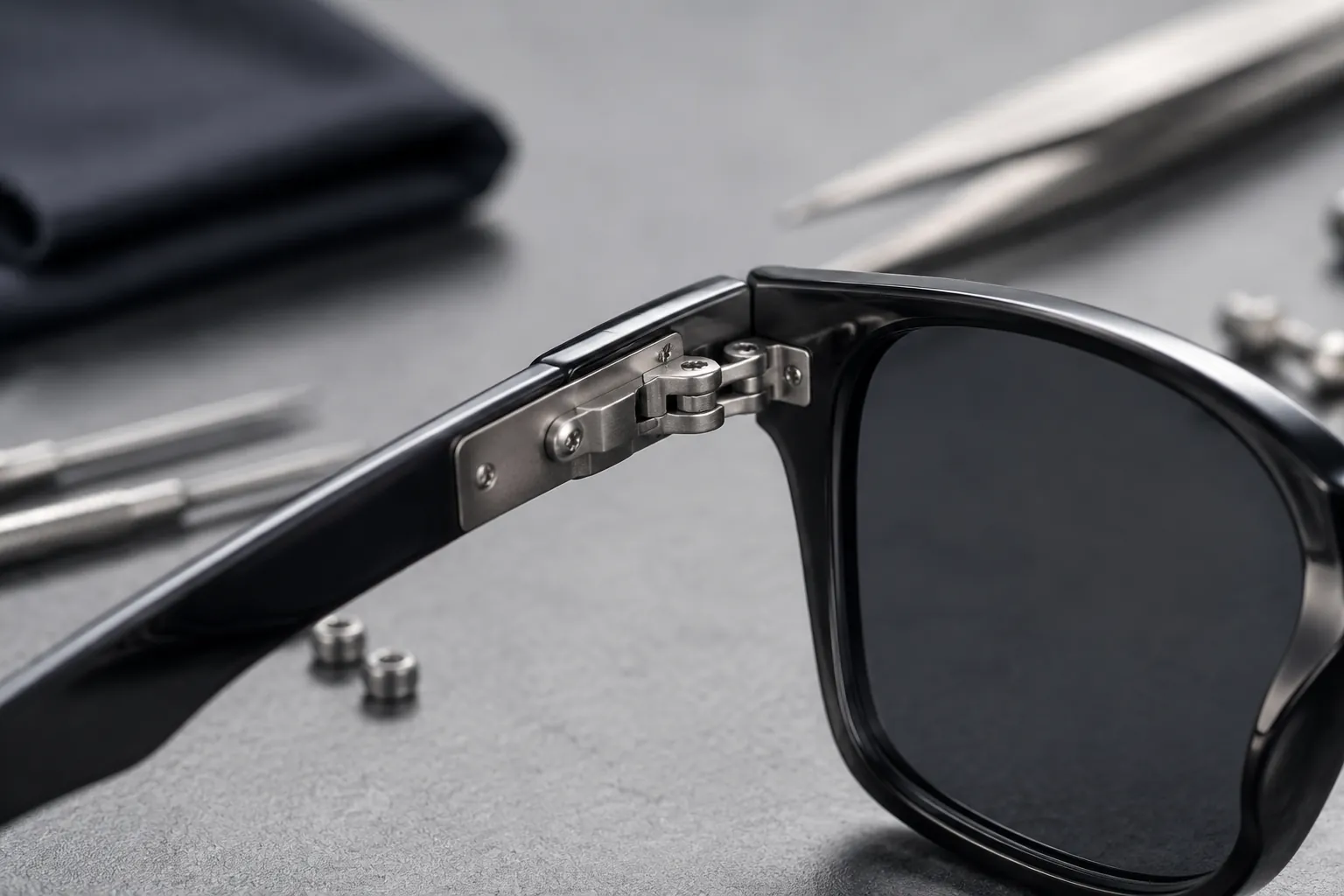
This guide is for importers, distributors, and retailers running large sunglasses programs across seasons, channels, and regions. If you want to protect service levels without building dead stock, plan hard: forecast by style and lens type, split production into release windows, and tie your sell-in calendar to factory capacity. At scale, the work is not the mood board. It is release timing, compliance control, and batch planning that can be checked.
Start with sell-through, not the order form
A large sunglasses program fails when the buyer starts with total volume instead of weekly demand. Break the business into markets, channels, and SKU families before you talk about factory capacity. A beach-season line in southern Europe, a replenishment program in the Middle East, and a promo assortment for domestic retail will not move at the same speed or under the same margin pressure. The factory does not need the full annual forecast on day one. It needs a release pattern that matches how the product will actually sell.
For sunglasses, the practical planning unit is not the annual purchase order. It is the sell-through bucket: frame shape, frame color, lens type, logo method, packaging format, and destination market. If one style is expected to drive a large share of units, give it its own forecast, its own safety stock, and its own release calendar. Mixing every SKU into one average is how buyers end up short on winners and stuck with slow movers.
Build the demand model from plain inputs. Use historical sell-through by week, store cluster, and channel; add a seasonality factor for launch weeks; and apply a conservative fill-rate target. Many buyers set a higher service target for core styles and a lower target for fashion colors. That split matters. Core colors can support replenishment. Trend colors often cannot. Blur them together and both service and turns suffer.
| Program layer | What to forecast | Why it matters |
|---|---|---|
| Market | EU, US, Australia, duty-free, domestic retail | Compliance, seasonality, and labeling requirements differ by destination |
| Channel | Retail, wholesale, ecommerce, promotion | Pack-out, reorder speed, and margin expectations change by channel |
| SKU | Frame shape, material, lens type, logo method | Drives tooling, QC checkpoints, and assembly time |
| Release batch | Weekly or monthly call-off volume | Controls stock risk, freight cost, and warehouse load |
For a custom eyewear program, the supplier should explain how production is split by SKU and how each release is controlled. In-house molding, cutting, tinting, decoration, and QC can reduce handoffs and make batch timing easier to manage. Still, the buyer needs a clear release plan and written approvals. No plan, no control.
Use MOQ and price breaks to shape the split
A quoted MOQ is a starting point, not a production strategy. For development and range testing, a low MOQ can be useful. For a 5M+ program, move from sampling logic to volume logic once demand is proven. The real question is not only what the factory will accept, but what quantity gives you the best balance of unit cost, risk, and replenishment flexibility.
The true cost is landed cost per sellable pair, including artwork changes, decoration setup, carton allocation, inspection time, and the chance of rework. On decorated programs, a logo plate, pad print, or laser mark adds handling steps and can increase scrap if the artwork changes late. A quote that looks cheap at a small quantity can become expensive once you add revisions, extra proofs, and delayed shipment.
Do not chase the lowest unit price by overcommitting to one giant lot. That turns into markdowns, storage cost, and write-offs if a color misses. A cleaner approach is to lock the core color in a larger run and keep fashion colors in smaller replenishment lots. A practical split is often most volume in core shades, a smaller share in seasonal colors, and a test share in new or marketing-led variants. The mix should come from sell-through data, not a fixed rule.
- Set a core SKU at the highest likely velocity and confirm the sell-through assumption.
- Place the first buy in the lowest sensible price band for your demand level.
- Hold a second release for the next 60 to 90 days of sales so you can react to actual movement.
- Keep test colors near MOQ until the market proves the style.
- Use smaller pack-outs on fashion colors so dead stock can be redistributed more easily.
For retailers, this matters even more on acetate and decorated frames. Acetate polishing, laser engraving, pad printing, and metal logo plates all add process time and scrap risk. If artwork is not final, do not freeze the full order. Finalize logo placement, artwork dimensions, and print tolerance before locking the large lot.
Build the calendar backward from shelf date
Lead time only helps if it is counted from the right date. Work backward from the first shelf date, the first inbound appointment, or the campaign launch, not from the purchase order date. For custom sunglasses programs, a supplier may quote sample and bulk lead times, but the buyer still needs buffer for approvals, reproofing, and freight booking. The exact buffer depends on design and packaging complexity. The calendar should never assume perfect sign-off timing.
The most common delay is not molding or cutting. It is waiting for approval of lens tint, temple print, logo plate placement, carton copy, or compliance text. One round of revisions can add time. Multiple rounds can turn a seasonal plan into an expedited freight problem. The safest approach is to lock the technical items first: frame geometry, hinge style, lens category, and decoration method. Then move to appearance items such as color, print, and packaging.
- Approve frame shape and lens category first, including the target UV and tint spec.
- Lock color chips and finish under production lighting, not office lighting.
- Confirm decoration method with the actual artwork dimensions and placement tolerance.
- Approve the golden sample only after fit, hinge tension, lens clarity, and alignment are checked.
- Release bulk in tranches so the factory can correct small deviations before the next wave.
Packaging also belongs in the calendar. If the carton size changes after sample approval, the change can affect master carton loading, pallet count, and freight cube. A plan that looks late only on paper is often late in the warehouse too. If your season opens in March, bulk should not start in late February. For a large program, the first production release should land before the replenishment window opens, even if that means carrying a modest buffer in your warehouse.
Match material choice to your risk profile
Different frame materials behave differently in production and in the market. Injection frames are efficient for repeatable volume and stable color matching, especially when you need consistent dimensions across large batches. Acetate gives a richer finish and a more premium feel, but it requires more polishing, more manual handling, and more control over humidity and storage. CNC-milled components are useful when the design needs sharper geometry, thicker sections, or a more precise surface finish than a standard molded frame can provide.
Material choice also changes your tolerance strategy. Injection styles can usually hold tighter repeatability on batch-to-batch color and part geometry once the master sample is approved. Acetate has more visual variation by nature, so define acceptable limits for color depth, pattern flow, and polish consistency. If the supplier cannot explain what is judged by measurement and what is judged by visual comparison, the program is still too loose.
| Option | Best use | Main risk | Buyer note |
|---|---|---|---|
| Injection frame | High-volume core styles | Color shift across batches | Good for repeat orders, faster replenishment, and stable unit cost |
| Acetate | Premium retail programs | More polishing and manual handling | Plan for more QC on finish, symmetry, and temple alignment |
| CNC-milled parts | Sharper geometry or premium builds | Longer setup and machining time | Use when design accuracy matters more than speed |
| Mixed-material build | Logo-heavy or fashion programs | More assembly variables | Keep the BOM stable before scaling and freeze inserts early |
Lenses deserve the same attention as the frame. For a commercial program, define checks for tint density, visible surface marks, lens fit, and edge polish. If the lens is polarized, confirm polarization orientation and adhesion consistency. If the lens is mirrored, check coating uniformity and scratch handling. For large programs, ask for the same inspection points every batch: lens shade, surface marks, hinge torque, temple alignment, and logo position. A serious factory should be able to describe its measurement tools, sampling method, and rejection thresholds clearly.
Split production into core, buffer, and chase lots
The easiest way to stock out is to manufacture everything as one wave. Use three layers instead: core, buffer, and chase. Core volume covers known demand. Buffer covers forecast error. Chase volume covers surprise winners. That structure protects service levels without bloating inventory and lets procurement stay responsive after the first sales readout.
For example, a 100,000-pair program might be split into 70,000 core, 20,000 buffer, and 10,000 chase. The core lot ships against the opening forecast. The buffer lot is built and QC-cleared, but held for release until sell-through data confirms the direction of the market. The chase lot stays pending until one color, style, or channel outperforms the plan. If demand is softer than expected, do not release it. If one style takes off, push it quickly before the season peaks.
That logic works only if the factory can repeat the same build standard across multiple releases. Confirm whether the plant can hold the same tooling, tint recipe, decoration setup, and QC expectations across batches. In-house molding, cutting, tinting, and decoration can help, but the key is repeatability. Capacity matters less than control if the second and third batches do not match the first approved sample.
Use a simple rule: do not let the same SKU fight three different release dates unless the factory has already proved it can hold color, fit, and finish across all three batches. If you need to split the SKU, split the release by written batch plan, not by informal phone call. The release note should name the color, lens type, carton code, and approved sample reference so no one confuses batch one with batch three.
Use compliance as a release gate
At scale, compliance must be built into the product plan. Do not treat it as paperwork at the end. Keep only real, market-relevant references in the file: CE EN ISO 12312-1, ANSI Z80.3, AS/NZS 1067, REACH, FDA registration, ISO 9001, and BSCI. The right document depends on destination market, lens type, and the claims made on-pack and in advertising.
Different markets may require different evidence. The same frame can be acceptable in one region and blocked in another if the lens category, labeling, or claims are wrong. Make sure the purchase order names the target market and the standard required for that shipment. If the product is intended for the EU, CE EN ISO 12312-1 and REACH-related material compliance are relevant. For the US, FDA registration and ANSI Z80.3 matter. For Australia, AS/NZS 1067 is the relevant reference. If you sell through multiple channels, keep a compliance matrix by SKU so the warehouse does not mix labeling rules.
For high-volume programs, ask the supplier to tie compliance to SKU code, colorway, lens type, and packaging variant. That avoids the common problem where one sample passes and a different lens tint is later built without matching documentation. The release gate should include the test report, the exact commercial artwork, carton text, and care instructions that will go into the market.
Buyer rule: if the compliance pack is incomplete, do not release the bulk order. Fix the file before the container is booked.
Good buyers also ask for traceability. If a batch is questioned later, can the supplier identify the production date, line, operator, and material lot? Can they show which inspection points were recorded? That level of control is what separates a scalable program from a one-time sample run.
Ask the right questions before the first major order
Buyers often ask for a quote too early. Better questions come first because they show whether the factory can support a seasonal program or only a sample run. A supplier that answers clearly on process, capacity, and QC is usually safer than one that only reacts with a low price.
Before you place a large order, ask for specific operational details: which steps are done in-house, how many QC checkpoints happen per batch, whether the factory can hold the same lens tint across repeat runs, and what tolerance it works to on fit and alignment. The exact answers matter. A strong supplier should be able to explain how it checks hinge torque, lens-to-frame gap, and color matching, and whether those checks use a physical standard, a written tolerance, or both.
- What is the exact MOQ by design, and what changes the price at 300, 1,000, and 5,000+ pairs?
- Which steps are in-house, and which steps are outsourced?
- How do you control color consistency across repeat runs and seasonal reorders?
- What is the approved tolerance on fit, hinge tension, lens alignment, and artwork placement?
- How do you handle decoration changes after sample approval?
- Which compliance documents are available for the target market, and which SKU do they apply to?
Ask for batch photos and QC records tied to your own SKU, not generic factory images. If the supplier cannot show how a specific model moved from sample to bulk, that is a warning sign. For distributors and retailers, the best vendors are the ones who can explain process, not just quote price. If they can describe the causes of scrap, rework, and delay in plain language, that is usually a stronger signal than a polished presentation deck.
Use a simple release plan for one season
Here is a workable pattern for a large seasonal sunglasses program. First, approve samples well before launch so there is time for any corrective round. Second, place the initial core order in the best price band you can safely support. Third, keep buffer units unshipped until sell-through data is clear. Fourth, release chase volume only after the top SKUs are confirmed. This keeps cash tied to the products that move and prevents the warehouse from filling with unproven colors.
A practical launch plan usually starts with a technical sign-off meeting, followed by a pre-production sample, then a golden sample, and finally a controlled bulk release. Keep the sample record attached to the PO so every later batch can be compared against the same reference. That sounds basic, but it is where many large programs go wrong. Teams remember the launch story and forget the approved technical file.
The target is not perfect forecast accuracy. It is controlled error. If your top three styles account for most units, protect them with earlier production, tighter QC, and a more conservative color palette. If lower-volume fashion colors are less predictable, keep them flexible. That is how you hold fill rate without carrying dead stock into the next season.
A factory with in-house production steps and a documented compliance set is useful when you need repeatable output rather than one-off novelty. The work is still on the buyer. The supplier can only deliver what is clearly released, approved, and timed correctly. Strong planning does not remove risk. It turns risk into a managed schedule instead of a panic order.
Have a custom sunglasses project in mind?
Send us your styles, target market and quantities and we will return a detailed quote with MOQ, lead time and a sample plan.
Get a QuoteWhy source this from Wenzhou with LumiShades
Wenzhou in Zhejiang Province is widely regarded as China’s eyewear manufacturing capital, producing a large share of the world’s sunglasses. That concentration matters to buyers: a deep local supply chain for acetate sheet, hinges, lens blanks, plating and packaging means shorter component lead times, easier color and material matching, and a workforce with decades of eyewear-specific skill. LumiShades has manufactured in this ecosystem since 2009, and our vertical integration — in-house injection molding, acetate cutting, CNC milling, lens tinting, decoration and quality control — means no part of your order is quietly subcontracted to a workshop you cannot audit.
For international buyers, that vertical control translates into accountability. When a single factory owns every step, defects are traced and fixed at source rather than bounced between vendors, and your specifications survive intact from first sample to bulk. We back this with 15+ years of experience, shipments to 60+ countries, more than 5 million pairs produced per year and a 98.5% on-time delivery rate. Our certifications — CE EN ISO 12312-1, FDA registration, ANSI Z80.3, AS/NZS 1067, REACH, ISO 9001 and BSCI audit — mean the compliance documentation your market requires already exists. Explore our manufacturing capabilities and quality control process to see how this works in practice.
Frequently asked questions
How should I split a 100,000-pair sunglasses order? Start with a core lot for proven demand, hold a buffer for forecast error, and leave a chase lot for reorders after sell-through data comes in. A common starting point is 70/20/10, but the right mix should be based on weekly sell-through, not a fixed formula. If one style or color has already proven demand, give it a larger share of the core lot and keep unproven variants closer to MOQ.
What is a sensible MOQ for custom sunglasses? Use the MOQ as a development threshold, not as your production target. For custom sunglasses, a low MOQ is useful for testing fit, color, and decoration, but larger runs usually make more sense once demand is proven. Ask the supplier what changes at 300, 1,000, and 5,000+ pairs, including unit price, setup time, packaging cost, and QC burden, then choose the smallest quantity that still gives you a workable landed cost and replenishment plan.
How long should I allow for samples and bulk production? Build your schedule backward from the first shelf date or launch date, then add time for approvals, reproofing, and freight booking. If a supplier quotes sample and bulk lead times, treat those as production-only numbers, not the full project timeline. Hold extra time for artwork approval, carton copy, compliance review, and any lens or decoration changes after sample sign-off.
Which compliance documents should I ask for on export orders? Match the document set to the destination market and product claims. For the EU, ask for CE EN ISO 12312-1 evidence and REACH-related material compliance where relevant. For the US, ask for FDA registration and ANSI Z80.3 references. For Australia, ask for AS/NZS 1067. Also ask which exact SKU, lens type, and packaging variant each document covers so you do not approve one sample and ship a different build.
What usually causes stockouts in large eyewear programs? The most common causes are late approvals, poor forecast splits, overcommitted fashion colors, one-wave production, and weak release timing. Stockouts usually come from planning errors rather than factory capacity alone. The best defense is to split core, buffer, and chase lots; lock technical approvals early; and keep the release calendar tied to actual sell-through rather than optimism.
How can I keep unit cost down without overbuying? Put proven core styles into the most efficient volume bands, keep risky colors near lower runs, and release production in stages. Then compare landed cost, not just factory price, because decoration setup, inspection, packaging, and rework can change the true cost per sellable pair. This approach protects your main volume while limiting idle stock and markdown exposure.
Ready to start?
Explore our cat-eye sunglasses or request a quote — our sales team replies within 12 hours.
Request a Quote