
Build Premium-Looking Sunglasses Without New Tooling
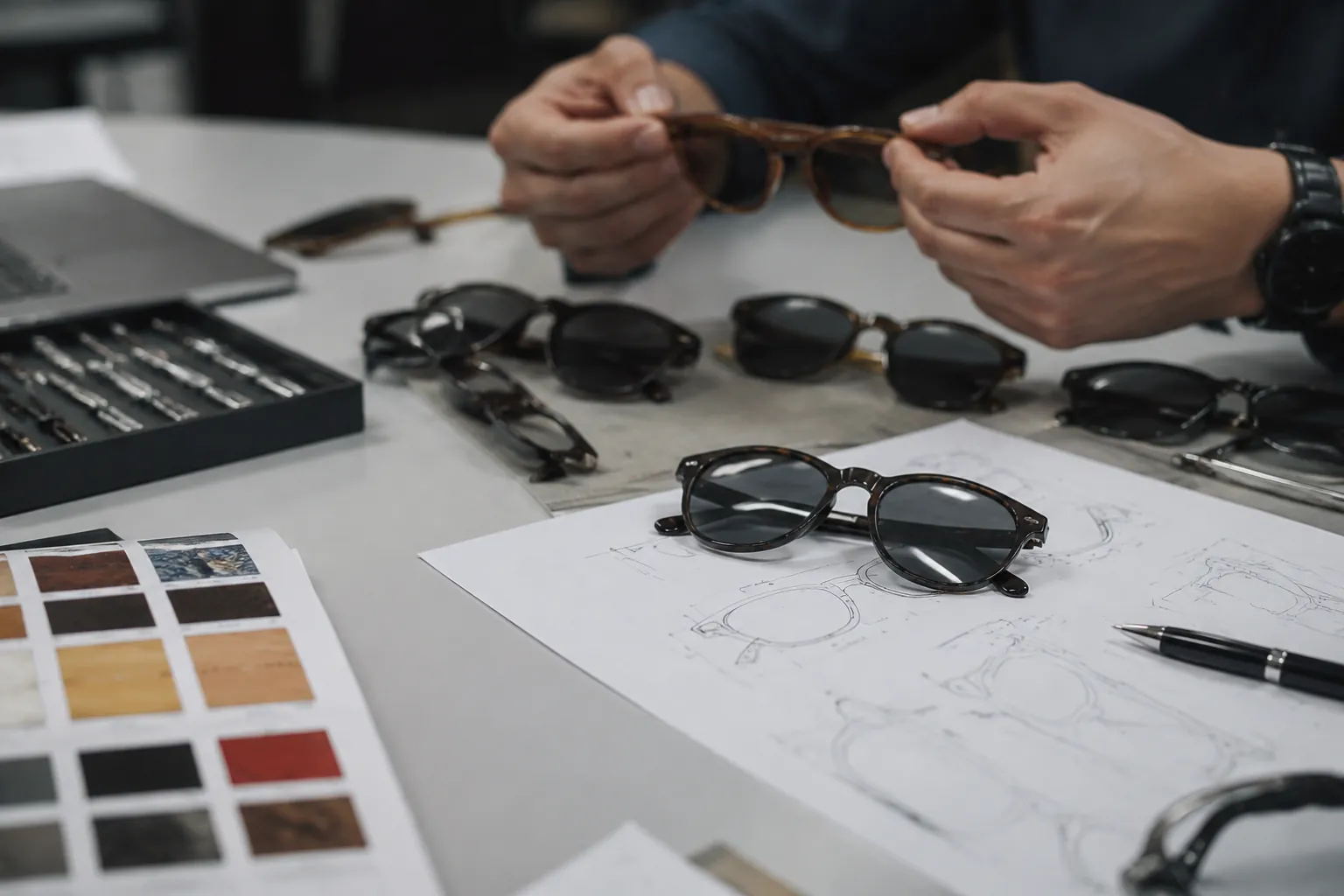
This guide is for brand owners, importers, distributors, and retailers who want a stronger-looking sunglasses line without paying for new tooling. In many cases, the fastest route is not a new shape. It is a disciplined mix of proven mold selection, better finish control, cleaner hardware feel, more deliberate lens color, and the right decoration method for the frame material and order size. The aim is simple: improve shelf appeal, brand clarity, and perceived value while staying inside real MOQ, lead-time, compliance, and margin limits.
Set cost, MOQ, and compliance first
Many programs go off track early because the buyer starts with a fully custom shape before defining target ex-works cost, workable MOQ, destination market, and branding method. That order is expensive. It pushes budget into tooling and revisions instead of the details customers notice first.
A better approach is to start with an existing mold or proven base construction, then spend on visible upgrades. The economics at 50 pairs are not the economics at 300, 1000, or 5000 pairs. Lower volumes usually limit color matching, custom parts, and decoration efficiency. Higher volumes make it easier to justify refined touches such as custom lens tints, upgraded finishing, or fitted logo hardware.
Exact unit cost depends on frame material, lens material, hinge type, decoration method, packaging, and whether the supplier controls key processes in-house. So do not chase a single universal price point. Build a cost structure instead: keep the mold standard unless shape is the core selling feature, and reserve budget for the touchpoints that most affect perceived value.
For most sunglasses programs, those touchpoints are frame surface, lens tone, hinge feel, logo execution, and final alignment.
- Spend first on surface finish consistency, assembly quality, and lens fit.
- Spend second on lens color accuracy and decoration placement tolerance.
- Spend third on visible cues such as logo plates or bevel details.
- Delay new tooling unless shape itself is the selling point.
This approach helps smaller brands launch with less risk and helps larger importers widen assortments without opening new tooling for every SKU.
Use existing molds and change the look with finish and color
A standard frame can look cheap or premium depending on how it is finished. Shape matters, but first impression usually comes from what the customer sees and feels: gloss level, texture, edge definition, transparency, color depth, and assembly cleanliness.
For injection styles, the lowest-value presentation is often the most common one: a generic glossy black frame, a flat grey lens, and basic temple printing. Easy to make. Hard to differentiate. A stronger route is to use the same mold with a matte finish, controlled texture, crystal smoke, olive translucent, sanded effect, or another finish with a clear visual direction. Often, those changes create more visible distinction than a small tweak to the bridge or temple line.
Material behavior matters. Polycarbonate and TR90 can both support matte or textured effects, but they do not process the same way. Polycarbonate can deliver a crisp molded surface and good color clarity. TR90 can offer flexibility and wearing comfort, but appearance consistency still depends on process control, especially for textured or low-gloss surfaces. If the product needs to feel more rigid or substantial, color alone will not do it. Wall thickness, finish quality, and hinge integration also need to be specified.
For acetate, premium appearance depends heavily on CNC work, tumbling, and polishing quality. A frame with balanced thickness, smooth bevel transitions, and even polish feels more refined than one with dull corners, inconsistent edge break, or uneven finishing. You do not always need a new front shape to get there. A change in lamination stack, bevel depth, polishing grade, or temple thickness may be enough.
Repeatability depends on process sequence. A stable production flow usually includes molding or cutting, trimming, surface finishing, hinge installation, lens edging and fitting, decoration, heat adjustment, final alignment, and QC. Fewer outside parties usually means simpler communication when a finish, lens, or decoration issue shows up during sampling or production.
Choose upgrades customers notice fast
Not every upgrade creates equal value. Some look good on a quote sheet and do very little on shelf. Others are visible the moment the frame is handled. Start there.
| Upgrade option | Typical cost effect | Visual impact | Best MOQ range | Main production note |
|---|---|---|---|---|
| Matte or sanded frame finish | Low to medium | High | 50+ | Needs even surface texture across front and temples |
| Soft-touch coating | Medium | High | 300+ | Can mark under abrasion; handling and rub checks are recommended |
| Gradient or custom-tinted lenses | Low to medium | High | 100+ | Check transmittance and color consistency lot by lot |
| Laser engraving on temple | Low | Medium | 50+ | Works best with simple artwork and controlled placement |
| Metal logo plate | Medium | High | 300+ | Requires accurate recess fit and clean edge seating |
| CNC bevel detailing on acetate | Medium | High | 300+ | Extra polishing time is needed to keep bevel lines clean |
The best value often comes from pairing one surface upgrade with one branding upgrade instead of stacking effects. A matte black frame with a G15 or light gradient lens and a small laser logo usually reads more premium than a shiny frame with oversized multicolor printing. Same idea with acetate: a crystal brown front with polished bevels and a restrained metal temple plate can look more expensive than a fully custom shape with weak finishing.
The rule is simple. Reduce visual noise. Improve execution. Fewer changes, done well, usually beat more features done loosely.
Fix hardware feel before adding decorative metal
Hardware matters, but not every metal detail deserves the budget. Hinge feel does. Decorative ornaments that the customer barely notices usually do not. If the temples open unevenly, wobble, or sit at different angles, the frame will feel cheap regardless of colorway or logo treatment.
Ask specific production questions. What hinge type is being used: standard barrel hinge, spring hinge, or another construction? How is screw retention handled? On acetate, how is hinge pocket depth controlled? What final alignment checks are done before packing?
On acetate and mixed-material frames, hinge pocket fit and insertion accuracy affect long-term stability. A loose hinge pocket or poor heat setting can lead to temple drift after repeated opening and closing. On injection frames, consistent screw fit, hinge seating, and lens groove accuracy usually matter more than decorative complexity. A premium-looking frame should also have balanced opening resistance between left and right temples, not one loose side and one stiff side.
Good factories normally define internal tolerances for visible assembly points, but buyers should still request clear approval standards for logo placement, lens seating, symmetry, and temple balance. A strong-looking frame loses value fast if a logo plate sits off-center, one lens stands proud of the rim, or the front rests twisted on a flat surface.
If the budget is tight, spend in this order:
- Stable hinge construction and smooth opening feel.
- Even lens seating and clean rim closure.
- Symmetrical assembly and balanced left-right temple opening.
- Accurate decoration placement against approved artwork.
- Decorative metal accents only after the above points are stable.
Not glamorous. Still the right order. It is what experienced buyers check first in samples and bulk inspections.
Match decoration to material, volume, and wear
Decoration is a production decision, not just a branding preference. The right method depends on substrate, artwork complexity, expected abrasion, and order size.
Pad printing is usually the most flexible starting point for lower MOQs. It works well on side temples, simple logos, and straightforward one- or two-color artwork. It is also practical for test orders in the 50 to 300 pair range. The main limit is visual: oversized pad prints can make a frame look promotional rather than premium, and poor registration shows quickly on glossy surfaces.
Laser engraving is useful when the brand wants a more restrained and durable result. On suitable temple materials, it can look cleaner than surface print, especially for small logos, inner marks, or tone-on-tone branding. It works best with simple artwork and enough line weight. Very dark textures or highly reflective finishes can reduce contrast, so approvals should always be made on the final finish, not just on raw material.
Metal logo plates create one of the clearest premium cues, but only when executed precisely. The recess needs to be consistent, the edges need to sit flush, and the plate finish needs to match the collection. If the plate is skewed or adhesive is visible, the result hurts the brand. That is why metal plates usually make more sense from around 300 pairs upward, where setup effort and reject risk are easier to absorb.
Decoration planning should also follow material logic:
- Injection frames: pad print, laser engraving, selected insert applications, and some hot-stamp options depending on surface.
- Acetate temples: laser engraving, foil, embedded logos, or metal plates depending on thickness and finish.
- Lenses: small laser or print branding only when market acceptance, markings, and compliance implications are clear.
For repeatable production, lock four items during sample approval: artwork file, size, position drawing, and tolerance. "Looks good" is not enough. A simple temple logo should be approved against a defined placement reference so bulk inspection has an objective standard.
Build compliance into the spec before bulk production
A premium-looking sunglasses line that fails compliance is not premium. It creates returns risk, import risk, and reputational risk. Testing and document requirements should be defined before bulk approval because lens color, coatings, markings, and packaging claims can all change the compliance path.
Depending on destination market, buyers may need to work to standards such as CE EN ISO 12312-1, ANSI Z80.3, or AS/NZS 1067. Material and chemical review may include REACH. Some importers also ask for FDA registration-related documentation for U.S. workflows. System or social compliance credentials such as ISO 9001 or BSCI can support supplier assessment, but they do not replace product-level testing or market-specific documentation.
The key sourcing point is this: visual decisions can trigger compliance work. If a buyer changes a lens from one tint category to a darker one late in development, transmittance and labeling may need review again. If mirror coating, polarized construction, or a different base lens material is added after the first sample, the test plan may also need to be checked again. The same goes for certain lens markings and packaging claims.
Before approving mass production, confirm the following in writing:
- Destination market and applicable standard.
- Lens category, transmittance target, and final tint reference.
- Frame and lens material declarations where required.
- Approved temple, lens, packaging, and carton markings.
- Which test reports and declarations ship with the order and which remain on file.
Serious buyers treat compliance as part of product development, not as end-stage paperwork. That reduces rework and lowers the risk of approving a sample that cannot be sold legally in its target market.
Plan samples and production around real delays
Lead time is usually driven less by the basic frame body than by how many variables change at once. A sample based on an existing mold with a standard lens and simple print is usually easier to move than one that combines custom tinting, fitted metal hardware, revised bevel work, and new packaging in one round.
Lead times vary by supplier capacity, material availability, and approval speed, so fixed timeline claims are not enough. Focus on the usual delay points instead: revised artwork after sample completion, lens color changes after first approval, late packaging decisions, and approval comments that are subjective instead of measurable.
To keep timing under control, approval should follow a strict order:
- Approve the frame base and construction first.
- Approve lens color under both indoor and natural light second.
- Approve decoration method, size, and placement third.
- Approve packaging only after the product itself is frozen.
- Sign one final sealed sample as the bulk reference.
This sequence avoids a common sourcing mistake: spending time on pouches, boxes, and cartons while the sunglasses themselves are still changing. It also protects the budget because each late-stage change can trigger new setup work, fresh confirmation samples, or extra quality risk during bulk production.
For buyers balancing budget and order size, three sourcing strategies are usually practical. Entry programs often use an existing injection mold, a standard smoke or G15 lens, a matte finish, and a small pad print logo. Mid-level premium-look programs often stay with an existing mold but add upgraded lens tinting, subtler branding such as laser engraving, and tighter finish QC. Larger-volume programs can justify one signature detail such as a metal logo plate, acetate lamination change, or CNC bevel treatment because the added setup cost is spread across more units.
If the shape already works, do not redesign it just to make the project feel more custom. Put the budget into finish control, lens consistency, and branding accuracy.
That is usually what makes a line look better in bulk: disciplined choices, locked specifications, and visible details executed consistently.
Have a custom sunglasses project in mind?
Send us your styles, target market and quantities and we will return a detailed quote with MOQ, lead time and a sample plan.
Get a QuoteWhy source this from Wenzhou with LumiShades
Wenzhou in Zhejiang Province is widely regarded as China’s eyewear manufacturing capital, producing a large share of the world’s sunglasses. That concentration matters to buyers: a deep local supply chain for acetate sheet, hinges, lens blanks, plating and packaging means shorter component lead times, easier color and material matching, and a workforce with decades of eyewear-specific skill. LumiShades has manufactured in this ecosystem since 2009, and our vertical integration — in-house injection molding, acetate cutting, CNC milling, lens tinting, decoration and quality control — means no part of your order is quietly subcontracted to a workshop you cannot audit.
For international buyers, that vertical control translates into accountability. When a single factory owns every step, defects are traced and fixed at source rather than bounced between vendors, and your specifications survive intact from first sample to bulk. We back this with 15+ years of experience, shipments to 60+ countries, more than 5 million pairs produced per year and a 98.5% on-time delivery rate. Our certifications — CE EN ISO 12312-1, FDA registration, ANSI Z80.3, AS/NZS 1067, REACH, ISO 9001 and BSCI audit — mean the compliance documentation your market requires already exists. Explore our manufacturing capabilities and quality control process to see how this works in practice.
Frequently asked questions
Is 50 pairs enough to make sunglasses look premium, or is that only for basic promo quality? Fifty pairs can be enough to test a premium-looking concept if you use an existing mold and keep customization focused on high-visibility details. The most practical options at that level are finish changes, a controlled lens tint, and simple branding such as pad print or laser engraving where suitable. It is usually not the right quantity for new tooling, multiple custom components, or complex hardware development. Ask the supplier to confirm which upgrades are feasible at 50 pairs, what setup charges apply, and whether the same finish and decoration can be repeated later at higher volume.
Which upgrade usually gives the best visual return for the lowest added cost? In many programs, the best return comes from frame finish and lens color before extra hardware. A matte, sanded, or well-controlled translucent finish paired with a deliberate lens tint such as G15, brown, or a light gradient usually changes perceived value more than extra printed graphics. To make the decision practical, ask for side-by-side samples of the same mold in two finishes and two lens colors, then compare them under store lighting and daylight before approving one direction.
When should I choose a metal logo plate instead of pad printing? Choose a metal logo plate when branding is central to the collection, the temple design has enough space and thickness for clean fitting, and the order volume can absorb the extra setup and QC effort. It is usually more suitable from around 300 pairs upward. Choose pad printing when speed, lower MOQ flexibility, or simpler artwork matters more. Before approving a metal plate, ask for a fitted sample that shows recess depth, edge seating, finish color, and placement tolerance, not just a loose hardware sample or digital mockup.
How do I stop bulk production from looking different from the approved sample? Approve one final sealed sample that matches the exact bulk specification: frame finish, lens tint, decoration method, artwork size, placement drawing, packaging, and markings. Then put that specification in writing and require QC against it. At minimum, the bulk inspection standard should cover color consistency, logo placement, lens seating, hinge feel, symmetry, and left-right temple balance. If possible, require the factory to keep the signed sample and approved artwork file together as the production reference so the line, QC team, and buyer are working to the same standard.
Can changing lens color late in development affect compliance requirements? Yes. A lens color change can affect transmittance, lens category, labeling, and the supporting test path for standards such as CE EN ISO 12312-1, ANSI Z80.3, or AS/NZS 1067. Mirror coatings, polarized construction, and lens material changes can also alter what needs review. If you change lens color or construction after first approval, ask the supplier or testing partner to confirm whether the existing test report, technical file, labeling, and packaging claims still match the final product before mass production is released.
Ready to start?
Explore our round sunglasses or request a quote — our sales team replies within 12 hours.
Request a Quote