
Custom Sunglasses Gift Sets That Lift Order Value
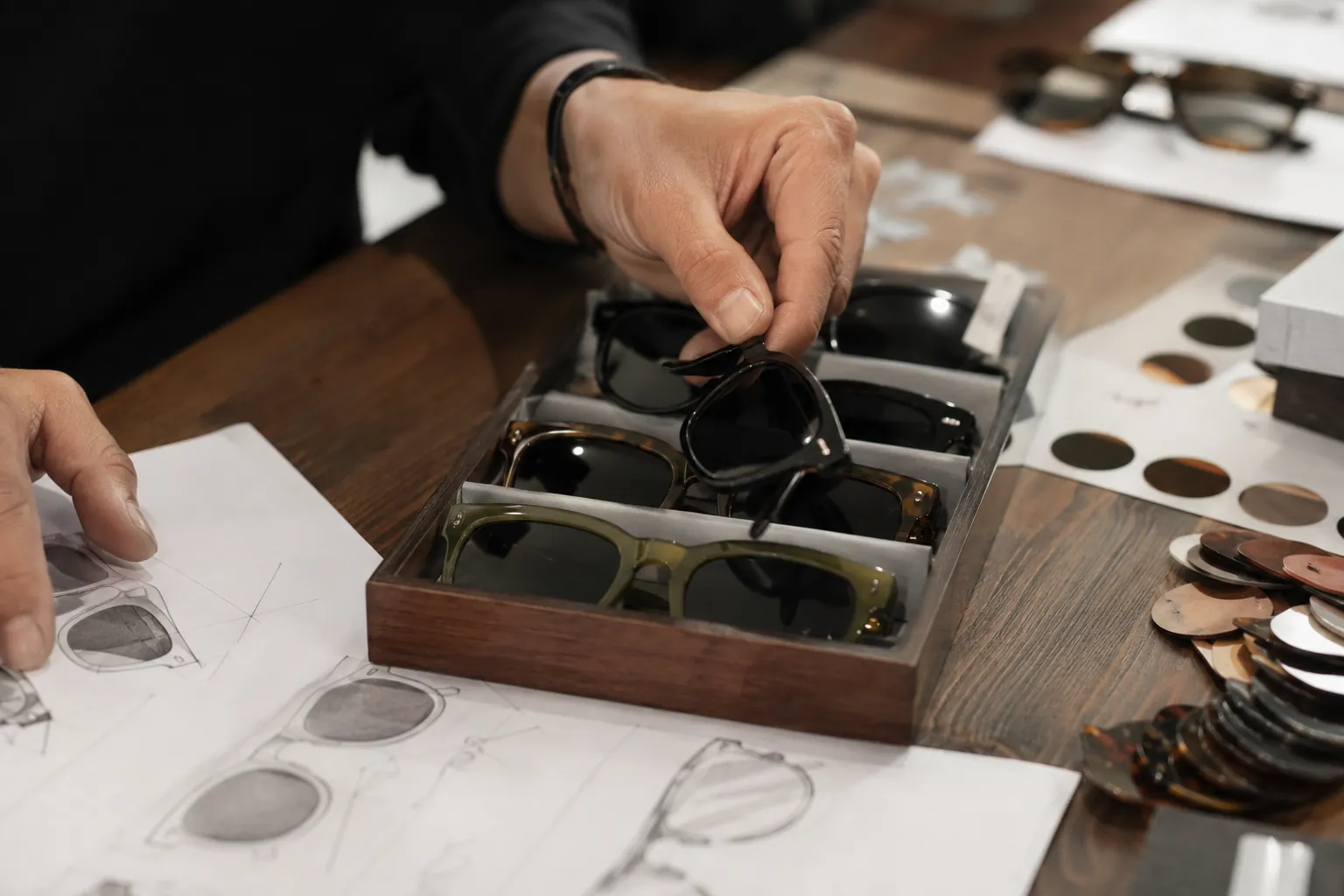
Custom sunglasses gift sets are not just packaging. For brands, importers, distributors, and retailers, the right case, pouch, or box can raise perceived value, cut transit damage, and make a basic frame easier to sell at a higher price. The catch is simple: every added part affects cost, packing time, carton density, and defect risk. If you buy at volume, the best set is the one that protects margin, not the one that looks prettiest.
1. Start With the Buying Goal
A gift set works only if the accessory supports a clear commercial goal. Promo programs need low unit cost and fast packing. Retail sets need shelf impact, clean unboxing, and fewer damages. Distributor programs usually sit between those two: enough presentation to justify a higher sell-in price, but simple enough to assemble without slowing production.
For sunglasses, the accessory package usually does one of four jobs: protect the frame, improve perceived value, carry branding, or reduce return damage. A soft pouch may be enough if the goal is scratch protection and light branding. A rigid box makes sense when the same frame needs to move from a basic promo item to a retail program. The package changes how the offer is read. That is pricing. Not decoration.
Start with the channel math. If a customer wants 2,000 pairs for a summer event, they will care more about landed cost and quick fulfillment than luxury presentation. If they want 500 pairs for boutique retail, the packaging can carry a meaningful share of the value story. The accessory choice should follow the margin model, not taste.
At LumiShades, production planning is built around volume orders and sampled development. Packaging should fit the same workflow: clear artwork, a realistic pack-out process, and enough lead time for approval. A set that causes rework or slows packing below the bulk timeline usually erases the value it was supposed to add.
Use the lightest set that still supports the target selling price, freight profile, and return rate. Anything beyond that is extra cost.
2. Compare the Three Common Set Formats
Most B2B buyers end up choosing one of three formats. The frame may stay the same. The value story changes with the package.
| Set format | Best use | Typical value effect | Cost and handling impact | Main risk |
|---|---|---|---|---|
| Soft pouch only | Promo giveaways, mailers, entry retail | Small but visible improvement over a naked frame | Lowest added cost; packs flat; minimal carton penalty | Limited crush protection and a weaker premium feel |
| Pouch + folding or semi-rigid case | E-commerce, distributor packs, mid-tier retail | Clear step up in perceived value and return reduction | Moderate material cost; more labor per unit; slightly lower carton density | Case sizing must match frame width, temple length, and lens height |
| Rigid box + case + cloth | Gift sets, seasonal promos, premium retail | Highest shelf presence and strongest unboxing value | Highest material cost; largest shipping volume; more pack-out steps | More components mean more QC checks and more chances for mismatch |
The simplest version is often the right one. If the selling price does not move up, do not add a rigid box just to make the item look more premium. That is margin leakage. A rigid carton can raise packaging cost through board grade, print method, insert complexity, and order volume. If the channel only supports a small price lift, the math can fail before freight is counted.
For retail chains and branded promotions, the best choice is often not the most impressive one. It is the one that survives freight, stacks cleanly, prints consistently across the lot, and packs without rework. In volume programs, consistency usually beats luxury.
3. What Each Accessory Changes
Packaging affects more than appearance. It changes damage rate, labor time, carton density, and the buyer's first impression. It also changes how the shipment performs in transit, which is why the accessory choice should be treated as part of the product, not as an afterthought.
- Soft pouches usually use microfiber, suede-like cloth, velvet, or woven polyester. They protect against surface scratches but do little against compressive force.
- Hard cases are usually EVA, PU, or molded plastic with a wrapped exterior. A semi-rigid EVA case is common for retail sets because it helps keep the frame shape stable and reduces hinge stress in transit.
- Rigid boxes use paperboard, specialty paper wrap, magnets, ribbon pulls, or fold-and-lock structures. They create the strongest unboxing value, but they also increase packed volume, which affects freight cost and warehouse storage.
- Cleaning cloths are low-cost but high-visibility. A printed microfiber cloth can reinforce branding after the set is opened.
- Logo plates, sleeves, inserts, and belly bands make the set feel designed rather than assembled. That matters in retail and gift programs, where buyers notice structure before they notice material detail.
Fit is where many programs fail. A poor-fitting case can press against the lenses, pinch the temples, or force the arms to bend. That is not just cosmetic damage; it can show up as returns, warranty complaints, and lower repeat orders. For eyewear packaging, the reference is the finished frame, not the concept drawing. Measure lens width, bridge width, temple length, and overall frame depth after polishing and decoration, because the final geometry is what needs to fit.
The frame should sit securely with slight clearance at stress points and without bending pressure on the temples. If closing the case takes visible force, the fit is wrong. If the frame rattles freely, the insert is too loose and the set will feel cheap.
LumiShades handles frame production and decoration in-house, which helps align the frame and accessory plan earlier in development. That cuts packaging rework, especially when a sample shows that temple sweep or lens height needs a different case profile.
4. Where the Extra Cost Comes From
Accessory sets add cost in predictable places: material, decoration, assembly, and carton volume. Buyers often look only at the unit price of the pouch or box and ignore the hidden cost in labor and freight. That is where margin disappears.
| Cost driver | What changes | Why it matters |
|---|---|---|
| Accessory material | Fabric grade, board thickness, EVA density, lining choice | Determines appearance, durability, and how well the set protects the frame |
| Decoration method | Pad printing, hot stamping, laser marking, metal logo plate, embossing | Controls setup cost, design limits, durability, and minimum detail size |
| Assembly time | Inserting cloth, folding cases, placing cards, boxing, sealing | Raises labor cost and can slow output if the pack-out is not standardized |
| Carton volume | Pack size and shipping density | Affects freight cost, pallet efficiency, and warehouse storage expense |
Decoration method matters more than many buyers expect. Pad printing is flexible for simple logos, but it is not ideal for very fine detail or high abrasion. Laser marking works on compatible materials and gives a clean result, but the substrate must be suitable. Hot stamping can look premium on paperboard and some synthetic surfaces, yet it depends on stable tooling and accurate pressure. A metal logo plate adds tactile value, but it also adds cost and can create alignment issues if the mounting method is inconsistent.
At low volume, the set often looks expensive because setup cost is spread over fewer units. As order volume increases, the packaging plan can become more efficient if the buyer is selling into channels that support a higher ticket. Standardization helps too: one print spec, one insert spec, one packing method, fewer surprises.
If the target landed price is tight, start with a pouch and cloth. Add rigid packaging only when the resale price truly moves enough to justify the extra board, extra volume, and extra handling. The accessory should earn its place.
5. Match the Set to the Sales Channel
The same sunglasses can be sold three different ways, and the right set changes with the channel. The frame may stay constant, but the packaging should be channel-specific if the commercial goal is different.
- Promotional campaigns: Use a pouch, a printed cloth, and a simple insert card. Keep the set light and fast to pack. Promo buyers usually want volume, short lead time, and a predictable unit cost more than premium unboxing.
- E-commerce and marketplace packs: Add a case if you want fewer shipping complaints and better presentation on the listing page. Online buyers compare photos first, then reviews, then perceived protection. A case can reduce post-delivery issues when parcels are handled roughly.
- Retail and gift boxes: Use a rigid box when the shelf price supports it. The packaging needs to read as intentional from a short distance, not only in a close-up product shot. Good retail packaging should look organized, not crowded.
For brands that sell into multiple channels, the smarter move is often one core frame with two or three accessory sets. That avoids retooling the product itself and lets you tune the offer by channel. The frame stays the same. The perceived value changes with the package.
That split also affects timing. A promo pack may tolerate a short artwork cycle and simple one-color print. A retail launch may require artwork approval, case or insert review, and a full packed sample before bulk. If the set will be sold internationally, compliance should be built into the plan early. LumiShades works to recognized standards including CE EN ISO 12312-1, FDA registration, ANSI Z80.3, AS/NZS 1067, REACH, ISO 9001, and BSCI, so the frame and lens package can be aligned with the target market rather than guessed after the fact.
6. Design Rules That Prevent Dumb Failures
Most packaging problems are basic: wrong size, weak insert, poor print registration, or a box that crushes in transit. None of that is exotic. What matters is whether the buyer checks those details before bulk, or after a shipment arrives damaged.
Use these checks early:
- Measure the finished frame, not the concept drawing. Temple length, front width, and lens height all affect fit.
- Confirm case closure force. A magnetic flap that opens too easily will not stay closed in shipping or retail handling.
- Check logo placement on both the accessory and the outer box. Even a small offset can make the pack feel off-center.
- Test the full pack in master cartons. A beautiful set that shifts in transit is still a bad set.
- Ask for an assembly sample before bulk. You want to see labor flow, not just parts on a table.
There are also detail tolerances that matter. For paperboard boxes, print registration should be checked before the run locks in; if the logo is misaligned on the lid and the sleeve at the same time, the set looks inconsistent fast. For folded cases, test the closure several times per sample to confirm that the snap, zipper, or magnetic force stays stable. For cloths, the print should survive a simple rub check so the logo does not smear during opening.
Color matching is another common failure point. A black frame, charcoal case, and navy box can look premium if the tones are intentional. They can also look mismatched if the supplier is working from loose references. The more parts in the set, the more places color drift can appear. That is why full-set sampling is essential before bulk approval.
A practical tolerance target is simple: the frame should sit securely without being squeezed, and the case should not force the arms to bend at the hinges. If the buyer has to fight the packaging to close it, the packaging is wrong.
7. A Clean Buying Process for Volume Orders
The easiest way to source custom sunglasses gift sets is to treat them like a small product program, not an accessory add-on. That keeps the commercial and production decisions aligned.
- Define the channel, the target selling price, and the desired landed cost.
- Choose the frame first, then the accessory mix that supports the margin.
- Approve material swatches, print method, and insert layout together.
- Sample the full set, not separate components.
- Check fit, closure force, carton loading, and transport protection.
- Lock artwork, decoration method, and pack-out sequence before bulk.
- Run production with QC on frame finish, print quality, and packing accuracy.
For volume buyers, the most useful sample is not just a product sample; it is a process sample. You want to see how long it takes to assemble one finished pack, whether the cloth folds consistently, whether the case closes cleanly, and whether the outer box survives a basic handling check. A fast, clean sample usually predicts a smoother bulk run.
That is where one-roof manufacturing helps. With frame production, tinting, decoration, and QC handled in-house, the loop shortens when the first sample needs an adjustment. If the temple is slightly too long for the chosen case, the fix can be made faster when the frame and accessory decision are coordinated in the same workflow. It also reduces the chance that a packaging issue gets blamed on the wrong supplier.
LumiShades' MOQ of 50 pairs per design makes it possible to trial a set without committing to a large run. That is useful for seasonal campaigns, retailer tests, and private label launches. If the set works, scale it. If not, revise the accessories and try again. In practice, a small pilot run is usually cheaper than discovering the problem after a large bulk order has already been packed.
8. Bottom-Line Choices by Budget and Goal
There is no universal best set. There is only the set that fits the price point, the channel, and the damage risk. The right decision is commercial, not aesthetic.
| Buyer goal | Recommended set | Why it works |
|---|---|---|
| Lowest promo cost | Pouch + cloth | Light, simple, easy to mail, and still branded |
| Mid-tier resale | Hard case + cloth | Better protection and a more finished look |
| Gift or premium retail | Rigid box + case + cloth | Stronger shelf presence and higher perceived value |
Use the accessory to support the margin, not to hide the product. If the frame, lens, and compliance are right, the set can raise order value without pretending to be something it is not. If the base product is weak, packaging will not save it. Buyers know that. They can tell the difference between a package that adds value and one that just adds cost.
The simplest rule of thumb still holds: add packaging only when it improves sell-through, reduces damage, or supports a higher ticket that is already realistic in your channel. If it does not do one of those three things, it is probably not worth the extra labor, freight, or QC burden.
Rule of thumb: add packaging only when it improves sell-through, reduces damage, or supports a higher ticket that is already realistic in your channel.
That is the decision. Keep the set simple, specific, and measurable.
Have a custom sunglasses project in mind?
Send us your styles, target market and quantities and we will return a detailed quote with MOQ, lead time and a sample plan.
Get a QuoteWhy source this from Wenzhou with LumiShades
Wenzhou in Zhejiang Province is widely regarded as China’s eyewear manufacturing capital, producing a large share of the world’s sunglasses. That concentration matters to buyers: a deep local supply chain for acetate sheet, hinges, lens blanks, plating and packaging means shorter component lead times, easier color and material matching, and a workforce with decades of eyewear-specific skill. LumiShades has manufactured in this ecosystem since 2009, and our vertical integration — in-house injection molding, acetate cutting, CNC milling, lens tinting, decoration and quality control — means no part of your order is quietly subcontracted to a workshop you cannot audit.
For international buyers, that vertical control translates into accountability. When a single factory owns every step, defects are traced and fixed at source rather than bounced between vendors, and your specifications survive intact from first sample to bulk. We back this with 15+ years of experience, shipments to 60+ countries, more than 5 million pairs produced per year and a 98.5% on-time delivery rate. Our certifications — CE EN ISO 12312-1, FDA registration, ANSI Z80.3, AS/NZS 1067, REACH, ISO 9001 and BSCI audit — mean the compliance documentation your market requires already exists. Explore our manufacturing capabilities and quality control process to see how this works in practice.
Frequently asked questions
When should I choose a pouch instead of a hard case? Choose a pouch when the order is mainly for promos, mailers, or low-ticket programs and you want to keep weight and cost down. Choose a hard case when the frame will ship in higher volumes, travel through more handling, or needs stronger protection to reduce damage and returns. If you are unsure, request both options in sample form and compare packed size, closure fit, and landed cost.
Does a rigid box always increase sales value? No. A rigid box only helps if the market can support a higher selling price or if the packaging is part of a premium brand position. Before approving it, compare the added packaging cost, the extra carton volume, and the labor needed to pack it against the actual price lift you can charge. If the price does not move, margin usually gets worse.
Can I mix one frame with different accessory sets for different channels? Yes, and that is often the most practical approach. Keep the frame and lens specification consistent, then adjust the pouch, case, cloth, or box by channel so you can match the right cost and presentation level to each customer type. This also makes it easier to test a promo version and a retail version without reworking the product itself.
How should I check if a case fits the frame? Sample the fully finished frame with the exact case you plan to buy. The frame should close without pressure on the temples or lenses, the hinges should not be forced outward, and the case should close without excessive force. Ask the supplier to show the packed set inside the master carton as well, because a fit that works on the bench can still fail when cartons are stacked or shipped.
What compliance documents matter for these orders? Ask for the documents that match the market where you will sell the sunglasses. Common references include CE EN ISO 12312-1, FDA registration, ANSI Z80.3, AS/NZS 1067, REACH, ISO 9001, and BSCI. The exact requirement depends on the destination market and product type, so confirm the target standard before bulk approval and keep the test reports with the final sample set.
Ready to start?
Explore our aviator sunglasses or request a quote — our sales team replies within 12 hours.
Request a Quote