
Custom Sunglasses Artwork Brief: Files, Logos, Color
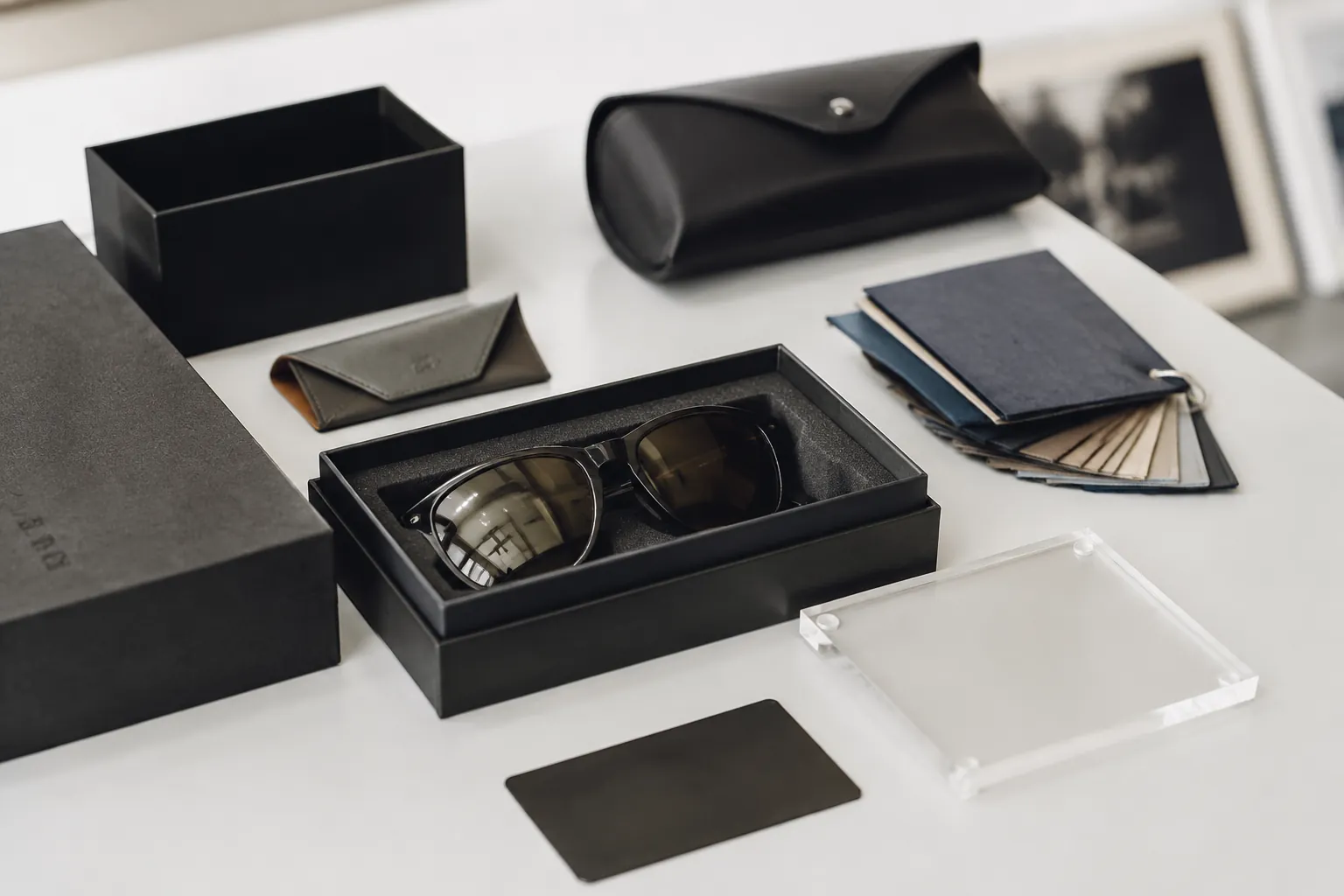
This guide is for brand owners, importers, distributors, and retail buyers preparing artwork for custom sunglasses production. A factory-ready brief reduces preventable errors: wrong logo size, weak color matching, unreadable engraving, rejected samples, and late shipment. The goal is simple. Give the supplier measured, production-useful information so the first sample can be checked against clear requirements. Then lock the approved file set before materials, decoration tooling, packaging, and bulk production are committed.
Build a Factory-Ready Artwork Pack
A sunglasses supplier cannot decorate accurately from a screenshot, website logo, or logo pasted into a presentation. Those files may help a sales discussion. They are not production artwork for pad printing, laser engraving, metal logo plates, lens marking, pouch printing, retail cards, or carton marks.
Send one compressed artwork pack per style, colorway, or logo version. Use a clear file name such as LS2407_Black-Grey_RightTempleLogo_V1_Approved. Inside the pack, include source logo files, a placement sheet, Pantone targets, material references, packaging artwork, and previous approved sample photos if the order is a reorder.
- Vector logo: AI, EPS, or editable PDF with outlined fonts and expanded strokes.
- Raster reference: PNG or JPG at 300 dpi or higher for visual checking only. Do not use it as the production master.
- Placement drawing: PDF showing logo width, height, hinge distance, vertical position, reading direction, and left or right temple use.
- Color target: Pantone Solid Coated number for printed logos, plus finish notes such as matte, gloss, metallic, brushed, or polished.
- Order context: quantity by design, target approval date, target ship date, destination market, packaging type, inspection requirement, and relevant compliance requirements such as CE EN ISO 12312-1, ANSI Z80.3, AS/NZS 1067, REACH, FDA registration, ISO 9001, or BSCI.
Small trial orders still need disciplined artwork. Logo checks, fixture alignment, color matching, sample approval, and inspection planning still take time. Low quantity can make each mistake more expensive per unit because setup and correction costs are spread across fewer pairs.
Use Production-Ready File Formats
Eyewear decoration is small-format manufacturing. A temple logo may be only a few centimeters wide. The usable decoration height can be narrow on metal, TR90, or slim sports temples. At that scale, rough edges, thin strokes, missing fonts, and unexpanded effects become real production problems.
| File type | Production use | Minimum requirement | Common risk |
|---|---|---|---|
| AI or EPS | Pad print film, engraving setup, metal logo plate tooling, packaging print | Fonts outlined; strokes expanded; spot colors separated | Unoutlined fonts may substitute automatically |
| Editable vector PDF | Backup source for simple logos and print layouts | Must be created from design software, not from a placed JPG | Looks clean on screen but cannot be separated for production |
| SVG | Useful reference for simple flat logos | Send AI, EPS, or editable PDF as well if the supplier requests it | Unsupported effects, font handling, or scaling issues |
| PNG or JPG | Visual reference only | 300 dpi or higher if used for comparison | Supplier must redraw it, which can change spacing and proportions |
| PSD | Layered mockup and packaging preview | Keep linked assets and fonts supplied separately | Not normally accepted as final temple logo artwork |
For text logos, outline every font before sending production files. If the logo includes a registered trademark symbol, tagline, legal line, or small descriptor, send a simplified version too. Tiny characters may fill in during pad printing or become too faint after engraving. Ask the supplier to confirm the minimum readable size on the actual frame material and decoration method.
For one-color logos, use solid vector shapes. For two-color or three-color logos, separate each spot color and ask the supplier to confirm registration tolerance before sampling. Avoid transparency effects, gradients, shadows, bitmap textures, and hairline strokes unless the supplier has confirmed that the selected decoration method can reproduce them.
Measure Logo Placement in Millimeters
A mockup with an arrow saying logo here is not a factory brief. The production team needs dimensions they can check on a real frame. For temple logos, specify distance from the hinge screw center or another agreed reference point, distance from the top or bottom temple edge, logo width, logo height, and reading direction when the glasses are worn.
Use millimeters. Be exact. A placement that works on a wide acetate temple may not fit on a slim metal temple or a curved sports frame. Curved temples also reduce the clean print area because the pad or laser path may behave differently near edges, raised details, hinges, and surface transitions.
- Mark the logo center point from a fixed reference, for example the hinge screw center or temple front edge.
- Give maximum artwork size in millimeters, including width and height.
- State logo position: left temple, right temple, both temples, outside only, inside only, lens, case, pouch, card, or carton.
- Confirm orientation: readable from front to back or back to front when worn.
- State acceptable placement tolerance, and ask the supplier to confirm whether the tolerance is achievable for the selected material and decoration method.
Lens logos need tighter judgment. A logo placed too low can enter the wearer's field of view. A logo too close to the lens edge may distort or shift after edging, especially on wrapped sports frames. Keep decorative lens marks small, away from the optical center, and confirm final placement on the finished lens, not only on a flat artwork proof.
If the product must meet CE EN ISO 12312-1, ANSI Z80.3, or AS/NZS 1067, treat lens marking as part of product compliance review. The supplier should confirm that decoration does not interfere with required optical performance, labeling, warnings, or market-specific documentation.
Define Color Targets Clearly
Color matching fails when buyers use loose words like navy, champagne, smoke, crystal brown, or rose gold. Those terms can mean different things to resin suppliers, acetate sheet suppliers, lens tinting teams, plating vendors, and packaging printers. Separate the printed logo color, frame color, lens tint, coating color, and hardware finish.
For printed logos, use Pantone Solid Coated references unless the printer requests another standard. For injected frames, Pantone can guide masterbatch color, but molded plastic may not match a paper chip exactly. Resin type, wall thickness, gloss level, and texture all affect the final shade. For acetate, the result depends on the sheet supplier, pattern, lamination, and cutting direction. For lenses, color changes with base material, lens thickness, gradient process, mirror coating, and visible light transmission target.
- Printed logo: Pantone number, ink finish, and whether the buyer requires a measured color tolerance such as Delta E, if the supplier can measure and report it.
- Injected frame: color target, resin type if known, gloss level, texture, and whether slight batch variation is acceptable.
- Acetate frame: sheet code, pattern direction, lamination style, and whether pair-to-pair variation is acceptable.
- Lens tint: color reference, filter category where applicable, visible light transmission target, and gradient direction if used.
- Metal parts: plating color, brushed or polished finish, logo plate thickness, edge shape, and any corrosion or wear expectations.
If color is critical, request a physical color chip, lab dip, material swatch, or pre-production sample. Define which one is the approval standard. Factory photos are useful for speed, but screen brightness, camera settings, and workshop lighting are not reliable final color standards.
Match Decoration Method to the Frame
Every logo method has limits. The cleanest result usually comes from matching the logo design to the frame material and surface. Do not force one branding method onto every style. A bold one-color logo that prints well on an injected temple may not engrave clearly on black acetate or fit on a slim metal arm.
| Method | Best use | Practical limit | Approval point |
|---|---|---|---|
| Pad printing | Solid color logos on plastic, TR90, or acetate temples | Fine lines, small text, and multi-color registration need supplier confirmation | Check sharpness, color match, position, adhesion, and rub resistance |
| Laser engraving | Subtle branding on metal, acetate, coated parts, or logo plates | Contrast depends on material and coating; some surfaces engrave with low visibility | Check depth, burn color, edge quality, and readability |
| Metal logo plate | Premium branding on thicker temples | Requires tooling, cavity fit, glue control, plating approval, and minimum letter size confirmation | Check plating color, flushness, glue line, plate alignment, and edge finish |
| Lens logo print | Small brand mark or category mark on finished lens | Must not interfere with vision, coating adhesion, required markings, or applicable standards | Check final position after lens cutting and coating compatibility |
For first orders, keep decoration simple when possible: one logo position, one ink color, standard frame color, standard lens color, and one approved packaging layout. Complexity adds approval steps. It also adds more places for defects to appear.
Laser engraving looks precise when the material responds well. It is not universal. On coated metal, the laser may reveal a different base tone. On translucent acetate, the mark can appear softer than expected. Approve the actual sample on the actual material and surface finish.
Control Sampling and Approvals
The approval flow should catch errors before bulk materials and decorated parts are committed. A practical custom sunglasses sequence is artwork check, digital placement proof, material and color confirmation, physical sample, sample correction if needed, bulk production, final inspection, and shipment. Get sampling time and bulk lead time in writing. Timing depends on frame material, decoration method, packaging, quantity, factory schedule, and whether compliance testing or documentation is required.
Do not approve a sample with looks good. Approve measurable details. If the logo is too close to the hinge, write the corrected distance in millimeters. If the silver print is too dark, restate the Pantone target or approved chip. If the lens tint is too light, refer to the agreed filter category, visible light transmission range, or approved lens sample.
- Artwork check: Confirm files open correctly, fonts are outlined, strokes are expanded, colors are separated, and logo size is realistic.
- Digital proof: Confirm placement, reading direction, temple side, lens mark, pouch, case, barcode, carton marks, and all printed text.
- Physical sample: Check frame color, lens tint, logo position, decoration quality, hinge function, fit, comfort, and packaging print.
- Compliance review: Confirm target market requirements such as CE EN ISO 12312-1, ANSI Z80.3, AS/NZS 1067, REACH, FDA registration, ISO 9001, or BSCI where relevant to the product, factory, or buyer requirement.
- Pre-production freeze: Lock artwork version, material, color, decoration method, packaging, inspection criteria, and written tolerances before bulk starts.
For exact reorders, a digital proof may be enough only if the supplier has the approved sample, production record, and unchanged materials. For a new frame, new logo method, new acetate sheet, new lens tint, new packaging artwork, or new destination market, skipping the physical sample creates avoidable risk.
Connect Artwork Choices to MOQ and Lead Time
Artwork choices affect price and schedule. A one-color temple print on a standard injected frame is usually simpler than a custom acetate pattern, gradient lens, two-position logo, retail pouch, barcode card, and metal logo plate. Each added component needs its own artwork check, sample review, and inspection point.
Minimum order quantity, unit price, tooling cost, sample cost, and lead time should be confirmed in the supplier's current quotation. Do not rely on a previous order or a website headline. Pricing depends on frame material, lens specification, decoration method, packaging, inspection requirements, freight terms, and quantity. Lower unit prices at higher quantities are common because setup labor, color matching, print films, fixtures, sample handling, and QC documentation are spread across more units.
| Artwork choice | Likely impact | Buyer control |
|---|---|---|
| One-color temple logo | Fast setup and low decoration complexity | Send clean vector artwork, Pantone target, and measured placement |
| Two or more print colors | More registration checking and higher reject risk | Simplify artwork or approve a physical print sample before bulk |
| Metal logo plate | Tooling, fitting, plating, and glue checks may add time | Confirm plate size, cavity fit, plating color, and minimum letter height early |
| Custom lens tint | May require tint sample and compliance review | Define color, filter category, visible light transmission target, and market standard |
| Packaging artwork | Can delay shipment even after sunglasses are finished | Approve pouch, case, barcode, retail card, and carton marks with the frame sample |
The rule is direct. Every extra color, position, material, and packaging component creates another approval point. Customization is manageable when each requirement is measured, version-controlled, sampled when needed, and approved in writing.
Check the Final Brief Before the PO
Before issuing the purchase order, consolidate the final approved information into one document. Production staff should not have to read a long email chain to find the correct logo file, Pantone number, barcode, or carton mark. Version control matters. A supplier should never have to guess whether a file named final, final2, or new-final is the one for bulk.
- Style number, frame material, frame color, lens color, and quantity per design.
- Approved vector logo files with outlined fonts, expanded strokes, and separated spot colors.
- Pantone references, physical color standards, and finish targets for printed decoration, frame color, hardware, and packaging.
- Logo placement dimensions in millimeters for temple, lens, case, pouch, card, or carton artwork.
- Decoration method for each position: pad print, laser engraving, metal plate, lens print, embossing, or packaging print.
- Approved sample photos or signed reference sample, including any written corrections and date of approval.
- Target market compliance requirements, including CE EN ISO 12312-1, FDA registration, ANSI Z80.3, AS/NZS 1067, REACH, ISO 9001, or BSCI when relevant.
- Packaging artwork, barcode requirements, carton marks, packing ratio, labeling language, and inspection requirement.
- Final delivery date, shipping method, agreed Incoterms if applicable, and latest approval date needed to protect the ship window.
A clean brief saves time inside the factory. Material preparation, frame production, lens processing, decoration, assembly, packaging, and QC all need the same locked information. If one department works from an old placement sheet, the mistake can appear on finished goods.
Factory note: The best artwork brief is short, visual, measured, and final. A correct vector file, Pantone number, approved sample reference, and millimeter placement drawing are more useful than a long email thread with conflicting instructions.
Have a custom sunglasses project in mind?
Send us your styles, target market and quantities and we will return a detailed quote with MOQ, lead time and a sample plan.
Get a QuoteWhy source this from Wenzhou with LumiShades
Wenzhou in Zhejiang Province is widely regarded as China’s eyewear manufacturing capital, producing a large share of the world’s sunglasses. That concentration matters to buyers: a deep local supply chain for acetate sheet, hinges, lens blanks, plating and packaging means shorter component lead times, easier color and material matching, and a workforce with decades of eyewear-specific skill. LumiShades has manufactured in this ecosystem since 2009, and our vertical integration — in-house injection molding, acetate cutting, CNC milling, lens tinting, decoration and quality control — means no part of your order is quietly subcontracted to a workshop you cannot audit.
For international buyers, that vertical control translates into accountability. When a single factory owns every step, defects are traced and fixed at source rather than bounced between vendors, and your specifications survive intact from first sample to bulk. We back this with 15+ years of experience, shipments to 60+ countries, more than 5 million pairs produced per year and a 98.5% on-time delivery rate. Our certifications — CE EN ISO 12312-1, FDA registration, ANSI Z80.3, AS/NZS 1067, REACH, ISO 9001 and BSCI audit — mean the compliance documentation your market requires already exists. Explore our manufacturing capabilities and quality control process to see how this works in practice.
Frequently asked questions
Can I send only a PNG logo for custom sunglasses production? Send a PNG only as a visual reference. For production, provide AI, EPS, or editable vector PDF with fonts outlined and strokes expanded. If the supplier redraws a PNG, line weight, spacing, curves, and proportions can change. Proof and approve any redraw before sampling.
What is the safest logo method for a first trial order? A one-color temple logo is usually the lowest-risk starting point, especially when the frame and lens colors are standard. Confirm the exact method with the supplier. Pad printing, laser engraving, and metal plates behave differently on plastic, acetate, TR90, and metal. Approve the logo on the actual frame material before bulk production.
What logo size works best on sunglasses temples? There is no universal size. Temple width, curvature, hinge position, and material all matter. Ask the supplier for the usable decoration area on the selected frame. Then specify logo width, height, distance from the hinge reference point, vertical position, and reading direction in millimeters. Check small text and trademark symbols on the physical sample.
Do I need Pantone numbers for black or white logos? Yes, if the exact appearance matters. State whether the logo should be matte black, gloss black, solid white, warm white, cool white, metallic silver, or another defined target. For metallic effects, confirm whether the supplier will use ink, plating, foil-like printing, or a metal logo plate. Those finishes do not look the same.
Can lens logos affect compliance? They can. Lens marks should not interfere with vision, optical performance, required markings, or applicable standards such as CE EN ISO 12312-1, ANSI Z80.3, or AS/NZS 1067. Approve the logo position on the finished lens after cutting and coating. Ask the supplier to confirm any compliance impact for the destination market.
How early should packaging artwork be approved? Approve pouch, case, retail card, barcode, warning text, labeling language, and carton marks at the same time as the frame sample. Packaging often has its own print setup and proofing timeline. Late barcode or carton changes can delay shipment even when the sunglasses are finished.
What should I check on the pre-production sample? Check logo size, position, color, edge sharpness, adhesion, lens tint, frame finish, hinge movement, fit, packaging print, barcode readability, and any market compliance requirement. Record corrections with millimeter dimensions, Pantone references, approved samples, or written tolerances. Avoid vague comments.
Ready to start?
Explore our shield & oversized sunglasses or request a quote — our sales team replies within 12 hours.
Request a Quote