
Scratch-Resistance Claims That Hold Up
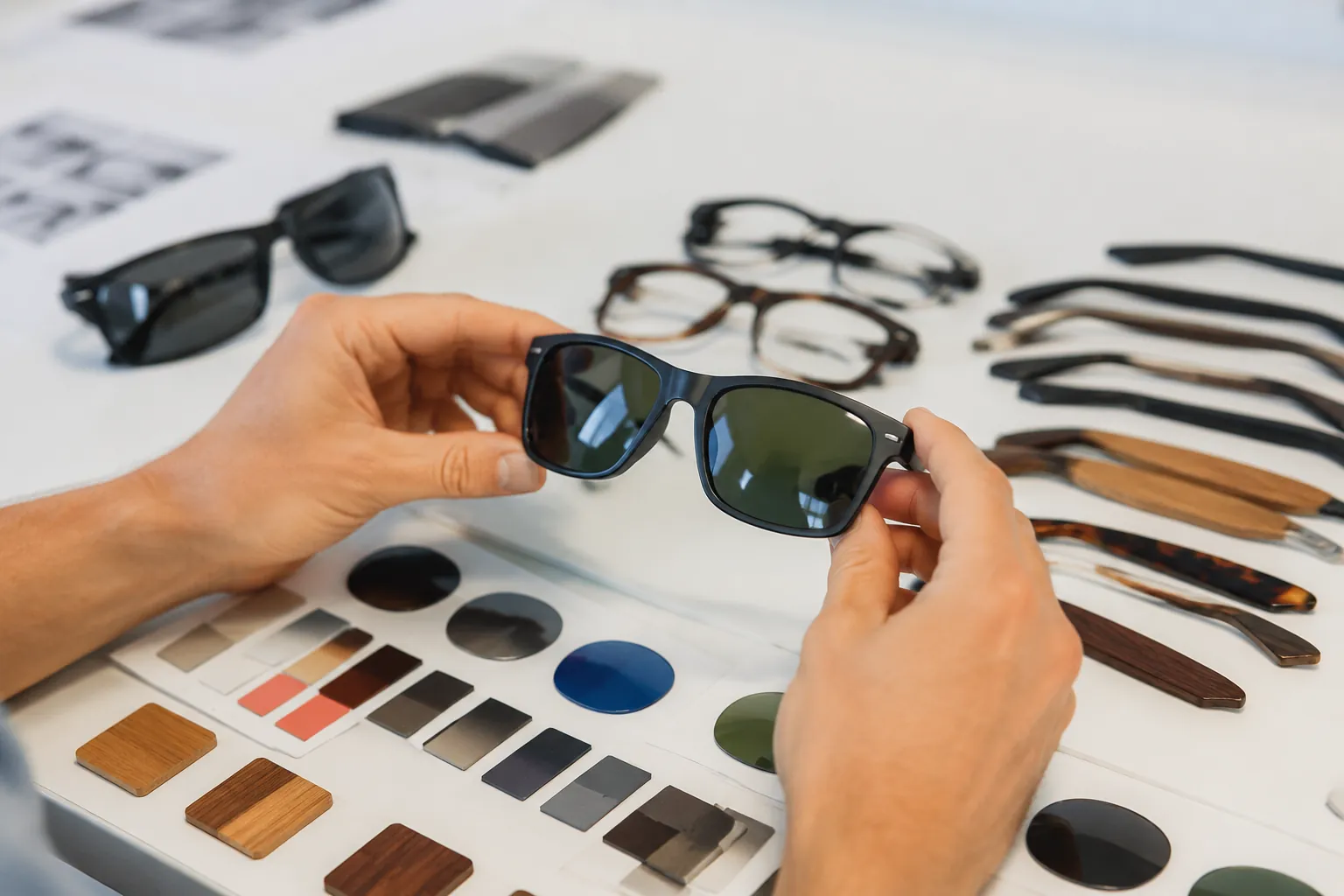
This guide is for brand owners, importers, distributors, and retailers buying custom sunglasses in volume. The aim is simple: cut returns, complaints, and review damage caused by vague scratch-resistance claims. Define the lens build clearly. Approve it with a repeatable check. Keep packaging and marketing language matched to actual performance. Do that before bulk production, and many disputes never start.
Start with the hard truth: scratch-resistant is not scratch-proof
Most scratch disputes start with wording, not chemistry. A buyer approves packaging that says scratch resistant. The customer hears this lens should not scratch in normal use. Those are not the same claim.
All common sunglass lens materials can scratch. The difference is how quickly visible surface damage appears during handling, cleaning, packing, transport, and retail display. Polycarbonate is common because it is light and impact resistant, but it needs a hard-coat to improve abrasion resistance. TAC polarized lenses can work well in many mid-range programs, but performance depends on outer-layer quality and coating control. Glass usually offers the best scratch resistance among common sunglass lens materials, but it adds weight and does not fit every program.
A hard-coat helps. It does not make a lens immune to grit, sand, metal contact, or bad cleaning habits. Dry wiping a dusty lens can still leave marks. So can rubbing inside poor packaging or repeated handling on an open display.
For B2B buyers, the real question is not whether a lens can be called scratch resistant in broad marketing language. The real question is whether lens performance matches the price point, sales channel, and claim language. If those three do not line up, complaints get harder to defend after launch.
What usually causes scratch complaints
Scratch complaints are often blamed on the factory. Sometimes that is right. Often it is not the whole story. The cause may sit in the spec, the assembly line, the packaging, or customer use. Separate the failure modes first. Then fix the right one.
- Wrong lens material for the channel: lower-durability lens options may fit a low-cost promotional brief, but they are risky in premium retail or heavy-handling environments.
- Weak or inconsistent hard-coat application: abrasion resistance depends on the coating system and process control. Variation between sample and bulk can cause trouble fast.
- Contamination during decoration or assembly: dust, polishing residue, overspray, or other particles can touch the lens and create marks during handling.
- Packaging friction: lens-to-lens contact, rough bags, exposed metal parts, or loose accessories can abrade lenses in transit.
- Retail or end-user cleaning practices: paper towels, dirty cloths, or a dry shirt can create damage later described as a factory defect.
- Overstated copy: the product may fit its cost level, but the wording promises more than the construction can support.
Factory capability still matters. A supplier with controlled sourcing, stable lens finishing, disciplined assembly, and reliable final inspection is easier to manage than a fragmented supply chain with multiple handoffs. But even a good OEM cannot protect a buyer from inflated claims printed on packaging, product pages, or sales sheets.
Write the lens spec so there is nothing to argue about later
A good lens specification is specific enough to check and simple enough to enforce. If the PO says only PC polarized, scratch resistant, that is too vague. It invites interpretation. That usually ends badly.
At minimum, the lens section of the PO or tech pack should define five things clearly:
- Lens material: PC, TAC polarized, nylon, acrylic, or glass, including thickness where relevant.
- Coating requirement: state whether a hard-coat is required, optional, or not included.
- Approved claim language: for example, hard-coated for improved scratch resistance in normal handling.
- Visual inspection standard: define lighting, background, and viewing distance for cosmetic review.
- Packaging protection: specify pouch, sleeve, film, tray separation, or other protective method.
For larger programs, keep an approved sample and a retained control lens. Define acceptable versus rejectable before packing starts. Cosmetic rules should be concrete. Identify the primary viewing area. State whether any visible scratch is rejectable in that area. Define how minor hairlines outside that area will be judged under the agreed inspection conditions. The exact tolerance depends on price point and channel, but the rule is simple: if you cannot describe the standard clearly, you will struggle to enforce it in production.
Address cost and timing early. A better coating, a microfiber pouch, or protective lens separation can affect unit cost, especially on smaller runs. Approve those items at quotation stage if they matter. Do not try to patch the problem after complaints arrive. By then, the cheapest fix is gone.
Material and coating choices: what to expect
| Lens option | Surface durability expectation | Typical use case | Main trade-off |
|---|---|---|---|
| Uncoated polycarbonate | Low. More vulnerable to visible marks from wiping and contact. | Entry-level promotional programs with tightly controlled claims. | Higher complaint risk if marketed as durable or premium. |
| Hard-coated polycarbonate | Moderate. Common commercial baseline for fashion sunglasses. | Private label retail, chain-store, and distributor orders balancing durability and cost. | Still vulnerable to grit, dry cleaning, and poor packaging. |
| TAC polarized with top protective coat | Moderate to good, depending on film quality and outer-layer control. | Mid-range polarized lifestyle collections. | Layered construction requires consistent bonding and coating quality. |
| Nylon lens with coating | Good when properly specified and coated. | Sport, activewear, or higher-spec performance programs. | Higher material cost and a narrower sourcing base. |
| Glass lens | Best scratch resistance in normal handling among common options. | Premium collections where weight and logistics are acceptable. | Heavier, costlier, and less common in fast-turn custom programs. |
There is no universal best option. There is only the right fit for channel, margin, handling environment, and claim level. For many importers, hard-coated polycarbonate is the practical baseline because it balances cost, weight, tint flexibility, and acceptable abrasion resistance. TAC polarized can also be a sound choice, but buyers should confirm the protective outer-layer spec instead of assuming all TAC constructions perform the same.
Frame design and packaging affect risk too. A simple product with few internal contact points is easier to protect than a style with exposed metal trim, decorative attachments, or a complex gift box. Scratch resistance is not just a lens issue. It is a whole-product issue.
Use a simple approval process before bulk production starts
Do not approve scratch performance by glancing at one showroom sample under office lighting. Use a repeatable commercial method. It does not need to be a full lab abrasion test to be useful. But it does need controls.
- Freeze the lens stack: substrate, thickness, polarization layer if any, hard-coat requirement, tint, mirror, and any other functional layer.
- Request multiple pre-production samples: one sample shows appearance; several samples show variation.
- Inspect under defined conditions: set the lighting, background, and viewing distance in writing.
- Run a simple comparison method: use the same cloth type, the same light dust condition, and the same number of wipes on approved and control samples. Record the method so it can be repeated.
- Check packaging interaction: place the lenses in the final pouch, tray, or box arrangement, then review for rubbing or contact marks after simulated handling.
- Lock the claim language: packaging, inserts, product pages, and sales sheets should all use the approved wording.
For larger programs, add an in-line checkpoint and a final visual inspection before packing. Keep photos of approved samples and rejected defects. That record helps show whether damage likely happened in coating, assembly, packing, or later handling. It also gives the buyer a firmer basis for any supplier claim discussion.
Keep compliance and scratch-resistance claims separate
Compliance and durability are different subjects. Buyers mix them together all the time. That creates avoidable risk.
For international sunglass programs, buyers may need documents tied to CE EN ISO 12312-1, ANSI Z80.3, or AS/NZS 1067, along with material-related compliance such as REACH. Some importers also ask for FDA registration paperwork for market-access support, plus quality-system or social-compliance credentials such as ISO 9001 and BSCI. These documents may matter for market access, supplier screening, and internal approval.
They do not, by themselves, prove a high level of scratch resistance. A compliant sunglass can still scratch easily if the lens material, coating system, packaging, or handling controls are weak.
- Compliance message: the product meets applicable sunglass or supplier-qualification requirements.
- Durability message: the lens includes a hard-coat or protective outer layer intended to improve abrasion resistance in normal handling.
- Care message: clean with a suitable microfiber cloth, store in a pouch or case, and avoid wiping grit across a dry lens.
Keep those messages separate. It makes marketing more accurate and gives customer-service teams a cleaner script when complaints come in.
Claim language can drive returns as much as the lens itself
The same product can be fine in one channel and a problem in another. Why? Expectations change with price, presentation, and use case. A low-cost promotional program and a premium DTC launch should not use the same durability wording unless the lens spec is also the same.
| Claim style | Risk level | Best use case | Why it works or fails |
|---|---|---|---|
| Scratch-proof lenses | Very high | None for standard fashion sunglasses | Creates an absolute promise that normal coated sunglass lenses cannot reliably support. |
| Scratch-resistant lenses | Medium | Retail or distributor programs with a real hard-coat specification | Usable, but should be supported by care instructions and internal QC records. |
| Hard-coated lenses for improved surface durability | Lower | B2B product sheets, retailer training, and more technical listings | More precise and easier to defend because it describes the feature rather than making an absolute outcome claim. |
| Includes protective pouch to help reduce lens wear | Low | Packaging, inserts, and online feature bullets | Supports correct care behavior without overstating lens performance. |
A practical rule: do not promise an outcome you cannot verify consistently. If the sales team wants stronger wording, tie it back to a documented lens construction, an approved sample, and a defined inspection method. No paperwork, no bigger claim.
Where a few extra cents usually pay back
Many buyers push hard on visible features, then lose margin through avoidable lens complaints. In many programs, small protective upgrades are a better use of budget than cosmetic extras.
- Specify a real hard-coat requirement: especially for PC or TAC lenses sold through retail or DTC channels.
- Add a microfiber pouch: useful for transit protection and safer cleaning guidance.
- Use protective separation in packing: keep lenses away from metal trim, rivets, accessories, and opposing lenses.
- Tighten final lens cosmetic inspection: visible lens defects usually hurt perceived quality faster than small non-critical frame issues.
- Train sales and marketing teams on approved wording: many claim problems start after production when copy drifts beyond the signed spec.
Practical rule: if your retail positioning depends on durability, spend first on lens protection, packaging isolation, and disciplined claim language before adding decorative upgrades.
Have a custom sunglasses project in mind?
Send us your styles, target market and quantities and we will return a detailed quote with MOQ, lead time and a sample plan.
Get a QuoteWhy source this from Wenzhou with LumiShades
Wenzhou in Zhejiang Province is widely regarded as China’s eyewear manufacturing capital, producing a large share of the world’s sunglasses. That concentration matters to buyers: a deep local supply chain for acetate sheet, hinges, lens blanks, plating and packaging means shorter component lead times, easier color and material matching, and a workforce with decades of eyewear-specific skill. LumiShades has manufactured in this ecosystem since 2009, and our vertical integration — in-house injection molding, acetate cutting, CNC milling, lens tinting, decoration and quality control — means no part of your order is quietly subcontracted to a workshop you cannot audit.
For international buyers, that vertical control translates into accountability. When a single factory owns every step, defects are traced and fixed at source rather than bounced between vendors, and your specifications survive intact from first sample to bulk. We back this with 15+ years of experience, shipments to 60+ countries, more than 5 million pairs produced per year and a 98.5% on-time delivery rate. Our certifications — CE EN ISO 12312-1, FDA registration, ANSI Z80.3, AS/NZS 1067, REACH, ISO 9001 and BSCI audit — mean the compliance documentation your market requires already exists. Explore our manufacturing capabilities and quality control process to see how this works in practice.
Frequently asked questions
Can I advertise sunglasses as scratch-proof if they have a hard-coat? No. A hard-coat improves abrasion resistance, but it does not stop scratching from grit, sand, keys, metal contact, or poor cleaning. Use safer wording such as <strong>scratch-resistant</strong> or <strong>hard-coated for improved surface durability</strong>, and support it with a written lens specification, an approved sample, and care instructions.
What is the safest lens option for mid-range private label sunglasses? For many mid-range private label programs, hard-coated polycarbonate is the safest commercial baseline because it balances cost, weight, common tint options, and acceptable abrasion resistance. To make that useful in production, ask the supplier to confirm the lens material, hard-coat requirement in the PO, cosmetic inspection standard, and exact packaging method used to prevent rubbing in transit.
Do CE EN ISO 12312-1 or ANSI Z80.3 prove a lens is highly scratch resistant? No. Those standards address sunglass performance and safety requirements, not a broad durability promise about abrasion resistance. Treat compliance and scratch resistance as separate approval tracks: request the compliance documents needed for market access, then separately approve the lens material, coating requirement, visual standard, and scratch-check method before bulk production.
How should I test scratch resistance before bulk production? Use a repeatable commercial check. Ask for multiple pre-production samples, define the lighting and viewing distance for inspection, compare the approved lens against a retained control using the same cloth and the same number of wipes under the same light dust condition, and then inspect the lenses again after placing them in the final packaging setup. Write the method down so it can be repeated if a dispute comes up later.
What factory details matter most for reducing scratch complaints? The key details are the lens material, whether a hard-coat is actually specified and controlled, the cleanliness of decoration and assembly steps, the final cosmetic inspection standard, and the packaging method that prevents lens contact during shipping. When evaluating suppliers, ask who controls lens sourcing or finishing, how lens defects are inspected before packing, what protective packing is standard, and whether approved samples are retained for bulk comparison.
Ready to start?
Explore our round sunglasses or request a quote — our sales team replies within 12 hours.
Request a Quote